





Branded

Explore Mandai Wildlife Reserve's latest attraction & win a trip to swim with whale sharks in Perth
Tap in to collect badges, points, learn more about unseen worlds and stand a chance to swim with the gentle giants of the sea.
Photos by Lia, Mandai Wildlife Group
If you told me I could win a trip to Perth to swim alongside whale sharks just by scoring points at Exploria, I’d have jumped at the chance to enter this contest.
And happily, that is essentially what Exploria, located at the Mandai Wildlife Reserve, is offering right now, from May 11 to Jun. 7, 2026.
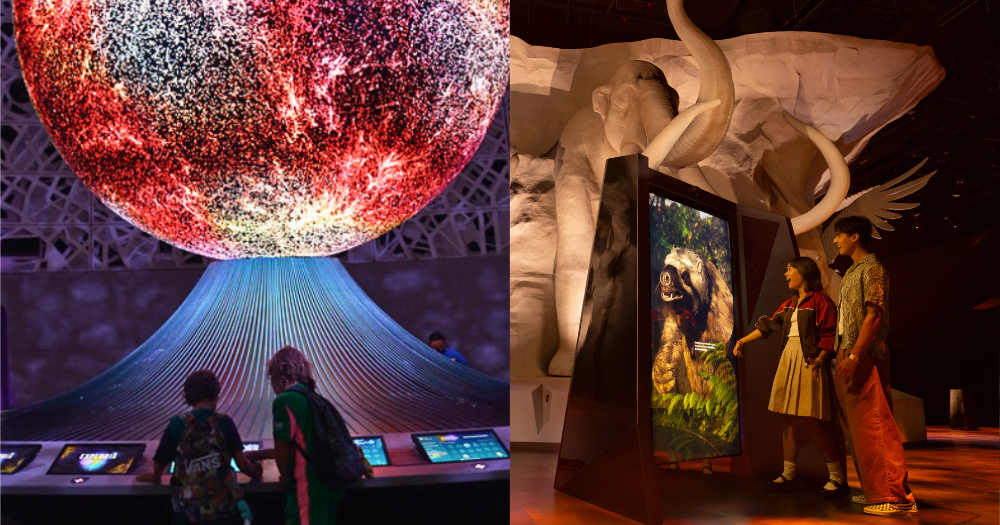
Exploria spans across five themed worlds and visitors can expect immersive zones that combine large-scale projections, interactive technology and sensory effects.
Each world takes us through parts of the natural world that most of us rarely get to access directly or are invisible — whether because they happen at a microscopic scale, in total darkness, under extreme temperatures or across millions of years of Earth’s history.
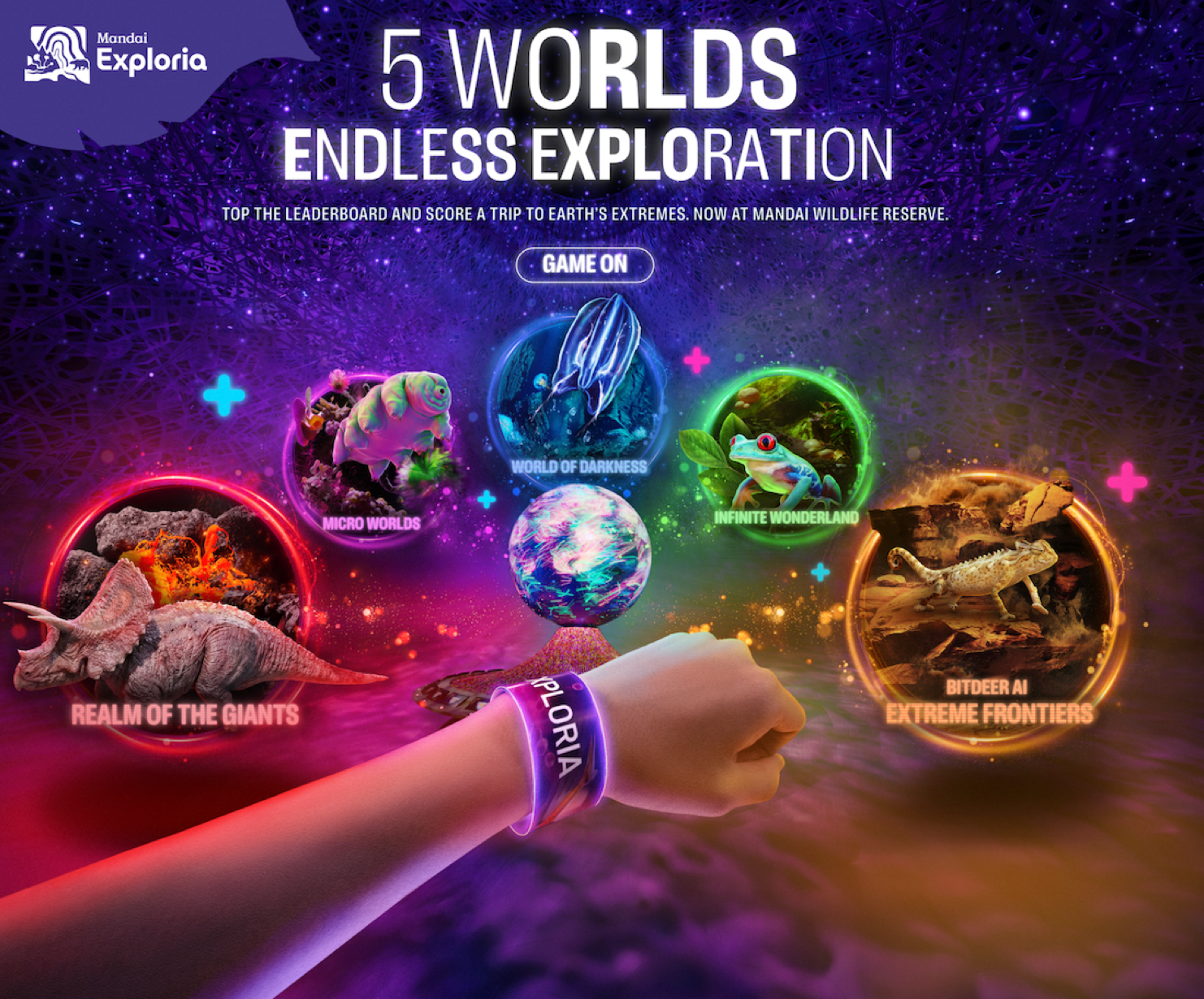 Image courtesy of Mandai Wildlife Group
During this contest period, visitors who register for a profile, collect points and climb Exploria’s leaderboard stand to win a prize trip to Perth, where they can marvel at whale sharks up close - the largest living non-mammal on Earth.
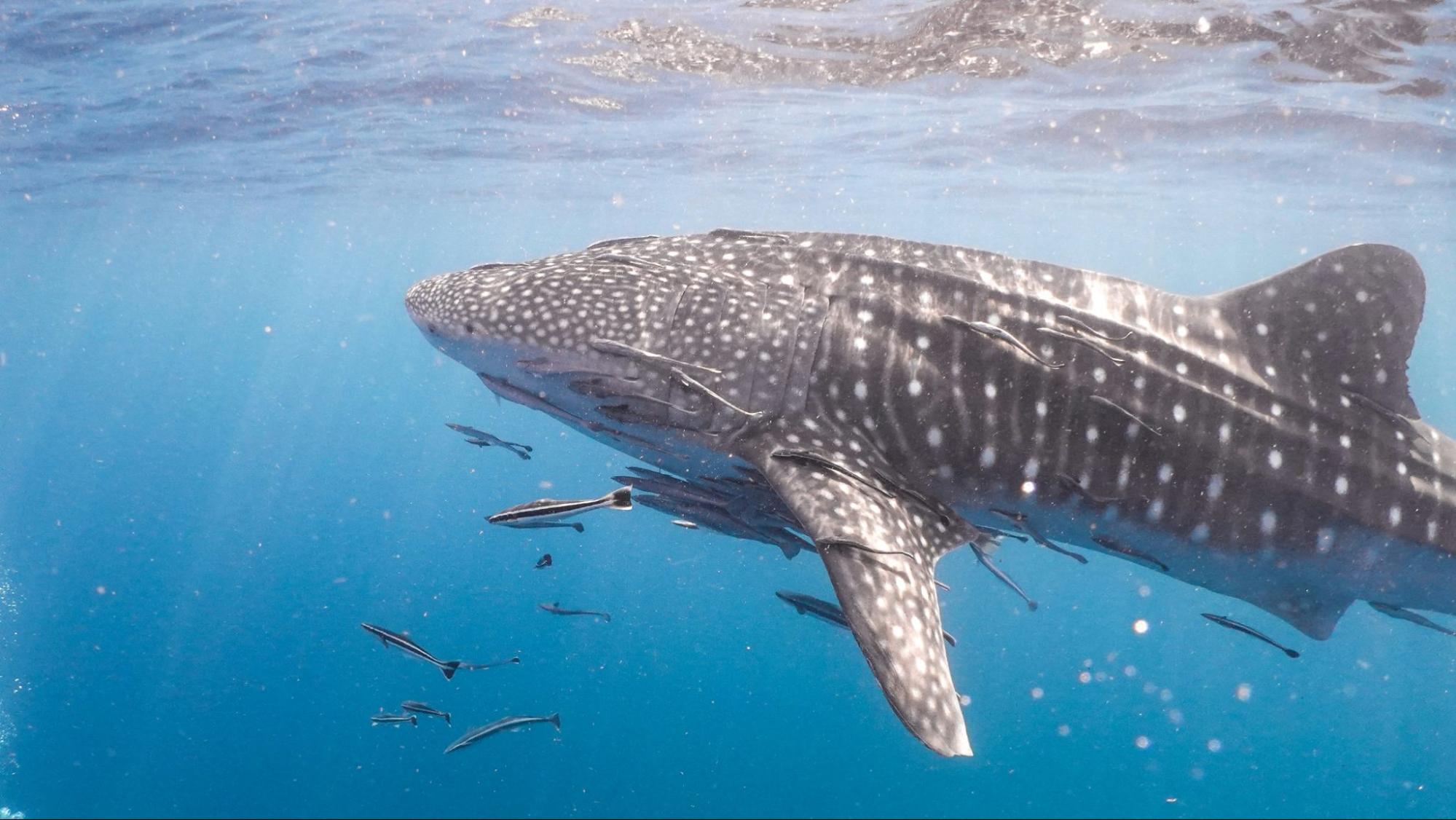 Image via Unsplash
One of Exploria’s five worlds is Realm of the Giants, where you move through prehistoric eras and come face to face with some of the largest creatures to have walked the Earth.
Given their description as gentle giants of the sea, whale sharks make a fitting extension of Realm of the Giants: a reminder that while some giants now exist only as projections and reconstructed forms, others still move through our oceans, but could one day follow the same path if we are not careful.
Today, whale sharks are listed as Endangered on the International Union for Conservation of Nature Red List of Threatened Species, with global populations having declined by more than 50 per cent over the past 75 years.
The prize is a chance to come face to face with one of today’s remaining giants while remembering that protecting them may be what keeps them from becoming part of history too.
The trip, which will run for five days and four nights, will take place anytime during the period of Jun. 29 to Jul. 12.
Creating your avatar at the Biopool
Upon stepping into Exploria, this was the first thing I was greeted with:
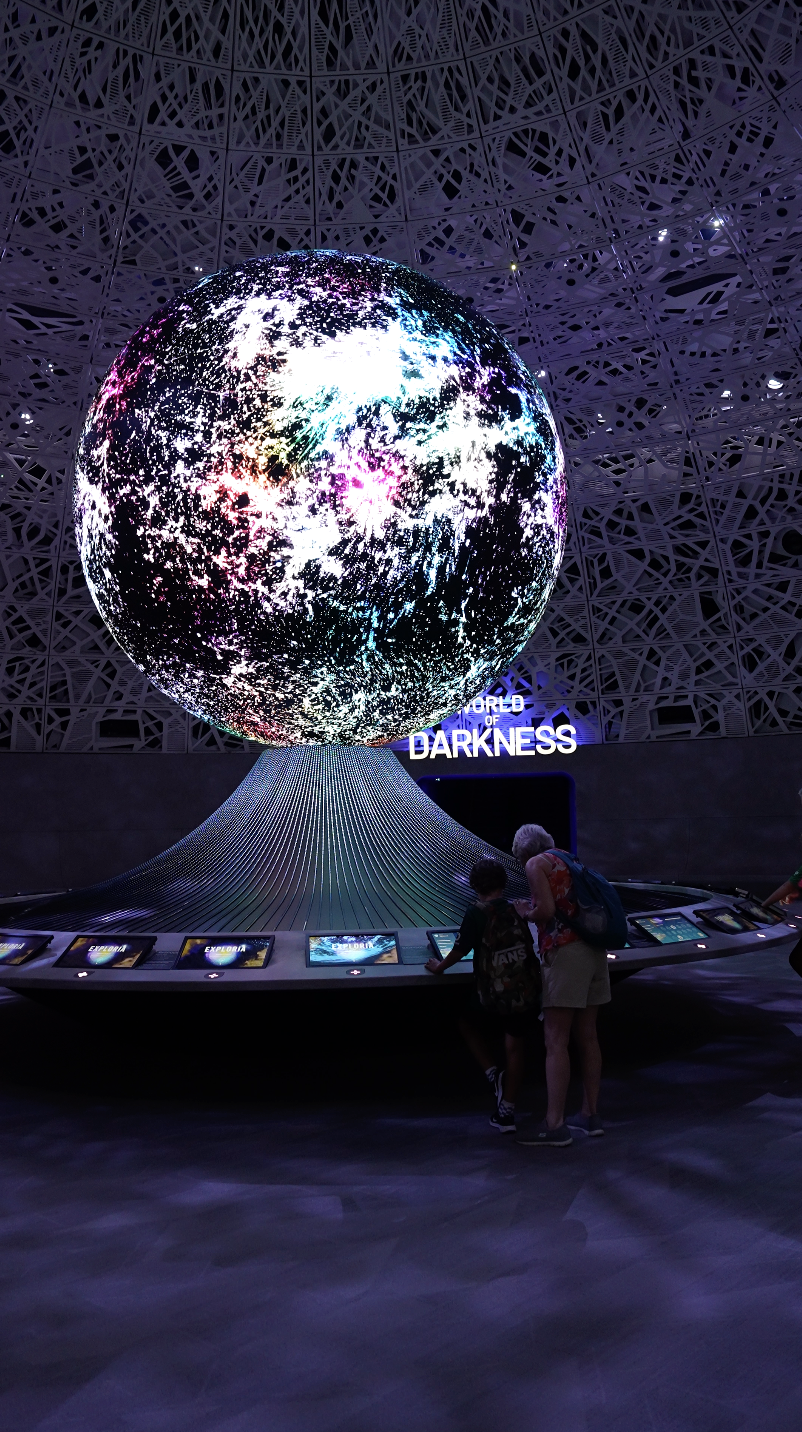 Photo by Aiman
This is where you begin before entering any of Exploria’s five worlds, a place aptly named “Our Interconnected World” with the Biopool, a four-metre LED globe that pulses like a heartbeat at its centre.
That same space also hosts “The Planet Awakens”, a light and sound sequence where the globe lights up in waves of colour and projection.
 Gif by Lia
But the Biopool is not just there to look good.
This is also where visitors can scan their RFID wristband, create a digital avatar and begin their journey through the attraction.
By creating your avatar, you can tap touchpoints across the five worlds to reveal species, unlock information, collect badges, accumulate points and check on your progress towards that Perth trip.
Touchscreen panels sit beneath the Biopool where you can track the badges you have collected, check your points and see where you stand on the leaderboard.
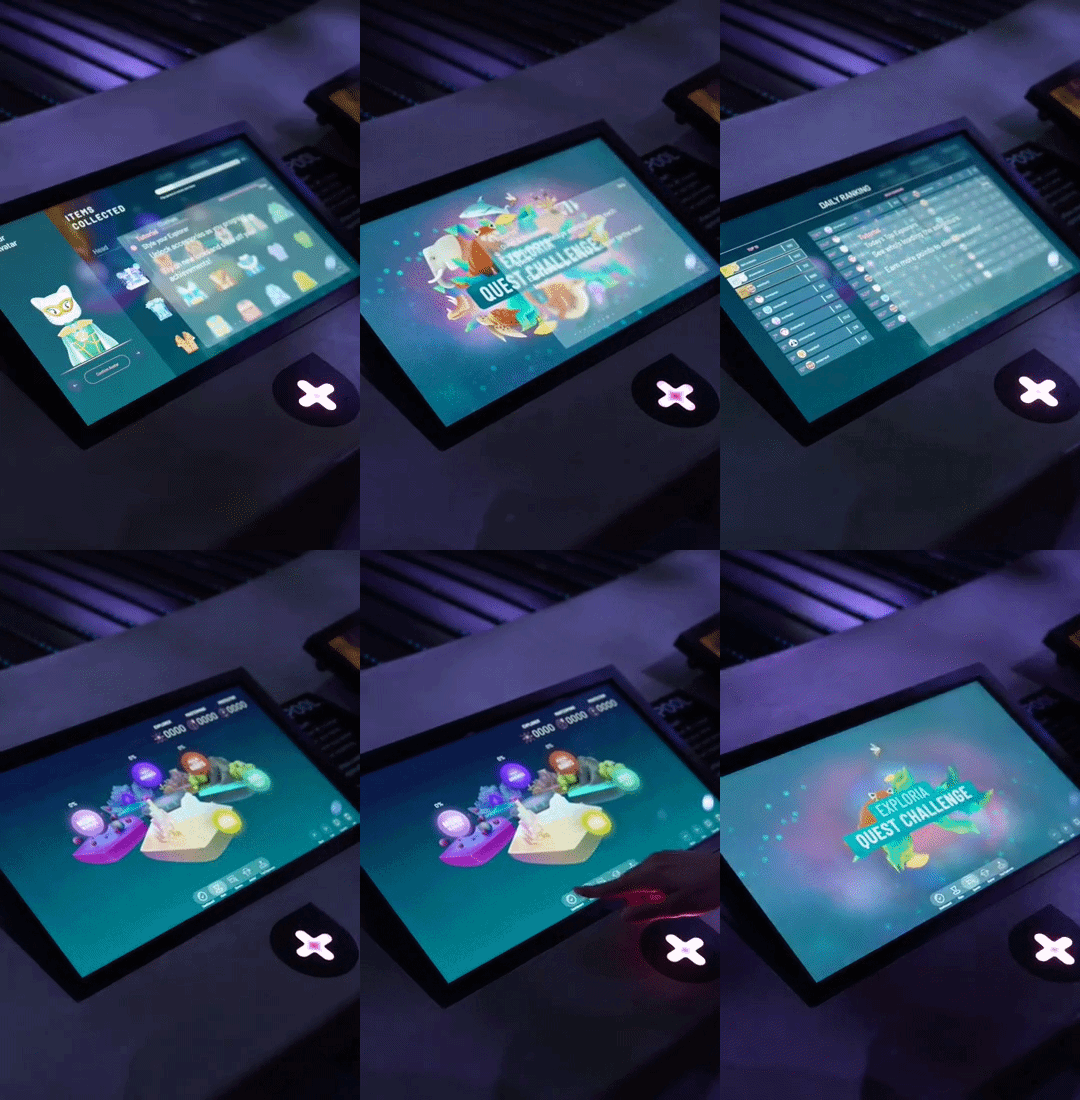 Gif by Aiman
I may have spent slightly longer than necessary customising my avatar, but this is what I eventually settled on:
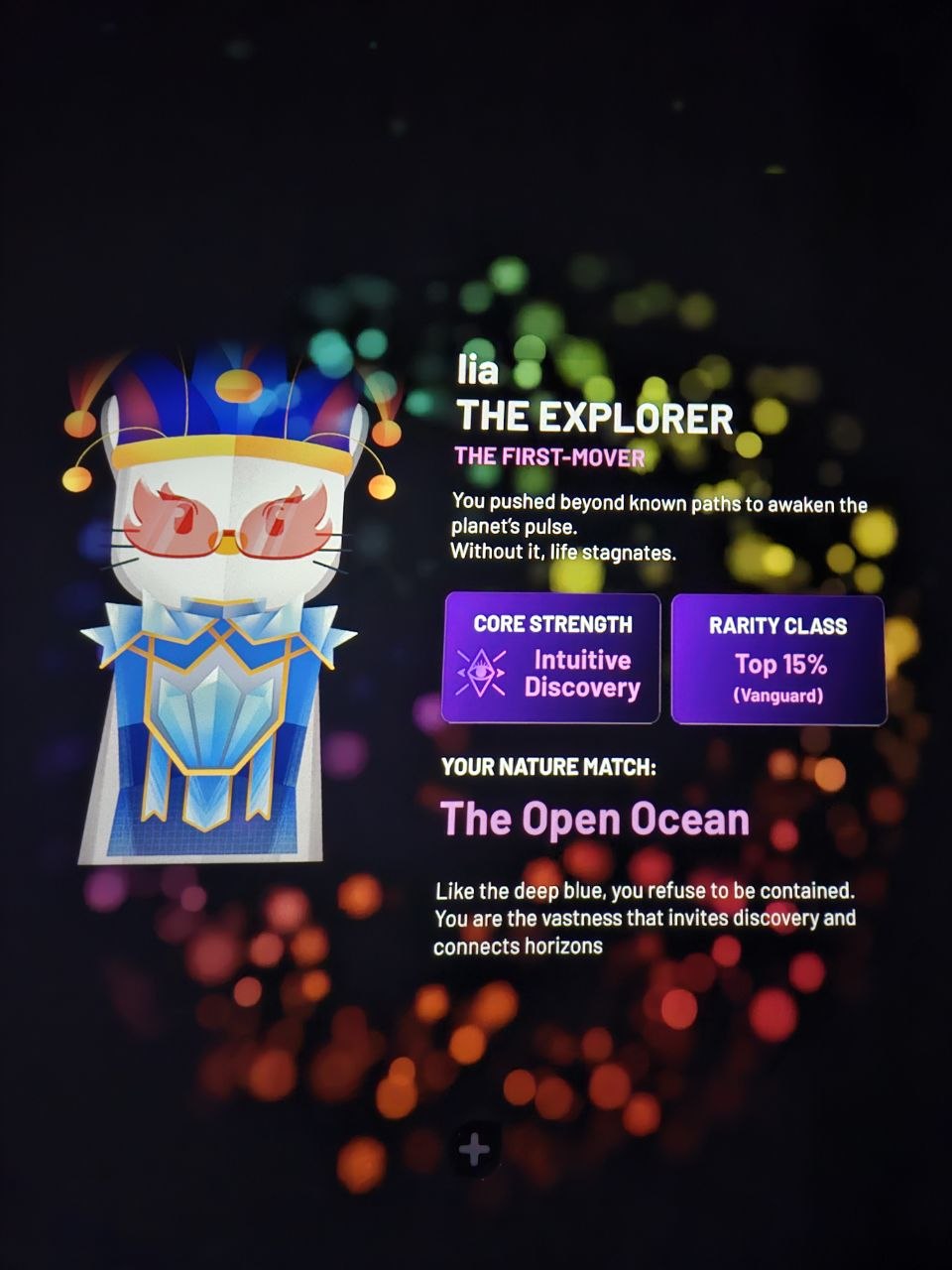 Photo by Lia
RFID Wristband makes you pay attention differently
I have to admit I was unexpectedly impressed by how much the RFID wristband changed the way I moved through the attraction.
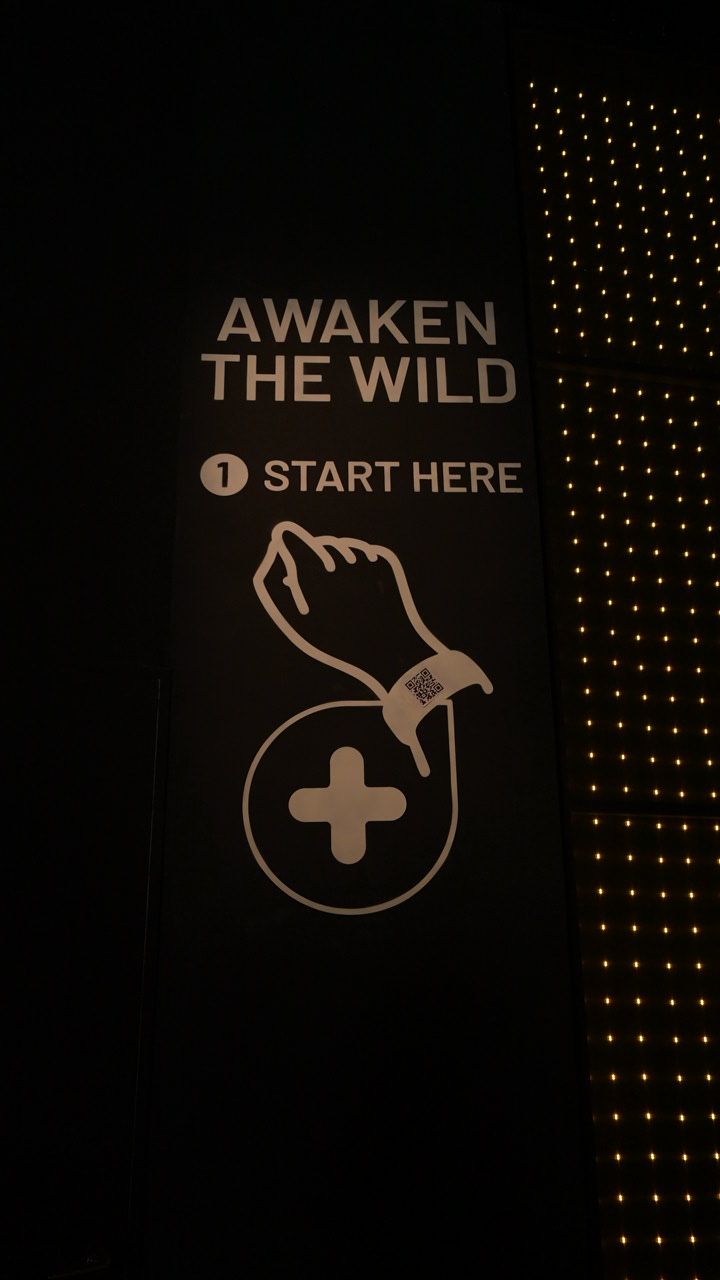 Photo by Aiman
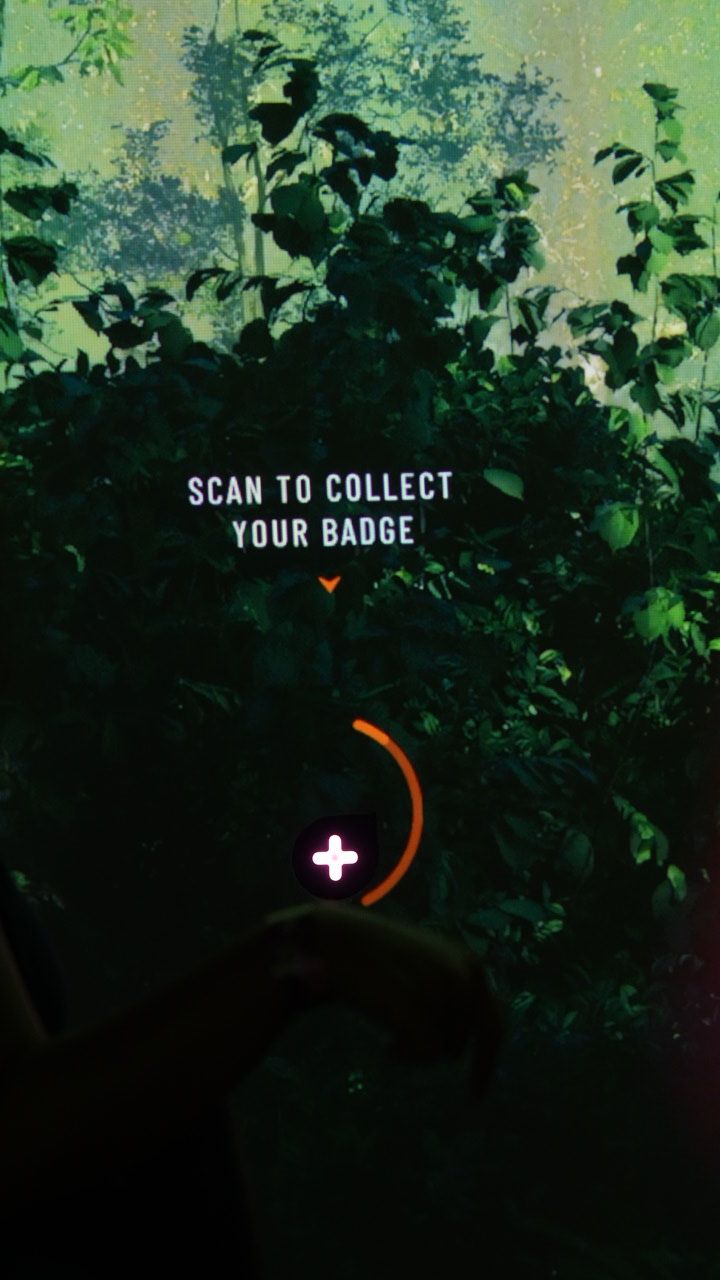 Photo by Aiman
Instead of simply breezing through each zone, the wristband nudges you to slow down, look closer and notice details you might otherwise walk past.
Some interactions only appear if you linger long enough to notice them, while others reward you with hidden gems or medals. Every tap feeds points directly into your leaderboard score, and the higher you go, the closer you are to that prize trip to Perth.
Unseen worlds
The obvious crowd puller is Realm of the Giants.
That is where a towering megafauna sculpture dominates the centre of the room, flanked by augmented reality displays that bring prehistoric animals into view.
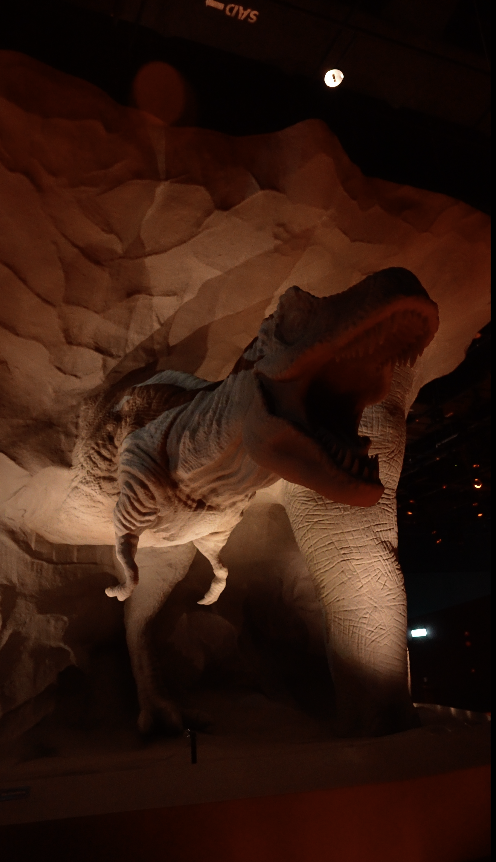 Photo by Aiman
Most of the creatures featured in Realm of the Giants — from the T. rex to the giant ground sloth — are long extinct.
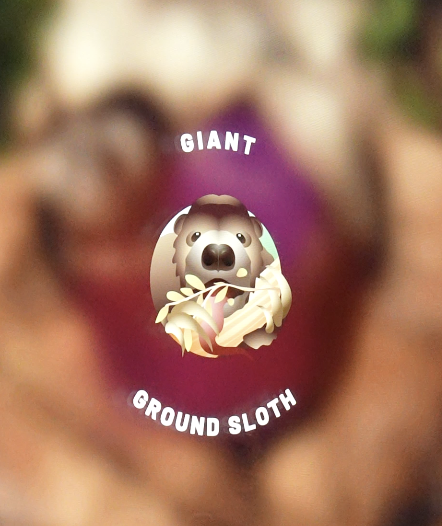
When I tapped my RFID wristband to pull up more information on the extinct giant ground sloth, I was pleasantly surprised to find that the badge I unlocked was an adorable cartoon version of it.
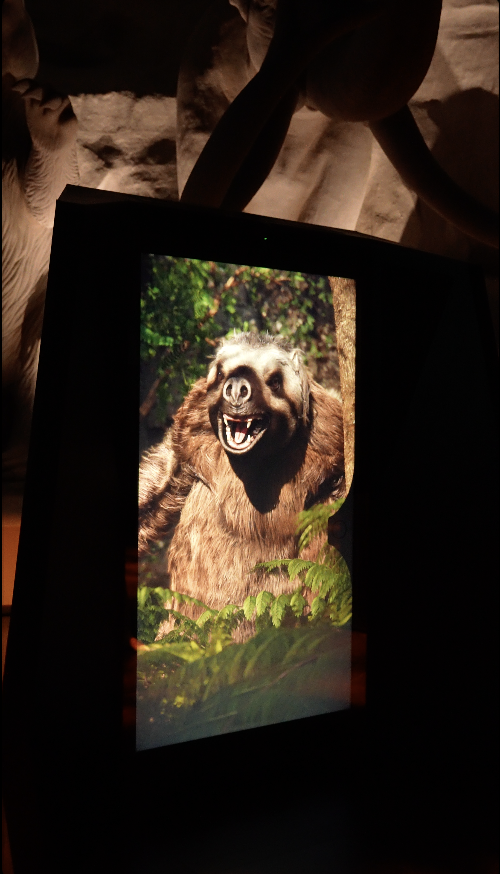 Photo by Aiman
 Pokedex vibes. Photo by Aiman
Naturally, the part of my brain that grew up on Pokémon immediately kicked in. “Must. Collect. Everythingggg.”
Each period, from the Palezoic to Prehistoric era and beyond, tells a clear narrative of what has caused nature's largest creatures to evolve with time or turn extinct.
It is a nudge to visitors that while some species disappeared through natural shifts and others through human pressures, many of today’s large animals still face threats from habitat loss, climate change and exploitation.
One comes away with a sense that sheer size has never guaranteed survival, but even the most imposing creatures can continue to thrive when the delicate systems around them are cared for.
That sense of scale builds towards The Giants Show, an eight-minute immersive sequence that brings you on a journey through 500 million years of Earth’s history in eight minutes, where visitors step onto a platform surrounded by a full 360-degree environment enhanced by motion, mist and other sensory effects.
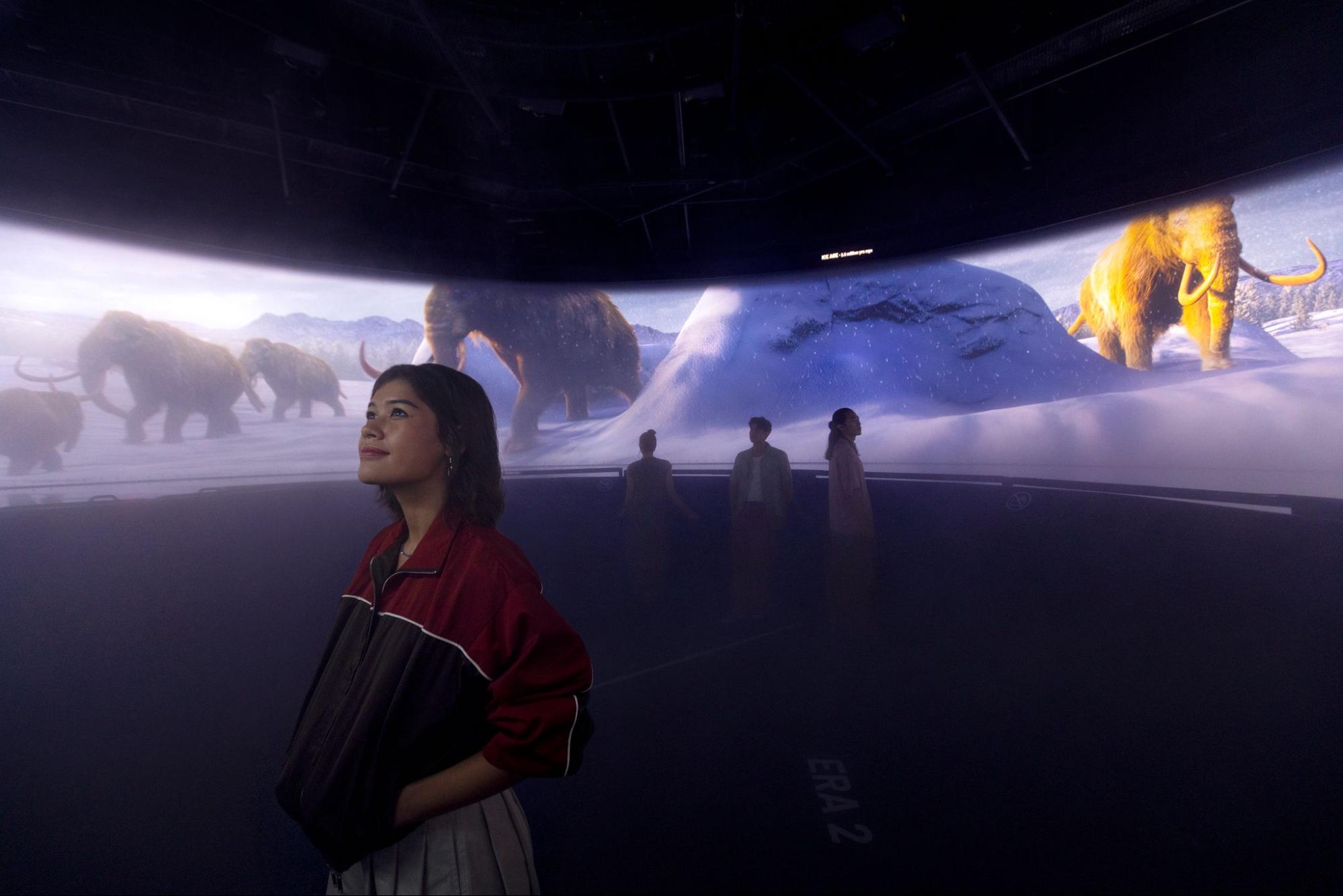 Image courtesy of Mandai Wildlife Group
Things get small
After giants, Micro Worlds makes the point that none of them could have existed without the existence of tiny organisms that make up the building blocks of our world.
Micro Worlds shrinks you down into a space where the tiniest organisms such as tardigrades, plankton and ants become the focus through illuminated globes and interactive domes which magnify life forms that normally escape notice.
It is a useful reminder that even the largest creatures — extinct or living — ultimately depend on systems built by things too small to easily see: microorganisms that recycle nutrients, fungi that break down organic matter, microalgae that help produce oxygen, and insects that keep ecosystems functioning.
When you look closely enough, a whole hidden world begins to open up, one that is stranger, busier and far more essential than its size suggests.
I was utterly transfixed, staring at creatures such as ants and bees for far longer than I would normally choose to.
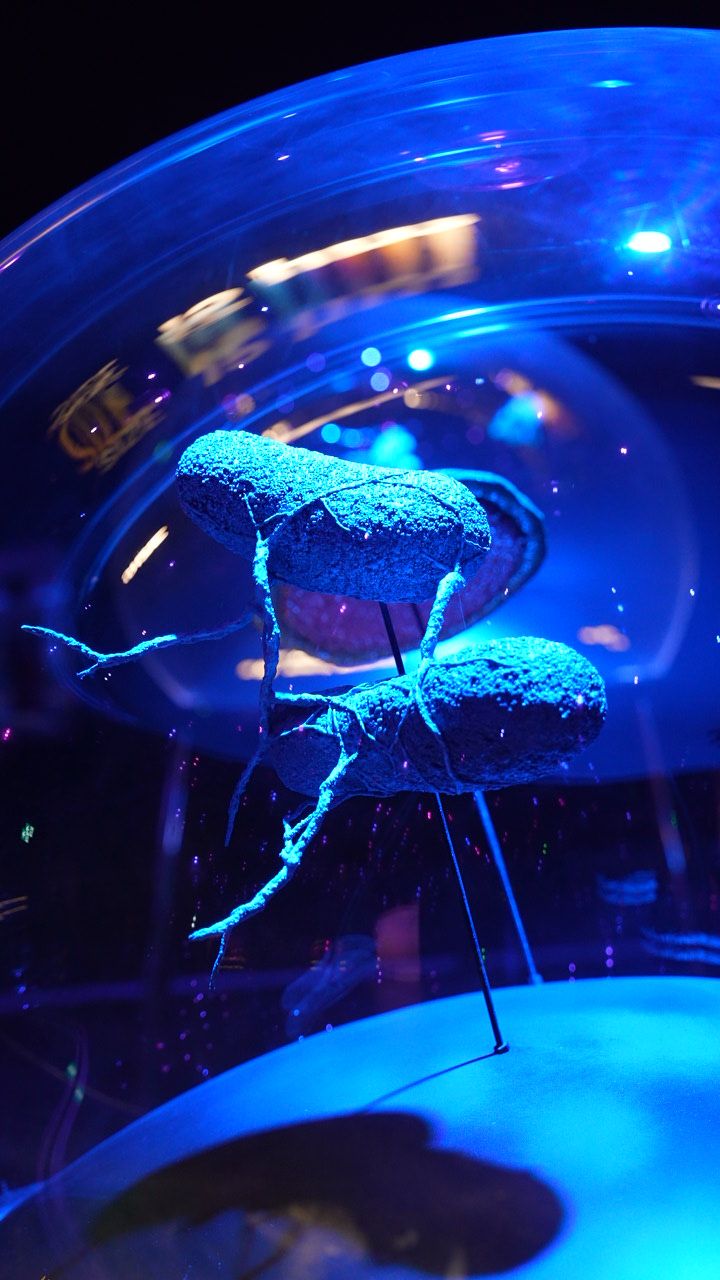 Photo by Aiman
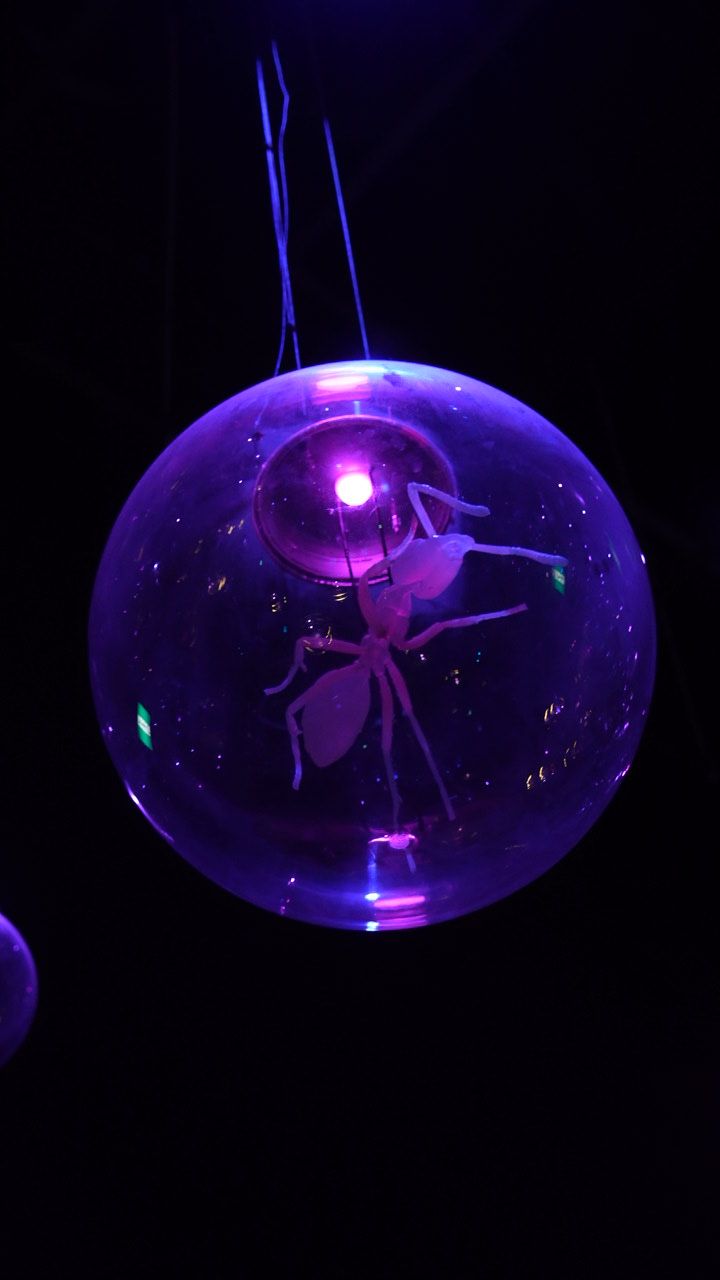 Photo by Aiman
Even if the sight of bees swarming together can be a little difficult to look at, they’re hard to dismiss once you remember that they are pollinators that help sustain much of the food we eat, while ants and other small creatures quietly keep soil, waste and plant systems moving beneath everything larger above them.
At another dome, I somehow found myself answering a quiz on mould, which was strangely satisfying.
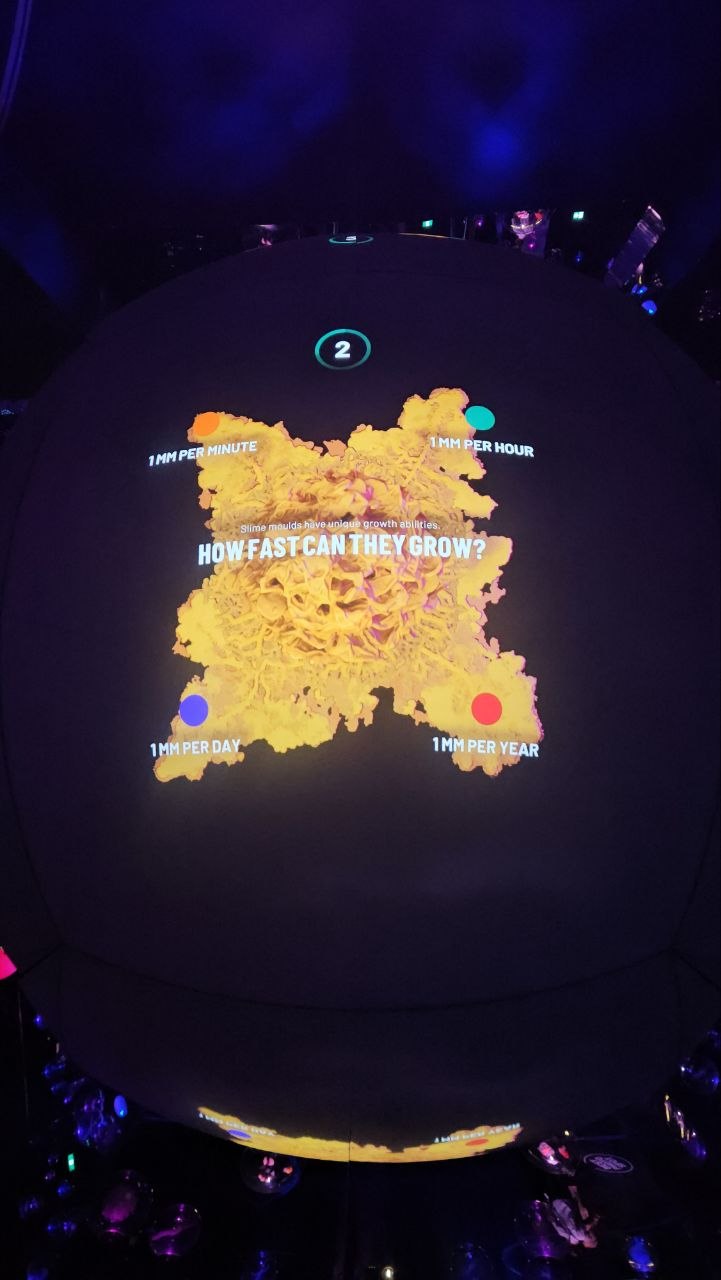 Photo by Lia
I was particularly proud of the slime mould badge I managed to collect:
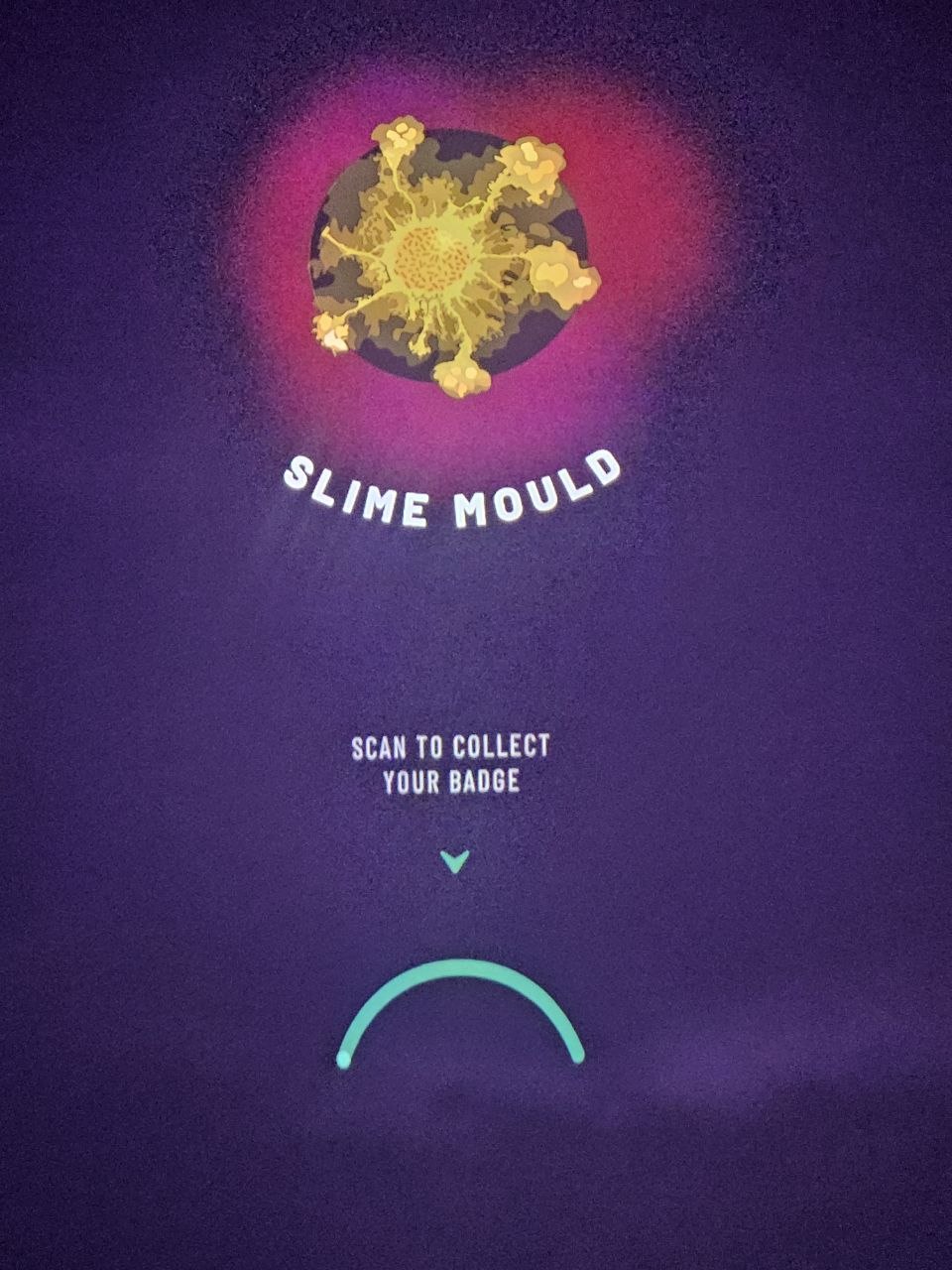 Photo by Lia
Stepping into harsh habitats
After tiny organisms quietly holding ecosystems together, Bitdeer AI Extreme Frontiers shifts the focus to places where life survives under conditions most of us would struggle to tolerate for long.
It is easy to forget, living in relative comfort, that many organisms exist in corners of the Earth shaped by heat, cold, altitude and isolation, developing remarkable ways to endure environments that can seem almost uninhabitable to humans.
One room pushes warm desert air across mirrored dunes, while another drops the temperature to mimic Arctic conditions, complete with wind, mist and Northern Lights visuals.
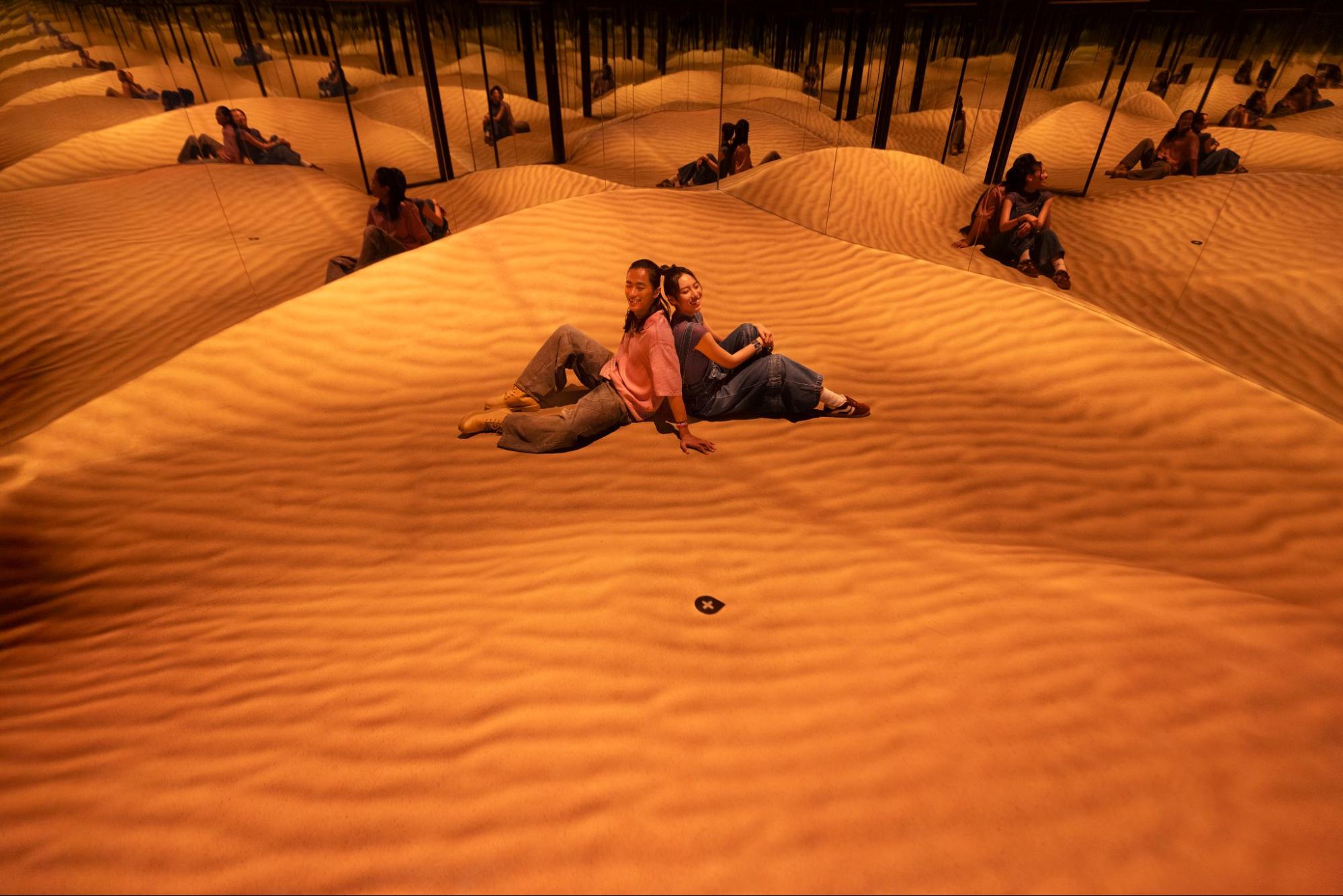 Image courtesy of Mandai Wildlife Group
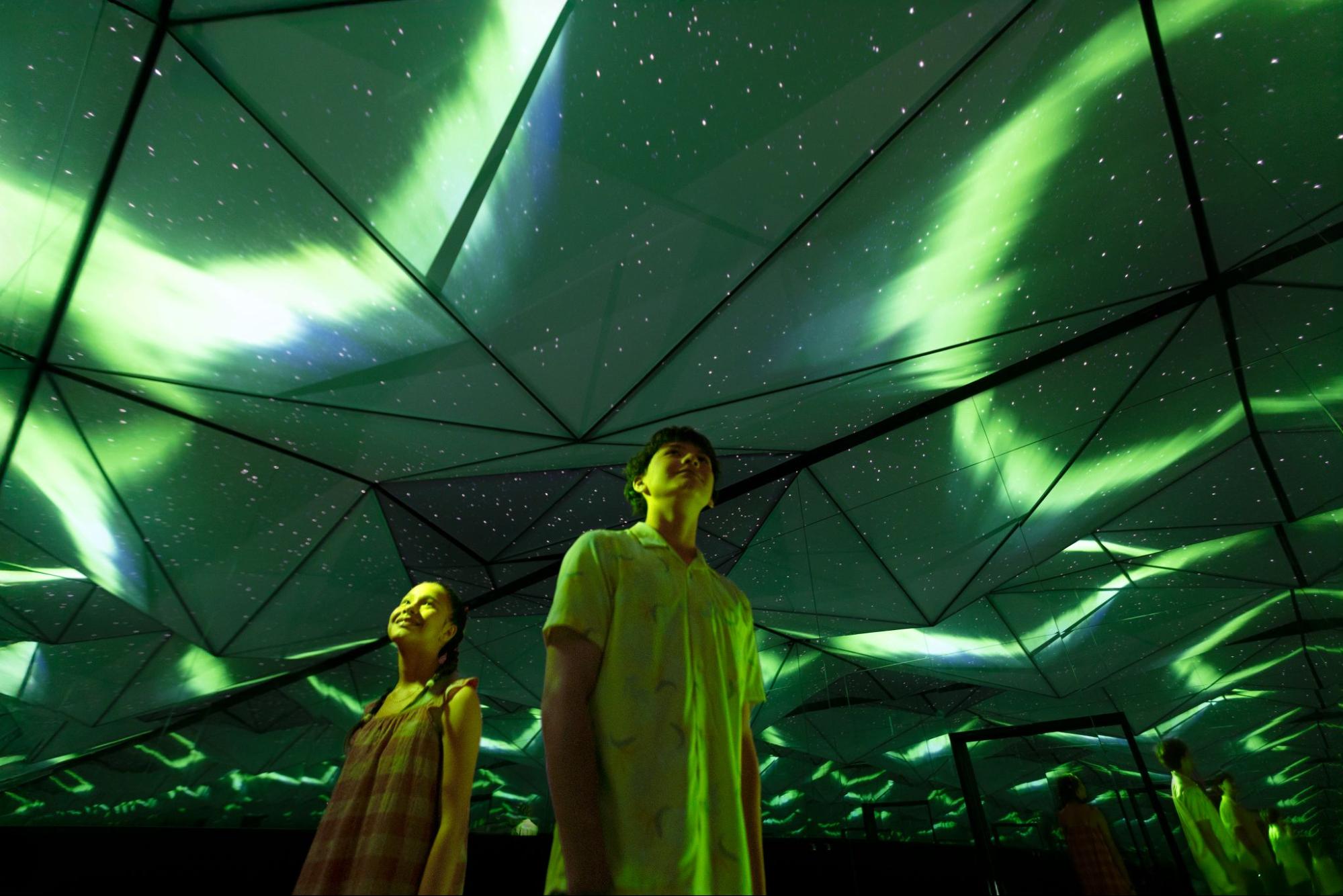 Image courtesy of Mandai Wildlife Group
A separate high-altitude chamber combines mountain projections with cold air, mist and gusts of wind, while the city section narrows into a dim tunnel-like corridor meant to evoke the hidden spaces where wildlife survives alongside human infrastructure.
 Image courtesy of Mandai Wildlife Group
Taken together, the rooms make the point that life does not simply exist where conditions are comfortable, it adapts, often in ways beyond what we immediately notice, whether in frozen landscapes, dry deserts or the edges of human-built spaces.
While most of us are used to stable, modern surroundings, we do have to remember that humans are remarkably adaptable too. After all, our species has managed to spread across every continent, from rainforests and deserts to tundra and remote islands.
Bitdeer AI Extreme Frontiers offered a small taste of that resilience, and I managed to move through desert heat, Arctic cold, high-altitude winds and even a city tunnel all in a single afternoon.
By the end of it, I found myself newly appreciative of Singapore’s year-round tropical weather.
Hidden species, hidden points
In Infinite Wonderland, visitors move through darkened mirrored spaces designed around rainforest and marine ecosystems, where hanging vines, reflective surfaces and concealed projections create an illusion of depth.
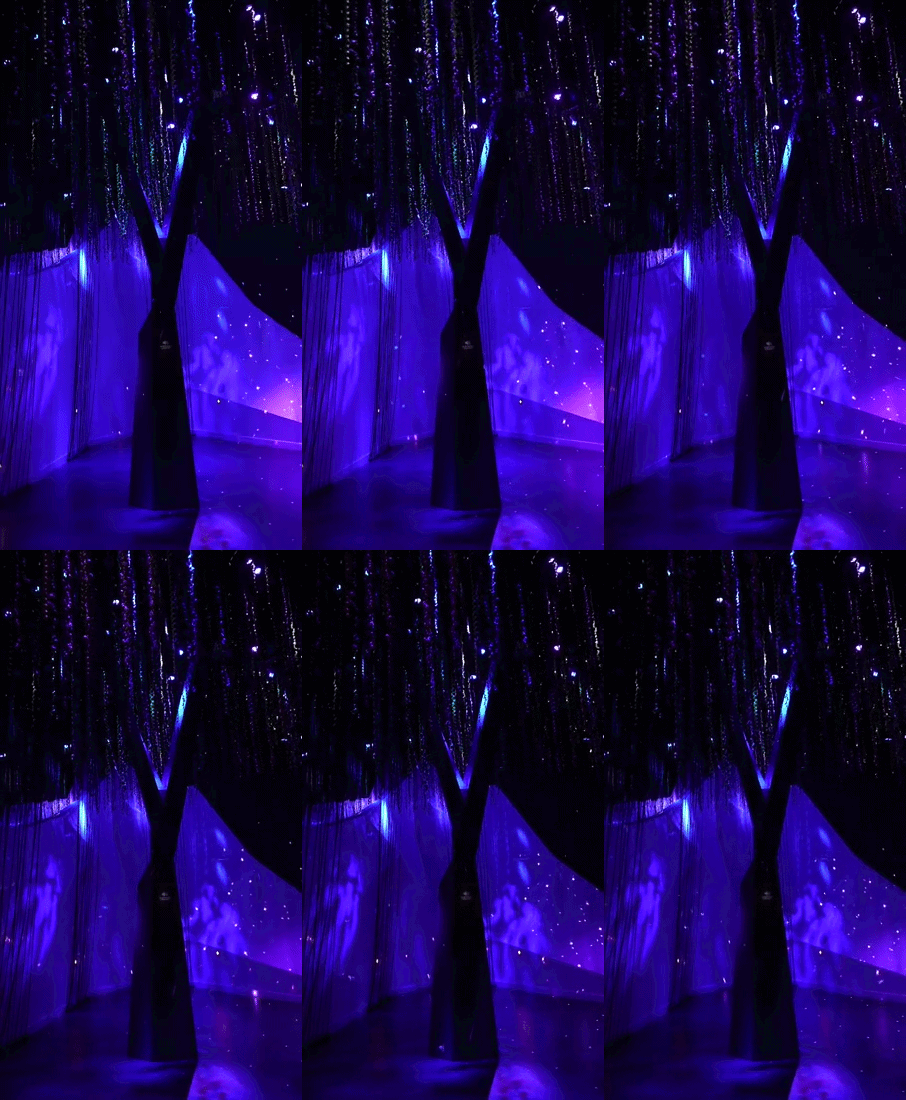 Gif by Aiman
Here, some animals only become visible when you touch the right wall or surface, a fitting reminder that much of what sustains these ecosystems often goes unnoticed until you stop long enough to look for it.
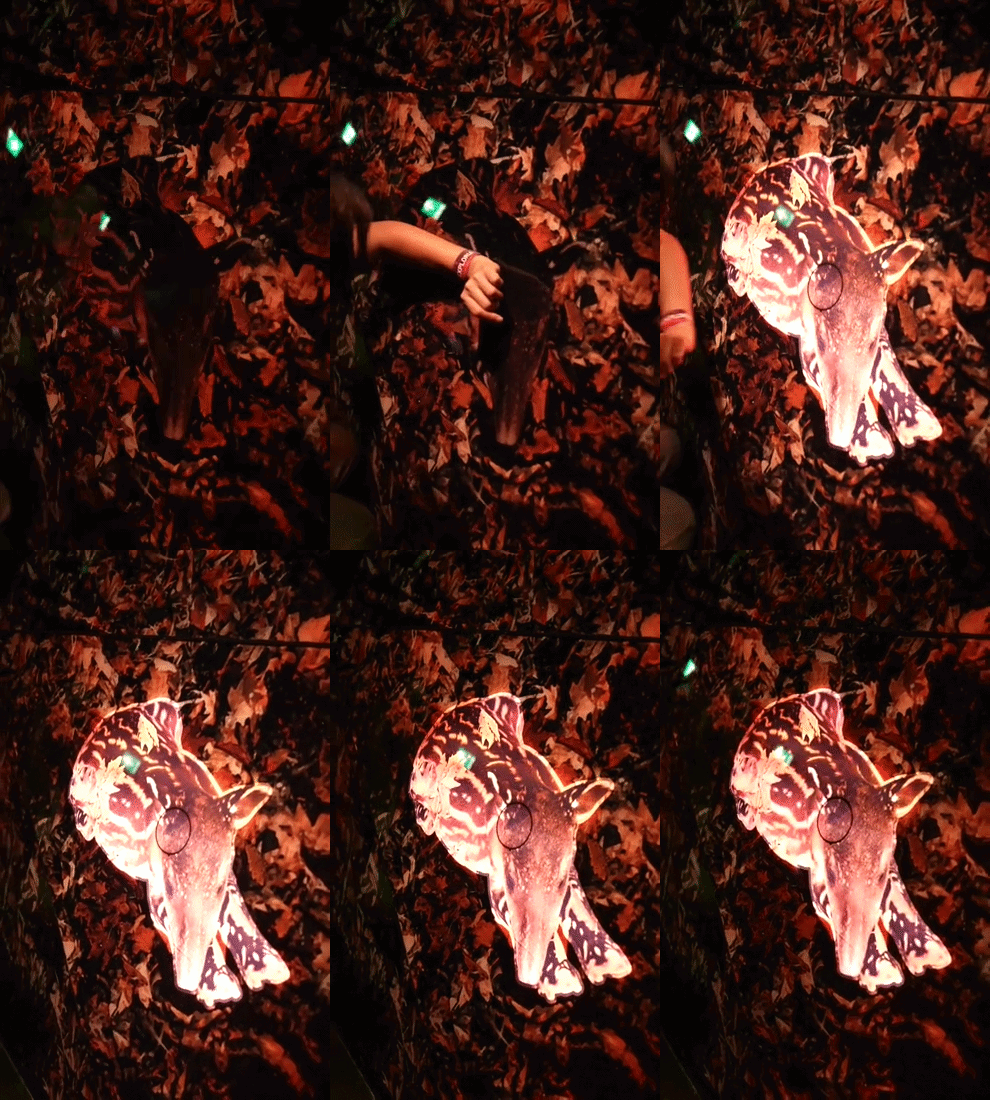 Gif by Aiman
After spotting animals camouflaged in the rainforest, you can tap your RFID wristband and head to the central screen to register the discovery and collect the corresponding badge.
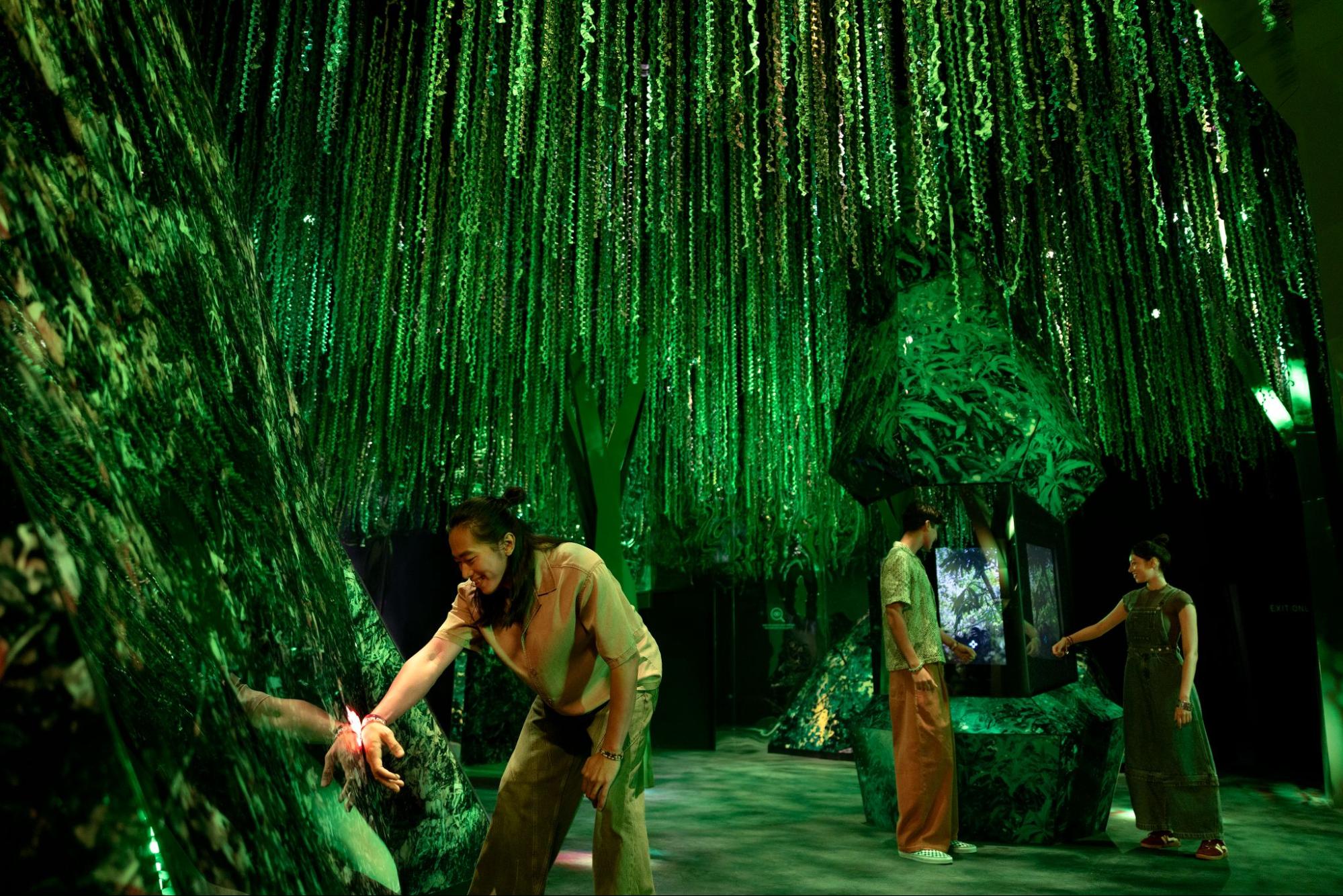 Image courtesy of Mandai Wildlife Group
At Songs of the Forest, different animal sounds can be heard at various RFID touchpoints, and you will also have to head to the central screen to figure out which animal made the sound before collecting its badge.
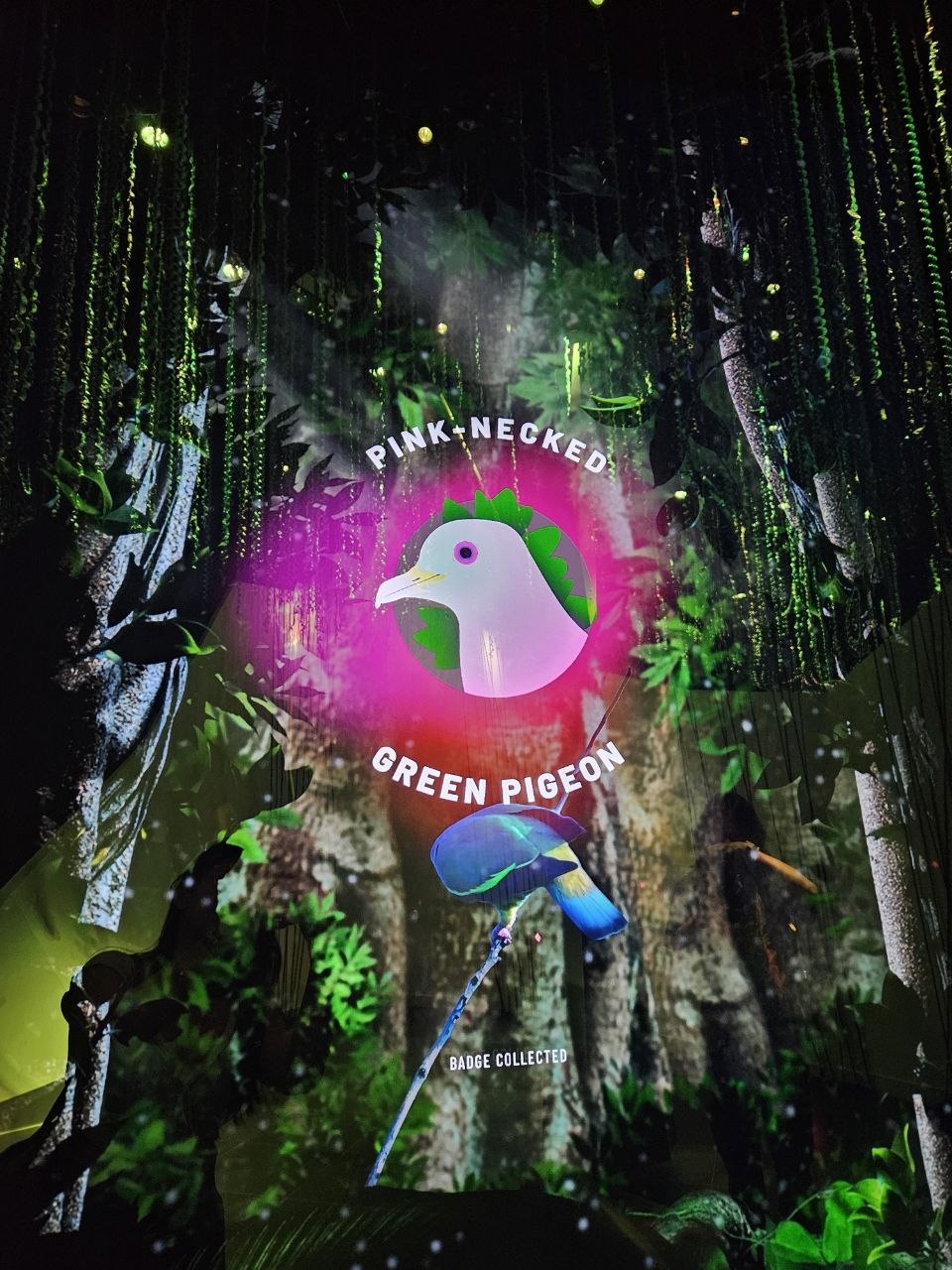 Photo by Lia
The zone gradually shifts into a vivid underwater world, where some panels invite you to interact further to reveal additional marine species.
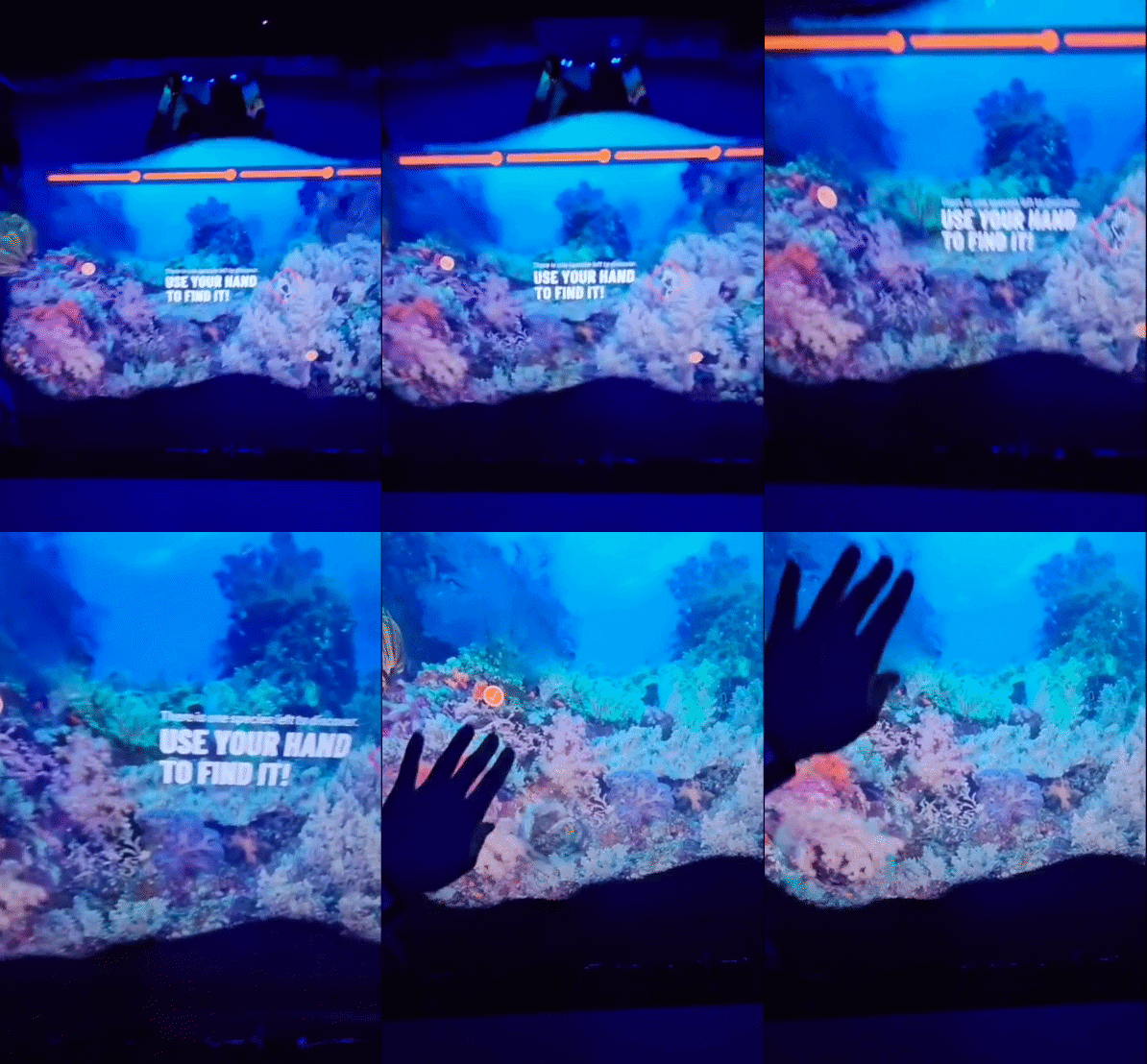
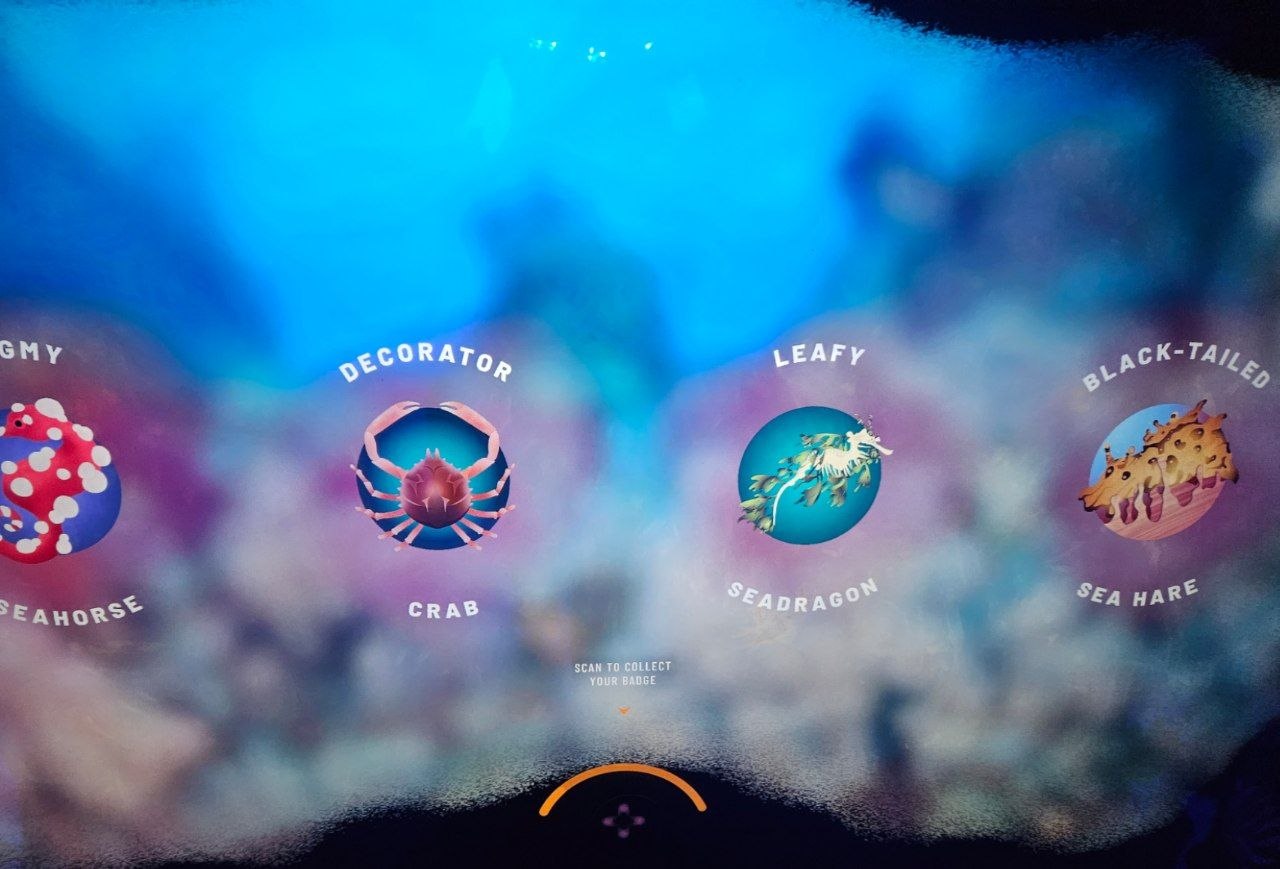 Gif and image by Lia
Taken together, the rainforest and marine spaces quietly underline how much life depends on systems we do not always see: forests that support most of our terrestrial biodiversity, and oceans that provide us with food, renewable energy and oxygen while sustaining countless forms of life far beyond our immediate view.
Next up, World of Darkness immerses you in caves, tunnels and deep-sea spaces.
Visitors begin with a UV torch and move through winding tunnels where hidden glowing animal symbols emerge only under ultraviolet light, turning the first part of the experience into a quiet treasure hunt.
Having to use the torchlight to navigate this zone, it struck me that while humans rely heavily on sight, many creatures survive in places where light is scarce or absent altogether, instead evolving sharper hearing, touch, smell or other sensory adaptations to navigate conditions we would struggle in.
Floor markers guide visitors deeper into the maze before the route opens into ocean-inspired spaces focused on underwater species that survive in near-total darkness.
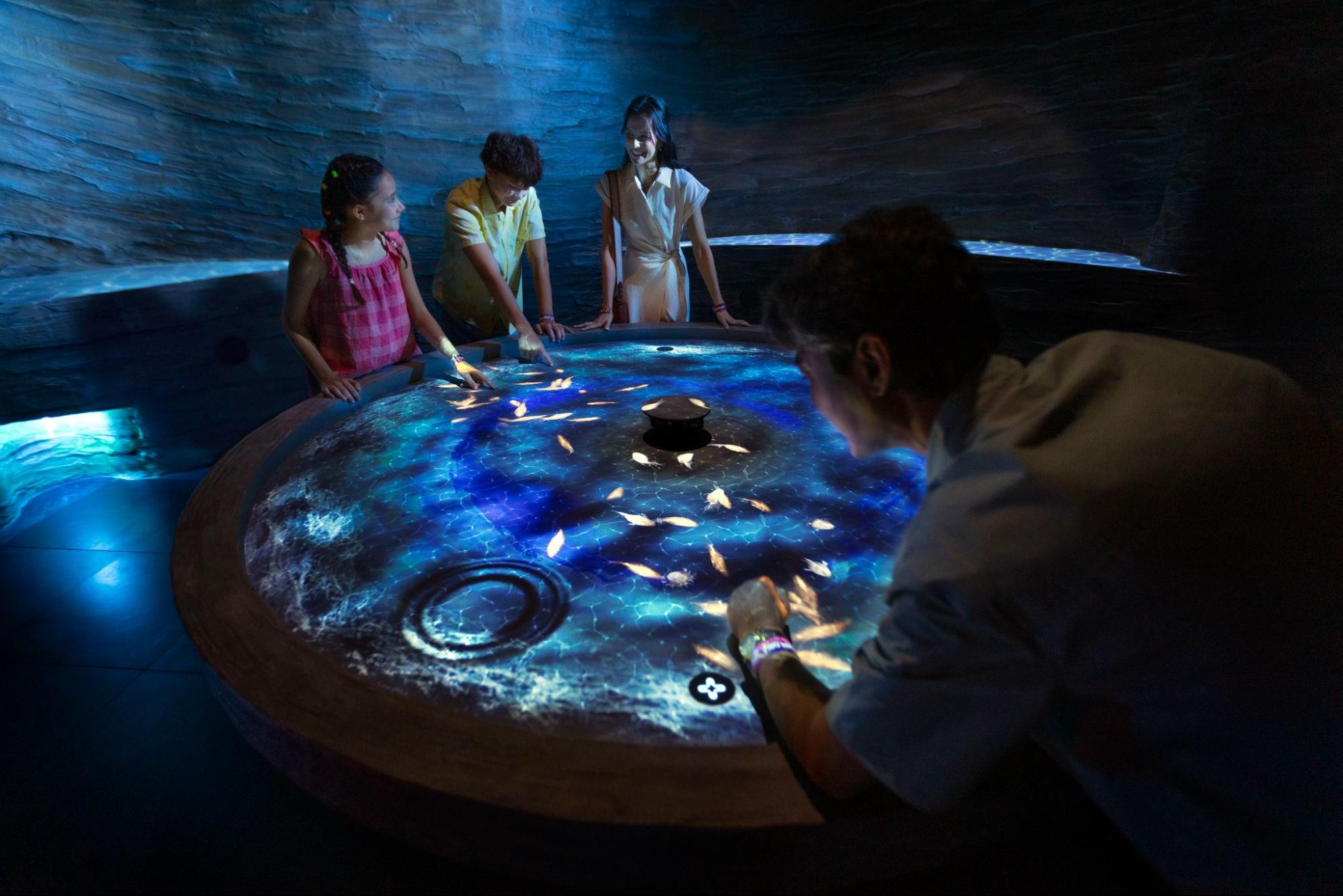 Image courtesy of Mandai Wildlife Group
An ocean trench-inspired corridor features a soft, immersive floor that reacts in response to your movements, while RFID touchpoints along the walls unlock additional information on deep-sea species, from fanfin anglerfish to other bioluminescent marine life.
At any given moment, half the world is in darkness, yet life continues to thrive there, in caves, deep oceans and nocturnal landscapes where many species overcome the lack of light by sensing the world in ways very different from us.
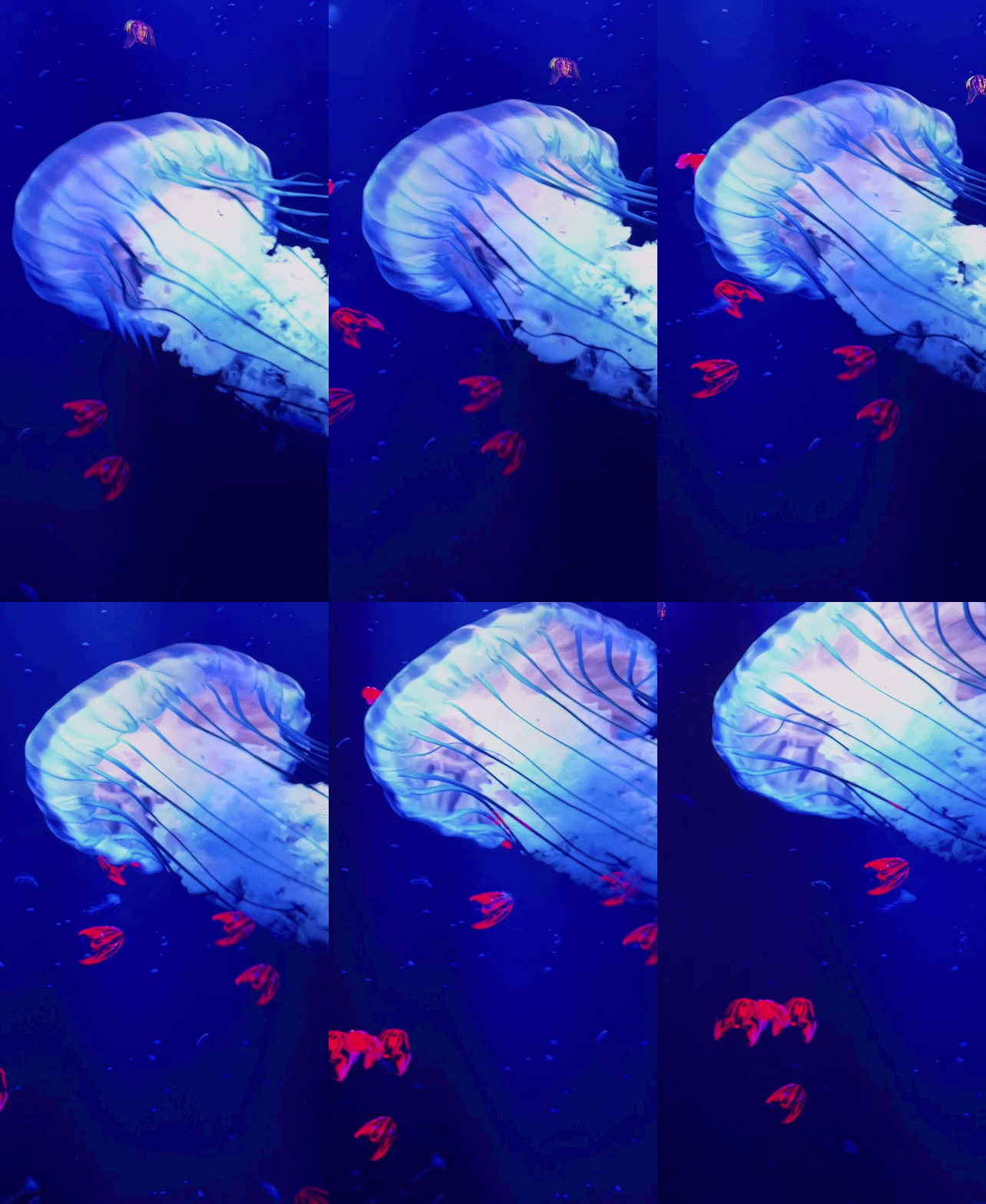
The zone slows even further towards the end, concluding with a large projection of drifting jellyfish that visitors can sit and watch before moving on.
 Gif by Aiman
For someone used to the usual pace of city life in Singapore, it felt unexpectedly calming, a rare stretch of time spent slowing down and thinking about creatures in the deep and dark, far away from all the noise and chaos.
Our actions matter
With dreams of cavorting with whale sharks — and perhaps a little more awareness of the importance of staying connected to the natural world — running through my head, I excitedly tapped in at the end to check where I stood on the leaderboard.
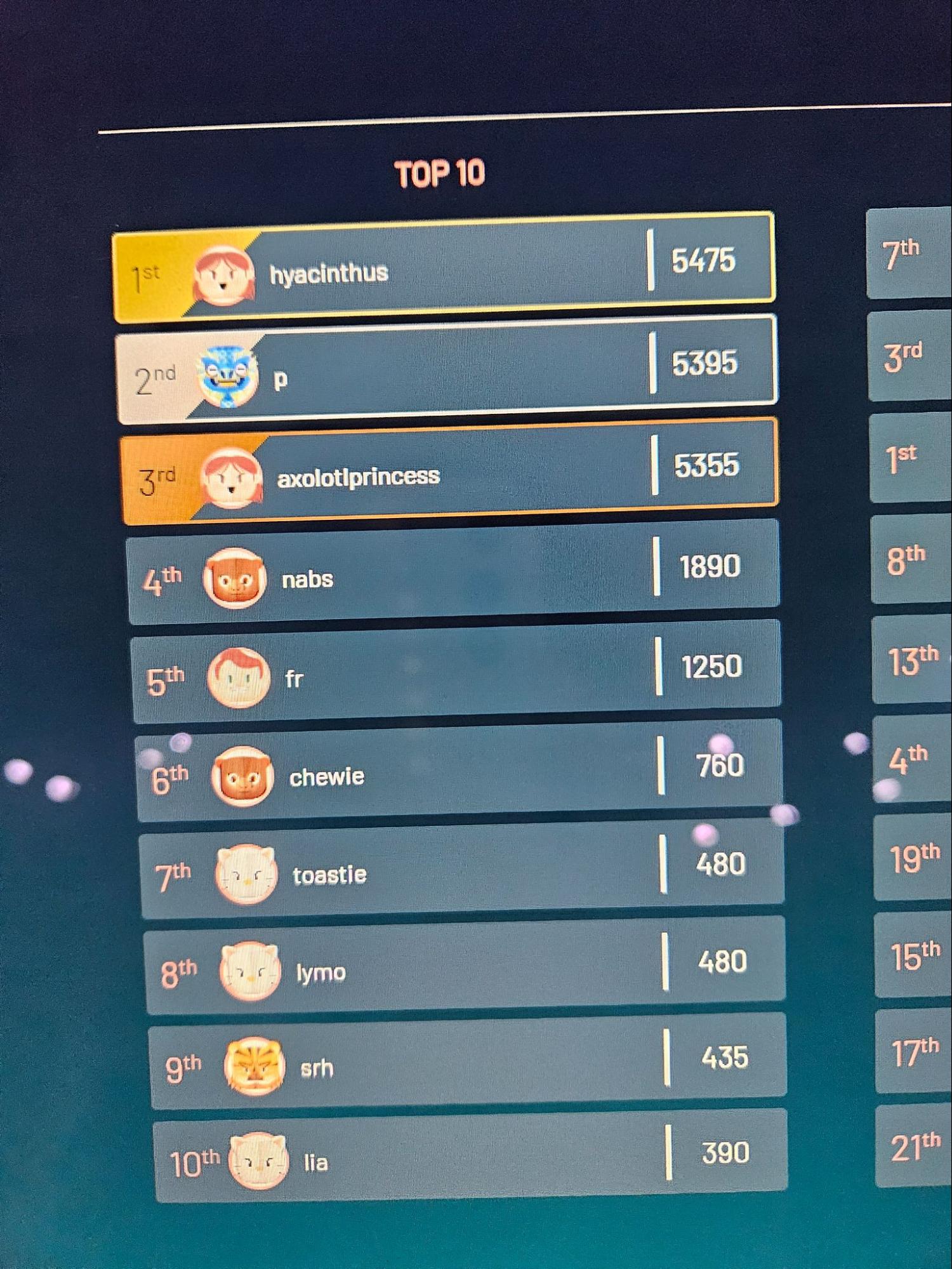 Photo by Lia
Alas.
Hyacinthus, p and axolotlprincess were all very, very far ahead of me.
Curses!
Within Exploria, your profile stays active for a full year, so you can return to explore all five worlds as often as you like in that time.
Even if your username doesn't top the leaderboard, you’ll leave with a head swimming with new facts about the natural world that stay with you.
Accumulate enough points during your visit and you can use them to redeem exclusive pins too!
For those tempted to try climbing the leaderboard themselves, there is currently a 50 per cent flash sale on Exploria tickets till May 29 using the promo code EXPMWR50.
This branded article by Mandai Wildlife Group made this writer wish she won a trip to Perth to swim with the whale sharks.