Features


'I felt like ending my own life': S'porean youth, 20, falls into K-pod addiction — & later overcomes it
Towards the end of the programme, he realised he had unknowingly quit K-pods on his own accord.
April 01, 2026, 03:05 PM
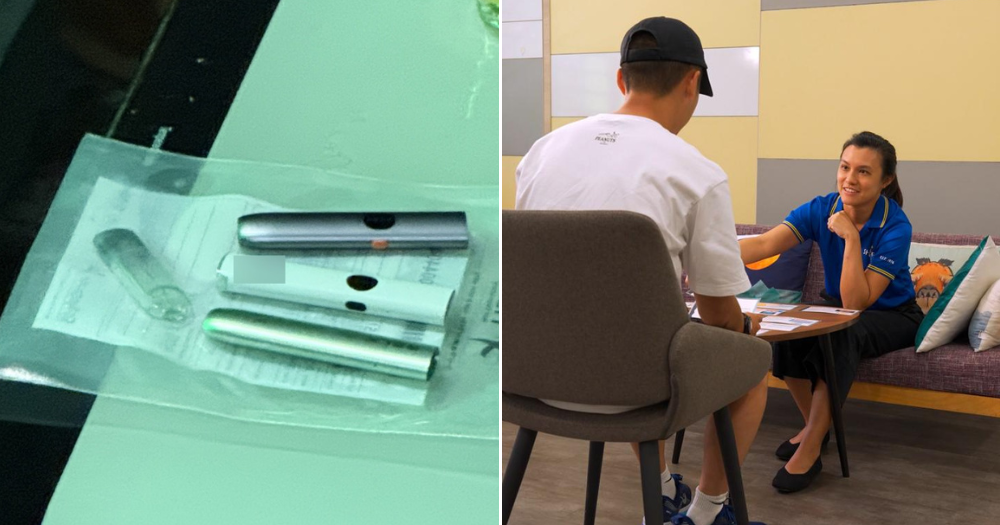


Over a weekend in March, radiant under the stadium floodlights, Gavin (not his real name) tossed his jockey cap into the air alongside rows of other recruits.
It was his Passing Out Parade (POP), marking the end of the first phase of his National Service (NS) journey.
But just 10 months ago, before he entered rehab, things didn't look quite as bright.
For the first six months in 2025, Gavin had struggled with K-pod abuse.
The 20-year-old felt like he was "clinging onto the edge of a cliff" as a result of his addiction.
He'd lost friends, strained his relationship with his family, and was staring at a case with the authorities.
First puffs
Gavin picked up vaping out of peer pressure.
He shared: "When my friends told me about vaping, I saw it more as a thing to get together with them, to mix with them."
K-pods, now a Class C controlled drug under Singapore laws, were introduced to him under similar circumstances.
"It was actually from my ex," Gavin shared, adding that he was under the impression that it was "just another new type of vape".
However, the "grave dangers" of K-pods would soon be impressed upon him.
Each time he puffed, the fleeting high would be chased by a crash involving muscle spasms, loss of appetite, and fatigue.
At the height of it, Gavin lost 8kg.
He also spent thousands of dollars on his new addiction, or about "80 to 90 per cent" of his savings.
Dwindled savings, damaged relationships
Worse than the physical effects and monetary loss was the damage to relationships.
"The worst negative effects... wasn't the fact that my health deteriorated.
It was more of the fact that I started losing friends because of it, and my relationship with my family also fell out because I was already hooked on [K-pods]."
With his addiction, Gavin ended up neglecting his friends.
His mood swings also led to frequent arguments at home and a loss of interest in the things he used to love doing.
When Gavin's family found out about his addiction, his mother was the "most disappointed" and angry.
Fights between him and his parents would get so bad that Gavin stayed away from home on some occasions.
His then-girlfriend, who'd introduced him to K-pods, became his main source of emotional support.
"Whatever she said, I actually listened to her," he recalled.
This included cutting off contact with his friends and his family.
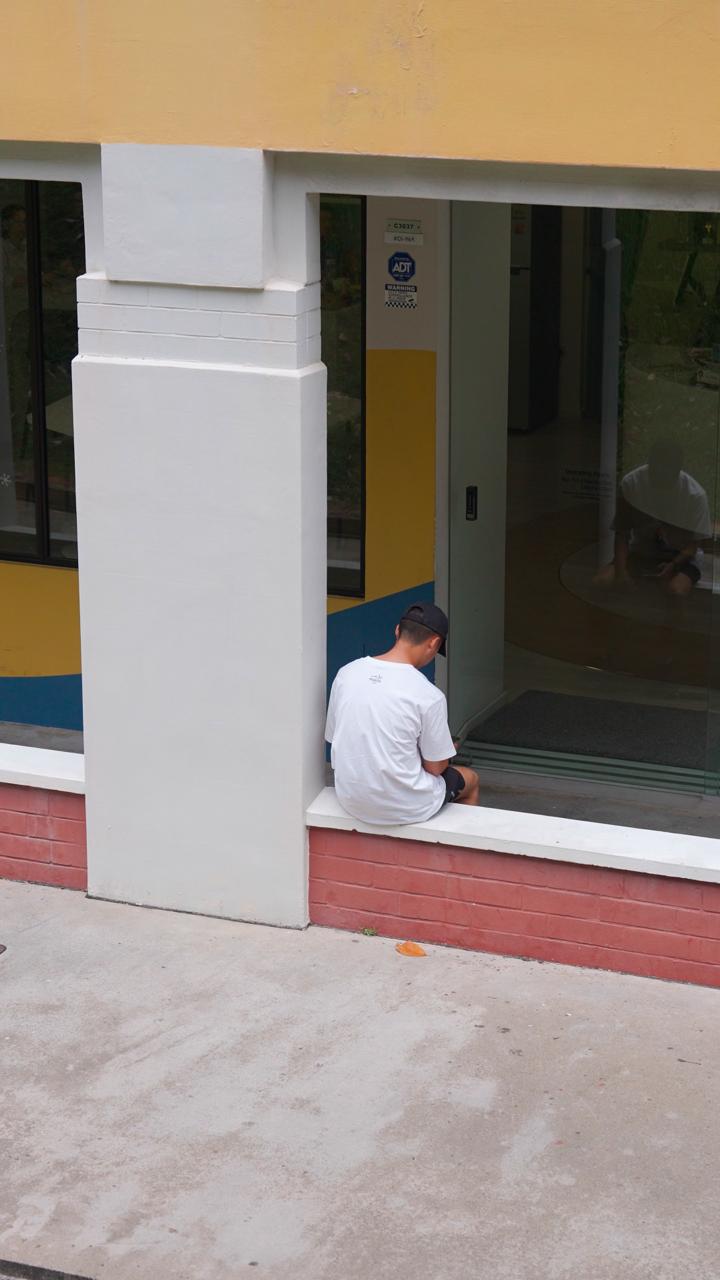 Photo via Mothership.
Getting out
Gavin revealed he was actually caught for using K-pods twice.
After the first time, the doctor informed him of the dangers and Gavin attempted to quit.
He tossed out the vape devices and pods, but relapsed under the influence of his then-girlfriend.
"I felt like there's no way out for me at the time, so I ended up falling in deeper," he said.
After the second time, Gavin lost his school-sponsored work placement and was told he'd have to pay thousands of dollars in fines if he didn't go for rehabilitation.
It finally dawned on him that the consequences were real and change was needed.
But getting out was easier said than done.
The social support system he once had was frayed — he had fallen out with friends, and his relationship with his family had become frosty.
His then-girlfriend, whom he relied on for emotional support, also kept him trapped in a vicious cycle.
So he had to cut her off.
"It was really all on my own from then on, and I had to figure out things by myself. I had to figure out how to make sure this doesn't happen [again], and how do I close the case with the authorities," Gavin confessed.
"It was a really difficult time for me... I really felt like ending it, like ending my own life."
It only took six months from when he first tried K-pods for him to arrive at this lowest of lows.
Picking up the pieces
Gavin was later referred by the Health Sciences Authority (HSA) to Shine Children and Youth Services, which runs social programmes to support children and youths, under the Youth Enhanced Supervision (YES) scheme.
The YES scheme is a three to six-month programme to help first-time drug offenders below 21 years old.
Gavin was the first youth to be referred to the scheme for K-pod abuse.
Zhuang Xinyan, 40, an assistant director at Shine and Gavin's caseworker at YES, explained that the programme has two tracks — a lighter and a more intensive version.
The former, which Gavin attended, is three months long, targeted at first-time offenders, and based on what Zhuang calls a "psycho-education programme".
During the sessions, the case worker, together with the youth, works through why the youth came to abuse drugs, what their goals are, and how they can remove drugs from their life.
They also come up with a relapse prevention plan.
The intensive version of the programme is similar except that it runs for six months, giving the case worker and youth more time to work on a "sustainable plan".
 Photo via Mothership.
Bringing back the shine
The hardest part of recovery, Gavin shared, was trying to "kick the feeling of using [K-pods]".
"Even though I stopped using it already, the thought of the taste, the feel... basically almost every sensory is overstimulated for me when going through the withdrawal symptoms," he described.
"I will need snacks and a lot of other different methods to cope, just to get rid and kick off that feeling."
Through the 10 weeks in the programme, Zhuang and Gavin worked on exercises like a decision matrix and went through reflection cards.
Gradually, he managed to pick up the pieces of his life, eventually finding himself a job he enjoyed.
"I think that's when I felt I saw him come alive. Because... whenever we talked about the past... there's like a shadow on his face," Zhuang shared.
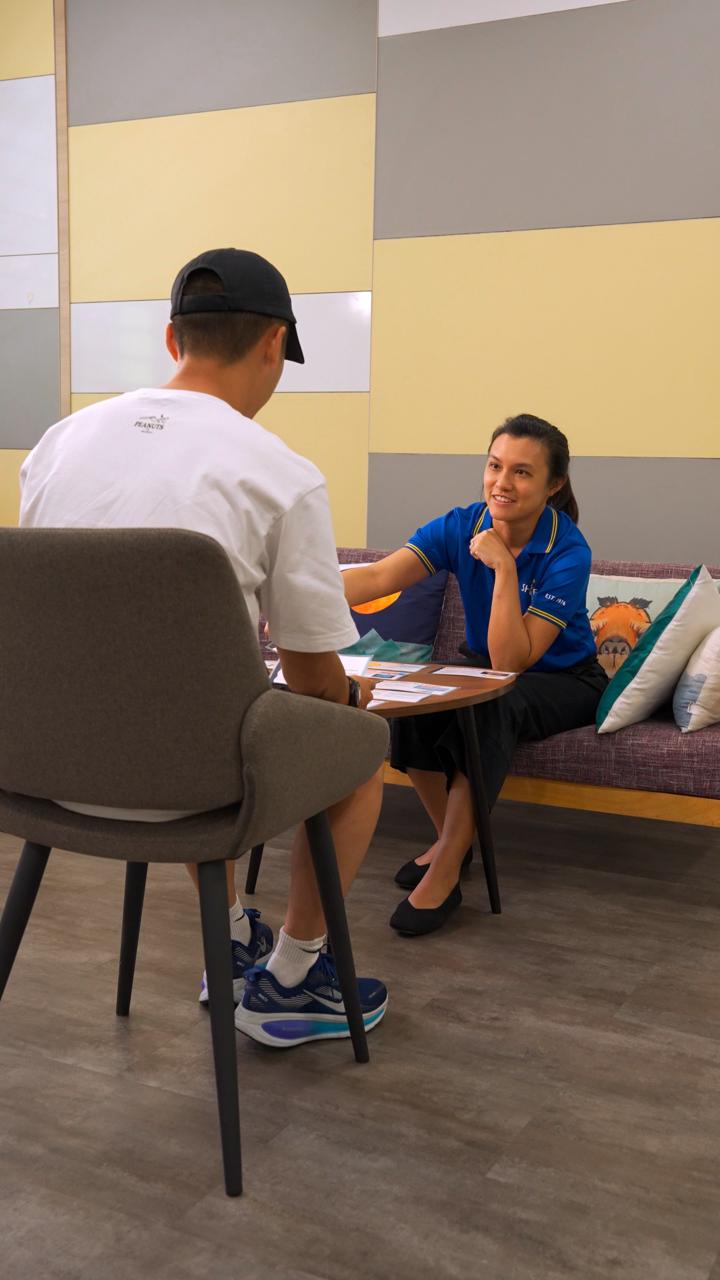 Photo via Mothership.
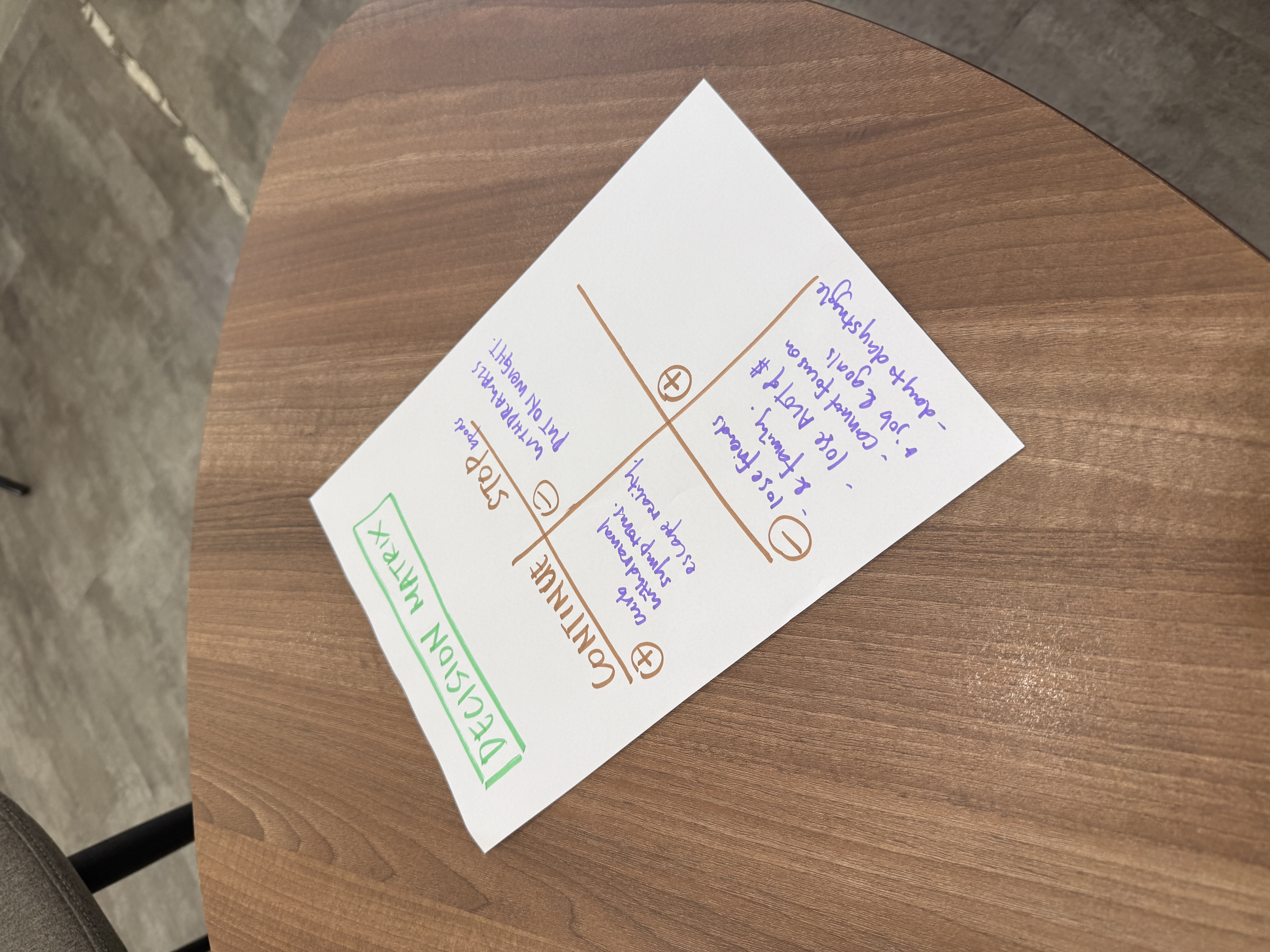 Photo via Mothership.
In the final few sessions, Gavin realised he had already somewhat quit K-pods "without even realising it".
One of the exercises that Gavin went through with Zhuang was thinking about where he wants to be 10 years from now.
He joked that he would rather be a couch potato and live carefree, but later confessed that he looks towards having a stable job and being able to look after his family — his two siblings, mother and father.
He also hopes to fulfil his dream of exploring the world.
The cliff's edge
Today, Gavin has found his way off the cliff's edge and is further from it as time goes by and life moves on.
He shared that in NS, his commanders and friends have also shown him that one small setback is nothing.
"It's how you get back up on your feet," he said.
Between graduating from the YES scheme and completing Basic Military Training, Gavin said he is 50 per cent back on his feet, and 25 per cent nearer to his 10-year vision.
With a week's break before the next phase of NS, Gavin and his family are going on a trip together.
He also hopes to use the break to meet and catch up with friends.
For anyone who might find themselves on the same cliff's edge he was on, Gavin has this to say:
"Things like this can happen. But there are always channels of support you can go to... it isn't always the end."
@mothershipsg Gavin (not his real name), was the first youth to be referred to the Youth Enhanced Supervision (YES) scheme for K-pod abuse. He has now been clean since June 2025. #mothershiporiginals ♬ original sound - Mothership
Top image via Mothership