Branded

Why do some S’poreans venerate these old sacred sites till today?
A reflection of Singapore’s multicultural and multi-religious heritage.
If you have ventured around Fort Canning Park, you might have noticed the following structure with a tomb marked with a crescent and moon right at its heart.
Here is where one of the last kings of 14th century Singapore, Sultan Iskandar Shah, is believed to be buried.
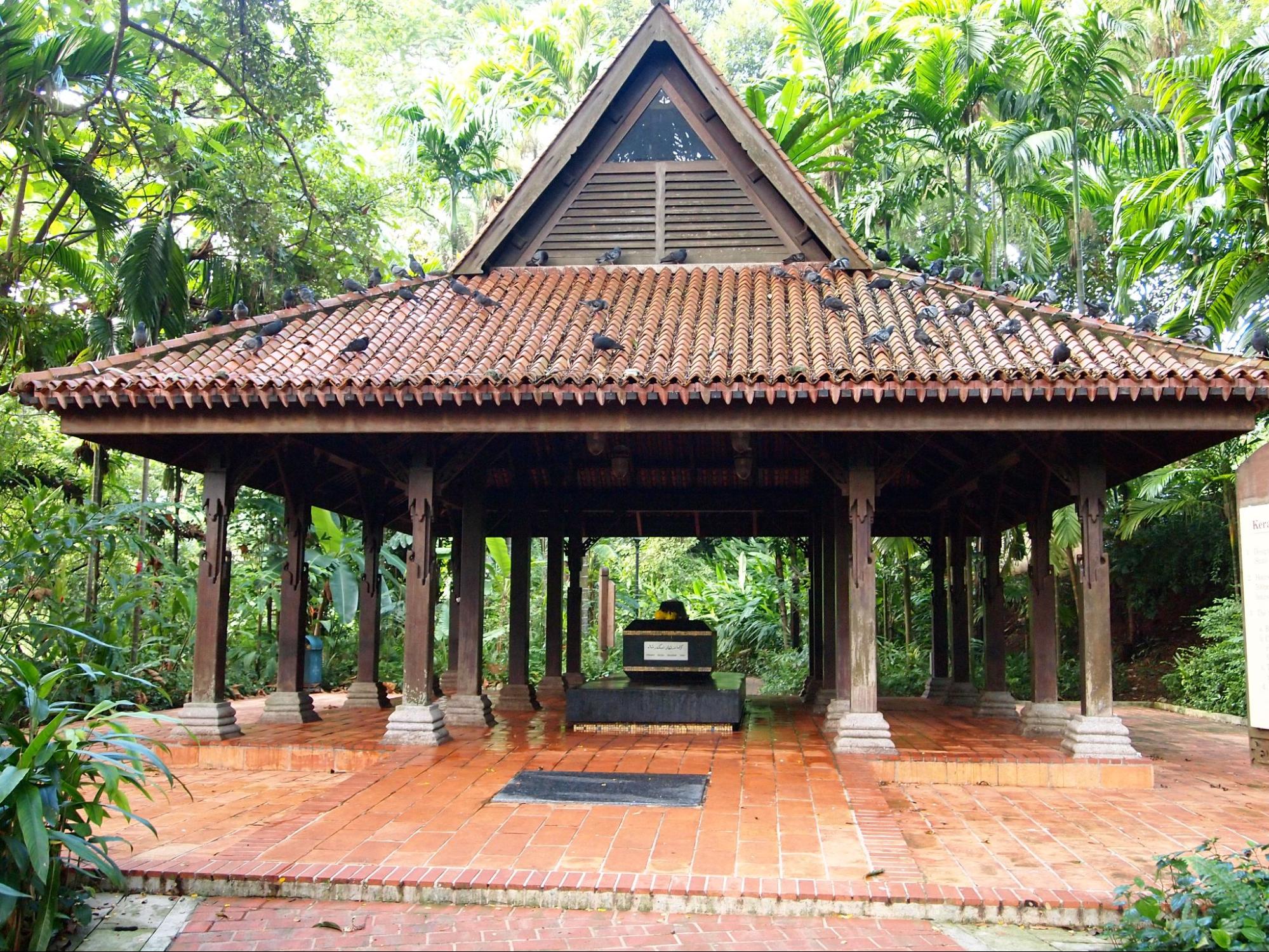 Image via Wikipedia
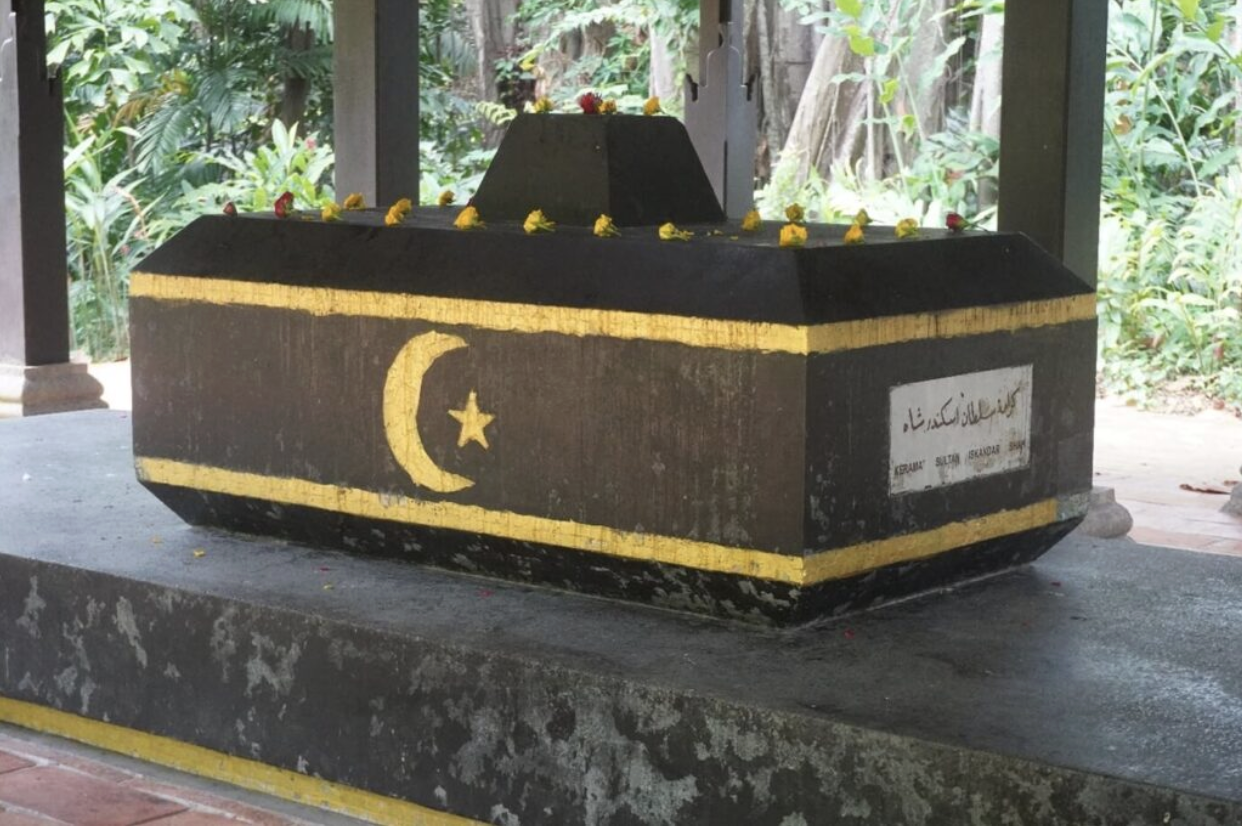 Photo by Esmond Soh via Culturepaedia.
Similarly, if you have driven on AYE along Keppel Viaduct, you would have noticed this mausoleum by the side of the bridge – Maqam Habib Noh.
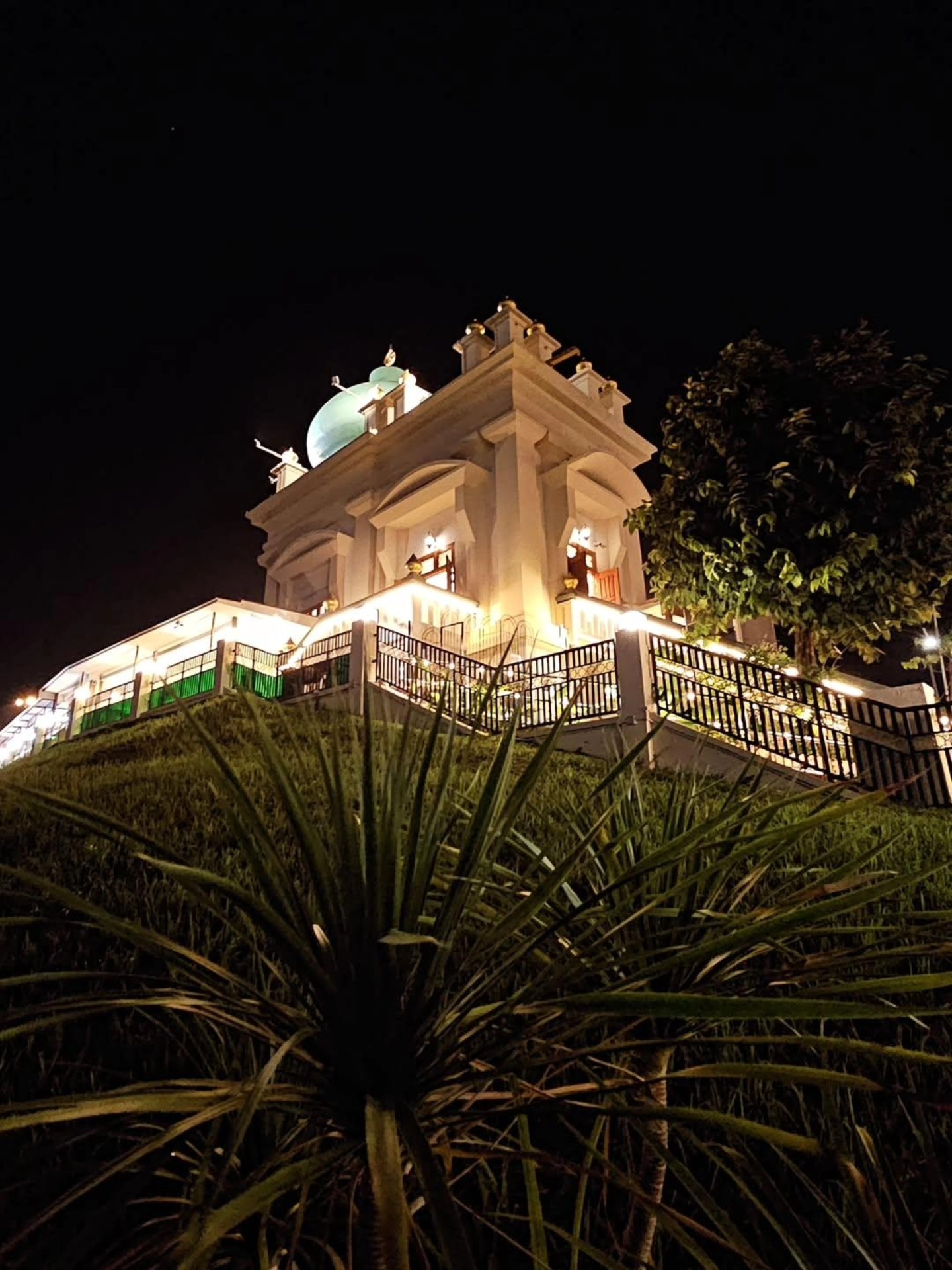 Photo via Masjid Muhammad Salleh Maqam Habib Noh/Facebook
Located beside the Haji Muhammad Salleh Mosque along Palmer Road, it is the resting place of a highly regarded saint – Habib Noh Alhabshi.
Both of these structures are examples of keramats – sacred sites and graves of holy men and women. Around Singapore, such sites dedicated to Malay-Muslim individuals have drawn Chinese devotees for over a century since the colonial era.
Why have these sites drawn Chinese devotees?
According to Culturepaedia, a major reason for the keramats’ attraction of Chinese devotees is the individual’s reputation for performing miracles.
In the case of Habib Noh, he was renowned for performing many miracles during his lifetime, which gained him a Chinese following.
It was also noted in oral accounts that he enjoyed watching Chinese opera at the nearby Hock Teck See Temple.
Today, many Chinese devotees of the temple will make a donation to the mosque and keramat next door after making their offerings at the temple.
There are also devotees who believe that a keramat is an auspicious space where one can ask for specific favours, as in the case of keramat Sultan Iskandar Shah.
Worshipping Datuk Gong
That such a belief has continued to this day can perhaps be best seen from the fact that there is still an ongoing annual pilgrimage season on Kusu Island.
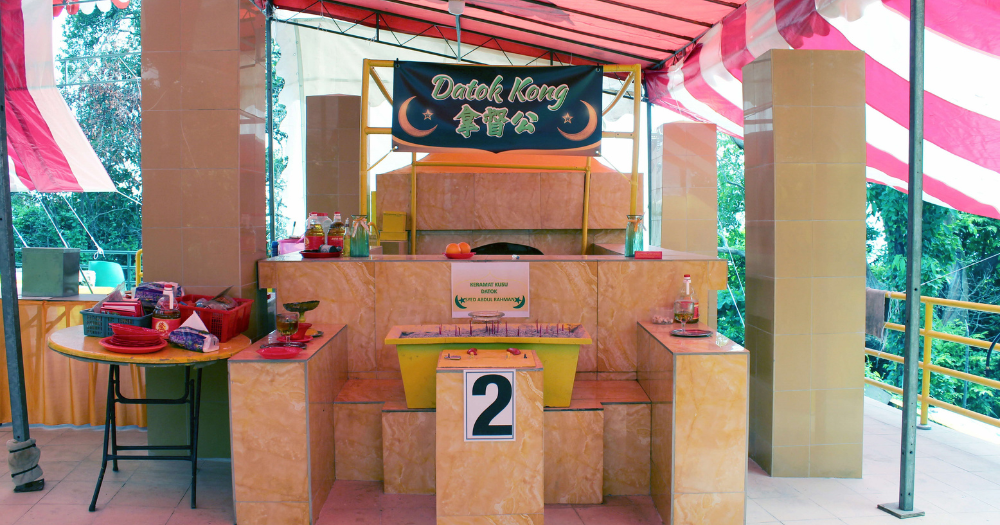
Apart from the presence of a Tua Pek Kong (a Chinese earth deity) temple, the island is also home to a keramat that is believed to be the grave of a pious Malay man called Dato Syed Abdul Rahman, as well his mother and sister from the 19th century.
Closely related to this phenomenon of venerating keramats is the worship of Datuk Gong – the Chinese way of addressing local deities or guardian spirits that are believed to have Malay-Muslim characteristics, and are often conflated or associated with Chinese deities such as Tu Di Gong (lord of the land) or Tua Pek Kong.
It also has inscriptions in Chinese, Malay and Arabic on its stone stelae, reflecting its mixed Sino-Malay influences.
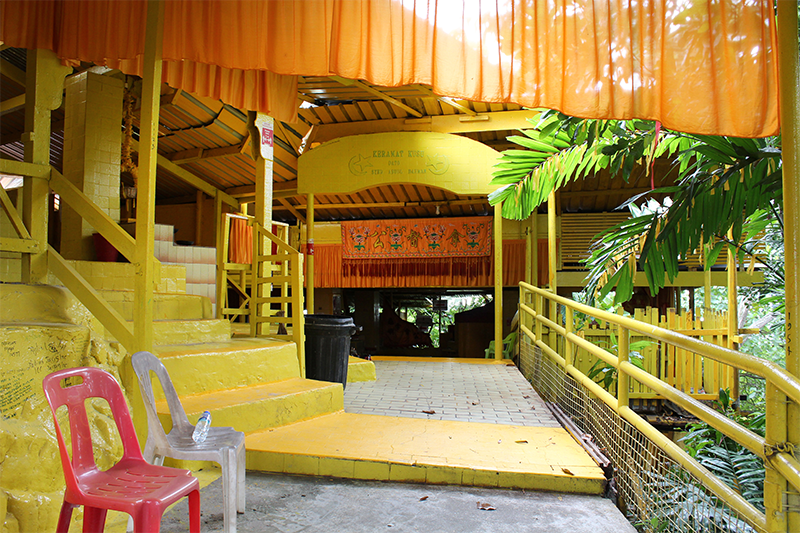 Entrance to the Kusu Island keramat before the fire in April 2022. Photo by William Gibson via BiblioAsia.
Many devotees have visited this island to pray for children and winning lottery numbers at the keramat.
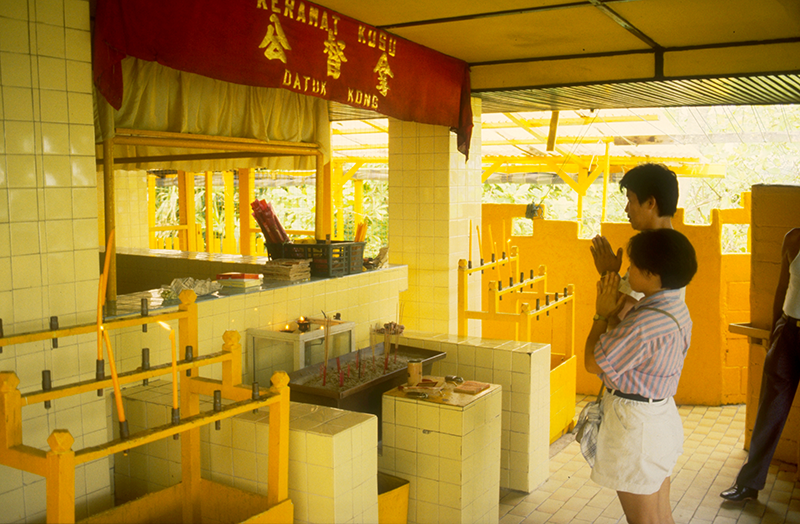 A Chinese couple at the shrine of Dato Syed Abdul Rahman, 1990. Photo by Ministry of Information and the Arts Collection, from the National Archives of Singapore.
According to Culturepaedia, the Datuk Gong phenomenon has come to reflect inter-ethnic exchanges in the wider Malay world, where practitioners of Chinese religion have carved out a niche for themselves in a predominantly Malay-Muslim environment.
Apart from Kusu island, another well-venerated Datuk Gong is housed in the Loyang Tua Pek Kong temple.
How long have such practices been around for?
While there is no clear evidence as to when such a practice started, there are accounts of these practices dating back to at least the colonial era.
One such account belongs to John Crawfurd, who oversaw Singapore’s administration starting from June 1823, following the departure of Stamford Raffles and William Farquhar.
In Crawfurd’s account, he noted that a “rude structure” had been erected over the tomb of Iskandar Shah “to which Mohammedans, Hindus, and Chinese, equally resort to do homage.”
The existence of the shrine was also acknowledged by Raffles and Farquhar in an earlier exchange with Farquhar describing the keramat as of a “very ancient date and highly venerated by the Natives.”
Why have they survived for so long?
As BiblioAsia points out, the survival of these keramats to modern times is largely due to the public, including donations by devotees who have come to offer their prayers or give thanks for a blessing believed to have been derived from the shrine.
Following the fire in April 2022 that destroyed the Kusu Island keramat, the caretaker, Ishak Samsudin, funded the reconstruction with donations from friends and companies, The Straits Times reported.
The keramats have also come to serve as repositories of Singapore’s history, reflecting the traits of the different cultures and faiths that make up our society, and offered a window into a religious syncretism that has existed in Singapore even before colonial times.
They demonstrate ground-up efforts and understandings of faith and religion that have been preserved and passed down for generations among the Chinese community.
But perhaps most importantly of all, they are a living reminder of the multi-religious and racial harmony that has existed in Singapore for centuries.
Keen to learn more interesting nuggets about Singapore Chinese history and culture?
Check out Culturepaedia, a bilingual repository featuring articles by scholars and experts from academia and the wider community. It will offer you an introduction to Singapore Chinese culture, and show you how it has evolved over the years.
Top image by William L. Gibson via BiblioAsia