News


Strait of Hormuz similar to S'pore Strait, right of transit passage is fundamental principle for S'pore: Vivian Balakrishnan
More global trade and maritime oil passed through the Straits of Melaka and Singapore than the Strait of Hormuz.
April 07, 2026, 06:55 PM
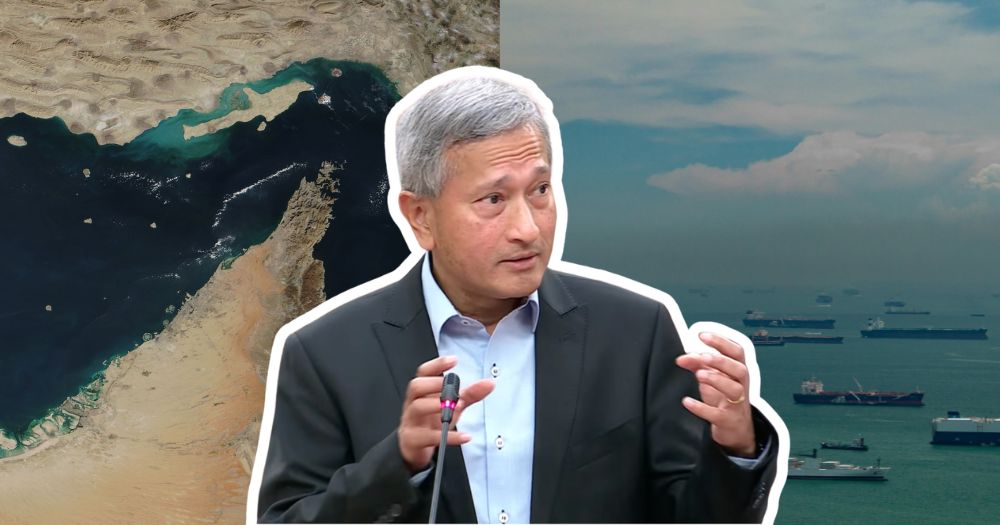

 Minister for Foreign Affairs Vivian Balakrishnan spoke in Parliament on Apr. 7, confirming that he had not spoken to his Iranian counterpart regarding safe passage for Singapore-flagged ships through the Strait of Hormuz, as well as laying out his reasons why.
WP question
He was responding to a question from Workers' Party Member of Parliament (MP) Fadli Fawzi, who had asked whether the Singapore government is engaging Iranian authorities in order to secure transit through the Strait for Singapore-flagged vessels.
He drew a comparison to countries like Malaysia, for whom Iran has assured that their vessels will not be hindered from transiting the Strait.
In addition, Fawzi asked if Singapore would be open to paying a toll to pass through the Strait of Hormuz.
Vivian confirmed that Singapore had not engaged in negotiations for safe passage nor for toll rates, as to do so would be to erode fundamental legal principles that Singapore adhered to.
Right of transit passage
Vivian began his answer by saying Singapore’s position on straits used for international navigation is “long standing and consistent”.
He compared the Strait of Hormuz to other similar navigational straits used for international navigation, such as the Melaka Strait and the Singapore Strait.
Vivian said that the position in international law is quite clear:
There is a right of transit passage for ships, “not a privilege to be granted by the bordering state”, nor a licence that could be applied for, nor a “toll to be paid”.
“It is a right of a nation's ships to traverse.”
The right was enshrined in the United Nations Convention on the Law of the Sea (UNCLOS), of which Singapore is a signatory and has ratified.
UNCLOS's article 44 imposes a “direct and an unambiguous obligation on states bordering these international straits”, which was “states bordering straits shall not hamper transit passage”.
Nor should those bordering states suspend transit passage, without exception for security, for the environment, or for war.
Customary international law
Singapore’s position was deeper than that of UNCLOS, however.
Vivian said that Singapore also took the position that the right of transit passage is also part of customary international law.
Customary international law, as defined by Cornell University's Legal Information Institute, referred to international obligations that arise from established international practices.
Vivian explained that the Singapore government’s position also being due to customary international law was in order to address the fact that there were several other states that had signed UNCLOS, but had failed to ratify it in their national legislatures.
So the right of transit passage being customary international law meant that there was no “Get Out of Jail Free Card” for those who have not ratified UNCLOS.
Less than two nautical miles
Vivian said that his legal and strict definition was not due to an obsession with the law, but because of the similarities that related to the Melaka Strait and Singapore Strait to that of Hormuz.
He compared them, saying that more maritime oil, both crude and refined, and more global trade, flowed through the Melaka Strait and Singapore Strait than through Hormuz.
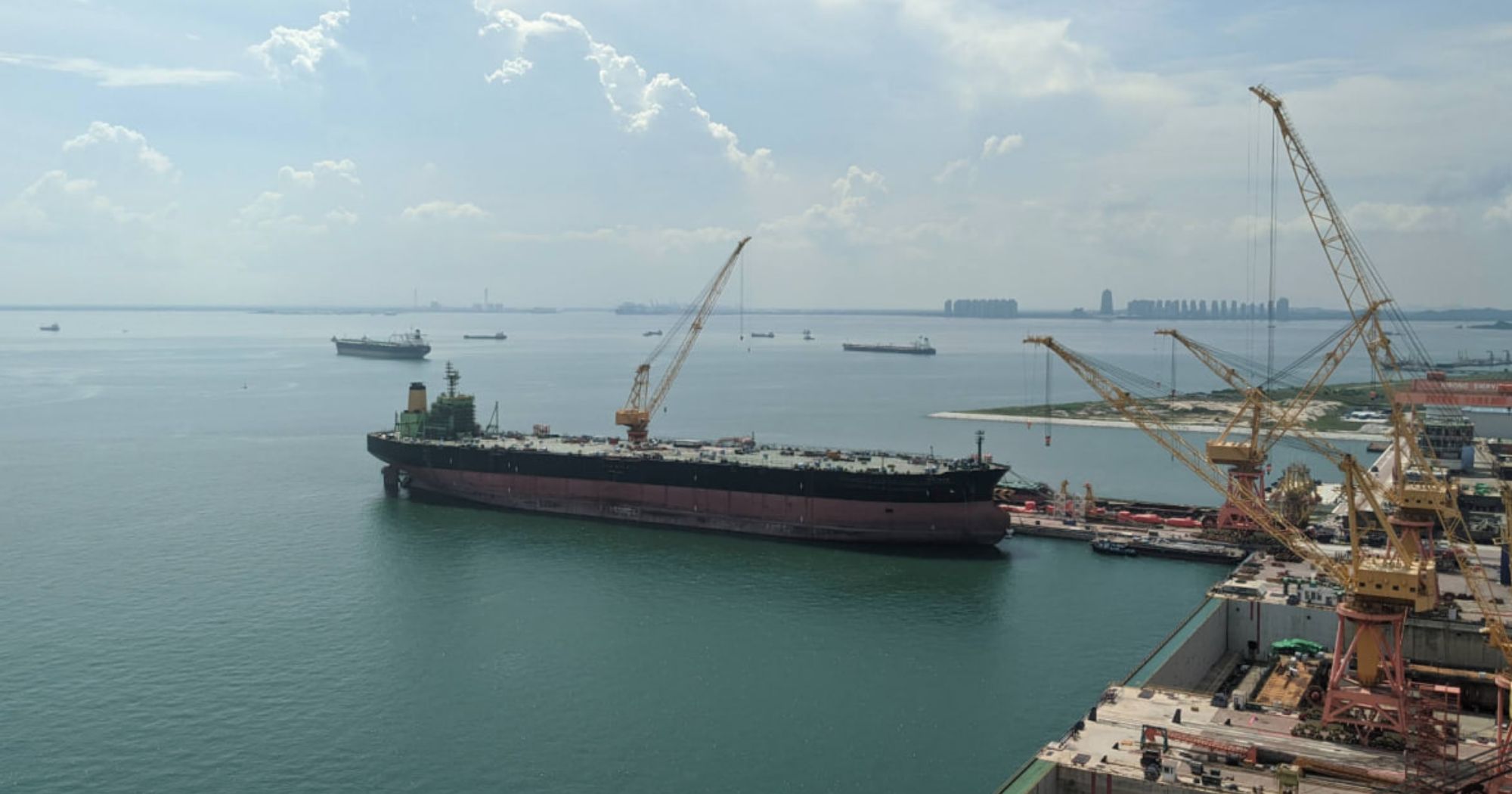
The Strait of Singapore was even narrower than the Strait of Hormuz, the latter being 21 nautical miles (39KM) at its narrowest point, but the former was less than two nautical miles (3.7 km).
Constitution of the seas
Because of these factors, Vivian said Singapore had to take a categorical position that international law and UNCLOS are the “constitution of the seas”.
Because of this, the right of transit passage and freedom of navigation was a right, not a privilege, for ships and planes.
“This is of profound importance to Singapore.”
After this explanation, he reiterated that he has previously engaged with his Iranian counterpart, and expected to do so again in the near future.
“But as a matter of principle, and not because we are taking sides, I cannot engage in negotiations for safe passage of ships or negotiate on toll rates, because to do so would be implicitly eroding this legal principle.”
3 observations
Vivian concluded by making three observations:
Firstly, there was a larger geostrategic backdrop to the question, and the world has become more violent and volatile, and “there is a price to be paid for that”.
Secondly, the situation in the Strait of Hormuz reminded us that even in a digital age, physical choke points and delivery still matters.
Thirdly, it was not enough for Singapore to be an “oasis of safety, cohesion, wealth”, or military power.
Because if the region was mired in conflict “aflame and with war, and missiles flying, no oasis can be safe”.
He said that the upshot of these observations was that there is an “insurance premium to be paid”.
The Government should be “upfront with our people”, about the dangers, and explain what needs to be done regarding paying that premium, without sugarcoating anything.
Top image via Canva, Wikipedia, & MDDI/YouTube