News


M'sia couple working in S'pore fall victim to PR application scam & lose over S$80,000
Payments exceeding S$3,000 were collected in person by different individuals each time.
April 21, 2026, 04:32 PM


A Malaysian couple working in Singapore lost S$80,000 after falling victim to a scam that promised to help them secure permanent residency in Singapore.
Came across a Facebook advertisement
The couple had been working in Singapore for several years and were hoping to obtain Singapore Permanent Resident (PR) status to provide a better life for their children.
Originally from Johor Bahru, the woman, surnamed Tan (transliteration), told Chinese daily Shin Min Daily News that she first came across a Facebook advertisement in April 2025 that offered assistance with Singapore PR applications and used phrases such as "career planning" and "stable path."
This piqued her interest, prompting her to contact the advertiser.
Following this, the couple were asked to submit their work permits and identity cards to verify their eligibility.
They were then given an "Application Process and Fee List", requiring each person to pay an application fee of S$100, a deposit of S$200, and a "document verification fee" of S$1,200.
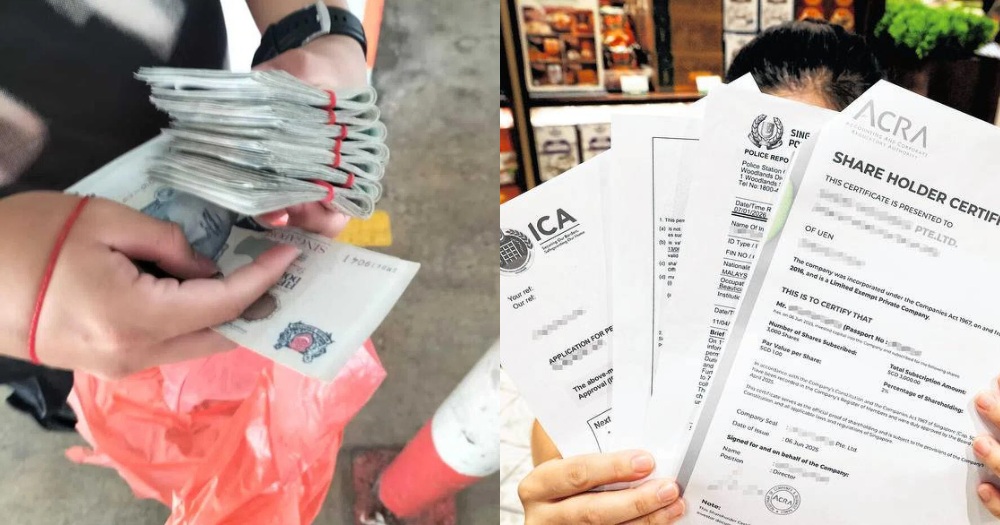
The day after making payment, they received a letter bearing what appeared to be the logo of the Immigration & Checkpoints Authority (ICA).
The letter stated that their applications had been approved and asked them to attend an interview at the ICA building the following week.
However, on the day of the scheduled "interview", the couple were suddenly told that the information provided was insufficient and they were unable to proceed with the interview.
Asked to pay for various steps to increase their success rate
Speaking to Shin Min, Tan said the couple were subsequently each asked to pay S$3,000 to invest in a local company and S$5,140 to enrol in a language course to increase their success rate.
They were also told that the whole application process was confidential and hence required each of them to pay a S$2,000 "confidentiality deposit".
However, the demands did not stop there.
Under the guise of "enhancing social contributions," the couple were asked to donate S$2,700 per month for six months.
Tan also recalled that after each payment, the scammer would send a receipt with the company name and address written on it.
"It was our first time applying, and the documents looked so authentic that we trusted him completely," Tan said.
According to her, the couple were also never asked to attend any classes despite having paid for the language course.
Never received their PR status
Towards the end of 2025, the scammer told the couple that their applications had been approved, but claimed that printing their Re-Entry Permits (REP) would require an additional S$12,500 each.
"He said this was the last step, and that if we didn't have enough money, we couldn't get the letter. We had no choice but to do as he said," Tan said.
The couple spent over S$80,000 over the course of around eight months, but never received their PR status.
It was only then that they realised they had been deceived and filed a report with the police.
Made some payments in person
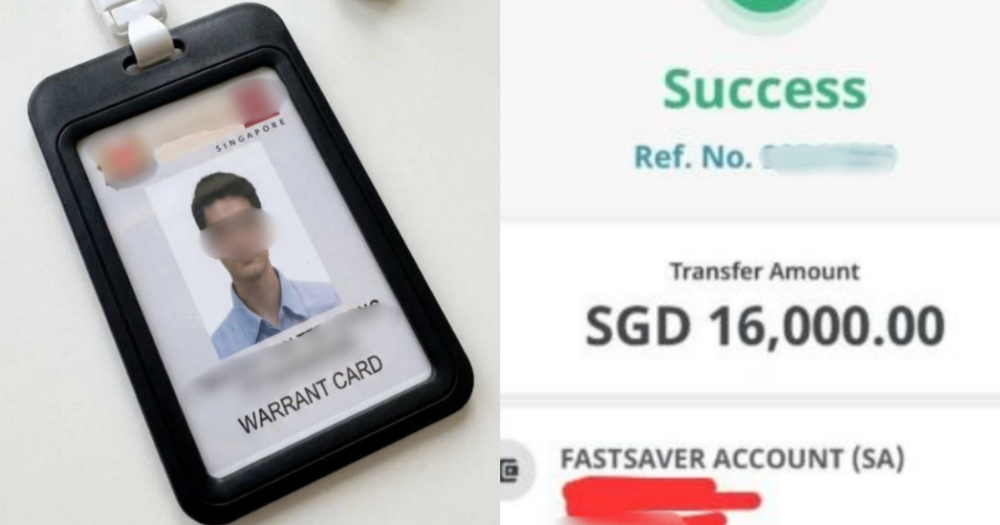
Tan told Shin Min some payments were made via bank transfer, while sums exceeding S$3,000 were collected in person by different individuals each time.
"We should have known something was wrong when they asked us to hand the cash over in person," she said.
Whenever the couple grew suspicious or asked for a refund, Tan said the scammer would pressure them to continue, at times threatening to have them barred from entering Singapore.
"They said, 'You've worked so hard and for so long, you're not here to waste your time,'" she recalled.
After the couple made their supposed final payment of over S$10,000, a new contact took over and immediately demanded a further S$9,800 per person from each of them.
"That's when we realised it was a never-ending scam," Tan said.
When contacted by Shin Min, the police confirmed that they had received a report and that the case is under investigation.
Returned to Johor Bahru to save money
To save money, Tan told Shin Min that she and her husband moved back to Johor Bahru at the end of March and now commute daily across the border to work in Singapore.
She also revealed that she had borrowed money from friends to fund the payments — something she said left her feeling deeply ashamed.
"I have never borrowed money from anyone before, and I feel really guilty. Now I can only work hard to pay it back," she said.
Despite holding little hope of recovering the lost funds, Tan said she was focused on moving forward.
"I know there's a high chance I won't get the money back. Now I just want to live a good life."
Welfare group in Malaysia warns of such scams
In an interview with Shin Min, the president of a welfare association dedicated to supporting Malaysians working in Singapore, said scammers are deliberately preying on cross-border commuters.
He urged the public to submit applications through official channels and to avoid engaging third-party "errand runners," regardless of whether they are in Singapore or Malaysia.
Address of "local company" turned out to be a residential flat
After paying to "invest" in a local company, the couple visited the address they had been given, only to find it was a public housing unit — not the financial holding company called Lucky Holdings that they had been told about.
An elderly resident at the flat told them they were not the first to show up at his door, and that he did not own any company, advising them to go to the police.
ICA's advisory
In a public advisory issued in March 2026, the Immigration & Checkpoints Authority (ICA) said it had been alerted to 12 cases involving fake ICA letters related to applications for long-term immigration facilities.
The authority noted that it was aware of commercial entities and consultants claiming to improve applicants' chances of securing long-term immigration status, including Singapore Permanent Residence, and stressed that it does not endorse or support such services.
ICA also urged applicants who choose to engage such services to exercise caution.
Members of the public applying for immigration facilities are strongly encouraged to submit their applications directly to ICA through their website.
Top photos from Shin Min Daily News