News


UAE may freeze billions in Iranian assets after being targeted by over 1,000 Iranian missiles & drones: WSJ
Accounts associated with Iran’s Islamic Revolutionary Guard Corps (IRGC) may be among the first targets if the plan moves forward.
March 06, 2026, 05:20 PM


The United Arab Emirates is considering a freeze of billions of dollars in Iranian assets held within the Gulf state, The Wall Street Journal (WSJ) reported on Mar. 5.
This could sharply limit the Iranian capital's access to foreign currency and international trade.
Since the start of the war, Iran has fired more than 1,000 drones and missiles against targets in the UAE in retaliation for U.S.-Israel attacks.
It initially targeted U.S. military assets, but has since begun targeting civilian infrastructure as well, Al Jazeera reported.
Iranian officials warned
The potential action comes as tensions between Iran and its regional adversaries intensify, following recent military exchanges involving the United States and Israel.
Iranian retaliatory strikes across the Gulf region have damaged multiple buildings, including Dubai International Airport and a five-star hotel at Burj Al Arab.
At least three people have been killed.
According to people briefed on the matter, Emirati authorities have privately warned Iranian officials that financial measures could be taken in response to the attacks.
It remains unclear whether or when the UAE government might proceed with such steps.
Measures could target shell companies and financial networks
Officials are reportedly assessing a range of options aimed at dismantling illicit Iranian financial networks operating within the country.
One target could be accounts associated with Iran’s Islamic Revolutionary Guard Corps (IRGC), the main branch of the Iranian Armed Forces, officials said.
Policymakers are also considering maritime options, including the possible seizure of Iranian ships believed to be used to transport sanctioned oil.
UAE a critical gateway for Iranian finances
The UAE has long been a financial hub for Iranian businesses and individuals seeking to avoid Western sanctions.
In its efforts to become an international financial centre, it has historically welcomed capital from around the world with little regard for its source, WSJ reported.
This has allowed the Iranian capital, Tehran, to keep selling oil abroad and use the proceeds to fund weapons programmes, analysts said.
Thus far, the UAE has largely refrained from weaponising its financial sector against Iran.
Such a decision would affect lucrative trade and banking ties with Tehran, and potentially damage the UAE's ability to attract and retain capital from other politically charged sources, according to WSJ.
As such, a targeted approach might be more likely, one analyst opined.
Conflict raises pressure on Gulf state
On Feb. 28, the United States and Israel launched coordinated strikes against Iranian targets.
This prompted Tehran to retaliate with missile attacks aimed at Israel and locations across the Gulf believed to host American military facilities.
Despite the escalating conflict, the UAE has signalled that it intends to maintain a defensive posture and avoid direct participation in military operations.
In a recent statement, the country’s foreign ministry reiterated its commitment to de-escalation and adherence to the principles of the United Nations Charter.
Related stories
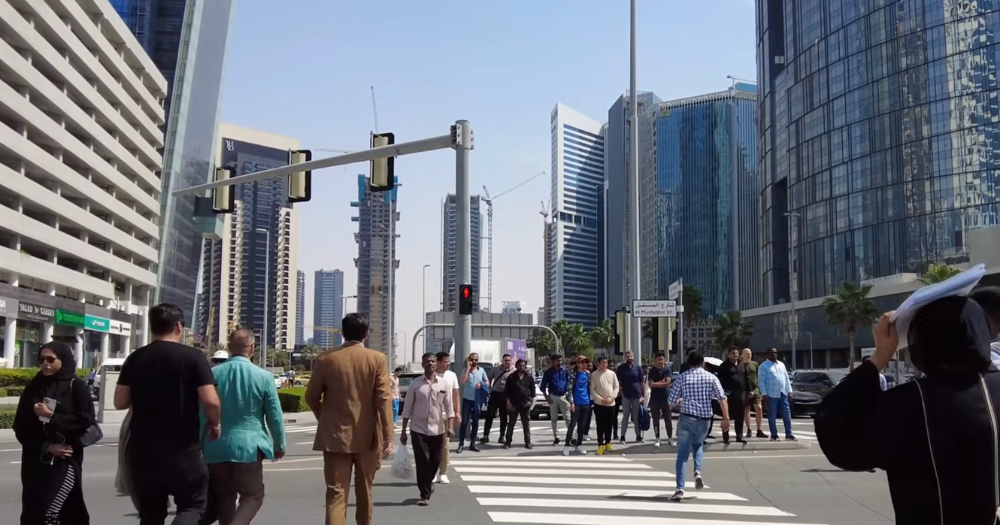
Top image via aloneindubai/YouTube