Parliament


Desmond Lee: Some primary schools still overrepresented by students from higher SES families, MOE reviewing P1 registration framework
Schools cannot just passively reflect the neighbourhoods around them, said Minister for Education Desmond Lee.
March 03, 2026, 11:57 AM
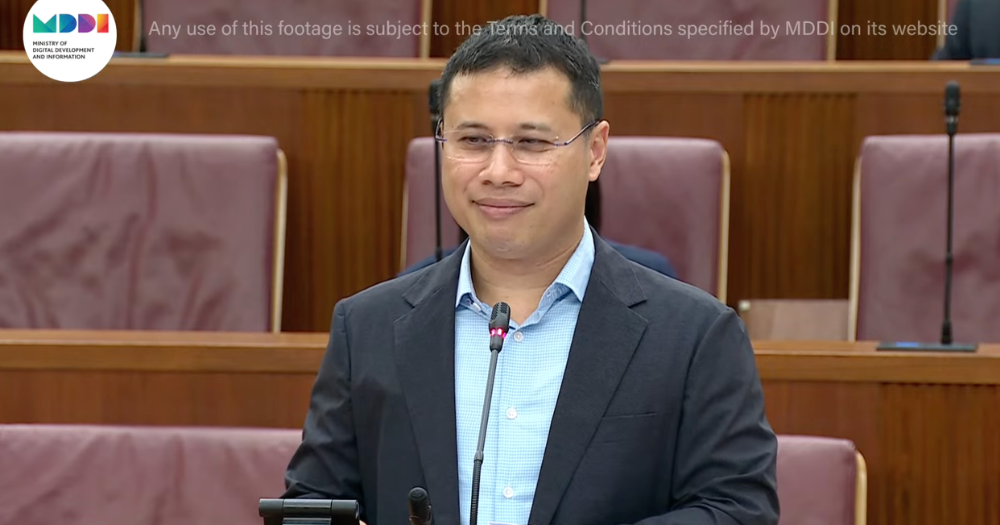


On Mar. 3, Minister for Education Desmond Lee spoke at the Ministry of Education's (MOE) Committee of Supply Debate, giving a speech entitled “We Learn for Life Together”.
In a speech that touched on a range of education issues, such as AI and full subject banding, Lee also addressed the holistic development of Singaporean students.
Lee also announced that MOE was actively reviewing the Primary One registration framework and would reveal more details when ready.
The educational arms race
Lee first recognised the Singaporean education system’s long-held reputation for academic rigour and excellence, but noted that while both were important, they were never the only focus of the system.
In order for Singaporean students to be “the trailblazers of tomorrow," Lee said there needs to be a “reimagination of education” to prepare students to be “resilient, well-rounded, and thoughtful”.
To do this, Lee said, “one challenge we must first confront honestly is the education arms race”.
Explaining further, he noted that many parents regarded the Primary School Leaving Examination (PSLE) and Direct School Admissions as “measures of success”, believing that getting their children into popular schools would help them in the future.
But it risked a fixation on grades and achievements, and the excessive competition it generates, diminishing their joy of learning, and taking away time from character building.
Lee noted that many MPs had spoken about their concerns on this aspect of education, particularly about reducing the stakes of assessment milestones, as well as questioning various aspects of the PSLE, like the need for challenging questions or its competitive grading element.
Lee said the role of the PSLE needed to be considered, such as its role as a checkpoint to assess students’ mastery of core concepts and skills, as well as guiding students into appropriate secondary school subjects and pathways.
Developing students holistically and supporting aspirations
He also addressed the need to develop students holistically and support their aspirations, agreeing with MPs who said that schools should not only focus on academic results, but should instead seek to nurture students for life.
Singaporean schools sought to do this in two ways:
Firstly, by placing emphasis on holistic development, and secondly, by cultivating students' aspirations.
Lee said that it is “good that our young ones are full of hopes and aspirations”.
"Every child should dare to dream, but our children also need to learn that for dreams to become reality, they need to take active steps and be resilient in dealing with challenges and setbacks along the way."
He also described some ways that Singapore’s schools sought to provide students with exposure to the next stage of school or work life.
Some examples were secondary schools that offered Applied Learning Programmes in areas such as Business and Entrepreneurship, or Polytechnic and Institute of Technical Education (ITE) students being required to complete internships, and can participate in mentorship programmes and industry visits.
Series of Education Conversations
Lee said that MOE will be starting a series of Education Conversations, as no one has a monopoly on good ideas.
The intent is to engage and consult educators, parents, researchers, students and the community.
MOE will also study other countries and learn from their best practices, adding that more details will be shared when ready.
P1 Registration Framework
Lee also revealed that MOE is currently reviewing the P1 Registration Framework to ensure that Singapore’s primary schools remain open to students from different backgrounds and that MOE will announce more details when ready.
Lee said that Singapore wanted its schools to “be active platforms that bring together students from different backgrounds”.
Singaporean schools “intentionally bring together students from different schools and different backgrounds, through programmes like combined school CCAs or cluster-based CCAs.
He also noted the changes made to the P1 Registration Framework over the years, in order to expand access for students with no prior connections to enter primary schools, such as reserving the first 20, then 40, places at Phase 2C.
This allows students without prior connections to a primary school to join, ensuring open access and allowing many schools to have “a good mix of students from families of different socioeconomic statuses”.
But some primary schools are overrepresented by students from higher-SES families. Some of this is due to their location in neighbourhoods composed mostly of private housing.
Lee said schools “cannot just passively reflect the neighbourhoods around them” and must “actively create diverse environments” for students to mix, mingle, and learn from one another.
He acknowledged the several suggestions and promised that they would all be taken seriously.
But the right balance between these competing views and needs needs to be found; and "as society evolves, we need to adjust this balance over time”.
Top image via MDDI/YouTube