Branded

Bank job to chief of S’pore’s airport emergency service: Meet the man, 46, keeping you safe when you fly
He started with zero experience in aviation or managing emergencies.
Photos via Ram.
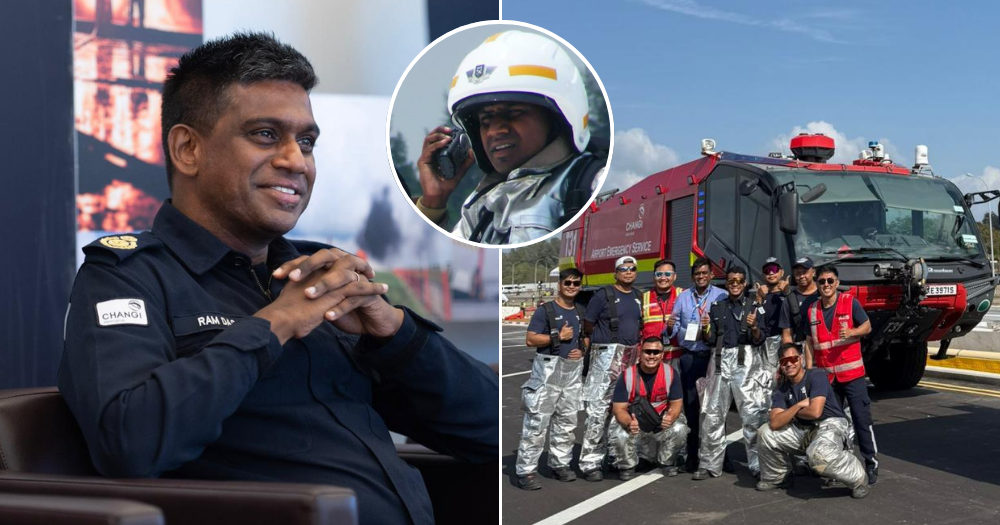
19 years ago, Ram Das Brabakaran, 46, was working at a bank’s corporate office when he decided to take a leap of faith.
Today, as Chief of Changi Airport Group’s (CAG) Airport Emergency Service (AES), he oversees about 550 officers whose primary job is to respond to incidents and emergencies across Changi Airport, Seletar Airport and Singapore’s military airbases.
It is a far cry from when he first signed up with AES in 2007.
At that point, he had zero experience in aviation and emergency services and little knowledge of the job for which he was signing up.
Starting from zero
“I was always interested in aviation [and] fascinated by Changi Airport,” Ram said, adding that he had applied for jobs in the aviation industry when he was younger.
“I really didn’t know much about the job that I was applying for in AES. It was a bit of a ‘let’s try my luck and see’.”
Starting from zero was no easy feat.
To prepare for his entry into AES, Ram was put through five months of “extremely tough” training at the Singapore Aviation Academy.
Incident management, command and control, aircraft rescue and firefighting techniques and a duty officer course were some of the things Ram faced.
AES officers are trained very differently because they operate in a highly specialised aviation environment.
They are trained to respond to aircraft fires, aviation fuel related emergencies and passenger rescues under strict international aviation safety standards.
This specialised training prepares them to act within minutes, manage complex aviation hazards, and help stabilise the situation so that the safety of passengers is maximised and airport operations can be safely restored as quickly as possible.
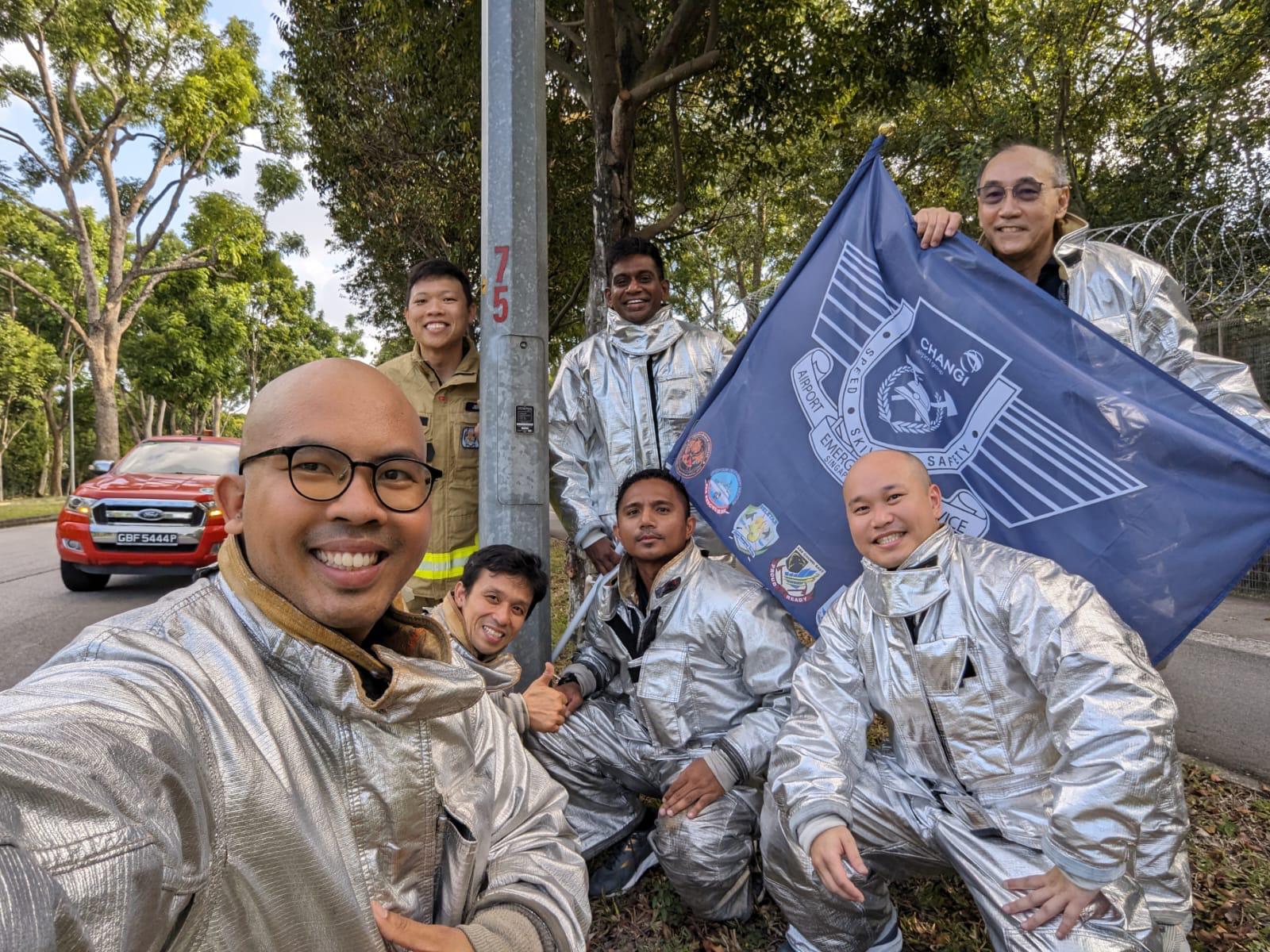 Photo courtesy of Ram.
Ram also sat through a gruelling written test, a demanding practical assessment of his command and control abilities and a rigorous interview.
“It was a very, very long process,” he said.
At the end of it all, he became a duty officer overseeing a team of 20 staff who were responsible for addressing aerodrome emergencies.
Such emergencies can involve aircraft crashes, sea rescue, ground fires, hazardous goods incidents, security threats and public health emergencies.
Ram progressed to become an Operations Commander, where he oversaw an “even larger team” and had to make executive command decisions whenever an incident happened during his shift.
High-pressure situations
AES officers are no strangers to high-pressure situations — in fact, they need to work well in them.
The ability to analyse a situation and formulate a response quickly is important as well, the Chief said, calling it the appreciation of the situation.
“While we have a lot of standard operating procedures in place, when something happens on the ground, our guys need to respond quickly… and make sure that the outcome is what we desire,” Ram described.
“No two incidents are the same,” he added, especially if the emergencies concern aircraft.
Tellingly, when I asked Ram about the most memorable incidents he has encountered in his career, he cited three very different incidents.
One of these was the very first incident he ever encountered as an Operations Commander – a gas leak in one of the Changi Airport terminals during his shift.
“This was during the evening peak period. So, I had to make the call because of safety to shut down our food and beverage operations in the terminal,” Ram recalled.
The incident was a reminder that his decision “had some consequences”.
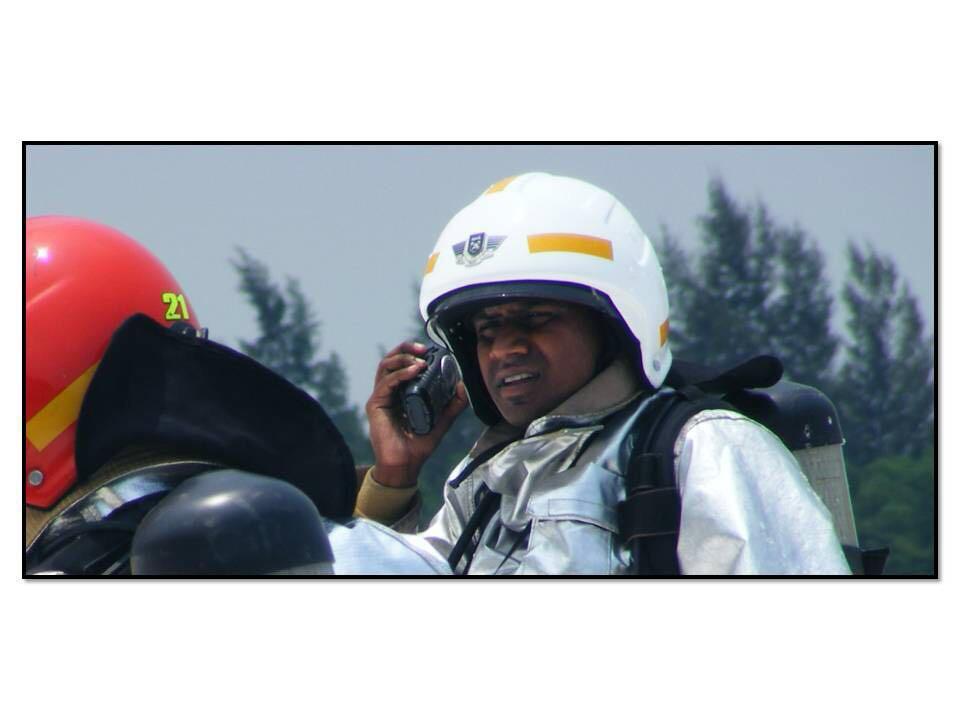 Photo courtesy of Ram.
The second was a fire in an air-handling unit in Terminal 2.
The spreading of smoke from that air-handling unit resulted in a terminal-wide evacuation as a precaution, a first for Changi Airport.
During this incident, Ram also had to personally address large groups of passengers who had questions about the status of their baggage and connecting flights, among other issues.
“To go through the situation, not just to handle the fire and smoke, but also to manage passengers, that experience was something that would always stay with me. And I learned quite a lot from that incident as well.”
The third incident occurred when a plane was evacuating passengers onto the runway because smoke was reported on board.
For Ram, his immediate concern was ensuring that the AES rescue vehicles were responding quickly and safely to the aircraft in distress, while looking out for passengers running away from the aircraft on the runway.
Fortunately, “we were very quickly able to manage the incident well and get everyone to safety,” he said.
Policy for its people
Today, Ram’s focus is on leading and developing policy to ensure AES continually operates at a high level of readiness.
This includes overseeing regular, airport-wide aircraft emergency exercises to ensure that everyone — from ground handlers to personnel providing medical support — can respond swiftly and are familiar with their roles.
AES has also evolved to help its people ensure passengers’ peace of mind through the adoption of technology.
“For example, we harness technology by using drone capabilities,” Ram explained, adding, “If I have a night operation, I can use drones to light up the incident scene which might otherwise be very dark.”
AES is also exploring other robotics applications, such as using robots to transport casualties.
On top of these, Ram regularly visits the officers stationed at Changi and Seletar airports and the military airbases that CAG’s AES serve, something he looks forward to doing.
AES cannot do without its people, and so Ram sees it as a priority for him to engage them and ensure that they are ready to perform when needed.
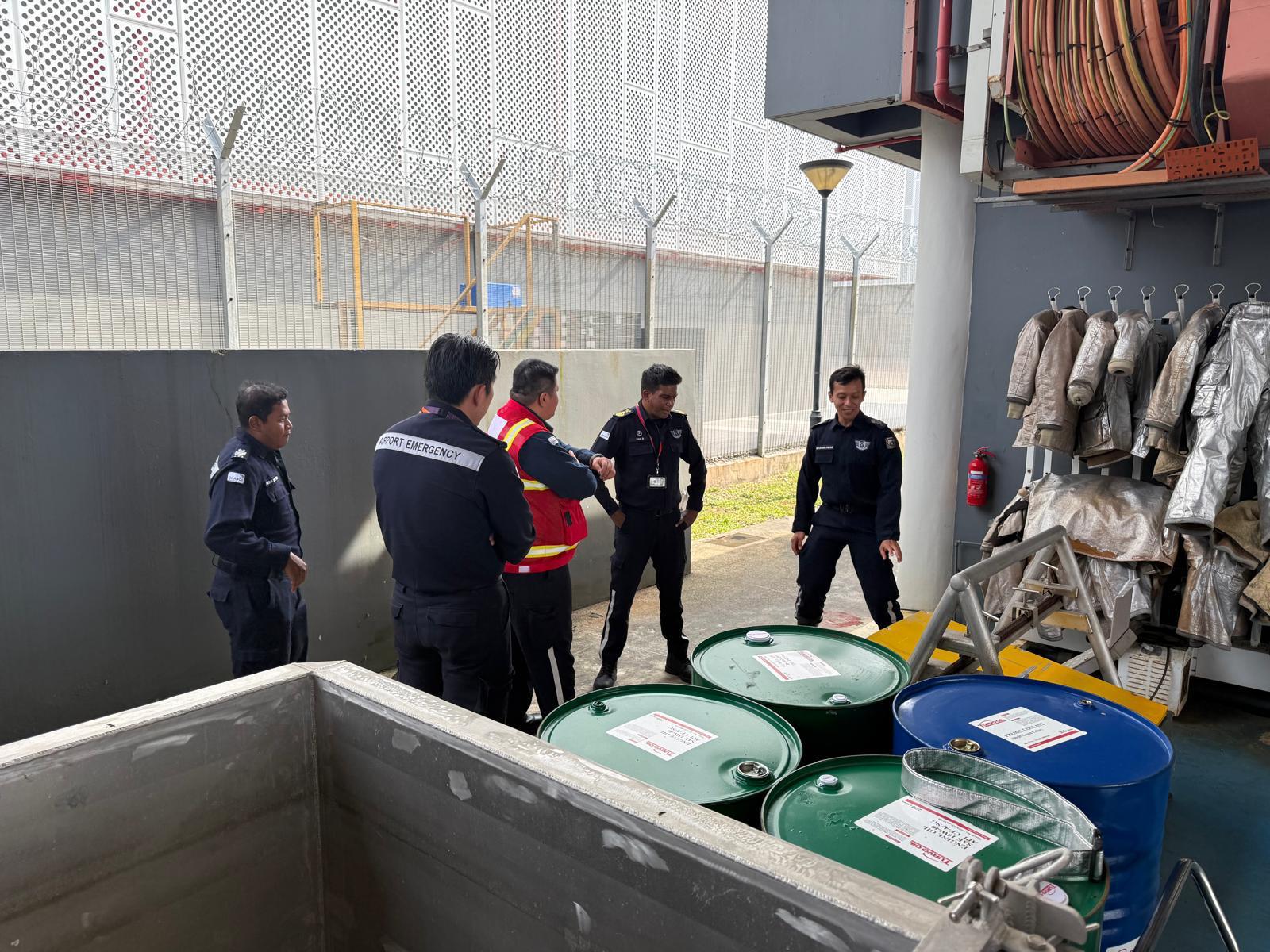 Photo courtesy of Ram.
“My job is to go there, meet them, engage in conversations and see how I can [help] them do their jobs better.”
Beyond the uniform
Outside work, Ram is an avid football fan, a doting husband to his wife of 19 years and father to a daughter, 16 and a son, 13.
His family has always been his greatest motivator, even on his bad days.
“They always have [my] back. I always say, ‘My family can keep me going.’”
 Photo courtesy of Ram.
When asked how else the job has touched his life, Ram remarked that he now pays attention to all the safety messages shared during flights.
He also takes note of where his nearest safety exits are “in the event” he needs them.
Safeguarding passengers
Beyond looking back at his recent appointment as Chief AES, Ram is also focused on the days beyond.
The Chief said his goal is to continue building on the good work of his predecessors and steer AES to always be mission ready.
Part of this is to continue the culture of constantly seeking excellence and tapping on technology such that AES can overcome constraints, such as manpower challenges.
At that, Ram commented that AES officers are “our greatest assets”.
“I hope to be able to play my part in leading the team well, developing our officers to the best of their abilities, and growing their skillsets so they can perform their roles better. When we deliver our mission well, Changi (Airport) succeeds, and Singapore benefits.”
To his people, he says, “Keep the AES SPIRIT going - Safety, People-centric, Integrity, Resilience, Innovation and Teamwork. These are the core values that we want to see in all our AES officers… Most importantly, the sense of teamwork. We don’t fight our mission as individuals.”
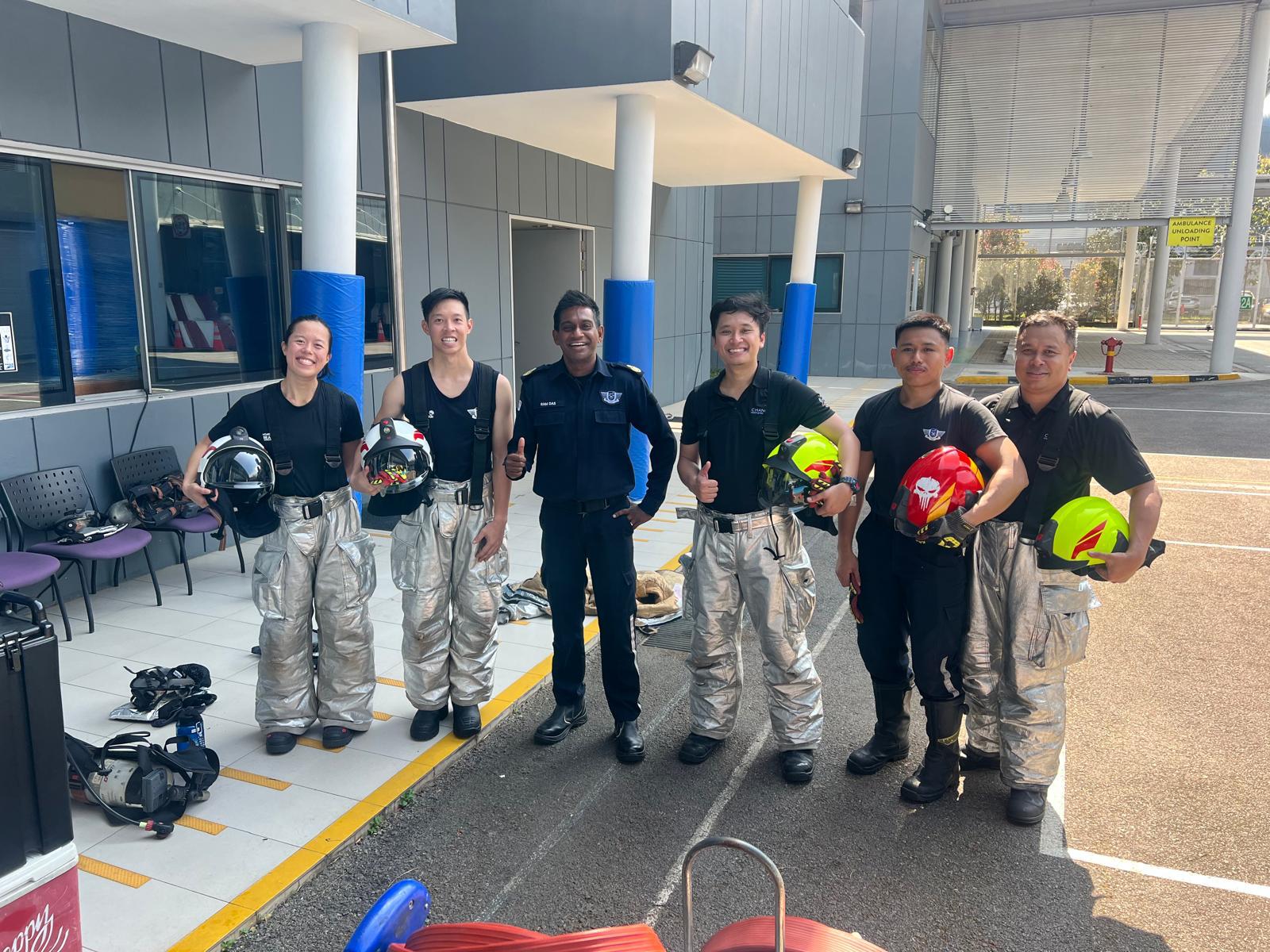 Photo courtesy of Ram.
 Photo courtesy of Ram.
Ram added that while his job may not be “glamorous” and has been perceived as being a “blue collar job”, it is his wish that more people will be aware about how “meaningful” it is.
“The purpose of my job is very clear. It’s about saving lives, about safeguarding our passengers. At AES, we have a very, very clear mission,” he said.
“We would warmly welcome more people to come join us.”
For Ram, his 19 years with AES thus far has been a “very purposeful, meaningful career” in a job that is dynamic and can differ greatly each day.
“And you get to do this at the best airport in the world,” the aviation enthusiast concluded.
The writer of this sponsored article now understands the specialised training airport emergency responders undergo.