Parliament


S'pore looking to set up 3 new SPED schools, & other new initiatives announced by MOE
To meet the rising demand for places for students with autism spectrum disorder with intellectual disability.
March 03, 2026, 01:05 PM
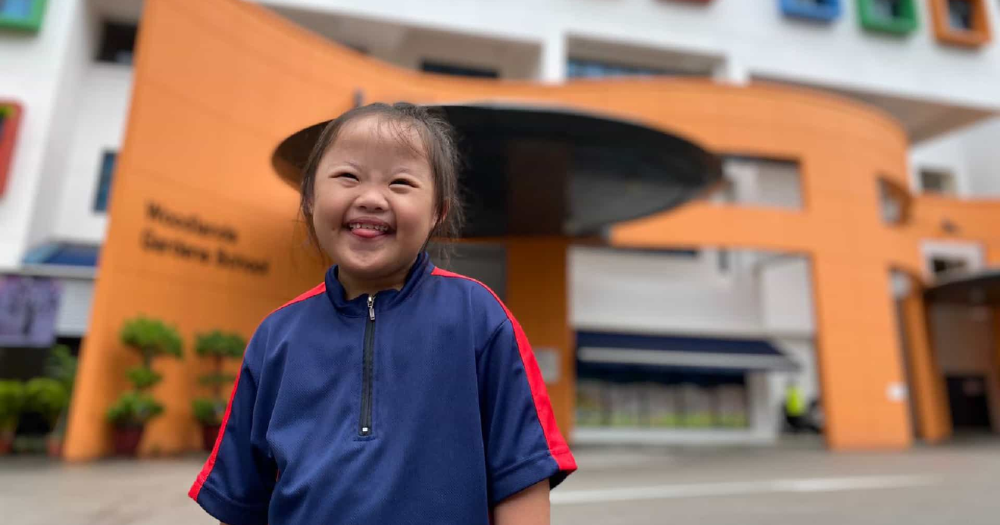


The capacity of Special Education (SPED) schools will be expanded starting from the second half of 2026, with the expansion of current schools and the establishment of three new ones.
This is to meet the rising demand for places for students with Autism Spectrum Disorder with Intellectual Disability (ASD-ID), the Ministry of Education (MOE) said.
This was part of a suite of new initiatives announced by MOE as part of Budget 2026, including a new approach that replaces the existing Gifted Education Programme (GEP).
SPED schools
From the second half of 2026, MOE will partner with MINDS to expand teaching facilities and resources with additional campuses for two MINDS SPED schools, MINDS Fernvale Gardens School and MINDS Lee Kong Chian Gardens School.
Two other MINDS schools will also be expanded from 2027 — the additional campus of MINDS Towner Gardens School will begin operation that year, and MINDS Woodlands Gardens School will relocate to a larger interim site in the North region.
MOE is also studying the establishment of three new ASD-ID schools, which will bring the number of SPED schools serving ASD-ID students to 16 from 13.
This slew of expansions, which will take place from the second half of 2026 through the early 2030s, will increase SPED school capacity by 30 per cent, or from 9,000 students to about 12,000.
New Post-Secondary Admissions Exercise from 2028
In 2027, the first cohort of students will sit for the Singapore-Cambridge Secondary Education Certificate (SEC) examination, which replaces the O-Levels and N-Levels.
In line with this, MOE said it will streamline the application process for post-secondary education institutions with a new Post-Secondary Admissions Exercise (PSE) in 2028.
The PSE will replace the current Joint Admissions Exercise, Polytechnic Foundation Programme Admissions Exercise and ITE Joint Intake Exercise, which take place at different times of the year.
For the 2027 SEC cohort, their results will be released in mid-January 2028, and the PSE application period will open for six days.
Under the new PSE, applicants will be able to indicate up to 12 post-secondary courses.
By mid-February, posting results will be released, and students will report to their various institutions accordingly.
New approach to support academically-inclined students
MOE will introduce a new approach to support students who demonstrate strength in academics, replacing the current GEP.
Under the new approach, which will kick in this year, Primary Three students will undergo a one-stage identification exercise, instead of the current two-stage screening.
The identified students will then be able to take advanced modules of their choice at one of 15 primary schools, which will be designated as centres to teach these modules.
Students can also be identified at the end of each semester in Primary Four or Five to join school-based provisions and/or centre-based modules.
Support for students from disadvantaged backgrounds
From 2026, MOE will provide more schools, from 100 to 157, with additional manpower and funding to support students from disadvantaged backgrounds.
Existing initiatives which provide schools with additional resourcing and school support, such as UPLIFT Enhanced School Resourcing and GEAR-UP, will be combined into a single support package.
Increased incentive for employers under ITE Work-Study Diploma
To continue encouraging employers to come on board and provide training opportunities under the ITE Work-Study Diploma, MOE will be increasing the employer incentive for new cohorts from April 2026.
The quantum received by participating employers will be increased from S$15,000 to S$20,000 per eligible trainee whom they hire and train.
Strengthening bilingualism
MOE will also be increasing funding, from S$30 million to S$33 million, to support Mother Tongue language learning activities and programmes for students and parents.
The funding will go to Mother Tongue Language Learning and Promotion Committees to help them extend their reach and establish stronger partnerships with community groups to enhance Mother Tongue programmes.
AI and lifelong learning
To help workers assess their AI readiness and training needs, SkillsFuture Singapore will partner with the Singapore Institute of Technology to develop a self-diagnostic AI readiness tool on the MySkillsFuture portal.
The SkillsFuture portal will also be enhanced to improve the curation and signposting of AI-related courses, including tagging courses by archetype for easier identification.
This, along with a more customised user experience on the portal, will be rolled out by the second quarter of 2026.
All Institutes of Higher Learning will also offer AI-related courses for their alumni at a significant discount for one year, starting in the second half of 2026.
SkillsFuture Singapore and Workforce Singapore will also be merged into a new statutory board in the second half of 2026.
Learning together
MOE said in a Mar. 3 press release that it remains committed to working together with stakeholders to "create a conducive environment where students can thrive and reach their full potential regardless of their starting points."
"We will continue to strengthen our education system by enhancing support for diverse learners, preparing for an AI-transformed world and strengthening lifelong learning opportunities," MOE said.
Top image via Minds