News


Mojtaba Khamenei, son of assassinated Ayatollah, likely to be Iran's next Supreme Leader
Official announcements have not yet been made.
March 04, 2026, 11:56 AM

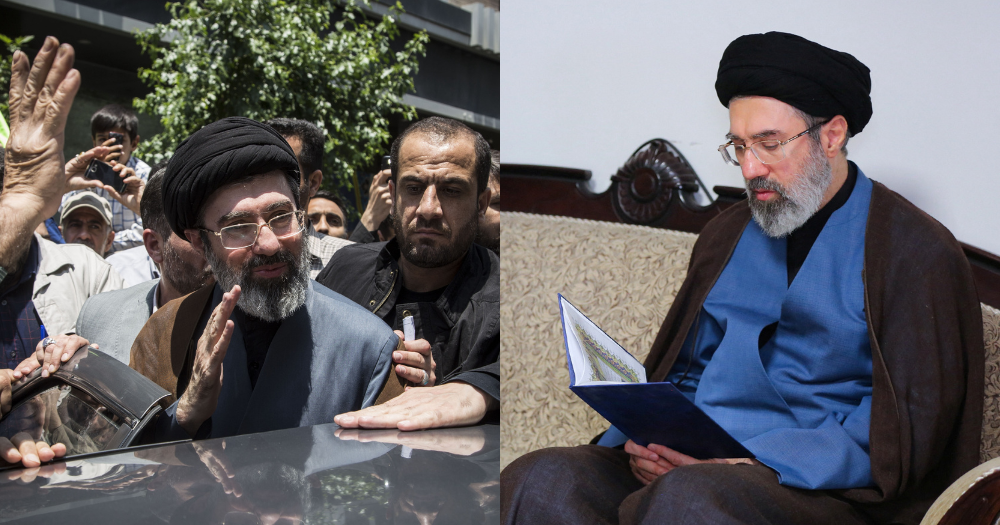
 Mojtaba Khamenei, the son of Iran's slain supreme leader Ali Khamenei, has emerged as the likely forerunner to take over his father's position.
The younger Khamenei, 56, is the second son of the former 86-year-old Ayatollah, who was killed in U.S.-Israel strikes on his compound in Tehran on Feb. 28, according to U.S. President Donald Trump and Iran state media.
According to the New York Times, the younger Khamenei was chosen after senior clerics in Iran met on Mar. 3 to deliberate on the vacant supreme leader position.
However, an official announcement of his succession, initially planned for early Mar. 4, has not been made due to fears of him becoming a target of further U.S.-Israel strikes.
Long in the running
While the former supreme leader had no designated successor, Khamenei had long been seen as a potential successor of his father, who ruled the country for 36 years, the Times reported.
However, he had a low profile over the past two years.
His clerical rank was also a recurring point of debate among senior clergy, according to NDTV.
While Iran's supreme leaders are constitutionally required to hold high religious standing, Khamenei has not yet attained the rank of ayatollah.
Nonetheless, he was a major figure in Iran's national affairs over the years, including serving in the 1980 Iran-Iraq War.
In 2019, he was sanctioned by the U.S., who suspected him of being delegated aspects of his father's authority to act in an official capacity.
Not a popular choice for reformists
However, Khamenei's possible ascension as the next supreme leader would not be popular among Iran's reformists, NYT posited.
His surprise comeback into the spotlight after allegedly dropping out of the running over the past two years would signify the shift in power toward's Iran's Revolutionary Guards, whom Khamenei reportedly has close ties to.
Three Iranian officials anonymously told the media outlet that the Guards had pushed for Khamenei's appointment, arguing he had the qualifications to lead Iran in current times of crisis.
His election could also be seen by detractors as a continuation of Iran's regime, which rights groups said allegedly killed at least 7,000 people in recent months after mass protests against the regime broke out.
While Trump previously claimed that U.S. military had killed many of Iran's potential leaders in the Feb. 28 strikes, Khamenei is one of three supreme leader candidates who emerged in less than a week since then.
"I guess the worst case would be we do this and somebody takes over who’s as bad as the previous person. Right, that could happen. We don’t want that to happen," Trump had said in a news conference on Mar. 3.
The other two candidates are Alireza Arafi, a cleric who is part of the three-person transition council after the former leader's death, and Seyed Hassan Khomeini, a grandson of the Islamic revolution’s founding father, Ayatollah Ruhollah Khomeini, reported NYT.
Top images via Reuters