News


S'porean shopowner contests removal of mural on shophouse facade, says it highlights Arab St's heritage
She did not receive official permission from URA before commissioning the mural.
February 05, 2026, 07:11 PM
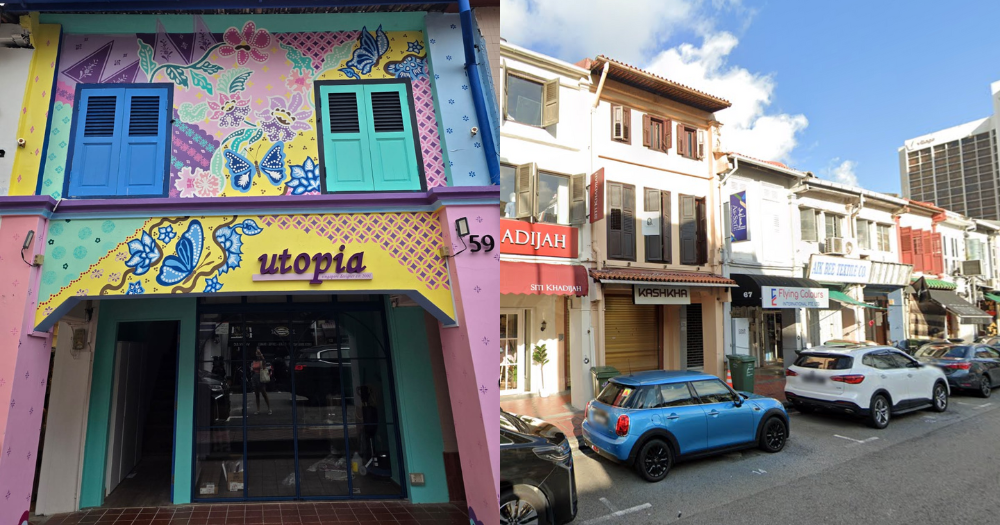


A Kampong Gelam business owner who had a mural approved on Haji Lane for five years is now being told to remove a similar artwork from the front of her new shop at 59 Arab Street.
This is despite both shophouses falling under the Kampong Gelam precinct.
Sherry See, 45, founder of Utopia Apparels, told Mothership that she had painted a batik-inspired mural on the façade of her shophouse but was instructed by the Urban Redevelopment Authority (URA) to remove it, citing conservation guidelines.
See, however, revealed that she did not receive approval from URA for the second mural.
In response to Mothership's queries, a URA spokesperson reiterated this and also said that they had "received appeals by the tenant and the Kampong Gelam Alliance (KGA) to ask for the retention of the mural".
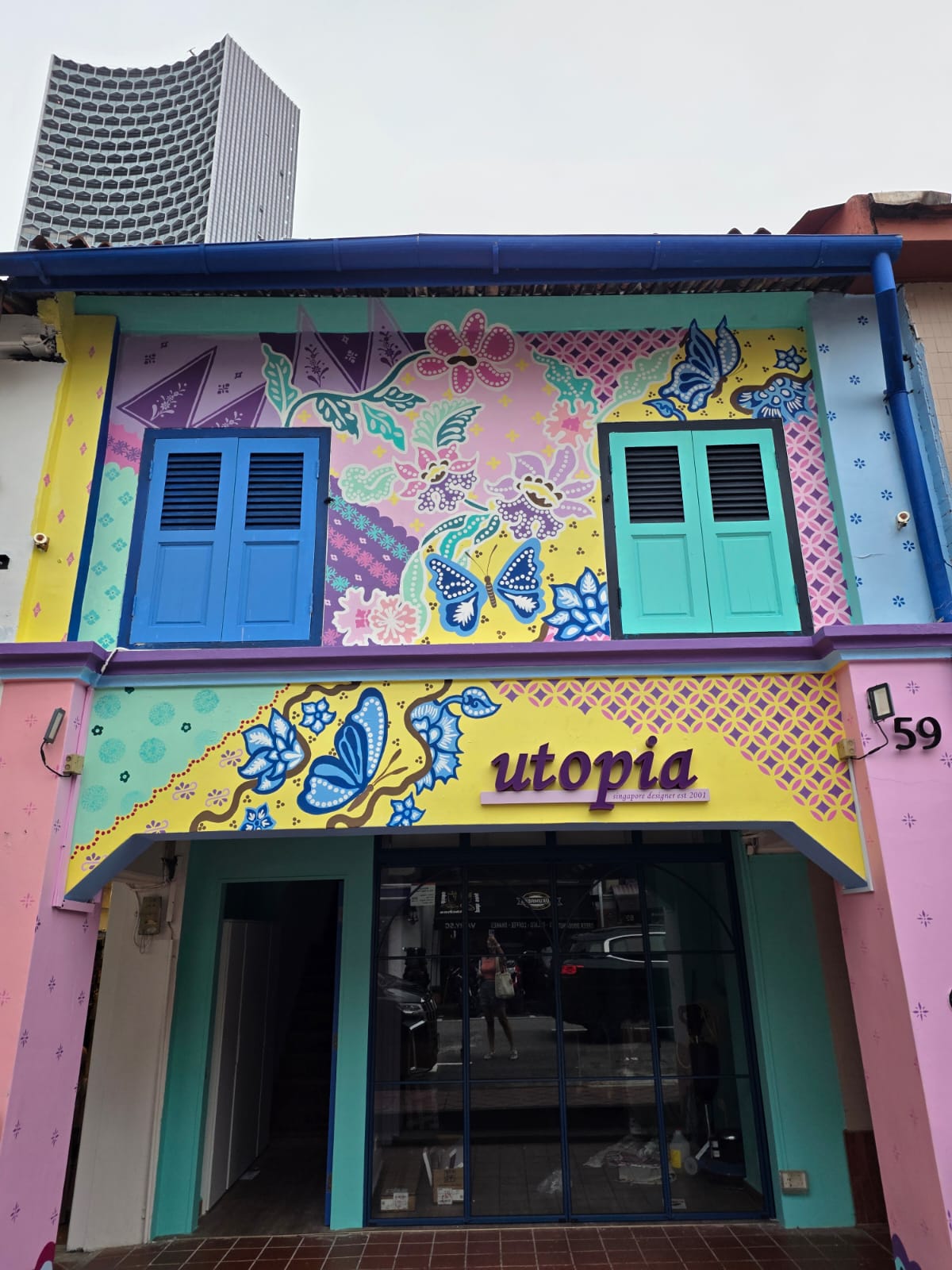 Photo from Sherry See
Mural on new unit
See previously operated her business at 47 Haji Lane, where, with URA's approval, a similar mural adorned her storefront for about five years.
The mural, she said, was "an iconic part of my store trademark in Kampong Gelam".
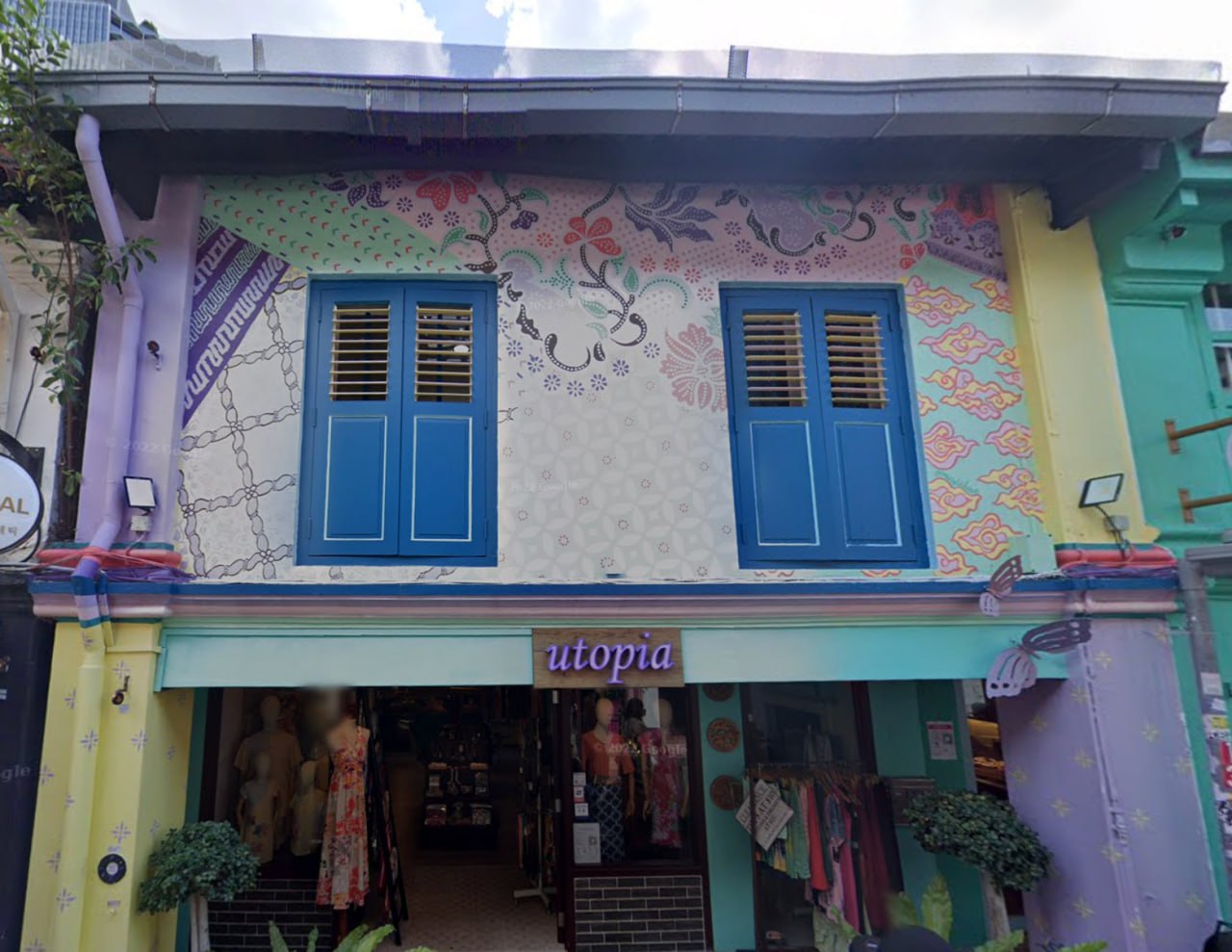 Photo from Google Maps streetview
After having to vacate the unit due to rising rents from a "serial subletter outbidding the rental", she decided to move to Arab Street in August 2025.
See chose the shophouse partly because of its clean and simple façade, which she felt would suit a refreshed version of her mural.
 The original white facade (right) of the shophouse. Screenshot from Google Maps
Before starting work, See said she had sent a casual WhatsApp message to a member of URA’s conservation team, sharing her artwork.
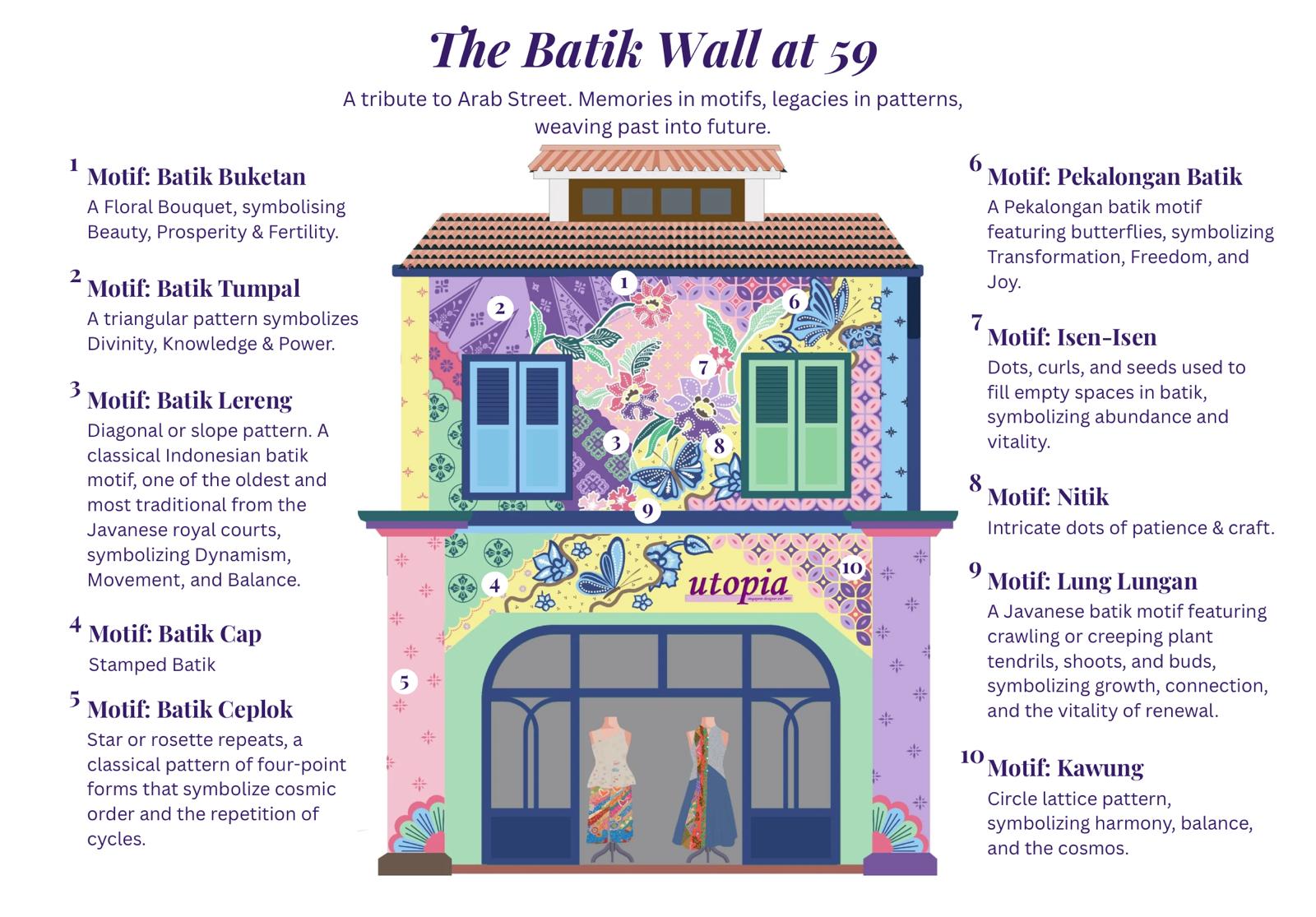 Photo from Sherry See
She did not receive official permission from URA before commissioning the mural.
In their statement, URA's spokesperson said that "owners and tenants of conserved buildings are responsible for ensuring that the relevant approvals are obtained before carrying out any conservation works and additions & alterations (A&A), including painting of murals on their buildings."
Having had a mural approved previously on Haji Lane, See said she did not anticipate that it would be rejected solely because her new unit was on a different street.
See said that she had served for many years with One Kampong Gelam (OKG), the business association in Kampong Gelam, and claimed that she herself was not aware of the mural guidelines.
"The irony was that I used to sit on the panel of stakeholders in Kampong Gelam that were the approvers of mural proposals. And even then, I did not know about this requirement. I have yet to be able to find the guidelines."
'How can there be progress without experimentation?'
See hoped that completing the new mural would demonstrate its value, and said it was not done to challenge the authorities.
“I wanted to show URA that it can be done tastefully, be aesthetically pleasing, and add value to the Arab Street area.”
See added that "till September 2012, murals were not allowed on the shophouse facade and commissioned murals were reported to be flouting guidelines".
However, the murals were finally approved after public intervention and stakeholder engagement.
"Without experimentation from the stakeholder back in 2012, Haji Lane may still remain the forgotten lane with dilapidated shophouses, instead of becoming the world-famous street it is now."
She added:
"Learning about how Haji Lane murals were eventually accepted, through dialogue, flexibility, and recognition that art contributes to the identity of the area, makes this even more emotional. It shows that these spaces didn’t become vibrant by accident; they became what they are because creativity was given room to exist alongside heritage."
She emphasised that "a huge part of Haji Lane and Kampong Gelam's success comes from the murals and creative energy they bring to the area".
See opined that Arab Street is the street with the least footfall in Kampong Gelam, "with many traditional businesses exiting", and asserted that "tradition on its own is no longer enough to keep a place alive and relevant".
See said that bringing a similar mural from her Haji Lane store to Arab Street highlighted the latter's heritage as a historic fabric district.
She added that "murals are storytelling tools", and the batik wall creates an opportunity to educate tourists about batik and its cultural history.
Murals typically not allowed on front of shophouses: URA
URA said in its response to Mothership that murals are "generally not allowed on the front façade of conserved shophouses, except those at Haji Lane, as they may obscure key architectural and heritage features of the conserved buildings and affect the established character and ambience of the historic district".
Murals are allowed on the end gable walls of corner shophouses, as well as the rear boundary walls, as these are typically plain façades without any significant architectural features.
The agency added that murals are not allowed on the front façade of shophouses along Arab Street as the street is the "focal point of traditional activities in Kampong Glam and features a mix of shophouse architectural styles that showcase Singapore's development story".
"Permitting murals on front façades along Arab Street would not only affect this established character, but also the legibility and consistency of the streetscape’s architectural heritage which has been carefully retained over the years."
The URA spokesperson said that "murals on the front façades of shophouses along Haji Lane are allowed for creative expression to reflect the street’s unique and eclectic character".
In consultation with the local community in Kampong Gelam, Haji Lane is the only exception.
"Its shophouses are predominantly of an earlier, simpler architectural style and typically do not have elaborate ornamentation that may be significantly compromised or obscured by murals."
Told to remove mural
See has made two appeals to URA after the mural was completed on Aug. 15 and another on Sep. 29, 2025, with support from stakeholders.
A URA spokesperson said it received and reviewed the appeals, and consulted KGA and the Heritage and Identity Partnership (HIP) on the existing mural guidelines.
"KGA and HIP agreed that the prevailing guidelines for murals on conserved shophouses, including those in Kampong Glam, should be upheld."
On Jan. 27, 2026, URA said the building owner and tenant were told to remove the mural from the wall of 59 Arab Street by Feb. 26, 2026.
"URA also informed the tenant that the painted artwork on the main beam of the unit can be retained, where flexibility is given to allow for shop owners to display business signs."
URA said its conservation guidelines were developed in consultation with diverse stakeholders, including heritage stakeholders, practising architects and engineers, contractors, and building owners.
The guidelines were set in place to enhance the conservation area's character and to protect the key architectural elements of conserved buildings while considering their functional and technical requirements for adaptive reuse.
Mothership has reached out to KGA for more information.
Top photo from Sherry See and Google Maps streetview