



News


Immigration crucial to S'pore, but only so far as integration allows: Jeffrey Siow
He highlighted that racial and religious harmony in Singapore needs to be a conscious effort from the government, locals, and immigrants.
January 26, 2026, 01:49 PM
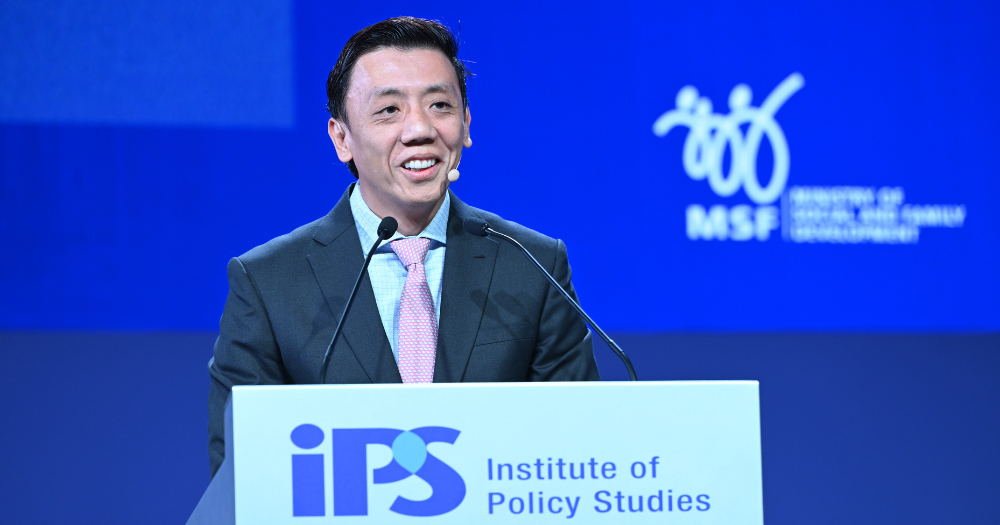


Singapore needs to strengthen the integration of immigrants so that it can welcome more into the country, said Jeffrey Siow, Acting Minister for Transport and Senior Minister of State for Finance.
He was speaking about social cohesion in Singapore at the Institute of Policy Studies' Singapore Perspectives Conference on Jan. 26.
Calling Singapore's total fertility rate — a historic low of 0.97 in 2024 — "abysmal", Siow said the country needs to confront the truth that immigration is crucial to keep its society and economy dynamic.
"But immigration can only go as far as integration allows," he went on, "and you can only stay open and welcoming to newcomers if you're able to integrate them well."
Mutual effort
Siow emphasised that integration is a two-way street.
"We need to make newcomers feel Singaporean, but also make Singaporeans feel that newcomers are Singaporean," he said.
It requires effort from both sides.
Newcomers need to consciously work to contribute to the community and understand what it means to be Singaporean, while Singaporeans need to be open-minded and accept that their national identity today will evolve.
Singaporeans also need to understand it takes time for newcomers to adapt to the local customs and practices, Siow added.
As of June 2025, about 40 per cent of Singapore's 6 million population were born overseas, according to statistics from the Ministry of Manpower.
Siow noted the factor of different homelands, and quoted Singapore's first foreign affairs minister S. Rajaratnam: "Ultimately, being Singaporean is not about ancestry. It's not about when we're born, but it's about choice, conviction, and contribution."
Conscious effort
Singapore's racial and religious harmony has long been a conscious effort, Siow said.
He shared about his first day of school at Primary One, where his teacher sat him between a Malay and Indian classmate.
Siow, whose first language is Hokkien, did not speak any English at that time and could only use "sign language" to communicate with these classmates.
As he grew up and after he joined the government, he learnt that having friends of different races and religions at school and work is not organic.
"In fact, it was the outcome of deliberate and conscious effort", he said.
He highlighted some government efforts to maintain social cohesion, including more direct interventions such as Racial Harmony Day and the Housing Development Board (HDB) Ethnic Integration Policy.
A less obvious approach is creating common spaces and common conversations for people of different backgrounds in Singapore to interact in daily life.
"The Singapore identity is complex and evolving, but it also has to be carefully nurtured and managed," Siow said. "But we are focused on this, and I think we are going in the right direction."
Top image via Jacky Ho / Institute of Policy Studies NUS