News


I feel incredibly lonely despite meeting so many people: Jasmin Lau on depleting social capital at S'pore Perspectives
Social capital is a "common bank of trust" that is depleting, she said.
January 26, 2026, 12:20 PM

 How many of you have a friend you can call for an emergency at 2am if you have a crisis?
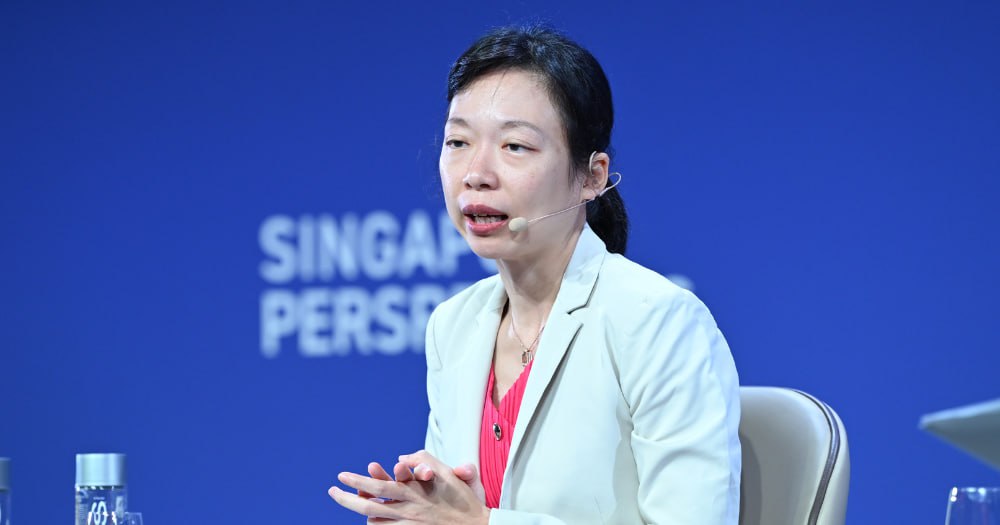
That was the question Minister of State for Digital Development and Information Jasmin Lau began with at this year's Singapore Perspectives on Jan. 26.
Depleted social capital?
The first panel of the event, on which Lau was a speaker, spoke on social capital in a digital world.
She simplified the term as a "common bank of trust" one cannot buy on demand, saying, "To me, it is like a form of insurance."
"We deposit funds into it. We hope, actually, that we may not have to draw down on it, but it is something that when the time comes, when the crisis hits, we will all draw down on it. So it is an invisible scaffolding that I think we will be building together."
The bank is getting "depleted" in the age of technology, she posited.
"Technology has helped, it's made our lives more convenient. Question is, what have we lost?" she asked.
According to a study by the Institute of Policy Studies (IPS), the average number of close friends per person in Singapore has shrunk significantly over time, from about 11 in 2018 to about six in 2024.
The tradeoffs of the digital age are obvious each day, said Lau.
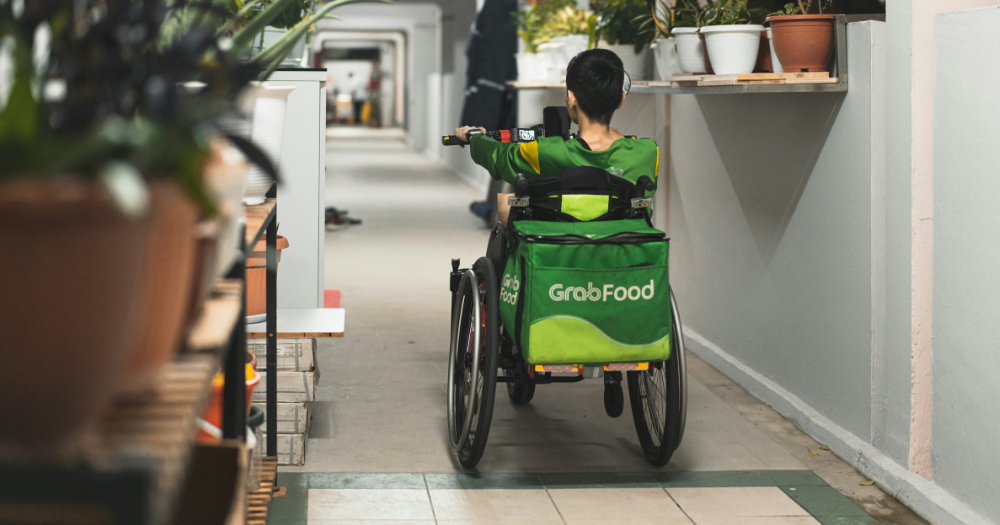
She cited families scrolling their devices in silence in a shared space, people no longer greeting delivery riders and cafe designs shifting towards prioritising privacy.
"In many ways, we are physically, maybe, there in the same space, but mentally, we are miles apart."
In her own life, Lau said she sometimes feels "incredibly lonely" despite her many meetings and interactions with residents at events.
"How many people out there really understand who I am, really understand my values, or who have seen me through my trials and my challenges? she asked, then answered, "Not so many."
"In fact, I could probably count on one hand, hopefully still two hands, the number of people who truly know me and whom I would say I could call at 2am. That's, I think, the kind of life many of us live now."
Effect on younger people
Lau, who is also the Minister of State for Education, added that the effects of the digital age on the younger Singaporean population are also noticeable.
"It also worries me that many of our children today may know the life of a stranger or influencer online way better than they know their own family members or friends," she said.
"This is that sign that gradually, even though we are all physically in the same country, in the same room, we really may not know each other that well."
It reflects outwardly, as studies have shown that people tend to be happier when they greet strangers like cashiers, hawkers, or people passing by, things people rarely do today, she said.
In the time saved by technology, younger people are also more likely to engage in individual habits, like playing computer games and scrolling on phones mindlessly instead of something constructive and impactful, Lau added.
Technology removes friction
Lau noted that technology is designed to maximise ease and engagement and minimise friction, pushing content that aligns with the user's thoughts and opinions while giving them the option to delete what they do not want to see.
But the lack of opportunity to handle friction prevents the deepening of bonds, Lau said.
"If you don't feel the discomfort, you don't engage in the discomfort, what will happen is that we never get a chance to go deeper into each other's lives to understand what drives our behaviours, and then be able to appreciate that all of us are actually pretty human underneath."
She highlighted an incident during a block visit months ago, when a resident, who complained about a bicycle problem with her neighbour, was found to have never confronted the neighbour in question in the first place.
The issue was quickly resolved with a simple conversation between Lau and the neighbour, who explained their side of the story, she said.
"Are we willing to engage in that discomfort of a conversation?" Lau asked, adding, "It's so much easier for the town council, bulky disposal removal, just take it and go...Now you have a small, little bank account of goodwill between the two neighbours that, hopefully, in future, it can be drawn upon."
She said social capital must be built on shared experiences of discomfort.
Like bank accounts, it can be rewired and rebuilt over time, but requires everyone to "invest in it".
Top image via Jacky Ho/IPS