Features

US author RF Kuang on learning Singlish & how S’pore is 'unlike anywhere else' in the world
The Chinese-American was a presenter at the Singapore Writers Festival, which continues till Nov. 16.
November 13, 2025, 03:34 PM


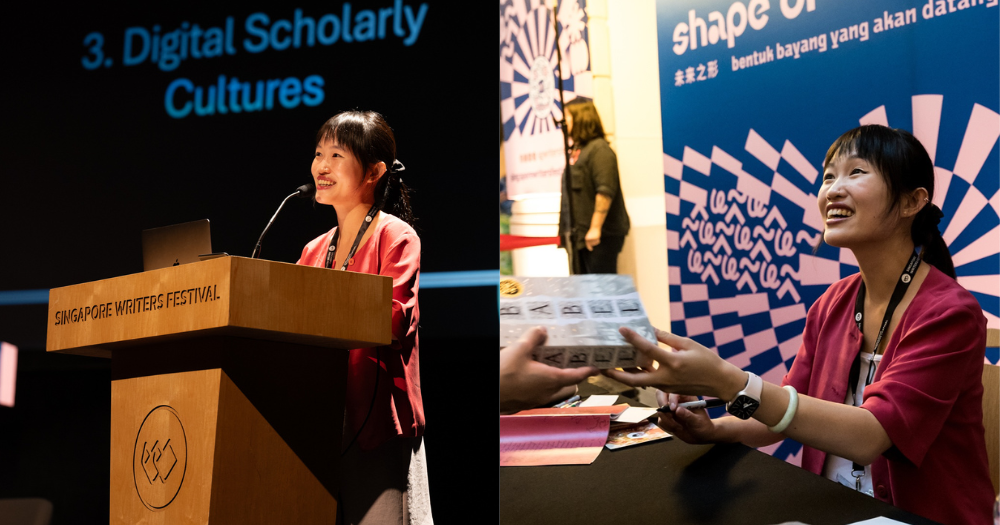
On her first visit to Singapore, author RF Kuang was greeted warmly with full houses and snaking queues of fans wanting to get their books signed.
The 29-year-old Chinese-American has gained a large following worldwide for her blend of fantasy, history, dark academia, and social critique, from the Poppy War trilogy to her latest book, Katabasis.
Featured in two events in the 2025 Singapore Writers Festival, Kuang spoke to audiences on Nov. 8 and 9 about topics she explores in her novels, such as academia, decolonialisation, and resistance.
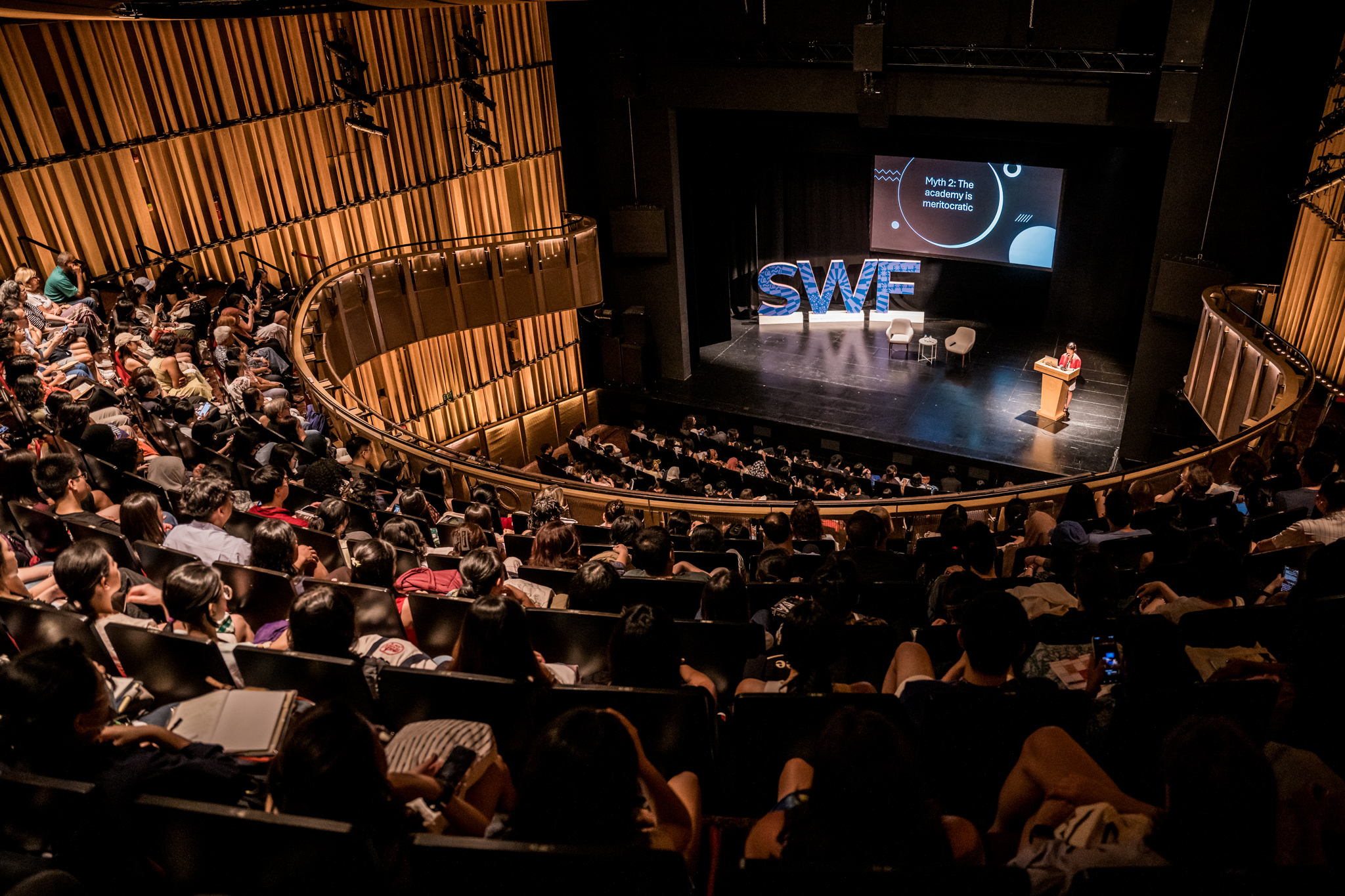 Photo by Moonrise Studio, courtesy of Arts House Group
"It's been one of the best festival experiences I've ever had," she told local and regional media in an interview.
Singapore's ethnic, cultural, and linguistic diversity, she said, is "totally unlike anywhere else [she has] experienced".
Kuang also joked about learning her first Singlish phrase, Phua Chu Kang's iconic "don't pray pray", and said she looked forward to picking up more during her week here.
"It feels like so many different parts of myself are represented here, the Anglophone part and the Sinophone part," she said.
Advice on education
Kuang has two master's degrees from Cambridge and Oxford, and currently teaches while she pursues a PhD at Yale University.
She is, perhaps paradoxically, a champion of education but a critic of academic institutions in the United States.
In her Nov. 8 keynote lecture, she spoke about how, both in Singapore and the U.S., a university degree has become less valuable in landing a job or a high salary today.
Yet there has not been a lot of empathy for young people struggling with the changes, Kuang told the media.
"I find it really patronising and condescending when older people who got into the job market when it was objectively much easier, just tell people to just keep trying," she said.
To help relieve pressure on youths, the first step is to acknowledge that finding a good job has become much harder today.
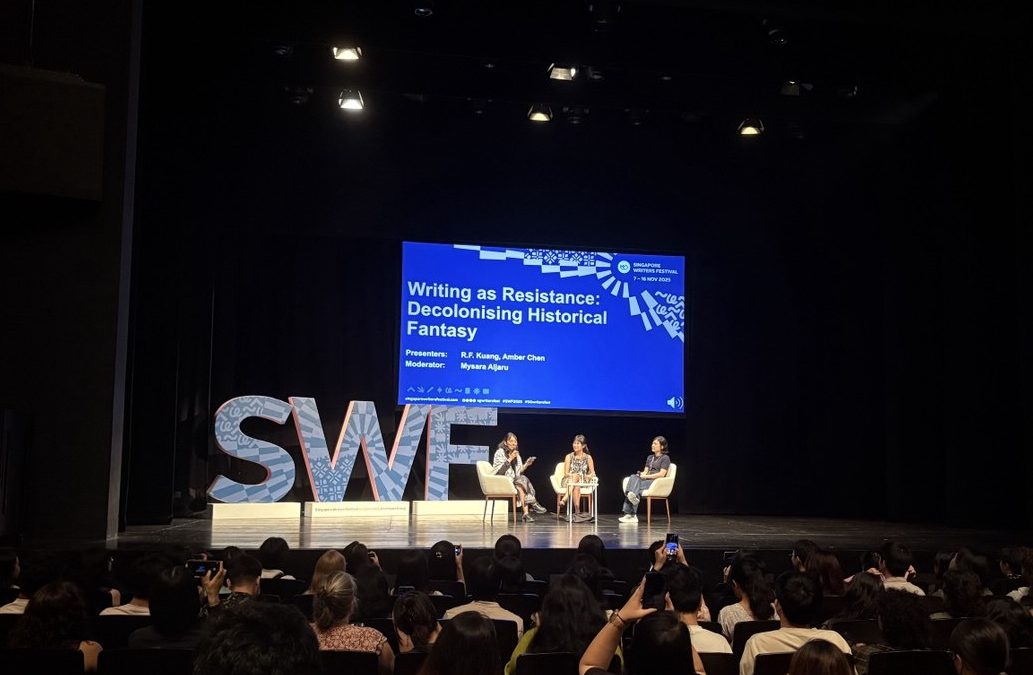 Photo by Mothership
Her relationship with her readers
Perhaps unsurprisingly considering her academic background, Kuang is known for weaving in complex topics into her books including philosophy, linguistics, and logic.
For some readers, this makes her writing rather dense and daunting.
But Kuang is not concerned about simplifying her works and making them more accessible.
"I think if you're asking yourself, 'Is my reader even smart enough to understand this?', you're already going down the wrong path, because you put yourself in an unequal relationship with the reader," she said.
In most of the topics that she writes about, Kuang isn't an expert herself. As she speaks to experts, she tries to make the information legible to herself — and in turn to the reader.
"I like to think that all of my books are just invitations for the reader to be curious about things with me, and to go down that investigative rabbit hole with me."
A multi-cultural perspective
Kuang's references, particularly in her latest two novels, also stand out for not being limited to one culture, but creating dialogues between many.
In Katabasis, for instance, she writes about Hell — a syncretic afterlife that mixes elements from ancient Greek, Chinese, and Buddhist mythologies.
It's a conscious choice. "I'm Chinese-American, so I have the enormous luck of being this hybrid artist who was raised with all these Chinese myths and stories at home, but also access to the entire Western canon," she said.
"I'm always going back and forth and absorbing new inspirations...I think that's the nice thing about living on the border in between cultures — you can dance between them."
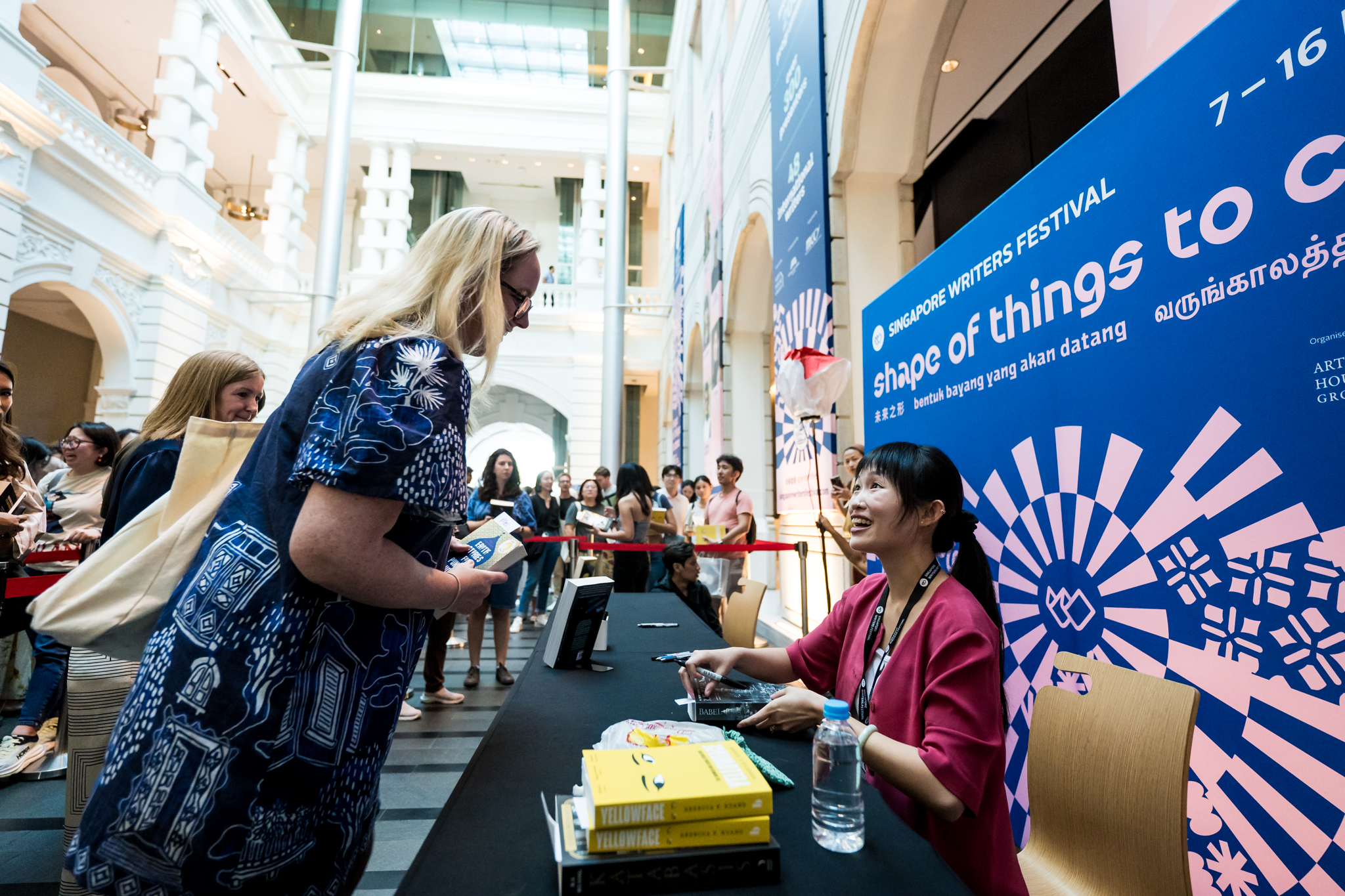 Photo by Moonrise Studio, courtesy of Arts House Group
What's next?
After publishing six novels at just 29, Kuang remains prolific, with her next novel already in the works and scheduled for September 2026.
Titled Taipei Story, it is a contemporary coming-of-age story about a college freshman doing a language study abroad programme in Taipei.
She described it as her most multilingual book, as she wrote large parts of the book, especially the dialogue, first in Chinese, and then translated them to English.
Fans could also possibly look forward to a historical thriller from her in the future.
"I love spy thrillers," Kuang said, "and I think of all the historical movements that has left the biggest footprint on the themes I'm concerned with, it's clearly the Cold War...I would like to write something that's set properly in the 60s."
Top images from Moonrise Studio, courtesy of Arts House Group