News

NParks looking into death of 25kg pet poodle at Tanjong Katong grooming salon
The dog was allegedly left alone for more than 1 hour.
November 03, 2025, 02:34 PM


A pet dog in Singapore allegedly died after it was brought to the Pawsome.sg pet store for a grooming session.
What happened
The dog owner Tanish Dhillon said his dog, Buddy, a poodle that weighed 25kg, was picked up from home for his monthly grooming session on Oct. 30 and arrived at the grooming salon, located at Tanjong Katong, at around 9:14am.
More than two hours later at 11:45am, Tanish received a call informing him of Buddy's death.
Dog left alone in cage for more than an hour
A 12-minute surveillance footage of the three-year-old poodle revealed his final moments.
Buddy could be seen crying and whining in a cage at around 9:50am.
He was also seen attempting to get free from the cage by pushing his head and paws through.
The staff on-site at the time were apparently attending to other matters at the shop, which also operates as a pet shop on top of their grooming services.
Told dog "just collapsed"
Tanish was informed that the groomer only arrives at 10:30am.
When he asked to see footage of the entire time that Buddy was at the shop, his request was allegedly denied, citing an "internal review".
The dog owner said Buddy was left alone in the room for more than an hour before the shop discovered him.
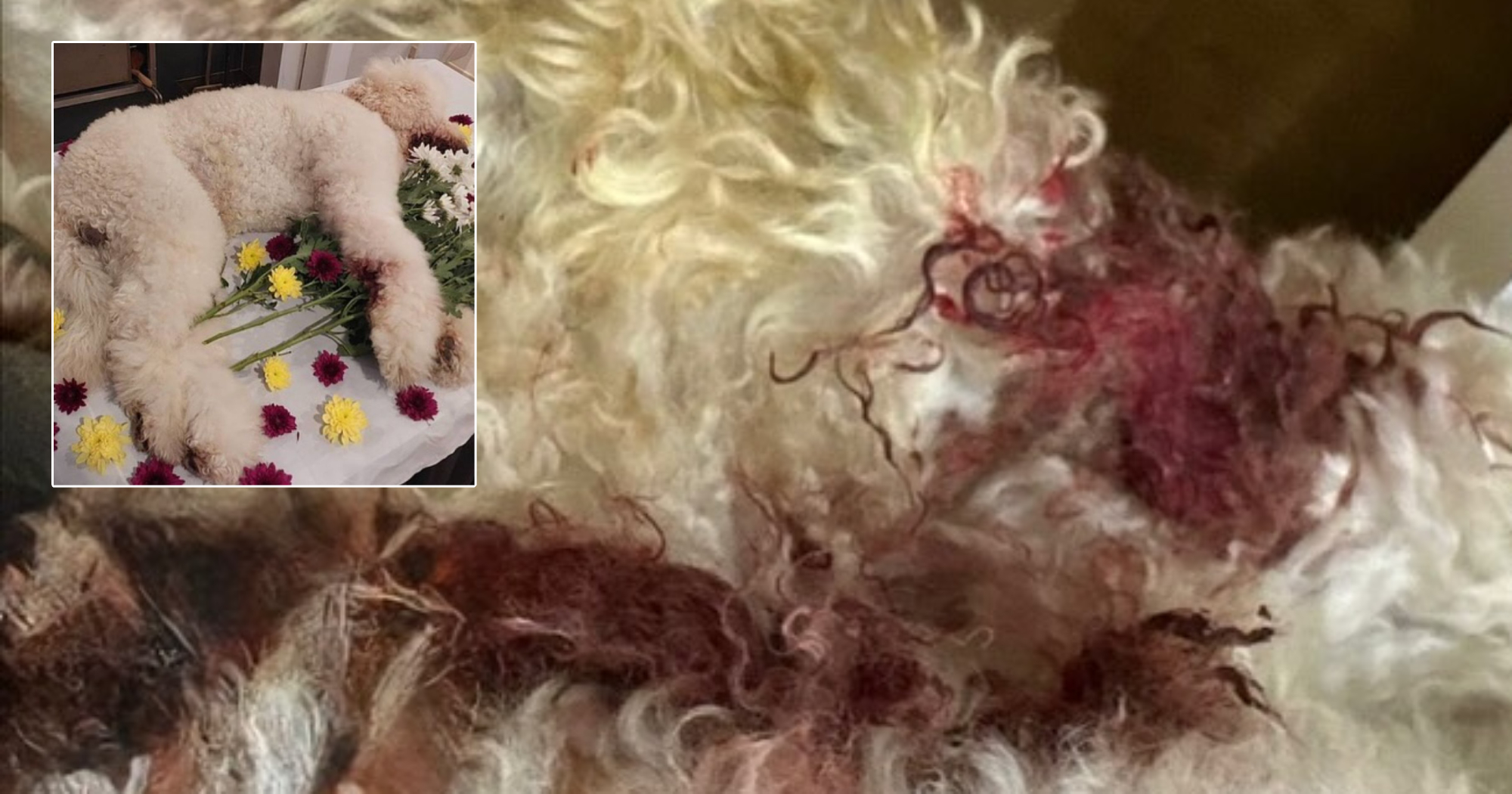
Tanish was told Buddy had "just collapsed", but he grew suspicious upon seeing that the dog's front paws and mouth were covered in blood.
Seeking legal action
The family halted Buddy's cremation and have sent him to the Centre for Animal & Veterinary Sciences (CAVS) for a post-mortem examination.
The family has also made a police report and is planning to pursue legal action.
Buddy was originally bought from Pawsome.
Shop's response
In response to the incident, Pawsome wrote online: "At Pawsome, every dog is treated with love, respect, and attention - just as we would our own."
It added: "One difficult moment does not define who we are or the dedication our team puts into caring for animals every single day."
NParks response
In response to Mothership's queries, Jessica Kwok, National Parks Board (NParks) group director for enforcement and investigation said it is looking into the case involving a dog at a pet grooming facility.
She said NParks takes a serious view of the case, and will take stern enforcement action if the pet grooming facility is found to be negligent.
Under the Animals and Birds Act, persons working with animals in relevant businesses, including those in the pet grooming sector, are expected to uphold higher standards of animal welfare as they are entrusted with the care of the animals by their clients, she added.
Any person found guilty of animal cruelty while operating or under the employment of an animal related business, will face a stiffer penalty of up to two years jail or a fine of S$40,000, or both.
In addition, the Animal & Veterinary Service (AVS), a cluster of NParks, has a code of animal welfare applicable to the pet industry that lists the minimum standards for pet businesses, including pet groomers.
These refer to the standards of animal housing, management and care that are deemed to be necessary to meet the basic needs of the animal.
All owners in the pet industry are encouraged to adopt these standards.
Any non-compliance to the code may be used as evidence to support enforcement actions, the statement said.
SPCA response
In its statement, the Society for the Prevention of Cruelty to Animals (SPCA) said it is deeply saddened to learn about the incident.
It added: "Incidents like this remind us how important it is to strengthen the standards of care for animals. That’s why SPCA with ACRES (Animal Concerns Research and Education Society) have pushed out the White Paper with recommendations to improve animal welfare and better protect companion animals. It’s a step toward ensuring that tragedies like this never happen again."
Such cases may warrant "longer disqualification periods" to ensure that "adequate time is allocated for meaningful reflection, rehabilitation, treatment and reskilling", SPCA also said.
SPCA also explained why a longer disqualification could work.
"Longer disqualification periods would compel individuals who may view the profession as a long-term career to carefully consider their actions and take the necessary precautions to prevent further mishaps," SPCA said.
It will also help address deficiencies and strengthen their operational capacity, it added.
Photos from tanishdhillon683 and lltanyadhillonll/Instagram