News

Commentary: Oct. 13 was an unalloyed victory for Donald Trump. Tomorrow will be tougher.
Trump's plan lack details, one of a multitude of problems it faces.
October 15, 2025, 05:34 PM


The holy grail, or poisoned chalice, of United State's foreign policy has long been peace in the Middle East, particularly between Israel and Palestine, where fighting has not only been violent and vicious, it has been enduring.
The fight has never just been between the Palestinians and the Israelis, but within them as well, between the Palestinian Authority in the West Bank and Hamas in Gaza, and the empowered Israeli right-wing against the diminished left.
And the past two years have been a potent concentration of the venom of the conflict.
On Oct. 7 2023, over a thousand civilians in Israel were killed, with hundreds more kidnapped by Hamas or aligned groups.
After that, Israel’s retaliation has killed over 60,000 people, many of them children, and brought parts of Gaza past the edge of starvation.
A global fight
The Israel-Palestinian conflict has its fair share of international attention, backers, and activists.
From the pro or anti Israel Jewish diaspora, to Muslim nations outside of the Middle East, to anti-semites, progressives, conservatives, and the religious in other countries, many groups have made this contest symbolic of their own.
Understandably, for politicians, this is fraught with danger, with thousands coming out into the streets to protest, and sometimes clash, supporting one side or the other.
Kamala Harris suffered in the 2024 U.S. presidential election in part due to her losing the support of critical communities in states like Michigan because of her reluctance to speak out on the conflict.
Even Donald Trump himself is not immune. His usually zealous supporters have questioned Trump’s steadfast backing of Israel.
A new dawn?
On Oct. 13, Hamas released the remaining 20 living hostages, and Israel reciprocated by releasing 1,996 prisoners.
In a region where, for at least the past two years, every day was marked by some new horror, every image was that of unimaginable pain, the pictures of Oct. 13 were remarkable.
Joy, relief, celebration.
Even before the exchange of captives, when the ceasefire was first called, a video was released of members of the Gaza press in Gaza City telling the remaining residents of the ceasefire. They could not know because the fighting had cut off their internet.
The image of the men wandering through what looked like a post-apocalyptic world, yelling good news into the pitch black city and the silence was absolutely haunting.
On Oct. 13, released captives were met by the public, by friends, by their families, who grasped their faces and cried with relief that those they thought were lost to them had returned.
And Trump can legitimately claim to have been the engineer of that joy.
Only Nixon can go to China
In American politics, there is an idiom, “only Nixon can go to China”.
Former President Richard Nixon was known for being stridently anti-communist both at home and abroad, but that meant he could treat with Communist China without being accused of being a red.
Trump’s credentials as a pro-Israel president are unquestioned, his face is on billboards in Tel Aviv.
He even joked that Israel’s prime minister Benjamin Netanyahu had asked for weapons “he never heard of” and Trump provided them, when addressing Israel’s parliament, as reported by Al Jazeera.
He leveraged this to make demands of Israel, such as making Netanyahu call Qatar’s emir from the White House to apologise for bombing his country, or when Trump had brokered an end to hostilities between Israel and Iran, only for Israel to continue a few sorties.
Trump responded by blasting Israel (and Iran to be fair), saying they “don't know what the f**k they're doing”, indicating that there were limits to his support and his paitience.
Trump’s meeting with Netanyahu on Sep. 29 was him showing an ally support, but it was also him forcing through his desire to see an end to fighting in Gaza.
He, practically unilaterally, forced through an exchange of captives, threatening Hamas with grave consequences otherwise.
20 points
He followed this up on Oct. 9 with a 20-point peace plan that demanded Hamas disarm and effectively disband, but it had some surprising inclusions.
Despite the current Israeli government denying the possibility of a Palestinian state, the 19th of Trump’s 20 points said:
“While Gaza re-development advances and when the PA reform programme is faithfully carried out, the conditions may finally be in place for a credible pathway to Palestinian self-determination and statehood, which we recognise as the aspiration of the Palestinian people.”
Once again breaking with Netanyahu, who had said that there would be no such accommodation, but still doing it with a smile.
Release
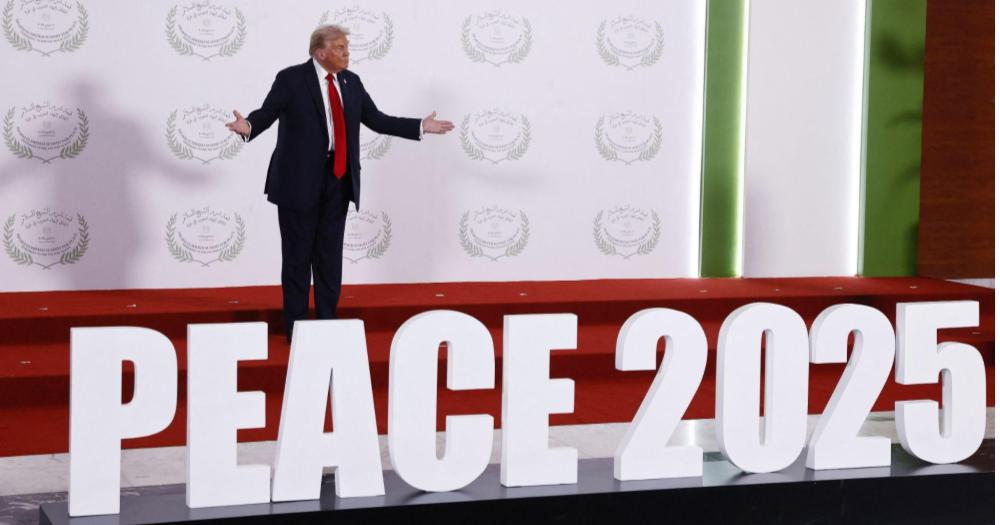
On Oct. 13, he landed in Israel to adulation, a standing ovation in Israel’s parliament, and then followed it up by heading to Sharm El-Shiekh in Egypt.
There he met with several regional and world leaders, including Indonesian president Prabowo Subianto, and later the U.S., Egypt, Turkey, and Qatar released a proclamation backing the Gaza ceasefire deal, and committing to “enduring peace” in the region, as reported by Al Jazeera.
There are many who dislike Trump, but there is no denying that if there was a platonic ideal of what a perfect U.S. presidential trip to the region would look like, it doesn’t get better than that.
For Trump, Oct. 13 will be an unalloyed victory for him, almost a kind of victory lap.
Tomorrow will be tougher.
Every American president has pursued a moment like this; some have come close, some have been closer than Trump is now.
But all have ended in eventual failure, whether within weeks, months, or years.
Hamas has rejected disarming and disbanding, unsurprisingly.
And it's not just about the conflict with Israel; Hamas isn’t the only militant group in Gaza and reports are already emerging of factional fighting in Gaza between Hamas and other groups, not to mention the alleged execution of collaborators.
Added to that is Hamas’s rejection of the so-called “peace board”, the requirement that Gaza will be administered by Palestinian technocrats, as well as the supervision of an International Stabilization Force.
This is without even going into the specifics, such as the role of Tony Blair, who has a nebulous reputation for the role he played in the 2003 invasion of Iraq.
One of the critiques of Trump’s plan is a lack of detail, but the forces arrayed against the plan are so multitudinous that this author would not bother to list that as a problem.
At least with a lack of detail, it gives those involved space to compromise and shift, and gives them agency with which to craft an enduring and lasting peace that represents themselves and their concerns.
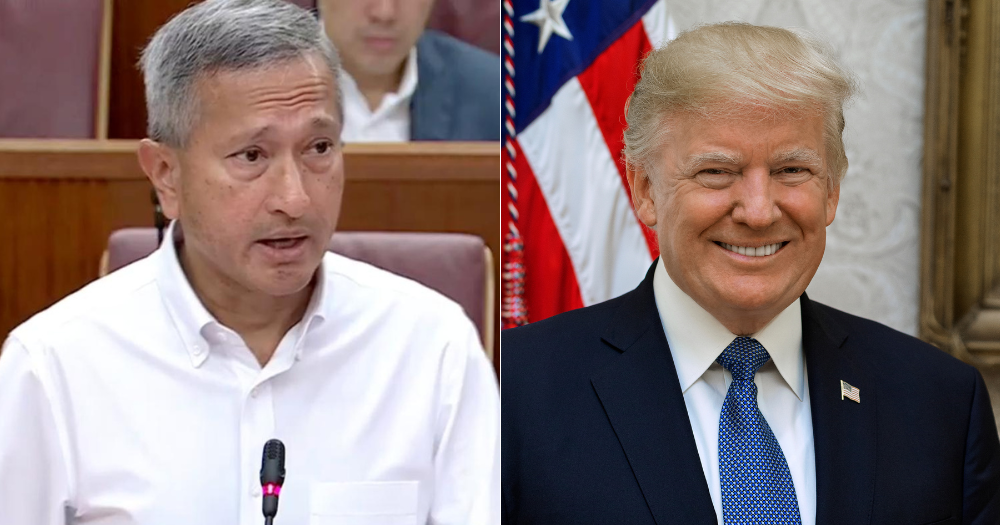
In Singapore, unlike in other countries, leaders have been ready to give Trump due credit, with Minister for Foreign Affairs Vivian Balakrishnan acknowledging that the Gaza peace plan was an "incredible achievement" when speaking in parliament on Oct. 15.
But he also warned that the the it was "the first step of what will, in fact, be a long and ardous journey to peace".
A long and ardous journey
This author is old enough to remember the Oslo Accords being signed thirty years ago.
And there was hope then, genuine hope, that the violence of the past had come to an end.
The blood spilt since then rivals that of what came before.
The Oslo Accords failed because internal factions within Israel and Palestine rejected them violently.
Israeli fundamentalists assassinated their own prime minister over it, with today’s incumbent egging them on, and Hamas conducting suicide attacks because of it.
And the question remains if either side truly wants peace.
Hamas has given no indication it will recognise Israel, and members of Israel’s current government are on the record, advocating for the full take over of Gaza and even the West Bank.
Netanyahu’s right-wing allies loudly grumble that the peace deal may be too lenient to the Palestinians, amongst other, more troubling complaints.
Netanyahu remains stunningly unpopular and would be replaced if only his rivals could work together for more than 12 months at a time.
Hamas for its part has been bled white, with a generation of combat leaders killed in the rubble of Gaza.
But Trump’s challenge is now to knit together a web of complexity, marrying the differing goals and visions of one of the most complex regions into a coherent tapestry.
This is without even mentioning the complex web that he has to face domestically, or with other parts of the world, at the same time.
Trump should rightly have enjoyed Oct. 13, but days like that will be fleeting.
Top image via AFP