



Features

Till death did them part: Lee Kuan Yew's 63-year love story with his wife
"She was always there when I needed her," he said in his eulogy to her.
August 09, 2025, 09:26 AM
Ten years after his death, the legend of founding Prime Minister Lee Kuan Yew persists. His indelible mark on Singapore political history remains untarnished, even burnished with time.
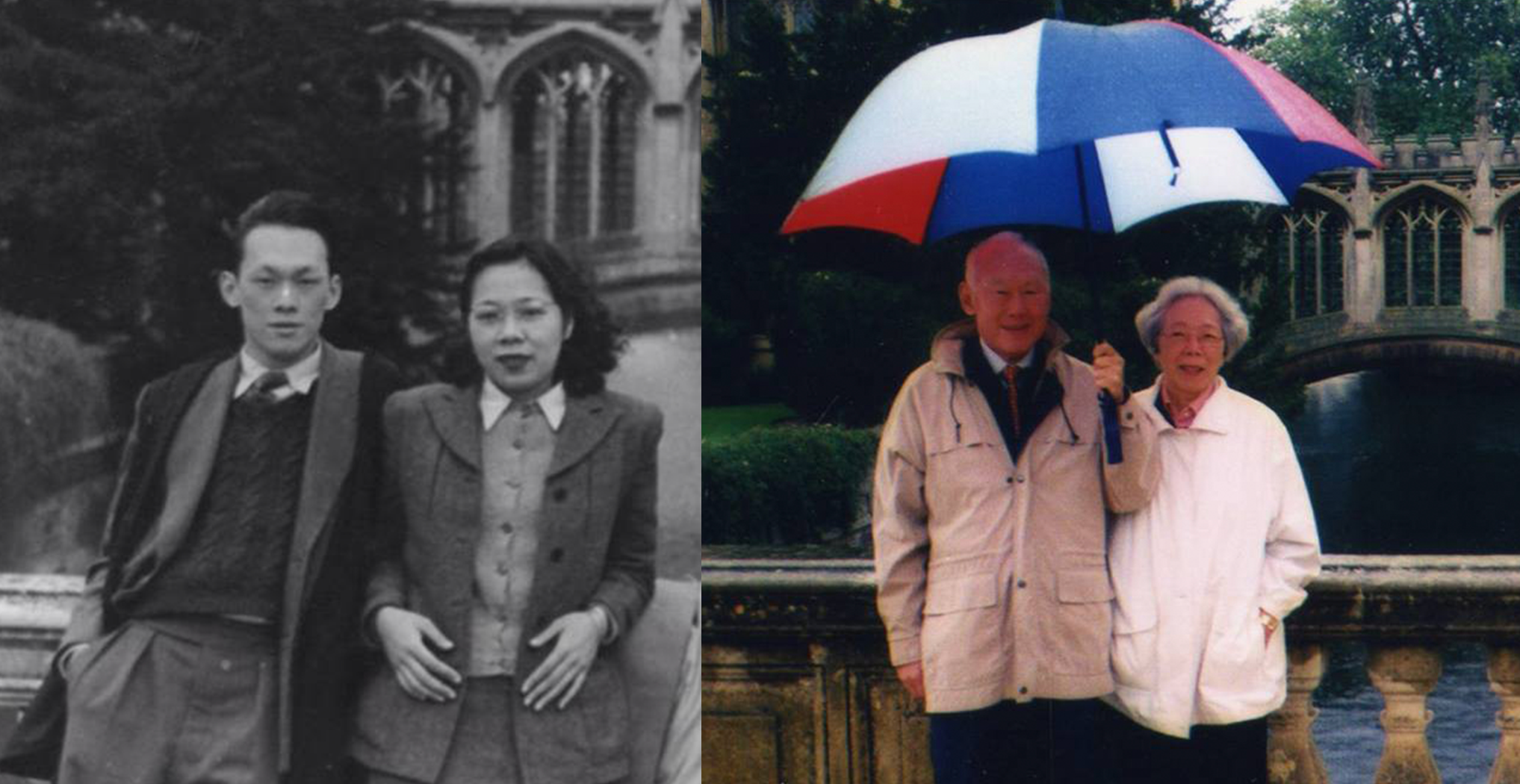
Less, however, has been said about his love story with his wife, Kwa Geok Choo. The pair met through Kwa's brother-in-law during the Japanese Occupation and got married in secret three years later.
In "The First Fools: B-Sides of Lee Kuan Yew's A-Team", published by The Nutgraf Books, nine Singapore writers explore the softer sides of our founding fathers, and the people they were outside their larger-than-life political legacies.
An excerpt from the chapter, "Lee Kuan Yew: When Harry Met Choo", is reproduced here in an abridged form.
By Peh Shing Huei
When Gascon (a Straits Times photographer) entered the study room, both Lee Kuan Yew and his wife, Kwa Geok Choo, were waiting.
Lee asked if his get-up was okay. Gascon took a quick scan and pointed out that his light-coloured top would not sit well with the off-white surface of his personal computer.
He asked if Lee could put on a dark-coloured sweater, and Kwa quickly came back with a pullover.
"It was from the gasoline brand Mobil," said Gascon. "The kind they give out for free when you pumped petrol at the gas stations. It had Mobil's logo on it." Far from ideal, but the photographer knew better than to ask the famously impatient Lee for a second wardrobe change.
He was about to start the shoot when Kwa interjected. "Wait a while," she said. She got up, took a comb, and started combing his hair gently because it was ruffled from when he put on the sweater.
Instinctively, Gascon switched from his work Nikon camera to his personal Leica camera and snapped two shots. "Oh George, I heard that," she said. Despite Leica being one of the quietest cameras around, the double clicks were audible.
Gascon froze. "I didn't know if it was a reprimand. I wasn't sure if she liked or disliked that I snuck a shot. But for me, as a photographer, it was pure instinct.
"I saw a moment of tenderness. He was very relaxed, she combed his hair, it seemed like that was what they were doing all their lives. They didn't have to say a word to each other."
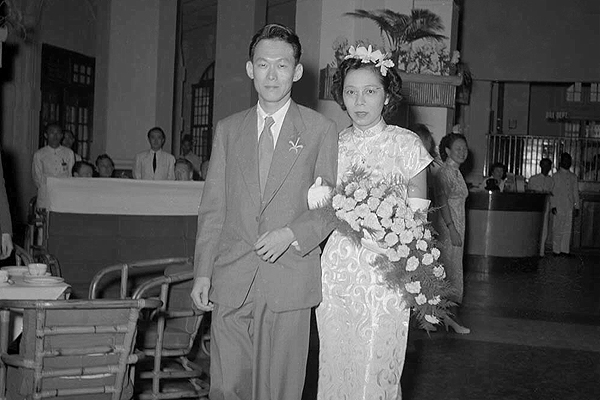
An ordinary marriage
While rich and powerful men often desired and demanded for women, Lee Kuan Yew wanted only one.
Philip Yeo, former special advisor for economic development to Lee, said: "A teapot has many teacups, just like an emperor has many concubines. But Lee Kuan Yew had only one teacup."
It was highly unusual, especially for powerful men of that era. China's Mao Zedong was a serial philanderer; United States' John F. Kennedy had multiple affairs, Uganda's Idi Amin had five wives and allegedly 33 mistresses.
Tycoon Robert Kuok remarked in Up Close: "One thing about him (Lee) I would say is that he stayed true to one woman his whole life, and that is quite remarkable for a man of those times."
Editor Cheong shared the same observation. "I don't know enough about him to know about his desires. But his devotion to her was total. He's a unique leader."
It is a political love story that rivals Mark Antony and Cleopatra, Queen Victoria and Prince Albert, and Shah Jahan and Mumtaz Mahal of Taj Mahal fame.
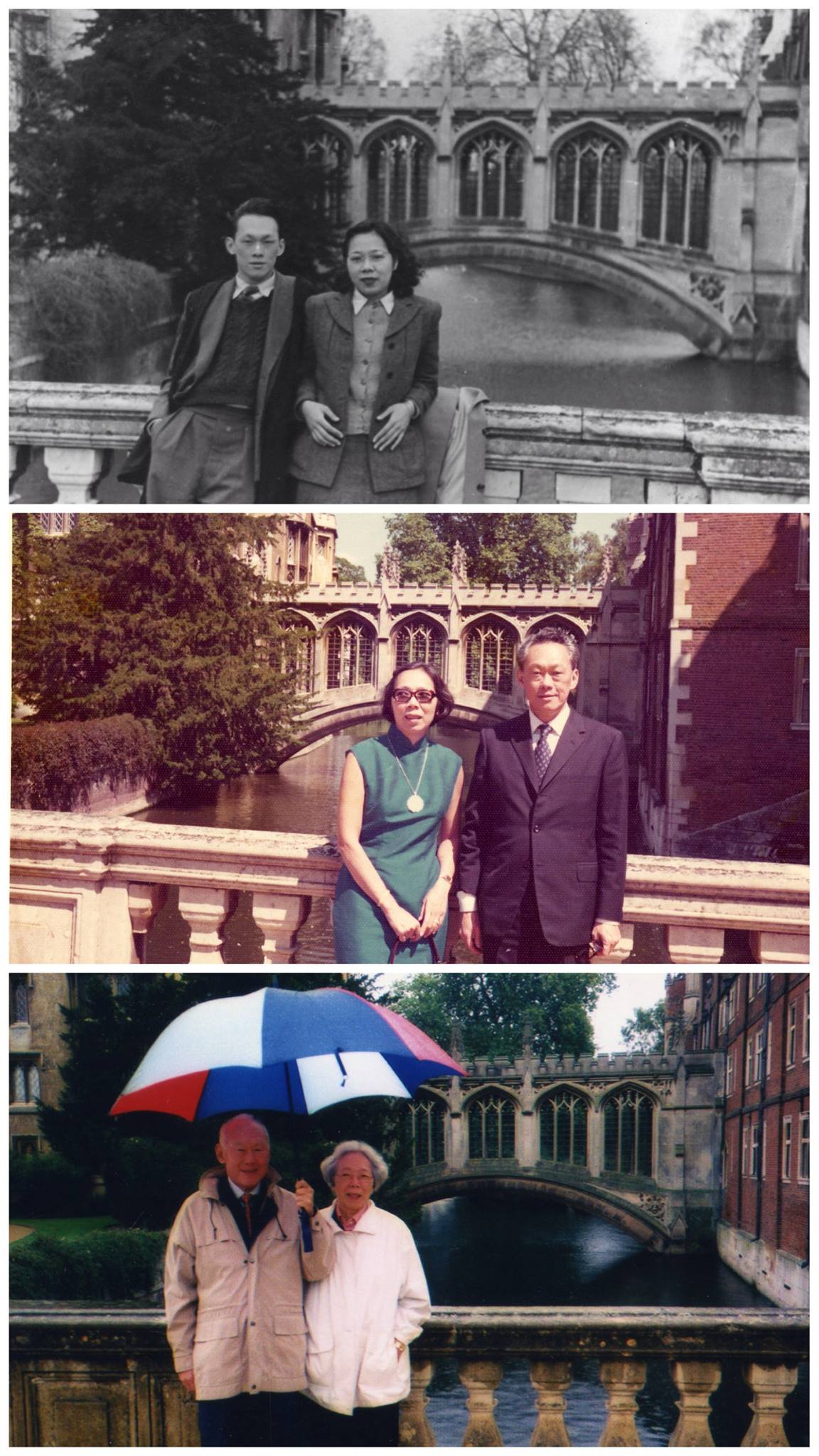 Image from Lee Hsien Loong/Facebook
Most trusted advisor
When he became Prime Minister in 1959, their marriage developed into a stable and quiet relationship where she became not only his chief confidant, but also his most trusted advisor and, critically, the supreme moderator.
She used her legal expertise to help him draft the constitution of the PAP. When Singapore had to break from Malaysia, she helped him include an undertaking to guarantee that Malaysia would abide by the water agreements signed between Singapore and the state of Johor.
He leaned on her for her reading of people. "She would tell me whether she would trust that man or not. That's a gut feeling," he said in The Man and His Ideas. "And often she is right because she has got an intuitive sense of whether the chap is trustworthy and friendly or unfriendly."
She cautioned him against trusting the left-wing trade unionists led by Lim Chin Siong. She warned him that the merger with Malaysia would not work because the Malaysian Malay leaders had different lifestyles, and their politics were based on race and religion.
"I replied that we had to make it work as there was no better choice. But she was right. We were asked to leave Malaysia before two years."
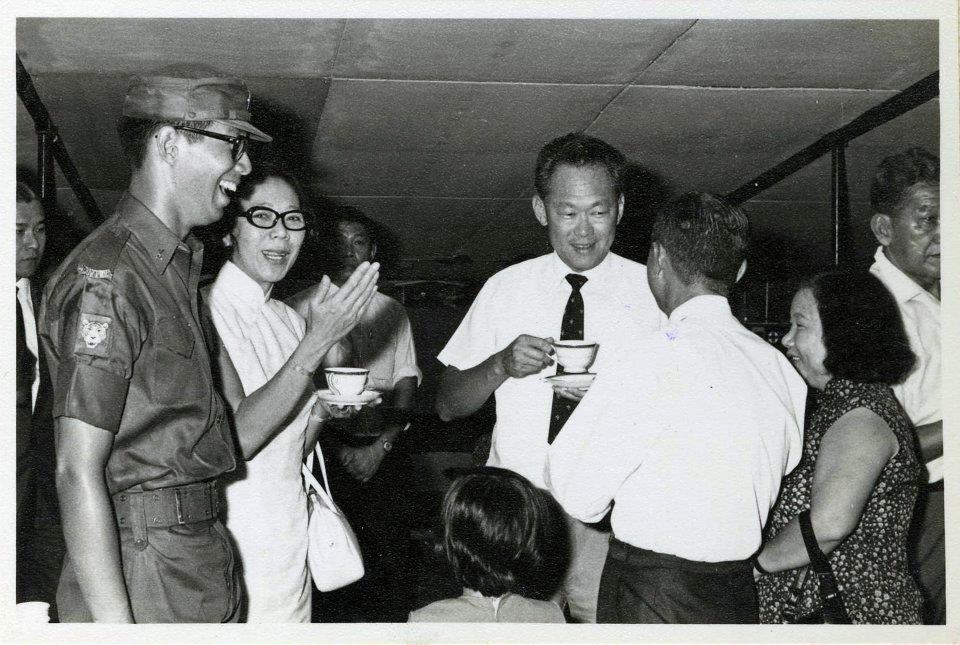 Photo from Lee Hsien Loong/Facebook
Role reversal
Their couple dynamics took a sharp about-turn in 2003 when Kwa suffered a stroke.
While she had hitherto revolved around him and taken care of his every need, from dressing to medication, from packing to cooking, it changed completely after her illness.
"The stroke and the resultant disability made my mother quite frail," wrote Lee Wei Ling in 2010. "From that point on, my father lived his life around her."
He became her shadow. She loved it, cheerfully dividing her life into "before stroke" and "after stroke", like BC and AD, he shared in his eulogy to her.
It was not easy to change decades of habits. Lee still wanted his wife to help him with simple tasks which he had been used to, such as mending his running shorts.
It was challenging, given her impaired vision, and she told him: "If you want me to prove my love for you, I will try." Lee Wei Ling stepped in to get someone else to do it.
As resolute as he was as a politician, Lee would prove that he was equally indefatigable as a lover. He adjusted and he persisted.
He believed it was better for her recovery to remain exposed to the world, instead of being isolated at home. So she attended his events in Singapore, aided by women security guards who held on to her with a thick elastic black belt to ensure she would not fall.
He insisted she travel with him on official trips, several of which were witnessed by this writer, who was then a political reporter with The Straits Times. This included nearby trips in Southeast Asia, but also longer-haul visits to the Middle East and China.
On one trip to the Gulf in 2006, Lee even brought her out to the desert, and she posed for photographs on a camel. He made sure there were always breaks in the itinerary for daily swims in the hotels.
At times, she resisted, said Lee Wei Ling. "On one occasion, she wanted to rest rather than swim. 'Today is a public holiday in Singapore,' she said to him. 'Can't I take a rest from swimming?'"
But he persisted, telling her that a swim would help her have a good night's sleep, and that he would join her. "The smile on Mrs Lee's face after hearing that is still etched in my mind," shared Yeong. "While I have never heard them say 'I love you,' their actions revealed everything."
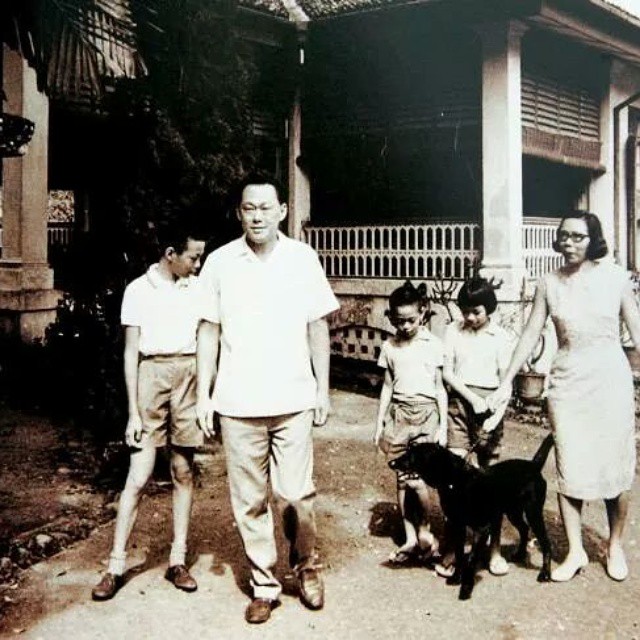 Photo from Remembering Lee Kuan Yew/Facebook
End of a love story
Sadly, the good times would not last forever. In May 2008, Kwa suffered three strokes in quick succession, becoming bedridden and mute.
Gradually, she lost more and more of her faculties and did not seem aware of the people around her. He was the exception.
She would respond almost only to his voice and even stayed up late at night so that he could talk to her. He told her about his day, the people he met, and most of all, he read the news and her favourite books and poems to her.
Even when she was overseas, he would make sure to do it over a webcam. She responded by blinking. One blink for yes, and two for no. "She understands when I talk to her, which I do every night," he told The New York Times in 2010. "She keeps awake for me; I tell her about my day's work, my favourite poems."
The toll it took on him became apparent to those who saw him during this time. It also became clear to journalists that his physical appearance became less neat and well put together. "You could sense this was an elderly man now very much on his own and unused to it," said Zuraidah.
"He was looking like a person who did not have the attentive eyes of a partner to tell him to straighten up. One day, he came for our interview with a piece of rope instead of a belt to hold his pants up.
I remember feeling a bit sad and thinking even the great Lee Kuan Yew couldn't do without the tender loving care of a wife."
In August 2009, in one of Lee's last major speeches in Parliament, he appeared with an obvious cowlick, no longer having that last brush of a hair before stepping out, as witnessed by Gascon.
Sorrow and grief
In October 2010, after more than two years of struggles, Kwa passed away. A state funeral was held in her honour, and thousands paid their respects.
The night before her funeral, he took a long walk by the Singapore River by himself because he could not sleep. It was a walk which the couple had shared many times.
Lee was grief-stricken. As he bade his final farewell at the funeral, he said:
"I have precious memories of our 63 years together. Without her, I would be a different man, with a different life. She devoted herself to me and our children. She was always there when I needed her. She has lived a life full of warmth and meaning."
"I should find solace at her 89 years of her life well lived. But at this moment of the final parting, my heart is heavy with sorrow and grief." He leaned forward to plant a final kiss on her face.
In what were probably his last public words on her, he told the Hard Truths journalists that the "big heavy house" was even emptier. In an e-mail interview in November 2010, a month after her passing, he said he was lonely. "No-one to talk to when the day's work is done," he said.
It felt that he was ready to join her, and that last leaf would fall on 23 March 2015, as he drew his last breath.
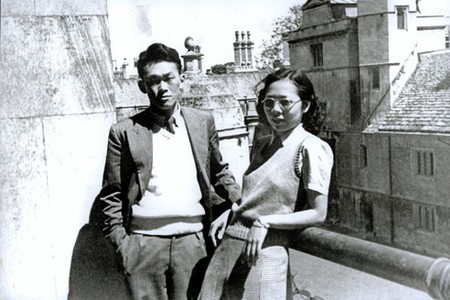
Top image Photo from Lee Hsien Loong/Facebook