News

1st ever record of peregrine falcon chicks in S'pore after 2 hatch in April 2025
Baby birbs.
May 28, 2025, 03:11 PM
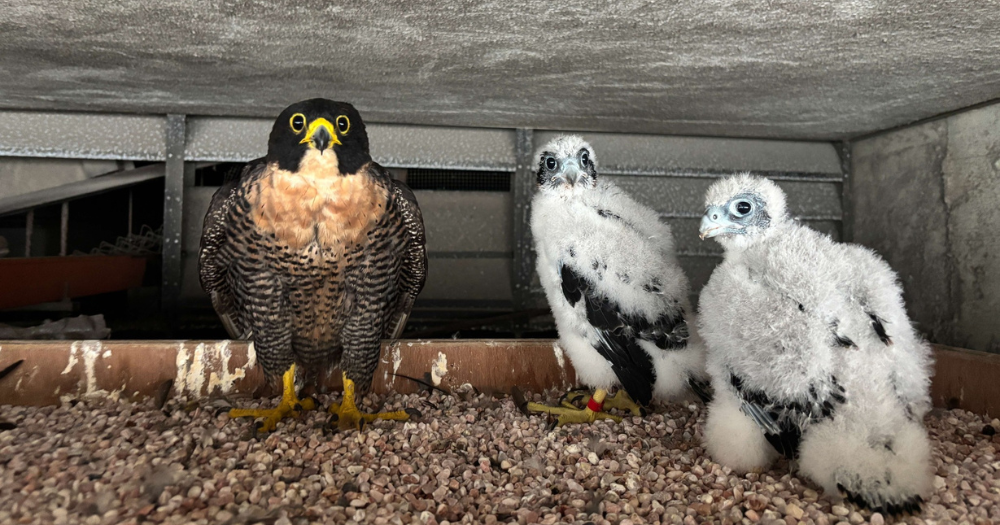


Two peregrine falcon chicks successfully hatched on Apr. 6 and 9, 2025, making them Singapore's first record of peregrine falcon chicks.
In a press release by National Parks Board (NParks) on May 28, these chicks were part of the third clutch of three eggs laid between late February and early March 2025.
As falcons may lay up to two to three clutches of eggs in a single mating season, that was likely the falcons' last attempt for the season.
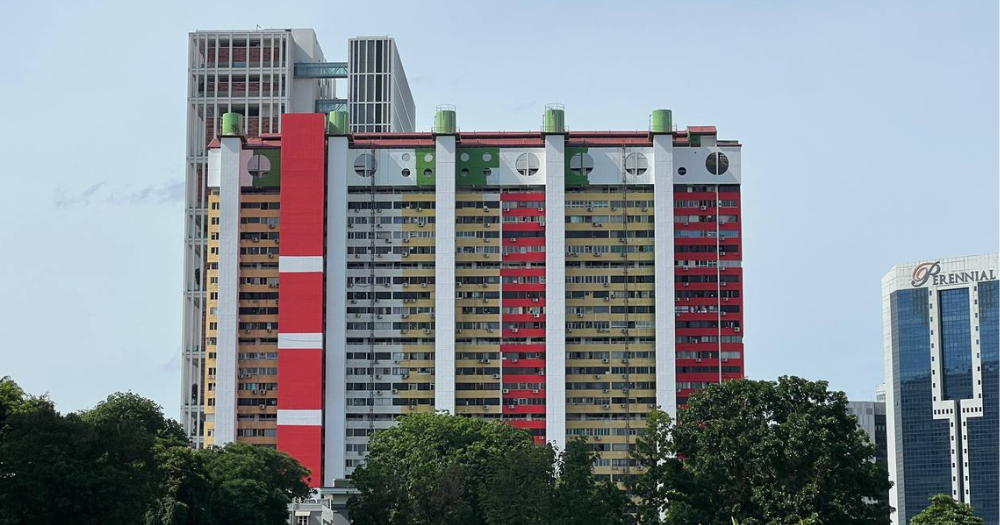
The nesting pair was recorded at the OCBC Centre in 2024.
NParks, supported by the Singapore University of Technology and Design (SUTD), Lee Kong Chian Natural History Museum (LKCNHM), Mandai Wildlife Group and Mandai Nature, helped the falcons with their breeding efforts.
OCBC also helped by contributing to the research project through the Garden City Fund, NParks' registered charity and Institution of a Public Character.
Long road to parenthood
In April 2024, the falcons were observed to have nested, but the parents eventually abandoned the pair of eggs.
The abandoned eggs were eventually retrieved, and it was observed that the eggs may have been abandoned due to shell damage.
The eggs were later donated to the LKCNHM, making them the first Peregrine Falcon egg specimens for Singapore and the museum.
On Nov. 22, 2024, a research team installed a nesting tray with loose gravel in the recess of the OCBC Centre to improve nesting success.
The loose gravel was intended to provide a more suitable substrate for nesting, as Peregrine Falcons in the wild nest on natural cliff-side habitats with a loose sandy or gravel substrate.
A CCTV system was also set up overlooking the nesting tray so that researchers could monitor the progress of the falcons' breeding cycle.
From January 2025, the team also noticed the falcons using the recess on the opposite side of the OCBC Centre and set up a second nesting tray and accompanying CCTV system.
During the installation of the second tray, five older, abandoned eggs and two newer ones were discovered.
The older eggs were donated to the natural history museum, while the newer ones were moved to the nesting tray, as earlier eggs found on concrete surfaces did not hatch.
The male falcon was initially seen to incubate the eggs in the tray, but the female falcon did not attend to them, and the eggs were eventually abandoned.
The two eggs were retrieved and sent to Mandai Wildlife Group for further examination and incubation at the Bird Paradise's Breeding & Research Centre.
However, they were removed after eight days due to degradation and lack of development.
Post-mortem examinations revealed no evidence of fertilisation in either egg.
In mid-January, a second clutch of three eggs was laid on the concrete surface but was later consumed by the female falcon.
NParks stated that the CCTV footage showed the falcons frequently adjusting the eggs' positions to keep them from rolling away during incubation.
The constant repositioning likely created a stressful incubation environment, and the increased movement of the eggs on the concrete surface could have damaged them, prompting the female to consume them. Food scarcity might also have contributed to the behaviour.
However, between late February and early March 2025, a third clutch of three eggs was progressively laid on one of the nesting trays.
The initial signs proved promising. The female falcon was seen hollowing out a scrap in the loose gravel to prevent the eggs from rolling and protect them from damage.
Both falcons were seen incubating the eggs.
Then on Apr. 6, the first chick hatched.
On Apr. 9, the second chick hatched.
Sadly, the third egg did not hatch and was eventually retrieved and sent to LKCNHM for further research.
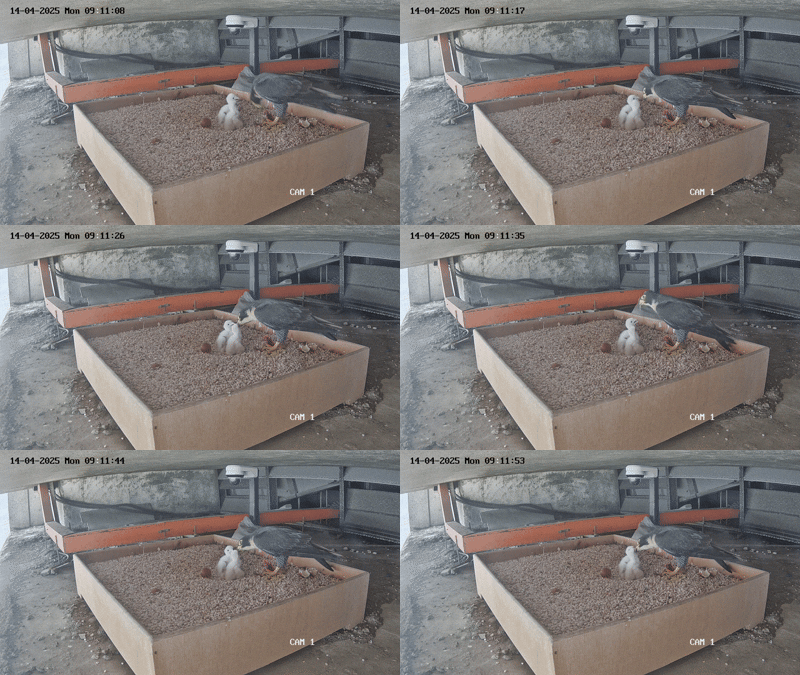
From the moment the first chick hatched, the new parents flew into action, capturing prey and regularly feeding it small morsels of meat from captured birds.
When the second chick hatched, the male falcon was seen on multiple occasions bringing food back and passing them to the female falcon to feed the chicks.
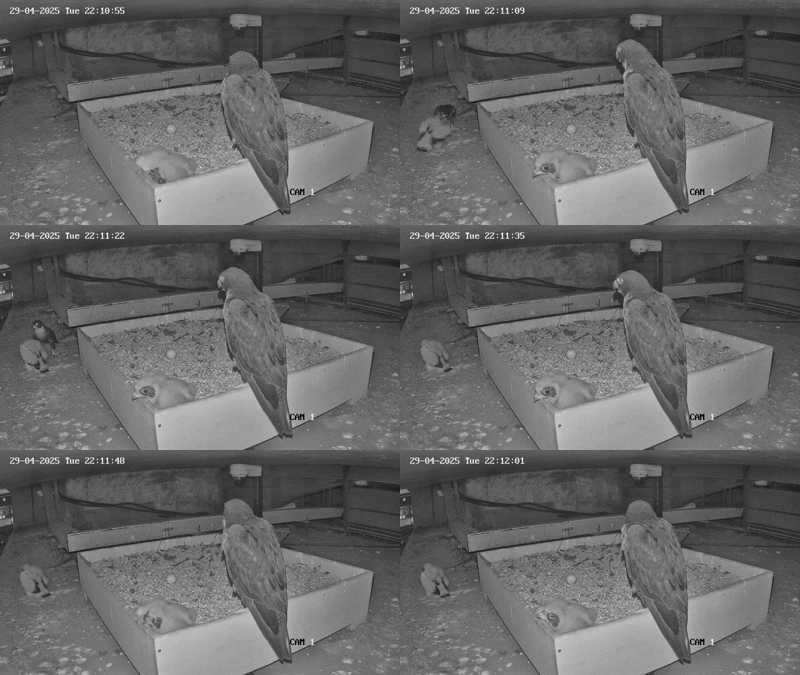 Gif from video via NParks
At times, the female falcon also hunted to feed the chicks.
 Gif from video via NParks
Chicks
NParks said that when both chicks were three weeks old, they were retrieved from the nesting tray for ringing.
This involved attaching small rings to the chicks' legs, which allowed the research team to identify the individual falcons from a distance without having to recapture them.
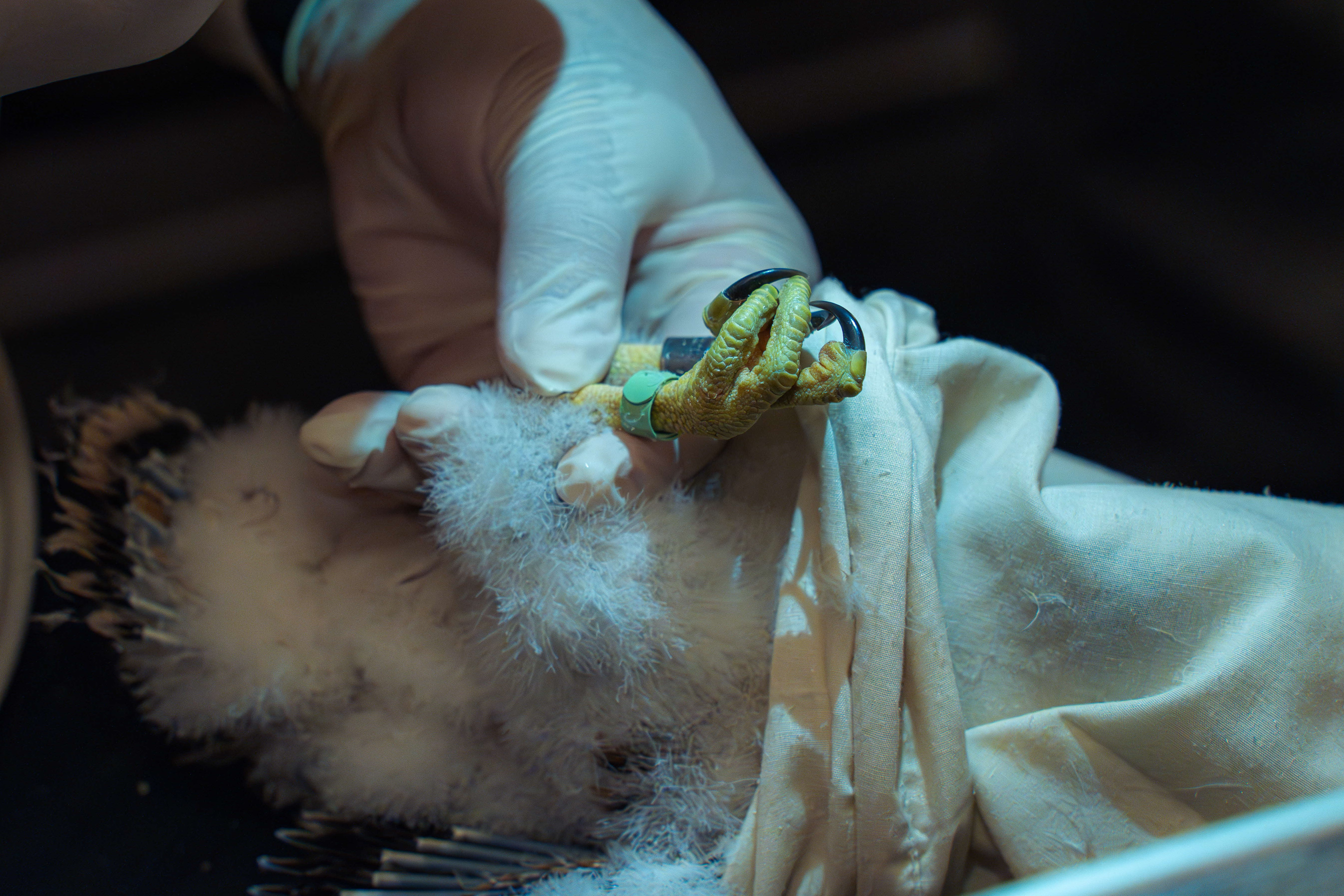 Photo via NParks
The first chick fledged on May 18 but was found on the ground floor a day later. Similarly, the second chick fledged and was found on the floor on May 21.
Both chicks were brought to NParks' Centre for Wildlife Rehabilitation for health assessments.
Thankfully, the x-rays of both chicks showed no fracture, and the first fledgling was released back to its nest on May 20, and the younger one on May 23.
On May 23, the older fledgling was sighted with its parents on the nearby One Raffles Place building. The next day, the older chick was spotted again on the same building but at a higher perch.
NParks shared that while the fledglings gain strength and confidence in flying, they may accidentally find themselves on the ground again. Members of the public are advised to contact NParks' Animal Response Centre if any of the fledglings are seen on the ground.
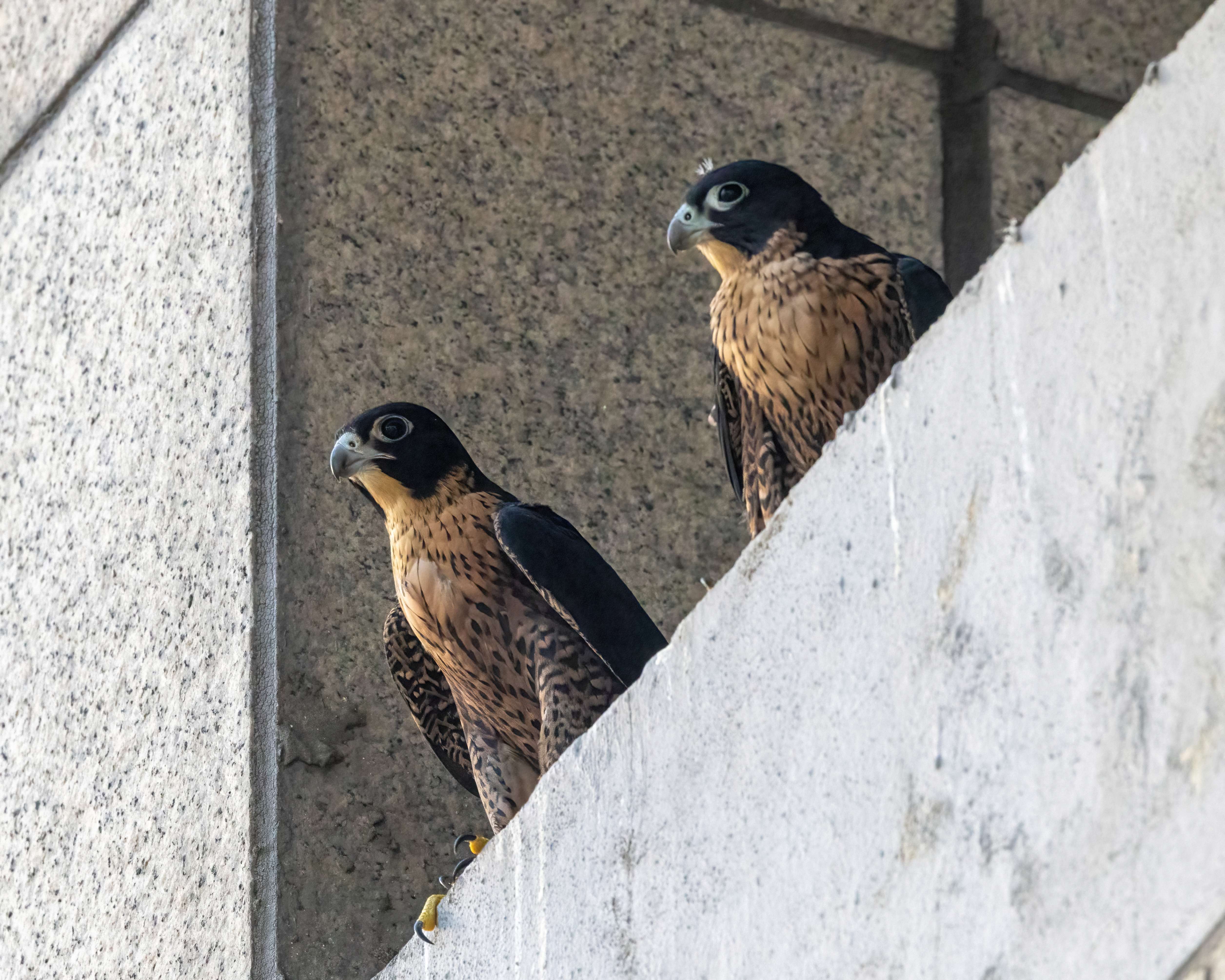 Photo via NParks
NParks' principal researcher, Malcom Soh, shared that "as Singapore's only known breeding pair of Peregrine Falcons, these birds provide invaluable research opportunities."
"Their presence allows us to gather crucial data about Peregrine Falcon breeding biology in tropical regions, where their ecology remains poorly understood... By studying their breeding patterns and foraging preferences, we can develop more effective conservation strategies to support their successful adaptation to Singapore's urban landscape."
The research team will continue to monitor both nest sites for subsequent breeding cycles and maintain the nests if needed, such as removing debris and replacing the nesting tray substrate, NParks stated.
Top photos via NParks