Branded
Considering braces? Here’s why having straight teeth goes beyond aesthetic reasons.
It’s more than having a nice smile.
Each time I visit my dentist, he’ll politely suggest that I consider getting braces.
Doc, if you’re reading this, yes, I know. You don’t have to say it again.
Truth be told, it’s obvious my teeth aren’t the straightest, and aligning my teeth has been on my mind for a while.
However, I find that my teeth’s alignment has not really posed much problems functionally at this point.
So, it seems like mostly an aesthetic pursuit for a nicer smile. Do I really need to spend all that money just for aesthetics?
Or might there be other reasons to justify the investment?
To have my questions answered, I spoke to an expert in orthodontics. Here’s what I learnt.
Straight to the point
Right off the bat, I found out that correcting malocclusion (the fancy word for misaligned teeth, and therefore, jaw) go far beyond aesthetics.
There are several kinds of malocclusions.
- Deep Bite: When the upper teeth overlap the lower teeth excessively
- Underbite: When all the lower front teeth protrude past the upper front teeth
- Crossbite: Misalignment where one or more of the upper teeth sit inside the lower teeth
- Open Bite: Presence of a gap between the upper and lower front teeth when biting down, often caused by mouth breathing and thumb-sucking habits in young children
- Crowding: Overlapping, crooked teeth due to insufficient space
- Spacing: Presence of gaps between teeth, often due to missing teeth, or when teeth are smaller than normal
Misaligned teeth can make it harder to brush and floss effectively, increasing the risk of cavities and gum disease.
Sometimes, misaligned teeth can also cause speech problems such as articulation or pronunciation of certain letters like “S”, “T” and “Z”.
Meanwhile, a misaligned jaw can similarly lead to problems with chewing and breathing.
Addressing these issues early through orthodontic treatment can help fix or prevent complications down the road.
That being said, it’s best to consult with your dentist to see if you require treatment.
Which treatment option to pick?
Investing in orthodontic treatment as a cost-saving measure is a good sell, if you ask me.
It makes sense to fix misaligned teeth early for better oral and overall health rather than risk bigger problems developing in the future.
Still, the potential inconveniences of wearing braces put me off.
I dove into the various orthodontic treatment options on the market to see if there might be one better suited for my lifestyle.
To start, there’s the classic metal braces that we’re all familiar with.
Metal braces are more noticeable and require frequent adjustments every 4 weeks.
However, with my active lifestyle, I worry that braces may not be the best choice.
For one, I learnt that there might be a risk of them breaking during contact sports.
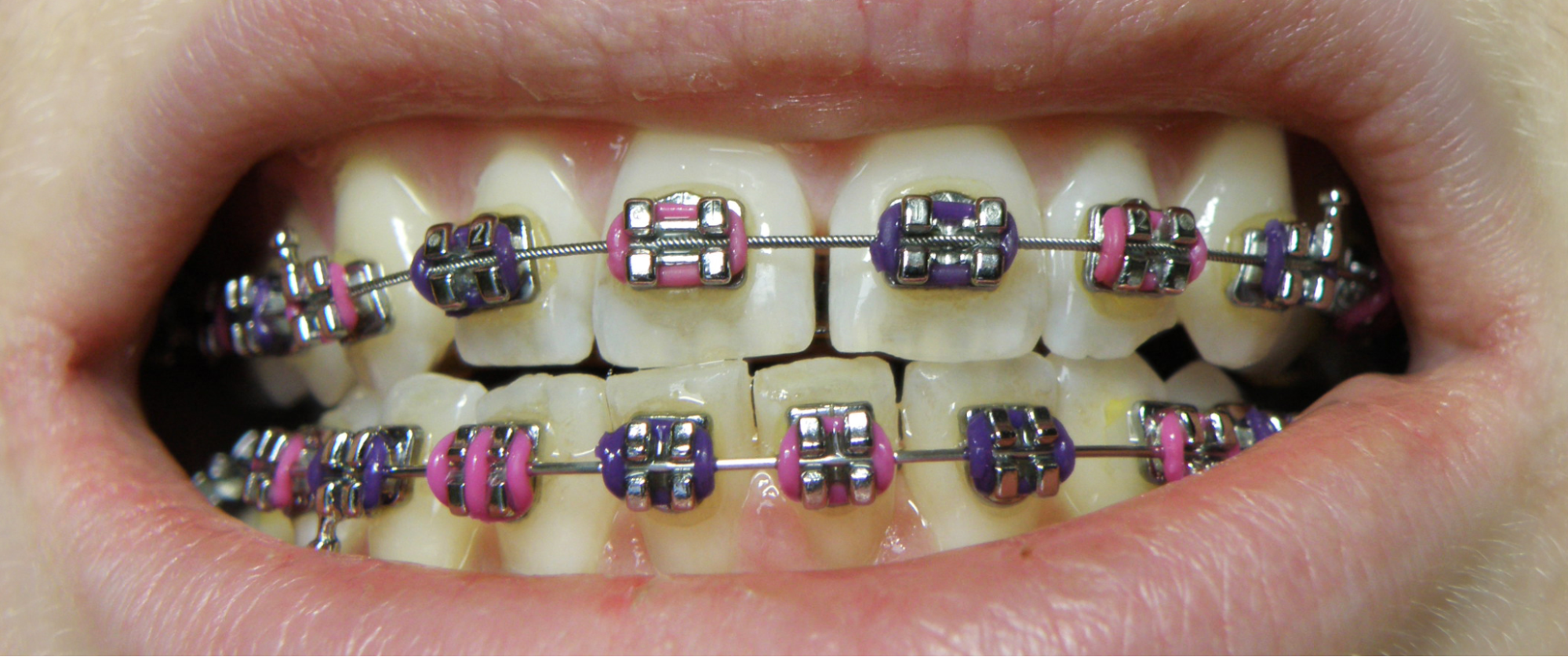 Image via Wikimedia Commons
Alternatively, there are lingual braces and clear aligners.
Lingual braces are like metal braces but are instead attached to the back side of the teeth, making them unnoticeable from the front.
However, wearing them might make it more difficult to maintain oral hygiene.
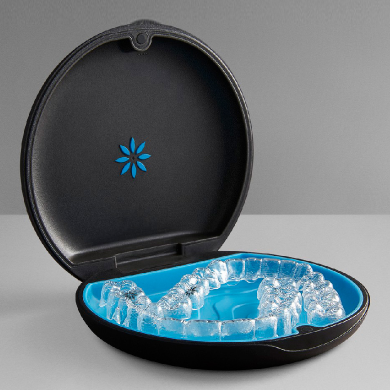 Image via Invisalign website
Clear aligners, on the other hand, are almost invisible. They gradually push your teeth into alignment using clear plastic trays.
These trays are removable, although patients do have to wear them for 20 to 22 hours a day except when eating or drinking.
This means you can eat all the food you love without worrying about food getting stuck. Maintaining oral hygiene will also be more convenient.
You can also do sports freely without much worry.
Clear aligners work just as well as traditional braces too.
All the same benefits, and then some
At this point, the most compelling option to me is clear aligners.
Clear aligners are made out of plastic, making them safer and therefore, comfortable to wear for those who frequently do sports.
It being discreet is a plus point too.
My curiosity about clear aligners led me to Invisalign.
Why Invisalign, you ask? I found out that they were the original clear aligners brand, founded by two Stanford University students who first developed and marketed the technology in 1997.
Where better to start than with the OGs?
Also, Invisalign has more than 25 years of research and data as well as millions of patients worldwide (19.5 million, to be exact).
It’s assuring to know Invisalign is a product with a solid track record.
Invisalign can treat simple to complex cases and can also correct the entire arch of teeth, including bite correction.
The expected duration takes an average of six to 18 months, depending on the complexity of your case.
Invisalign also uses advanced technology to prepare your course of aligners, ensuring each one is tailored to your dental profile.
They also have a digitised treatment workflow where your Invisalign doctor does a scan of your teeth and can show you the end result, even before treatment begins.
I also learned that not all clear aligners are made the same.
Only Invisalign is made with their proprietary SmartTrack material. Simply put, it means Invisalign aligners offer more comfort, predictability, and precision giving you the results you expect.
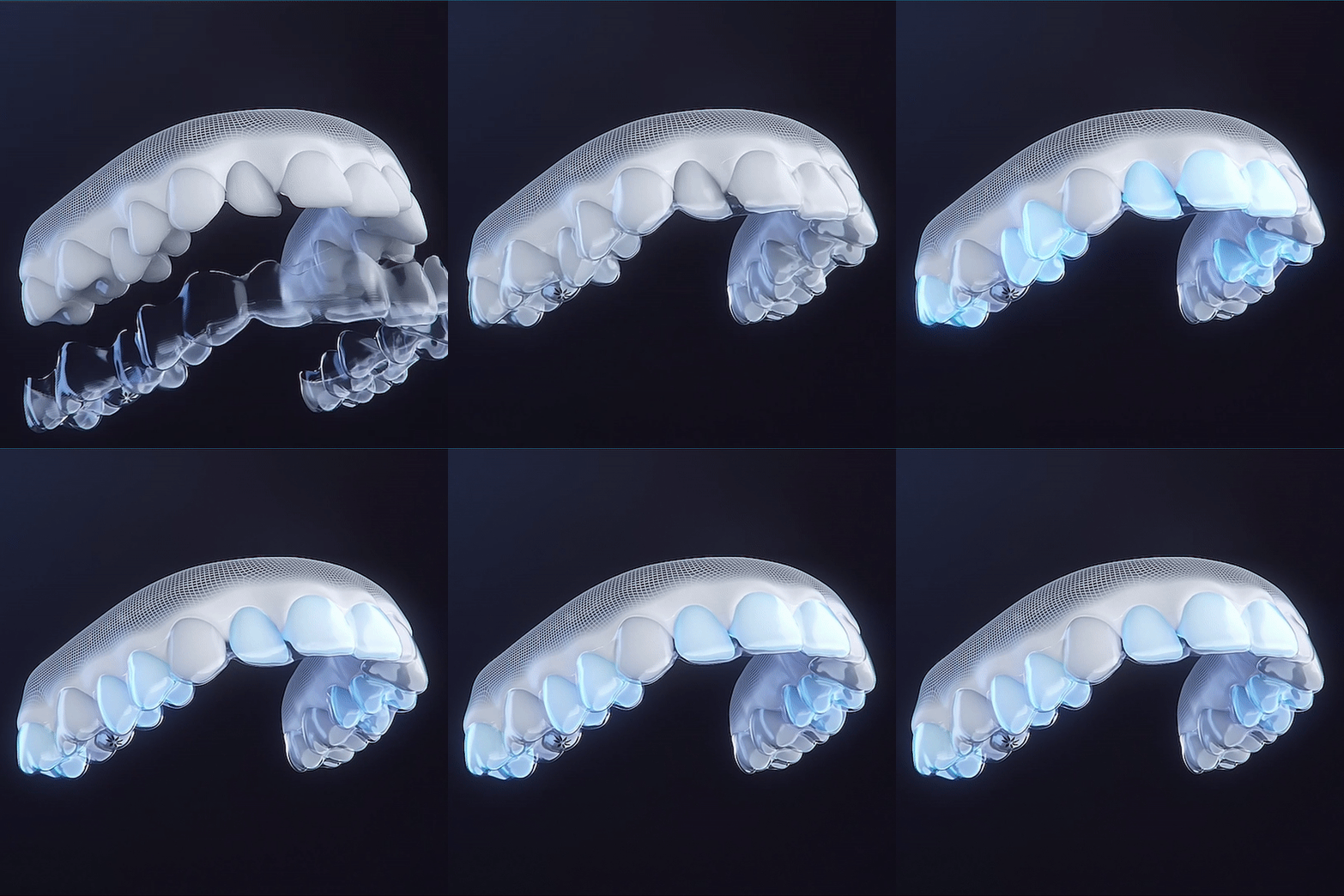 Correcting teeth alignment comfortably and discreetly. Wow. Gif via Invisalign.
The best part? Invisalign treatment doesn't necessarily cost more than traditional options.
The cost of Invisalign can be similar to traditional treatment options such as braces, with Invisalign treatment starting from S$3,288.
To know that you’re getting all these advantages, look for the flower logo and make sure what you’re getting are Invisalign aligners.
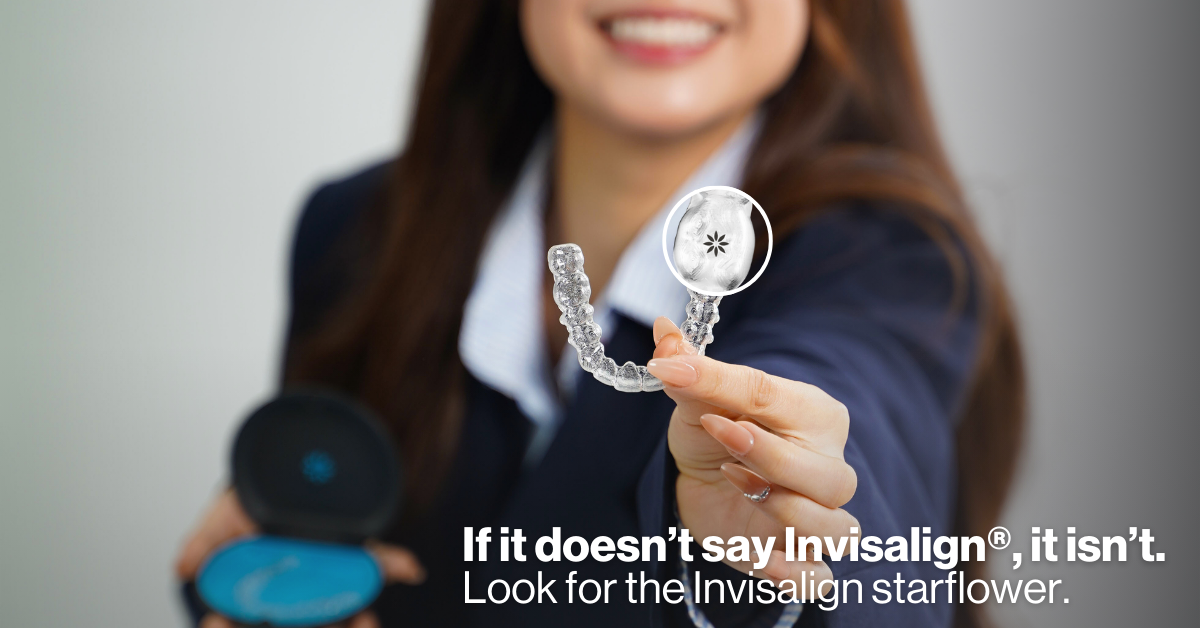 Image via Invisalign.
Hmmm, maybe it’s time?
To be honest, this mini foray into learning more about teeth straightening actually convinced me to seriously consider it.
The fact that clear aligners like Invisalign can help correct malocclusions with minimal discomfort and interruptions to daily life is extra appealing.
Invisalign even has an app that makes it easy for you to track your progress and see improvements over time.
Of course, aligners are just the first step in the process. After aligners come retainers, but right now, that’s jumping the gun a little.
Whatever it is, the first step is a doctor’s consultation, who will then advise you on your treatment needs.
Thinking about getting Invisalign aligners to finally have that celebrity smile? Find an Invisalign-trained doctor from their website.
This Invisalign-branded article made the writer consider clear aligners to fix his teeth.
Top image from Canva, Invisalign