News

Immigration essential, even existential, for S'pore's survival as new citizens enrich & invigorate S'pore: SM Lee
SM Lee also talked about the "fresh experiences, diverse perspectives, and global connections" that new arrivals brought with them.
March 09, 2025, 02:27 PM


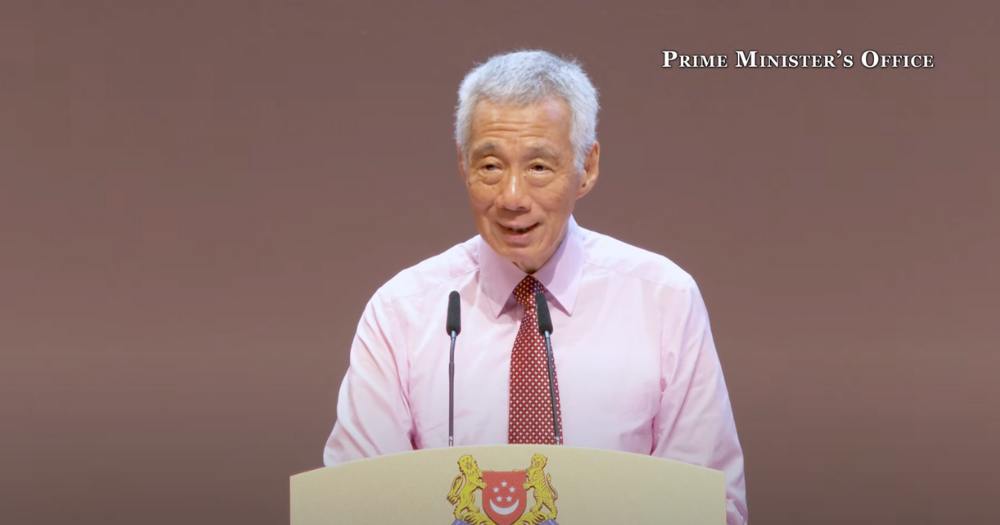
Senior Minister Lee Hsien Loong was at the Teck Ghee Citizenship Ceremony on Mar. 9, 2025 at Nanyang Polytechnic to present citizenship certificates to new citizens.
The ceremony was to formally welcome new citizens into the local community.
SM Lee also gave a speech welcoming the new citizens.
In it, SM Lee noted that citizenship, which he noted was granted to about 22,000 people yearly, was not just an administrative process, but a "deeply personal journey".
He highlighted the different ways in which the new citizens had found themselves at this ceremony.
"Some of you married Singaporeans and decided to make your home and build your families here. Some of you studied and grew up here; all your friends are here.
Some of you came here to work, found yourselves fitting in and growing roots here; and now, you have decided to take the final step and become Singaporean."
He noted that many of the new citizens at the ceremony were already "old friends" of Singapore, and were familiar with the Singaporean way of life and were already "contributing to our economy and society" in their own ways.
Essential
SM Lee continued by stating how important immigration was to Singapore's survival.
"Immigration is essential – even existential – for Singapore’s survival."
He pointed out that as a small island with no natural resources, Singapore can only rely on "our people- our skills, enterprise, and hard work - to make a living for ourselves".
He noted that unlike other countries with a large population, resources and a hinterland, Singapore does not have those advantages to fall back on.
SM Lee further said that Singapore needed new citizen to "top up our numbers" and to keep the economy growing, noting that the "resident workforce" is already at "full employment, and ageing".
"If Singapore closes ourselves up, opportunities will pass us by. We will fall behind, and become just like any other city in the region, and our descendants will be the worse off for it," he added.
Beyond numbers
However, SM Lee said it was not just about numbers, but for new citizens to enrich Singapore's society and invigorate the economy in ways "beyond what numbers can show".
To this point, SM Lee talked about the "fresh experiences, diverse perspectives, and global connections" that new arrivals brought with them.
Which in turn, he said, helps Singapore become plugged into the world, and "thrive as a regional hub and a global node".
Pointing to "great centres of culture and prosperity" like London, New York, and Shanghai, SM Lee said they achieved that by attracting "enterprising and adventurous people from all over the world to live and work there".
That "steady infusion" of new arrivals sparks a "cross-fertilisation" of ideas and cultures which leads to "an environment of constant innovation and enterprise".
SM Lee said this leads to more growth and reinforces success, which then attracts even more talent.
Sensitive issue
SM Lee did note that immigration is a sensitive issue in every country.
"There is always some tension between newcomers and those who are already there. Governments play a big part in managing these tensions, in order that immigration can become a net plus for societies. Unfortunately, this does not always happen."
SM Lee pointed to "many European countries" where integration effort had not kept pace with the immigration.
He then said this ultimately leads to a strong "nativist pushback".
SM Lee said the Singapore government is "keenly aware of the need to handle immigration and integration sensitively", particularly as the inflows are not small.
Every year sees about 30,000 citizen babies being born, Singapore takes in about 22,000 new citizens.
SM Lee notes this is why it is "crucial" to manage immigration inflow carefully, paying attention to harmony and different ethnic groups, while taking in people "who can fit in and add to our society".
Part to play
While he acknowledged that there are many programs to "welcome and integrate" new citizens into communities, SM Lee stressed that new citizens have a part to play as well.
"I hope now that you have become citizens, you will participate wholeheartedly in society, and make the effort to integrate. Learn our values and cultural norms. Get involved and contribute actively to your communities.
"You will not be exactly like those who have been citizens for many years, or all their lives, but that is also precisely what makes you valuable.
But over time, just like past generations of immigrants, as you integrate into your communities, as your sons go through National Service, the differences will become less stark.
Soon, you too will become Singaporean – not just in name, but in spirit and identity too.
We will influence you to become like us, and you too will influence Singapore to become a bit like you."
SM Lee also laid out what parts Singaporeans can play as well.
"To make friends with the new arrivals − be they neighbours, colleagues, or schoolmates.
To be big-hearted, and welcome new citizens as valuable members of our Singapore team.
To help new citizens to fit in − to feel at home here, to pick up how our society works, and how we can live harmoniously together."
He also called on Singaporeans to "firmly reject" those who play up "nativist and xenophobic sentiments for political gain", something he said would do "great harm" to Singapore.
Image from PMO YouTube