


 October 02, 2023, 06:45 PM
If there’s one thing food and storytelling have in common, is that both are a labour of love.
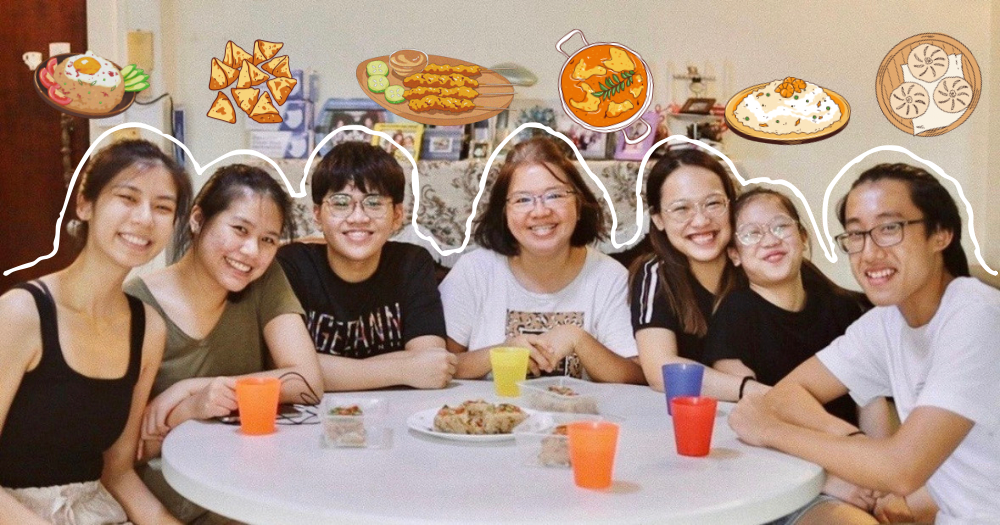
It was through this outpouring of passion that a team of five youths started the ground-up initiative “Kampung Eats”, and subsequently, “Chronicles of Heritage”.
Kampung Eats is a website that aims to shed light on Singapore’s cultural heritage through the lenses, expressions, and narratives of the older generation.
On the other hand, Chronicles of Heritage is a physical exhibition that delves into Singapore's cultural heritage through a series of stories surrounding every Singaporean’s favourite topic — food.
Food as memories
The team behind Kampung Eats knew right off the bat that their project was going to centre around food, an integral aspect of our identity as Singaporeans.
“Food binds families, communities, different races and cultures,” they said.
Pointing to the fact that food is the most commonly used gateway to Singaporean culture, the team shared that whenever friends came to visit from abroad, their first course of action was to take them to hawker centres.
Vice versa, whenever the team travelled, they often craved home-cooked food.
In particular, food prepared by their grandparents.
The pursuit of this project was arguably more personal to Kang Yue Tong, who wanted to relive the moments of the familiar memories she had with her late grandparents.
The short time she had with them was precious and she wanted youth volunteers to experience this with their own grandparents as well.
The most visceral memory Kang had was when she made ngoh hiang together with her grandparents.
During festivities, they would make the pork rolls together from scratch.
It was those childhood memories that constantly reminded her of why ngoh hiang is her favourite food till this day.
Kang also remembers the lessons learnt from her grandparents’ stories and anecdotes.
In such moments, she wishes that she could have spent more time with them, but it was also out of these fond memories that birthed the idea of creating a database of old recipes.
The way to the heart is via the stomach
One of the recipes that the Kampung Eats team is working on is Aishah Hashim’s Putu Piring.
Malay putu piring is flatter than their Chinese counterpart, tutu kueh. Putu piring is also made with pure rice flour, whereas tutu kueh is also made with glutinous rice flour.
Speaking to the Kampung Eats team, Aishah, who runs Haig Road Putu Piring, shared that the family tradition and recipe has been passed down, from mother to daughter, for close to 100 years.
In fact, Aishah is the fifth generation managing and running the business.
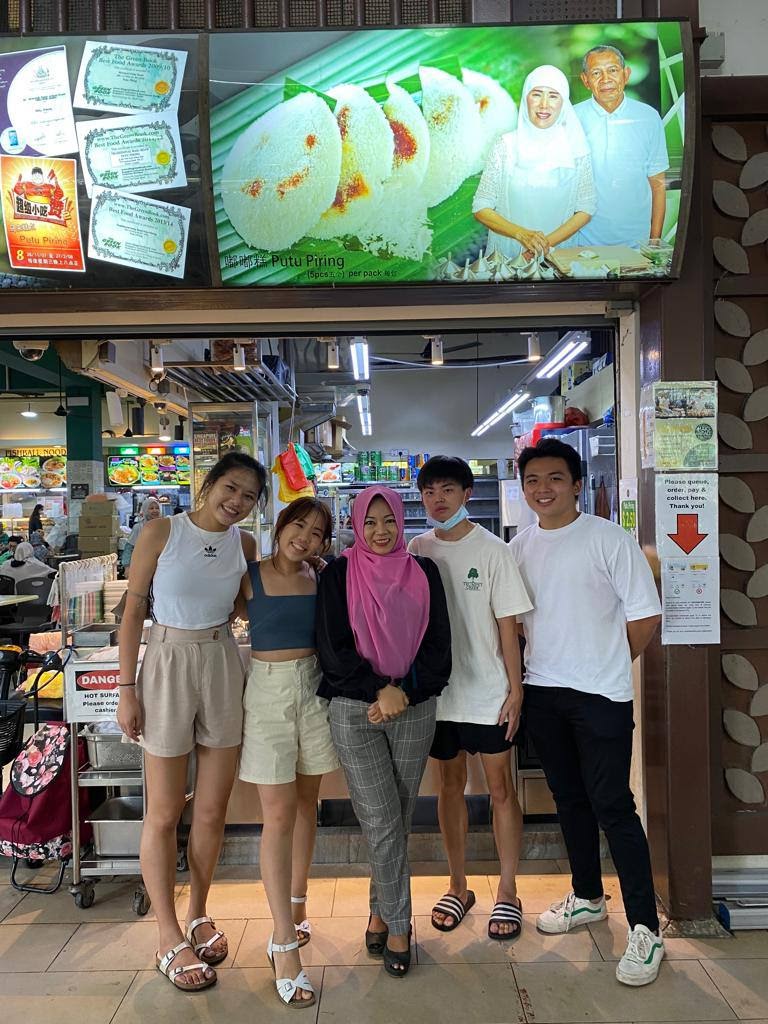 Image via Kampung Eats
“Therefore, when my parents decided not to continue the business, I felt it’s difficult to let it go as it has come such a long way. I decided to continue the legacy of putu piring and take over the business,” Aishah told the team.
She explained that her putu piring evoked fond childhood memories for her customers, who have eaten the dish since young, and now are trying to familiarise their children with such nostalgic cuisine.
What struck the team the most was how hard it was to manage multiple outlets while still trying to replicate the taste of heritage and the authenticity of a family-run business.
Adaptability is another hard-learned skill in a cut-throat world.
The team admired how Aishah managed various aspects of the business like finance, logistics, and the incorporation of modern technology in production.
Above all, Aishah’s roots still shine through her food.
Growing up in a kampung at Owen Road, she eventually settled down in Tampines, a neighbourhood she proudly proclaims as her favourite due to its accessibility and availability of facilities.
It is also where one of her shop’s seven outlets is located.
The long road ahead
While Kampung Eats was founded in 2021, it wasn’t until 2022 that the team started to collaborate with senior care organisations in hopes of showcasing an exhibition of recipes.
In 2022, the exhibition project was given a name – “Chronicles of Heritage”.
It was meant to showcase the database of stories the team gathered from pioneer generation cooks to a wider, more youthful audience.
From February to March 2022, the team crystallised their ideas for the showcase, and started scouring collaborations and partnerships with organisations, such as the National Heritage Board, as well as funds and sponsorships.
This proved to be challenging, as sponsors and support were hard to find.
At one point, the team could not secure a sponsor for the venue for the exhibition.
Funding was also an issue, as the project required extensive logistical planning.
Renting equipment to document stories was also expensive.
Nevertheless, the team pushed forward.
Spurred by passion, the team approached hawkers and filmed interviews with them, uncovering the process behind making iconic Singaporean dishes.
Thankfully, the team secured a venue and key partnerships in the middle of May 2022, which motivated them to move forward with the idea.
They produced a film for screening during the exhibition, and designed poster boards to detail their experiences.
In June, the finishing touches were made – hand-drawing stickers and procuring merchandise for their giveaways.
With that, the three-day event was executed from July 25 to 27 at *SCAPE.
The gift that keeps on giving
The reactions to the exhibition made the months of preparation all worth it.
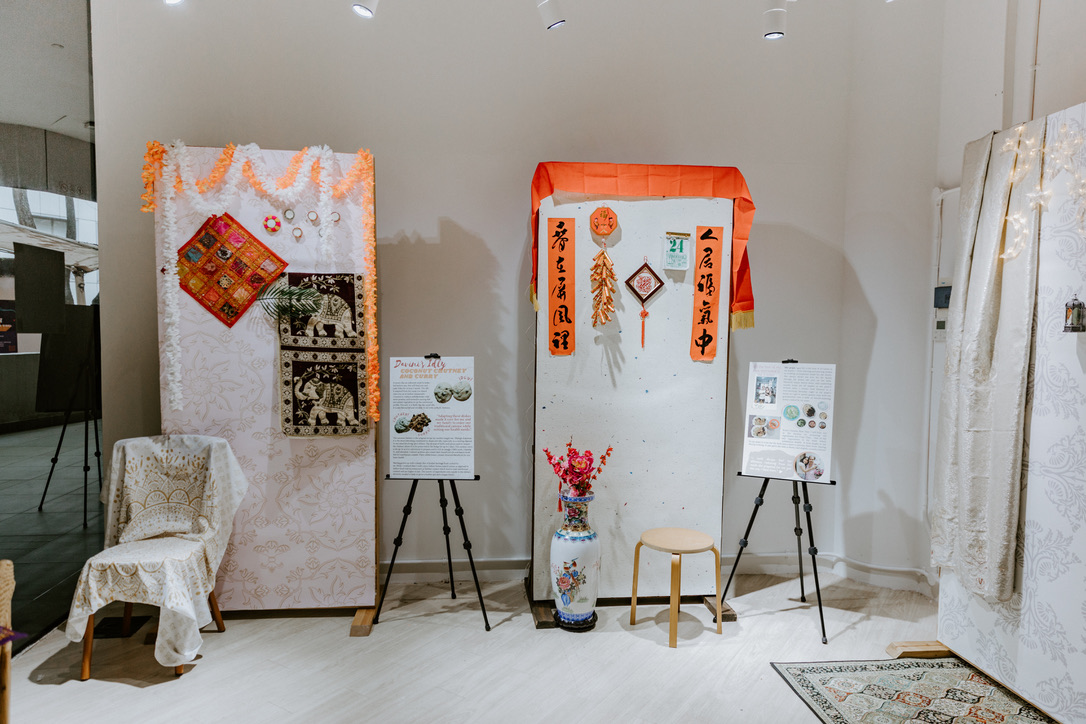 Image via Kampung Eats
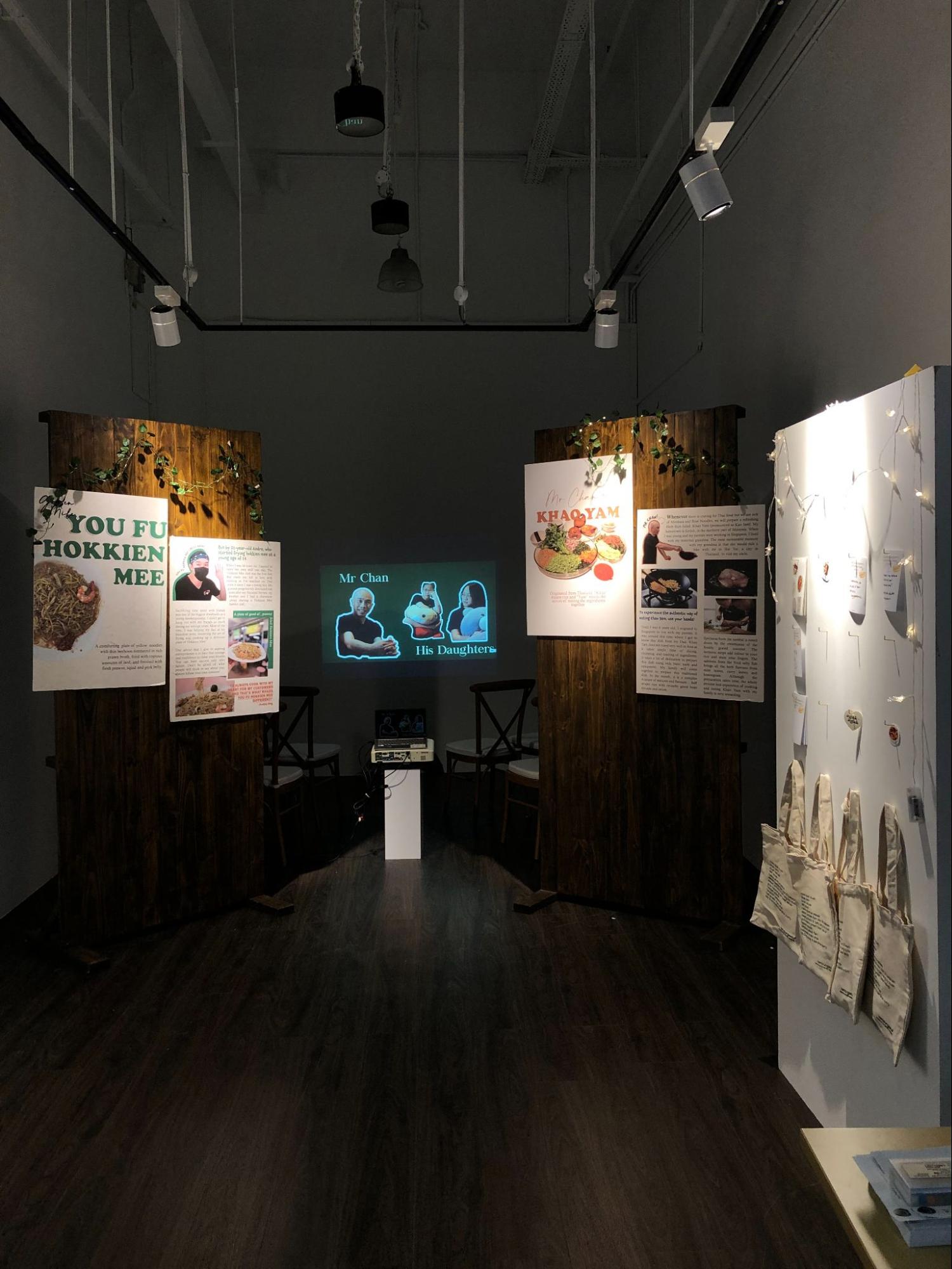 Image via Kampung Eats
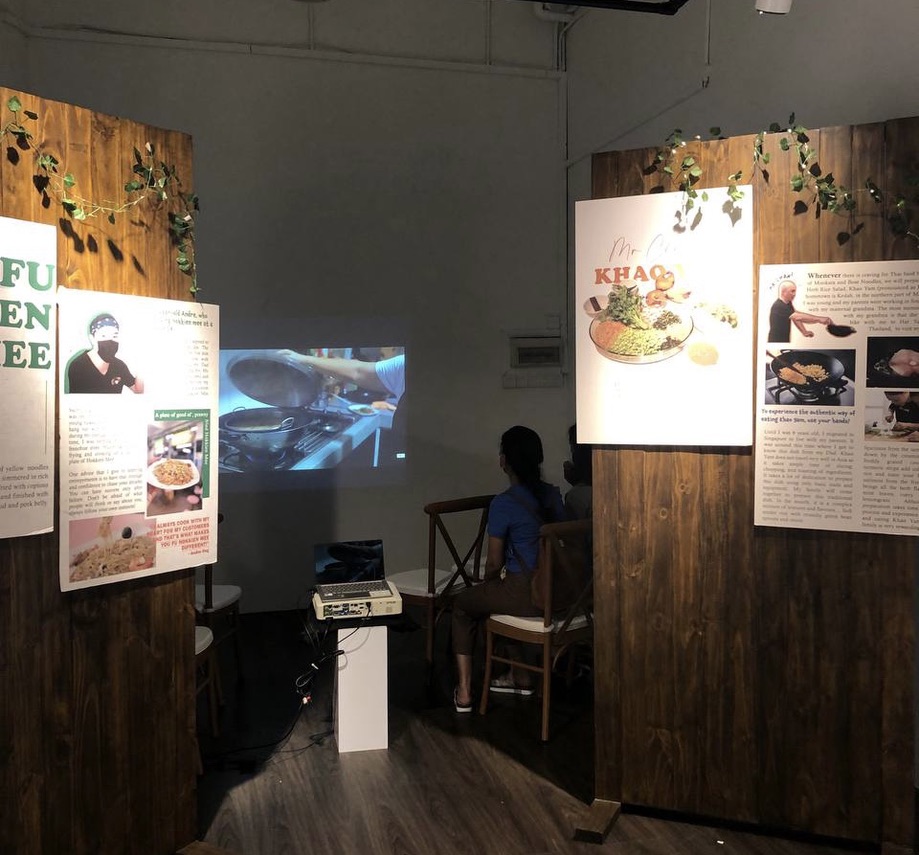 Image via Kampung Eats
Speaking to those who visited the exhibition, the team realised that their audience consisted mainly of youths.
The exhibition had the most emotional impact on them.
Speaking to two attendees, Vernice Lek and Kaitlyn Sim, both shared that they had cultivated a greater appreciation and understanding of their grandparents’ culture and heritage through the exhibition.
Sim even attended the exhibition with her grandmother, and the duo bonded over conversations about food.
The exhibition also left a lasting impression on the organisers.
As students, the team explained that they rarely had the opportunity to execute ideas due to roadblocks, such as costs.
The Young ChangeMakers (YCM) grant had helped them immensely in this aspect, as it provided the team with the necessary funds and mentorship to execute the project.
Providing networking opportunities and seed funding of up to S$5,000, the grant aims to help youths kickstart ground-up initiatives and empower youth leaders to benefit Singapore’s community and society.
The future of hawker culture in Singapore
When asked about their thoughts on the future of hawker culture in Singapore, the team noted the importance of prolonging its longevity in a fast-progressing society.
“It undeniably has deep-rooted value that should be passed on to subsequent generations,” the team said.
“With youth being the next generation of successors, this project will definitely have a place, and even be progressive in the future, with our mission to encourage and empower youth to preserve Singapore’s identity and heritage.”
The team pointed out that Singaporeans should focus less on “idealistic and transformative views” of what they think hawker centres should look like.
Rather, more value should be given to simply preserving traditional modality.
This is because while technology will inevitably be present in every crevice of our lives, the traditional hawker scene still preserves human connection.
At the end of the day, there’s nothing more human than knowing food binds.
This article is sponsored by the National Youth Council, and made the writer crave her grandmother’s Hokkien Mee.
Top photo by Kampung Eats


If you like what you read, follow us on Facebook, Instagram, Twitter and Telegram to get the latest updates.