




News


Do not outsource your judgement to a machine: Zaqy Mohamad on AI & algorithms at ACG Youth Forum
He said that while AI can generate answers, it cannot provide a conscience.
November 17, 2026, 04:18 PM
Top photo from Anbarasu Rajendran/Facebook


Acting Minister-in-charge of Muslim Affairs Zaqy Mohamad urged youth to stay in control of what they see and share online, warning that artificial intelligence (AI) and algorithms can amplify falsehoods, prejudice and hatred, as well as creativity and learning.
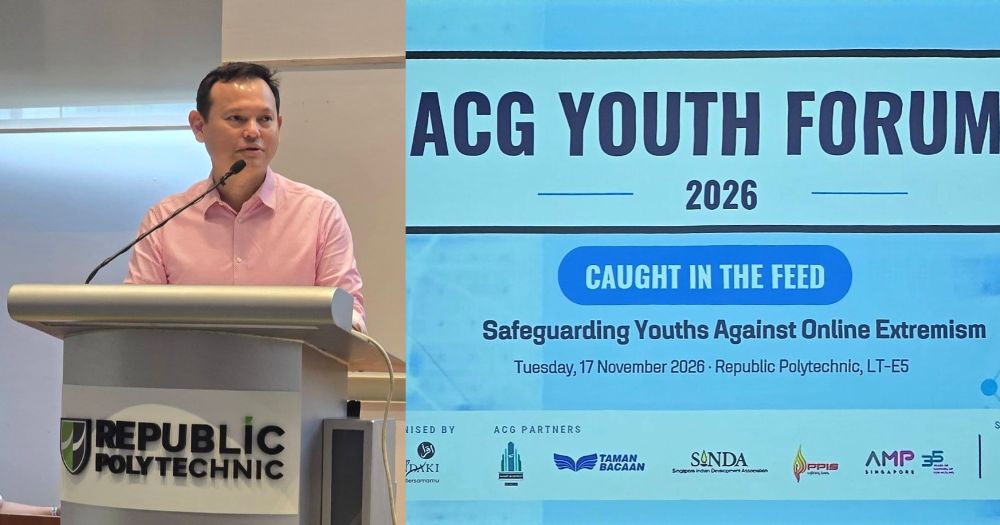
Speaking at the Annual Inter-Agency Aftercare Group (ACG) Youth Forum on Nov. 17, Zaqy, who is also Senior Minister of State for Defence, said “human judgement still matters” when it comes to online extremism.
He acknowledged AI's ability to generate answers and the algorithm's role in recommending content, but cautioned that an algorithm "cannot take responsibility for the consequences".
About 150 students from madrasahs, ITEs, polytechnics and universities attended the forum held at Republic Polytechnic on Nov. 17.
In teams, the students took part in the “Ctrl Your Feed” video-making competition, creating 30-second videos to help their peers recognise online extremism and think critically about what they see, believe and share.
"We must remain in control of our choices"
In his speech, Zaqy emphasised that Artificial intelligence and algorithms produce and push content that is potentially harmful.
He noted that AI can produce audiovisual media, impersonate trusted people and manipulate opinions and sentiments, with algorithms exacerbating this issue by repeatedly feeding internet users material that confirms one's anger or grievances.
Hence, this causes a narrow worldview to begin to feel like the only view.
Zaqy also mentioned how online chats beginning with "edgy jokes" can spiral into hate and glorified violence, with anyone who dares to speak up being mocked.
"AI can generate answers, but it cannot provide a conscience. An algorithm can recommend content, but it cannot take responsibility for the consequences," added Zaqy.
6 out of 8 new ISA cases involved youth aged 20 or below
The 2026 Singapore Terrorism Threat Assessment Report (STTAR) states that in the past year alone, six out of eight new cases dealt with under the Internal Security Act (ISA) involved youths aged 20 or below.
Zaqy cited this statistic from the report, as well as the near quadrupling of youth ISA cases in the past five years, from four cases between 2017 and 2021 to 15 cases since 2022.
The report noted that those being radicalised are getting younger, with four 14-year-olds having been issued with ISA orders since June 2024.
Zaqy noted that youths "understand this online world in ways many adults do not", including how conversations flow and how online communities shape opinions and create a sense of belonging.
He urged youths to speak up when watching their friends head down the dangerous path of radicalisation, noting that "most youths investigated by ISD showed signs of radicalisation visible to family members and friends".
"The first person who can make a difference is simply someone who cares enough to notice."
Recognise, Reflect, Respond
Zaqy shared three simple steps: recognise, reflect and respond.
He asked youths to question content that evokes negative feelings like anger or fear and to think about who created the content and benefits from it being shared around.
Check in when friends withdraw and become consumed by hateful material or glorify violence, said Zaqy.
He encouraged youths to recognise changes in people and listen before judging.
"Do not outsource your judgement to a machine."
He said: "We can disagree strongly, including over difficult global events, without turning against one another. And stand firmly for what we believe in while rejecting hatred and violence."
Zaqy also told the audience not to forward harmful content even if the intention was to condemn it, as sharing such content may enlarge its audience.
Instead, he recommended using platform reporting tools where appropriate and speaking to trusted guardians if you are worried about a friend, he said.
Zaqy also said that if someone expresses support for violence, it was imperative to raise concerns promptly and told the youth present, "Do not try to manage the situation by yourself".
"Speaking up is not betraying a friend. It is an act of care, and it may be what saves them.
Early counselling and intervention can help someone step back from radicalisation without needing to be dealt with under the ISA."
Concluding his speech, Zaqy urged youths to "take control of your feed. Look out for your friends. And never underestimate the difference you can make in someone's life".