



Abroad


S'pore-listed shipbuilder disputes UN report over allegedly breaking Libyan arms embargo
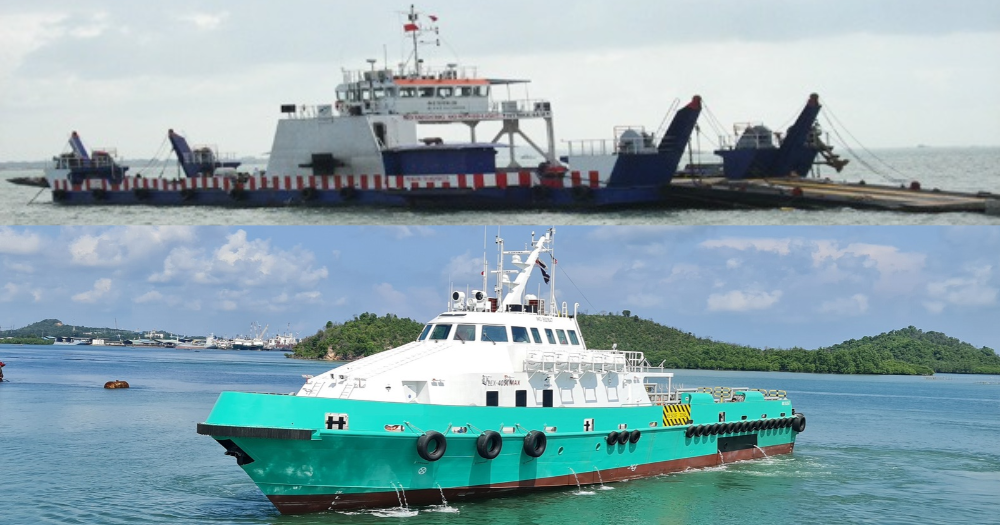
The vessels were sold to Dubai-based 2020 Volume Boats, delivered from Penguin's shipyard in Singapore and later brought to Benghazi, Libya.
November 18, 2026, 05:51 PM
Top photo from Penguin International/Website


Penguin International, a Singapore-listed shipbuilder, has disputed a United Nations (UN) Security Council report's findings that its sale of two vessels, which were later shipped to Libya, had violated an arms embargo.
The UN Panel of Experts on Libya report was published on Mar. 24, 2026. It named both Penguin and Penguin Shipyard Asia, its wholly owned subsidiary.
On Nov. 17, the company issued a bourse filing on the Singapore Exchange stating that the vessels were built for commercial use and delivered without weapons.
The filing noted that the vessels were sold in December 2024 to Dubai-based 2020 Volume Boats, delivered from Penguin's shipyard in Singapore and later brought to Benghazi, Libya.
The vessels
According to the bourse filing, the vessels were a security vessel and a landing craft.
The UN report listed them as the 40-metre-long Penguin Flex Fighter Max MV TBZ11 and the 55-metre-long Penguin landing craft MV TBZ12.
The Flex Fighter Max had two gun mounts with ballistic shields and a concealed utility room with an arms locker, stated the UN report.
On Penguin's website, the boat is marketed as the world's best-selling security boat.
The panel classified the Flex Fighter Max as a naval-type fast patrol vessel (FPV) and the Penguin landing craft as a dual-use vessel.
The vessels were loaded on the MV St Maria between Dec. 12 and 13, 2024, and departed Singapore on Dec. 14, 2024. Both vessels were delivered to Benghazi via Turkey on Jan. 6, 2025.
Penguin has disagreed with these characterisations and the panel's resulting conclusion concerning the violation of the arms embargo, as stated in the bourse filing.
The company insisted that the vessels "were designed and built as commercial vessels and were delivered without arms or ammunition on board".
Documentation inconsistencies
It was noted in the report that Penguin International had informed the panel that "the vessels' destination was Libya and that the end-user of the vessels was the 'Libyan Coast Guard'."
No end-user certificates were issued, the report added.
Sales contracts included a condition that "the buyers shall not utilise the vessel for military purposes" and that the vessels were “meant for civilian use only”.
The cargo manifest paperwork supposedly left out "consignee" and "notify party fields blank, with Penguin claiming that it was for practical reasons and as standard practice.
However, the UN Panel noted that in this case "the absence of a bill of lading is unusual" as there was already an established buyer and sales contract.
A bill of lading typically acts as a receipt for goods and cargo in the maritime and shipping industry. This document is a legal requirement for the export and import of goods in most UN member states, including Singapore.
Libyan law does not explicitly require a bill of lading but speaks of a general ship's manifest and requires the name of the consignee.
Possibility of UN sanctions is low, being named in the report does not carry direct penalties
In Penguin's bourse filing, the company said it was approached by and consulted with the UN between January and May 2025.
Since November 2025, the group has also corresponded with the Company Compliance & Audit Branch of Singapore Customs, adding that it has cooperated fully.
The company's management was made aware of the report in September 2026 and engaged both Singapore legal counsel and an international sanctions counsel to advise on the legal implications.
In the filing, the company said it understands that being named did not constitute sanctions action or carry any direct penalties with the possibility of UN imposing sanctions against them being low.
The filing notes that as of the announcement, Singapore Customs has not informed the Company that it has breached Singapore laws.
The matter has not caused any material disruptions to the group's operations, stated the filing.
Following this, the group stated that it has also reviewed and enhanced its sanctions and export-control procedures.
Libya Arms Embargo explained
Libya was imposed with an open-ended arms embargo in February 2011 in reaction to the First Libyan Civil War, due to human rights violations, including the forceful repression of peaceful demonstrators, according to the Stockholm International Peace Research Institute.
The sanctions fall under UN Security Council Resolution 1970 and bans the supply of military equipment and arms to and from Libya.
According to Reuters, the war was sparked by the arrest of a human rights lawyer, Fethi Tarbel.
This subsequently led to an uprising that toppled the 42-year dictatorship of Muammar Gaddafi, but the country has remained divided since.