



News


Tampines has 296,060 residents, the most in S'pore, followed by Bedok & Sengkang
Punggol and Sengkang increasing in population over time.
October 29, 2026, 04:21 PM
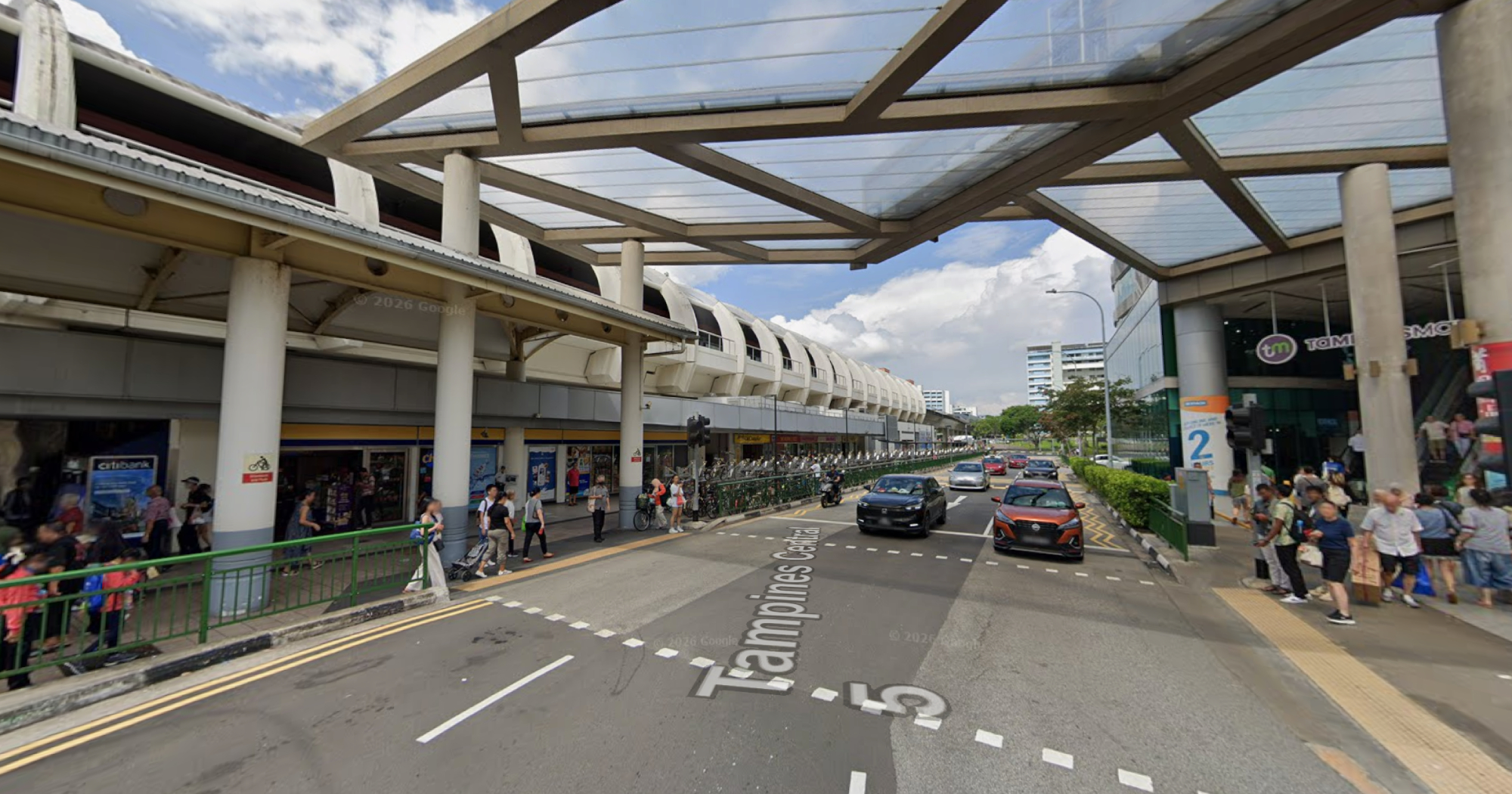
Photo from Google Maps


Tampines is Singapore's most populated planning area in 2026 with 296,060 residents.
This is followed by Bedok (272,120), Sengkang (265,930), Woodlands (255,280), and Jurong West (250,890), as reported in the second issue of the Statistics Singapore Newsletter by the Department of Statistics Singapore (SingStat) on Oct. 28.
Tampines overtook Bedok and Jurong West in the population rankings over the past decade.
Meanwhile, Punggol and Sengkang in the northeast recorded average annual population growth rates of 4.6 per cent and 1.9 per cent, respectively, between 2016 and 2026.
Singapore's resident population increased by 298,000 over the past decade, from 3.9 million in 2016 to 4.2 million in 2026, SingStat noted.
The report examined changes in population size, age composition, education qualifications and household income across Singapore's planning areas.
Tampines overtakes Bedok as most populous planning area
Tampines climbed from third place in 2016 to become Singapore's most populous planning area in 2026, with its resident population increasing from 259,110 to 296,060.
Bedok, which previously held the top spot, fell to second place with 272,120 residents, down from 287,170 in 2016.
Sengkang moved up from sixth to third place, with its population rising from 219,380 to 265,830 over the same period.
Woodlands ranked fourth with 255,280 residents, followed by Jurong West with 250,890.
Together, Singapore's 10 most populated planning areas were home to more than 2.3 million residents, accounting for 55.6 per cent of the country's resident population.
Punggol among fastest-growing residential areas
Punggol climbed into the top 10 most populous planning areas, ranking eighth in 2026 with 204,490 residents.
It recorded an average annual population growth rate of 4.6 per cent between 2016 and 2026.
According to SingStat, Downtown Core recorded the highest annual population growth rate of 5.3 per cent between 2016 and 2026, followed by Punggol at 4.6 per cent and Sembawang at 4.1 per cent.
However, the department noted that Downtown Core's growth was partly attributable to changes in its planning area boundaries.
Sengkang also ranked among the 10 fastest-growing planning areas, recording an average annual growth of 1.9 per cent.
Tengah, a relatively new housing estate, was excluded from the rankings as its small resident population of just 10 in 2016 resulted in an exceptionally high growth rate over the decade.
Tengah and Punggol have highest proportion of children
The report also examined the age profiles of residents across Singapore.
In 2026, Tengah had the highest proportion of children aged below 15, at 20.3 per cent, followed by Punggol at 19.6 per cent.
This is followed by Tanglin at 17.3 per cent, Newton at 17.2 per cent and Bukit Timah at 17.1 per cent.
Sengkang, Sembawang and Tampines were also among the 10 planning areas with the highest proportions of children.
However, the overall proportion of children aged below 15 among Singapore residents declined from 15.2 per cent in 2016 to 13.3 per cent in 2026.
Meanwhile, the proportion of residents aged 65 and above rose from 12.4 per cent to 19.5 per cent.
Outram, Ang Mo Kio, Jurong East, Bukit Merah and Rochor recorded the highest proportions of elderly residents.
Outram had the highest elderly population at 28.9 per cent, followed by Ang Mo Kio at 26.9 per cent, Jurong East at 26.2 per cent, Bukit Merah at 25.8 per cent, and Rochor at 25.2 per cent.
In terms of median age, Outram is the oldest area with a resident population median age of 50, followed by Ang Mo Kio and Jurong East at 49.
Residents in Rochor and Bukit Merah each had a median age of 48 years.
The other planning areas had a median age of 47 years or below.
Central areas record higher education levels and household incomes
SingStat also found that planning areas in Singapore's central region generally had higher proportions of university graduates and higher household incomes.
In 2025, Tanglin had the highest proportion of residents with university qualifications, at 83.6 per cent.
It was followed by River Valley, Newton, Downtown Core and Bukit Timah, where more than 70 per cent of residents held university qualifications.
Downtown Core recorded the highest median monthly household market income per household member, at S$13,396 in 2025.
Newton came next at S$12,222, followed by River Valley at S$9,923.
The report noted that higher-income areas remained concentrated in Singapore's central region, although household market incomes had also increased in other parts of the country.
The report concluded that the development of new housing estates, the ageing of older areas and changing socio-economic profiles reflected Singapore's evolving geographical landscape.