Court


S'pore man, 27, acquitted of sexual assault of vulnerable person on staircase after court finds reasonable doubt
The case judgement was published on Oct. 9.
October 10, 2026, 02:32 PM
Photos via Canva


Warning: This article contains details of alleged sexual assault. Audience discretion is advised.
A 27-year-old man was acquitted of alleged sexual assault involving penetration and outrage of modesty after a judge found that the prosecution did not prove its case beyond a reasonable doubt.
Both charges, which involved a vulnerable person, were alleged to have taken place on Oct. 30, 2024, Justice Kwek Mean Luck wrote in his judgement published on Oct. 9, 2026.
Background
The judgement noted that the 23-year-old complainant, who was around 21 years old during the alleged offence, was diagnosed with Autism Spectrum Disorder (ASD) as a child.
He was found to be to be extremely weak in verbal skills but relatively better in non-verbal skills and processing speed.
The complainant, who attended a school serving students with autism and intellectual impairment until he was 18, now has a job which his vocational institute linked him up with.
Prior to Oct. 30, 2024, the accused, who was 25 at the time, did not know the complainant.
Dispute
The judgement stated that at about 10:15pm that day, the accused approached the complainant after seeing him walking and pushing a bicycle within the estate.
They continued their conversation at a nearby bench.
The pair left after a while and made their way to a block.
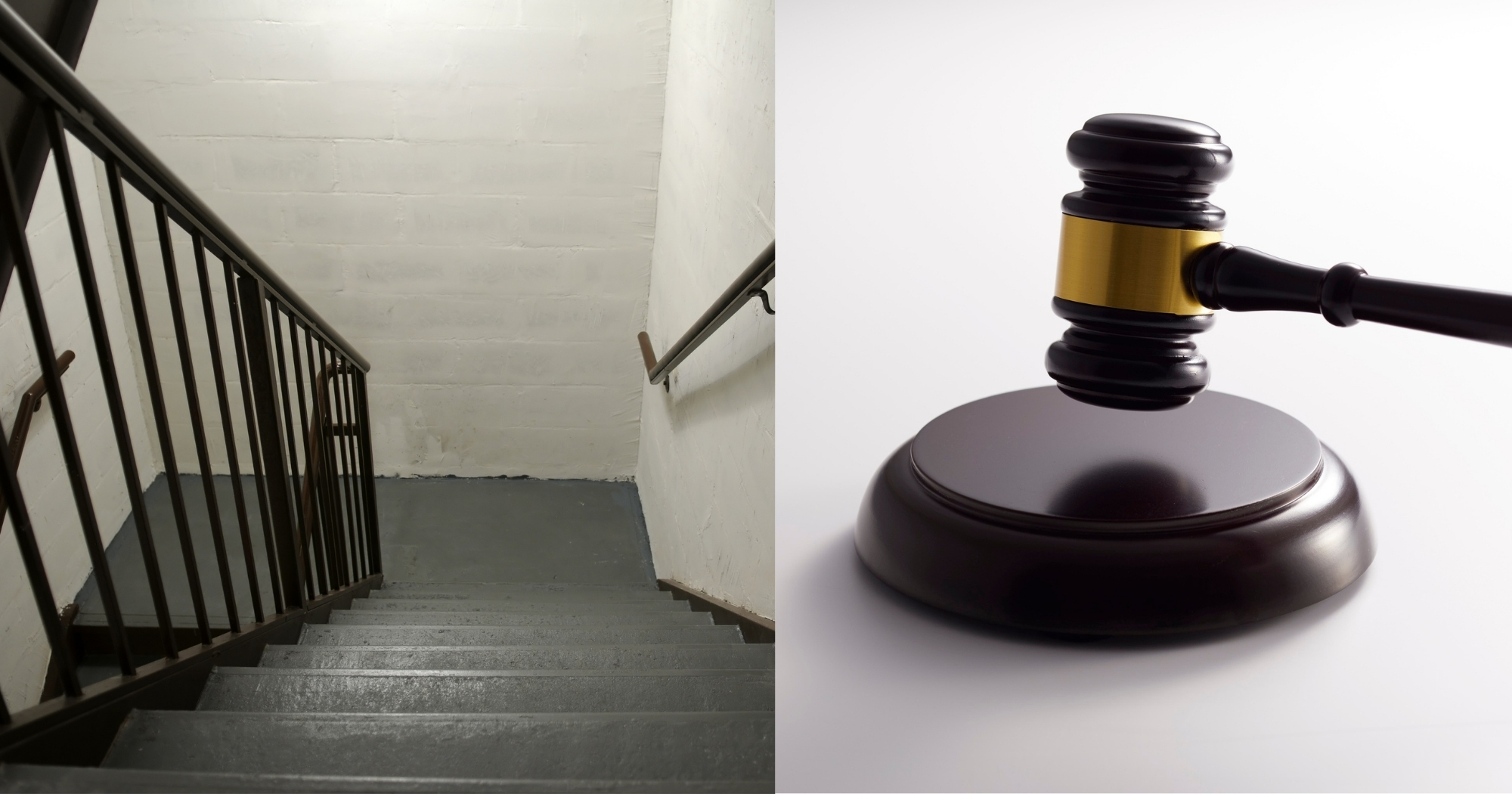
They then took a lift together from the ground floor to level 19 of Block 14 at around 10:23pm, before sitting on the steps of the level 19 staircase.
At around 10:31pm, they took a lift back to the ground floor and went their separate ways.
According to the judgement, the dispute is regarding what happened at the staircase of level 19.
Prosecution's case
The prosecution argued that according to the complainant's oral testimony, he had seen a bicycle with a punctured tyre at the carpark, and pushed it as he wanted to throw it at a dustbin.
When the accused apparently asked him for the time, the complainant said his phone battery was weak.
The accused then supposedly asked him to sit on a bench to talk, where he asked the complainant several questions, including whether he was circumcised.
According to the prosecution, the complainant followed the accused to the block, supposedly "because he always says yes and was scared that [the accused] would do something bad".
They then went to the level 19 staircase, where the accused asked the complainant a second time if he was circumcised.
The prosecution argued that the accused then allegedly committed sexual assault involving penetration and outrage of modesty of the complainant.
Two prosecution witnesses also testified that the complainant disclosed the sexual offences to them on Nov. 2, 2024, or Nov. 3, 2024.
Defence's case
As for the defence, the judgement stated that the sole witness was the accused himself.
The accused completely denied the offences, and also denied asking the complainant if he was circumcised, eventually leaving the bench as he apparently noticed a police car nearby and was afraid of being fined for the vape in his hands.
The accused argued that he walked in the direction furthest away from the police car and claimed the complainant followed without being asked to do so.
He then supposedly pressed level 19 without looking, before talking to the complainant for no more than five to 10 minutes before heading down.
Assessment of testimony in light of ASD
Given that the complainant was diagnosed with ASD, the prosecution argued that the court ought to take that into account, and put forth that the complainant was susceptible to suggestion and had weak social resistance skills.
It was also argued that children or juveniles should not be measured by adult standards on how an average adult may be expected to react.
However, the defence countered that even if the complainant's testimony were to be treated as coming from the equivalent of a minor, the testimony of a minor should be treated no differently from that of an adult complainant.
The defence added that the test remains the same, namely that the court could only convict the accused on the uncorroborated testimony of the complainant if his evidence was so reliable or unusually compelling.
The judge said that regardless of the complainant’s personal characteristics, his testimony had to be "unusually convincing" if it was the sole basis for a conviction. However, he said the court could take his ASD into account when assessing how reliable his evidence was.
Corroboration
In terms of whether there was corroborative evidence such that the complainant's testimony need not be "unusually convincing", the prosecution submitted that the complainant's testimony was not subject to the “unusually convincing” standard.
They argued that it was independently corroborated by four pieces of evidence.
Firstly, video footage from the lift apparently showed the complainant's reaction immediately following the accused's alleged sexual assault, rushing into the lift, pressing the "door close" button and holding down the button even as the accused reached the lift.
This could supposedly be used as independent evidence to assess the veracity of the complainant's testimony.
Secondly, the CCTV footage showed observable changes to the complainant's clothing before and after going to level 19, as well as the accused and complainant's movements before going up to level 19 and the walking path the complainant took immediately after leaving Block 14.
This was said to be consistent with the complainant's account.
Thirdly, the accused was also said to have told a Lucas lie that he saw a police car while at Block 14, which the prosecution argued could serve as independent corroboration of the complainant's testimony.
A Lucas lie is a deliberate lie on a material issue, out of fear of the truth, and clearly shown to be false by independent evidence.
Lastly, the complainant was also said to have told witnesses about the alleged sexual assault within days of it happening, and filed a police report, this was said to serve as corroborative evidence.
However, the judge was unable to agree with the prosecution that the complainant's testimony was independently corroborated by the four pieces of evidence.
While the judge accepted that the complainant hurrying into the lift and pressing the "door close" button seemed consistent with his account, the judge said the complainant’s behaviour in the lift afterwards did not suggest fear.
He chatted with the accused, did not shrink away when the accused tapped his shoulder, and initiated a handshake before they left.
While the absence of visible fear is not determinative, the judge said, the footage does not corroborate "his version of events".
As for the changes in clothing appearance, the judge did not find that much weight could be placed as there could be "a variety of reasons" why the complainant's shirt was half-wedged in.
"For example, it is plausible that the shirt is wedged in as such because of how [the complainant] sat down and moved up when leaving the stairs."
As for the Lucas lie, the judge noted that evidence showed no such police car, but did not find that the accused had lied deliberately.
When asked during cross-examination why he thought that the car he saw was a police car, the accused testified that the car he saw was a "white car".
He had a vape in his hands, so he took a "glance", thought it was a police car, and left.
The judge also accepted that the complainant had made complaints to two people shortly after the incident, and accepted that these two were "truthful witnesses" with no motive to falsely implicate the accused.
However, the judge said that complaints made subsequent to the alleged incident will not be given much weight by the court due to their "non-independent and self-serving nature", even if they constitute liberal corroboration, and will not dispense with the requirement for unusually convincing testimony.
Beyond reasonable doubt
The judge found the complainant to not be an unusually convincing witness, with reasonable doubt arising from the prosecution's case.
He considered several reasons together. Based on measurements of the staircase and the two men, he found it difficult to see how the penetration offence could have taken place considering the gap between them, and the positions the complainant described, though he did not find it physically impossible.
The complainant had also told the police four times that the accused pulled down his clothes, but said in court that he did it himself.
CCTV footage also showed he collected his bicycle, contradicting what he told police three times, that he ran home immediately.
In contrast, the judge did not find material inconsistencies in the defence's case.
In closing, the judge agreed with the prosecution that there did not appear to be any reason why the complainant would be motivated to falsely implicate the accused.
He, however, noted that the absence of motive is not sufficient for the case against the accused to be proved beyond a reasonable doubt.
He acquitted the accused of the two charges.