News


N95 masks will be distributed to vulnerable Singaporeans when PSI hits unhealthy range, Haze Task Force convened
Haze conditions had worsened over the week due to new hotspots and unfavorable winds.
October 09, 2026, 08:28 PM
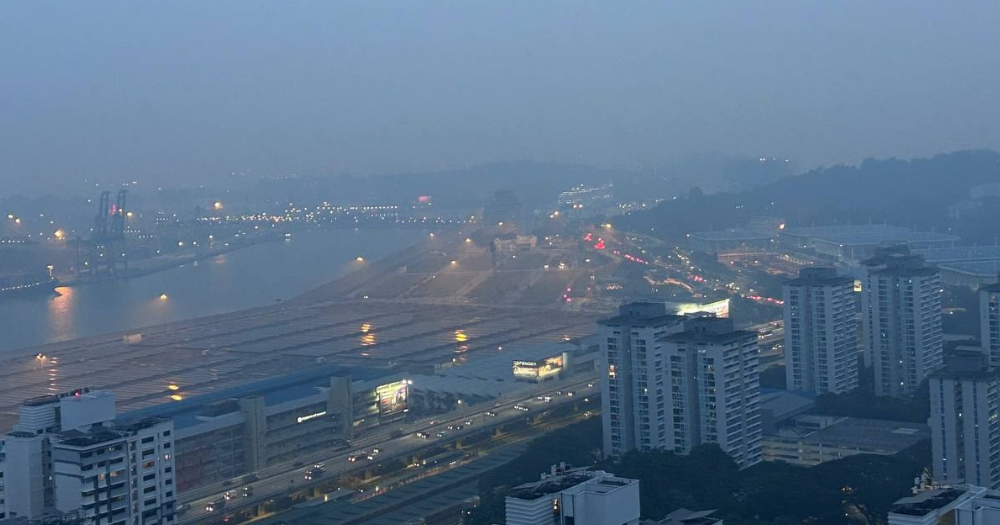
Image from Mothership


With the possibility of haze conditions worsening in the upcoming days, the Singaporean government's Haze Task Force (HTF) has convened and stands ready to roll out the next tier of action plans and advisories to protect the health and well-being of the public.
In a press release issued on Oct. 9, the HTF outlined the measures it was preparing to take to ensure public health, especially for vulnerable groups such as the elderly, pregnant women, children, and those with chronic lung and heart diseases.
The HTF is led by the National Environment Agency (NEA) and comprises 28 government agencies.
As of 7pm on Oct. 9, the 1-hour PM2.5 concentration readings were 69 – 123µg/m3, in Band 2, Elevated, and the 24-hr Pollutant Standard Index (PSI) was 136 – 192, in the Unhealthy range.
Deteriorating haze situation
NEA said that the 24-hour PSI may exceed 200 and enter the very unhealthy range as the haze situation had deteriorated over the past week due to an increase in hotspots in southern and central Sumatra, as well as unfavourable wind conditions.
It advised the avoidance or minimisation of outdoor activities, particularly for the elderly, pregnant women and children, and especially for those with chronic lung or heart conditions, advising those who felt unwell to seek medical attention.
Healthcare institutions such as public hospitals, polyclinics, and nursing homes have activated their haze preparedness measures, closing windows in wards and corridors, using air purifiers, and reducing ambient temperature through portable air coolers where appropriate.
Mask distribution
Should the PSI enter the very unhealthy range, the People's Association (PA) grassroots organisations will start distributing N95 masks to eligible Singaporeans, such as those who may be more vulnerable to the effects of the haze or may have limited means of obtaining N95 masks.
Mask vending machines will also be made available at selected public transport hubs and social services offices.
Eligible Singaporeans can collect N95 masks or ask family members or friends to collect masks on their behalf using the eligible person’s NRIC at vending machines at selected public transport hubs, Social Service Offices and PA venues.
Eligible persons include:
- Pioneer Generation (PG)
- Merdeka Generation (MG)
- CHAS Orange card holder
- CHAS Blue card holder
- Medical Fee Exemption Card (MFEC) holder
- Recipients of ComCare Assistance
Pregnant women, children (seven to 16 years old), and individuals with medical conditions such as asthma may collect masks at PA venues with their NRICs.
NEA said N95 masks are generally not required for short outdoor exposure, such as commuting between home and school or work, or when indoors.
It advised vulnerable persons to consider wearing an N95 mask when the air quality forecast is in the very unhealthy range (PSI > 200) and if they have to be outdoors for several hours.
However, vulnerable persons with difficulty breathing at rest or on exertion should consult their doctor before using an N95 mask. Any person who feels discomfort when using a mask should take a break from using it.
NEA reassured the public that there are sufficient stocks of N95 masks in retailers' warehouses and government stockpiles.
Preschools and schools
While the PSI is in the very unhealthy range, the Early Childhood Development Agency (ECDA) requires preschools to cease all outdoor activities and strenuous indoor activities.
Preschools are required to ensure that all children remain in enclosed and well-ventilated indoor spaces with doors and windows closed, as well as with fans and air conditioners switched on.
Preschools are to prepare at least one enclosed room with air purifiers turned on to temporarily accommodate children who may be unwell or develop respiratory problems due to the haze.
Likewise, the Ministry of Education and schools have plans to ensure the well-being of staff and students during haze, and all students will be kept in well-ventilated, indoor, enclosed spaces with air purifiers turned on.
Teachers have also been instructed to be on the lookout for students who are unwell or have pre-existing conditions.
Classroom lessons will continue but may be modified where appropriate, such as students being assigned work confined to sit-down classroom settings and avoiding outdoor activities.
Schools will monitor the 1-hour PM2.5 readings throughout the day and adjust activities as needed.
National examinations
Arrangements have been made by schools for students sitting for national examinations to take their papers in enclosed spaces and for air purifiers to be provided, allowing examinations to continue should haze conditions unexpectedly worsen.
Should school closures be necessary and coincide with national examinations, the affected examination papers will be rescheduled, and the examination period extended.
As was the case in 2015, MOE will consider closing schools when the air quality forecast for the next day is Hazardous (24-hour PSI>300).
In making any decision to close schools, MOE is mindful of the disruptions to families’ care arrangements for their children, and will take into consideration all available information, health advisories and forecasts from the relevant authorities regarding the next day’s haze situation.
Announcements on the rescheduling of examinations will be made together with the announcement on school closure, and school and private candidates will be informed through their schools and the Singapore Examinations and Assessment Board, respectively.
Should a candidate be unable to sit or continue with the examination, their health must take priority. Schools can escalate the situation to the SEAB in accordance with existing procedures for special consideration, so the candidate will not be penalised.
Employees working outdoors
The Ministry of Manpower (MOM) reminded employers not to compromise on the health and safety of their employees, especially employees involved in outdoor work, referring employees to the haze guidelines and tripartite advisories.
It advised employers to adopt the following risk-mitigating measures when the 24-hour PSI enters the very unhealthy range.
- Avoid prolonged or strenuous outdoor work for healthy employees.
- Minimise outdoor work for vulnerable workers, especially the elderly and pregnant women.
- Avoid outdoor work for workers with chronic heart and lung conditions.
- Use mechanical aids, implement job rotation, schedule indoor rest breaks and ensure adequate hydration.
- If prolonged or strenuous outdoor work is not avoidable, and an employer still requires an employee to work due to extenuating circumstances, the employer is strongly urged to provide suitable masks (e.g., N95 masks or equivalent).
Haze shelters
Air-conditioned rooms in community clubs (CC), selected residents' committees, and Residents' Network Centres will be set up as haze shelters, allowing members of the public to seek respite from the haze when PSI enters the very unhealthy range.
Residents may contact their nearest CCs for the haze shelter locations and operating hours. If the 24-hour PSI crosses into the hazardous range (PSI > 300), the opening hours of the shelters will extend to 10 pm.