



News


S'pore to import biomethane, a low-carbon alternative to natural gas, with wider adoption from 2028
Other efforts by METI to help industries decarbonise include programmes to accelerate R&D and connect researchers with industry, Gan said.
October 23, 2026, 04:55 PM
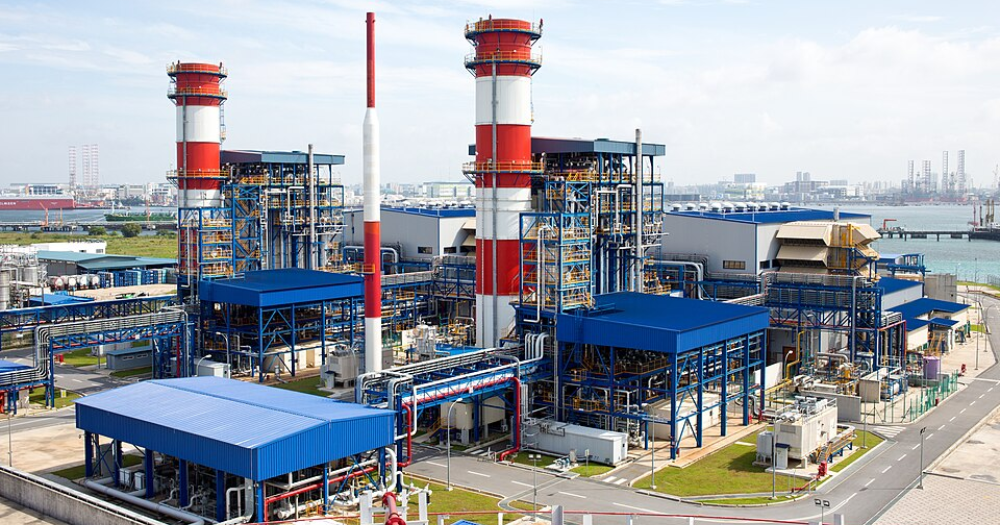
Photo from PLP2016/Wikimedia Commons


Singapore has launched a pilot programme to import and use biomethane for its energy needs, starting in 2028.
Deputy Prime Minister and Minister for Energy, Trade and Industry (Trade) Gan Kim Yong announced the programme on Oct. 23, revealing that Keppel Energy, Sembcorp Utilities and Tuas Power Generation have been appointed to import and supply biomethane into Singapore as part of the pilot.
This announcement came as part of remarks made by Gan at the inaugural Singapore Industry Decarbonisation Forum, hosted by the Economic Development Board (EDB) in partnership with A*STAR and the Advanced Energy and Decarbonisation Office.
Aside from the biomethane pilot, Gan also highlighted several other new METI initiatives aimed at helping Singapore cut carbon emissions across industries.
Singapore aims to reach net zero carbon emissions by 2050.
Why biomethane?
Biomethane is a renewable gas produced from organic waste.
It can serve as a low-carbon alternative to natural gas, a fossil fuel.
Crucially, biomethane is compatible with Singapore's existing gas infrastructure, allowing easy adoption without costly modifications.
95 per cent of Singapore's electricity comes from natural gas, making biomethane a subject of interest.
Gan announced that METI had established a "regulatory sandbox" in 2025, allowing Singapore to tackle the various obstacles needed for biomethane adoption – supply chains, commercial arrangements, and regulatory frameworks.
The goal is for biomethane to support up to 300 megawatts of energy from 2028, with the pilot ultimately seeking to enable industry to deploy new low-carbon solutions.
Focus on industry
In his speech, Gan also noted that Singapore's industries account for around 65 per cent of our emissions, including the electricity that they consume, and therefore have to be addressed as part of Singapore's net zero goals.
The challenge is to keep these industries competitive while helping them decarbonise, he added.
He also stressed that Singapore suffers from many constraints, such as limited land and renewable energy resources, industries with complex operating requirements, and the fact that low carbon technologies from other countries may not be entirely suitable in Singapore.
As such, the government is dedicating S$800 million to the Decarbonisation Grand Challenge (DGC), which aims to support promising technologies that can lower emissions.
R&D
Under the DGC, S$143 million will go to the Industry Decarbonisation Funding Initiative.
Of this sum, S$100 million will be set aside to support research & development spearheaded by companies, including defining their own decarbonisation challenges and co-developing solutions with Singapore.
The initiative will also seek out partners, such as clean energy investors and accelerators, to collaborate with Singapore and develop low-carbon technologies.
Existing partners include Temasek Holdings, Energy Impact Partners, Breakthrough Energy and SG Growth Capital.
New partnerships have also been formed with various funds and organisations from abroad, namely Main Sequence Ventures, Extantia and Rocky Mountain Institute.
The government will further provide funding to connect researchers with industry, allowing them to pilot and test new technologies in actual operating contexts.
Another S$62 million will be dedicated to the Low-Carbon Technology Translational Testbed, or LCT³, to be hosted at the A*STAR Institute of Sustainability for Chemicals, Energy and Environment.
It is a test-bedding platform on Jurong Island that allows companies and researchers to test new technologies, such as converting carbon dioxide into sustainable aviation fuel, or an ammonia-to-hydrogen production technology.
Gan added that three industry users have been secured: IHI Corporation, Amogy and Metha8.
He reiterated Singapore's approach in its net zero journey:
"Across all these efforts, our goal is the same: lower emissions from our factories and plants, and keep industries competitive and continue to provide good jobs."