



News


S'pore man 'asks' friend on WhatsApp to make S$1,300 transfer to African bank account, turns out to be scam
The scammer apparently could not reply well in Malay, which raised suspicions.
October 28, 2026, 05:19 PM
Photos from Faiz's Instagram and Canva (for illustration purposes only)


A man believes his WhatsApp account was recently hacked after his friend received mysterious messages from him, asking her to help him transfer S$1,300 to a bank account.
The friend was willing and ready to help, until she discovered that the phone number linked to the bank account was registered in South Africa.
A big favour
According to screenshots of the chat that Faiz's friend later shared with him, the first message was sent to her at 9:57pm on Oct. 27.
It was sent from Faiz's number, asking if she could help him with "one big favour".
She replied "yes" a few minutes later.
"Faiz" explained that he needed to send S$1,300 to a "friend" but he had hit the daily transfer limit on his own bank account.
He asked if she could help to make the transfer on his behalf, and he would pay her back the next day.
Although the friend felt that it was a big favour, she agreed.
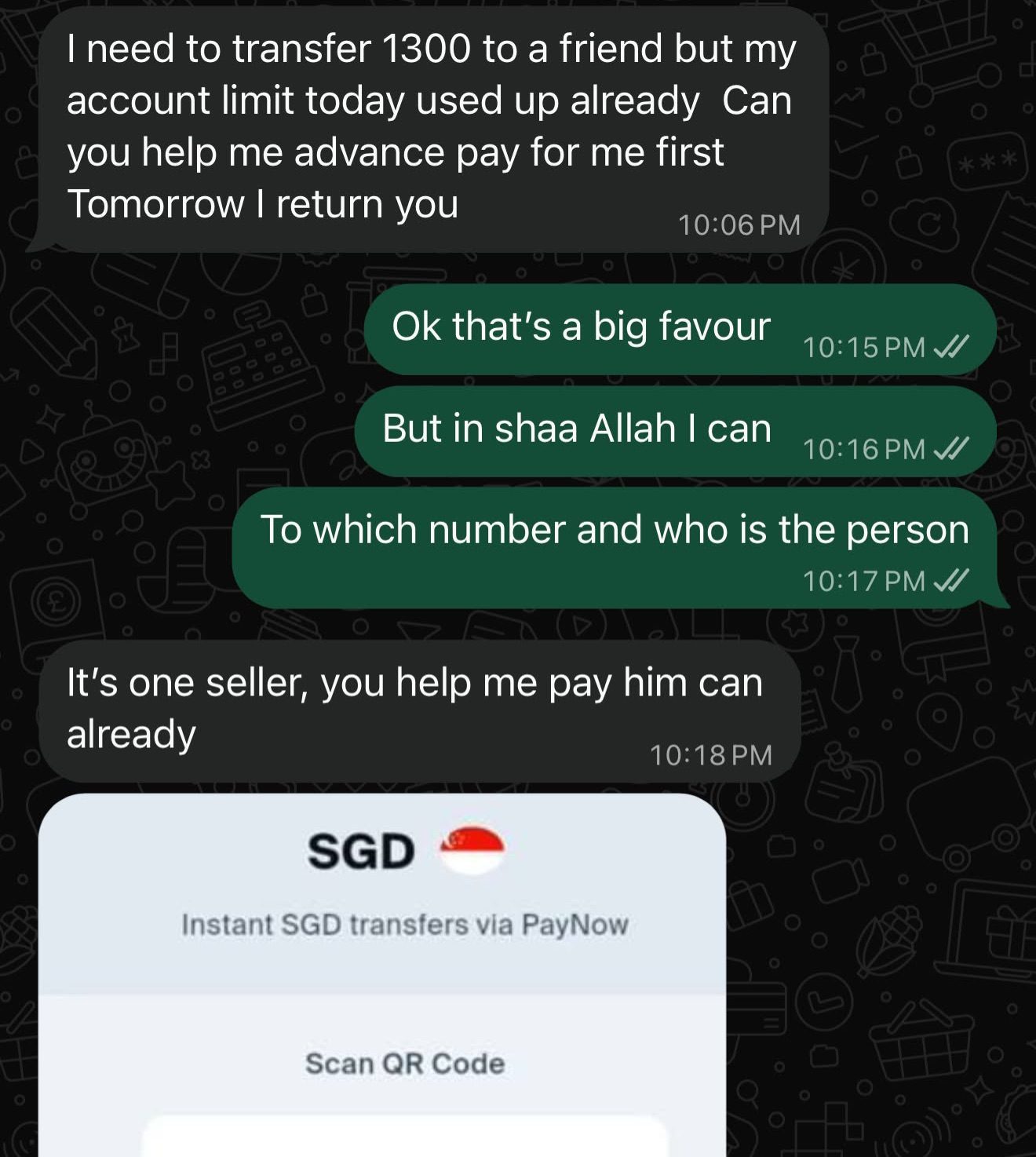 Photo from Faiz's Instagram
At this point, "Faiz" said that the person she needed to transfer money to was a "seller".
When she wanted to know what item he was buying from this supposed seller, he said they were a furniture seller.
A South African-registered number
The person using Faiz's WhatsApp account then sent her a QR code to make the bank transfer.
Speaking to Mothership, the real Faiz said that a phone number showed up when his friend scanned the QR code.
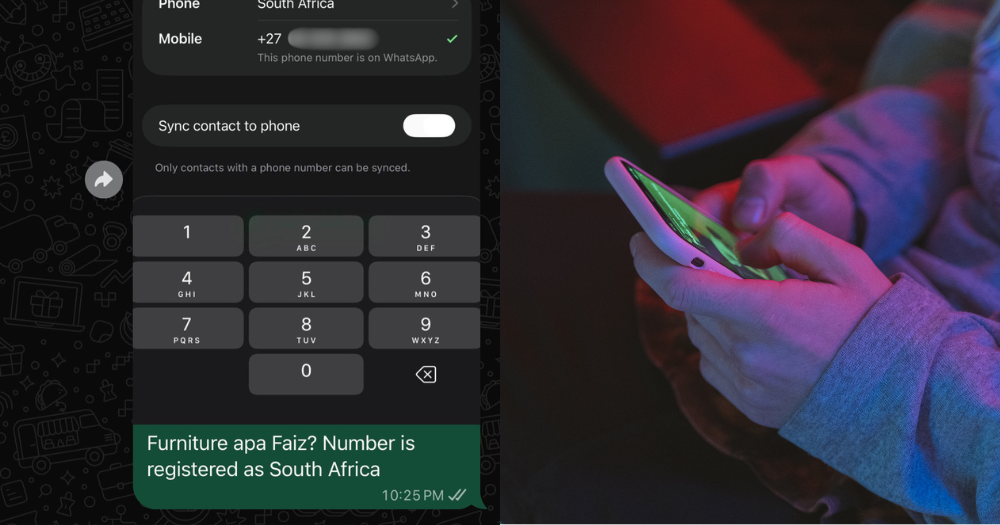
When she checked the number on WhatsApp, the app told her it was a South Africa-registered number, and this made her suspicious.
The friend, who works with Faiz, held back because she knows he doesn't have any business in South Africa, Faiz told Mothership.
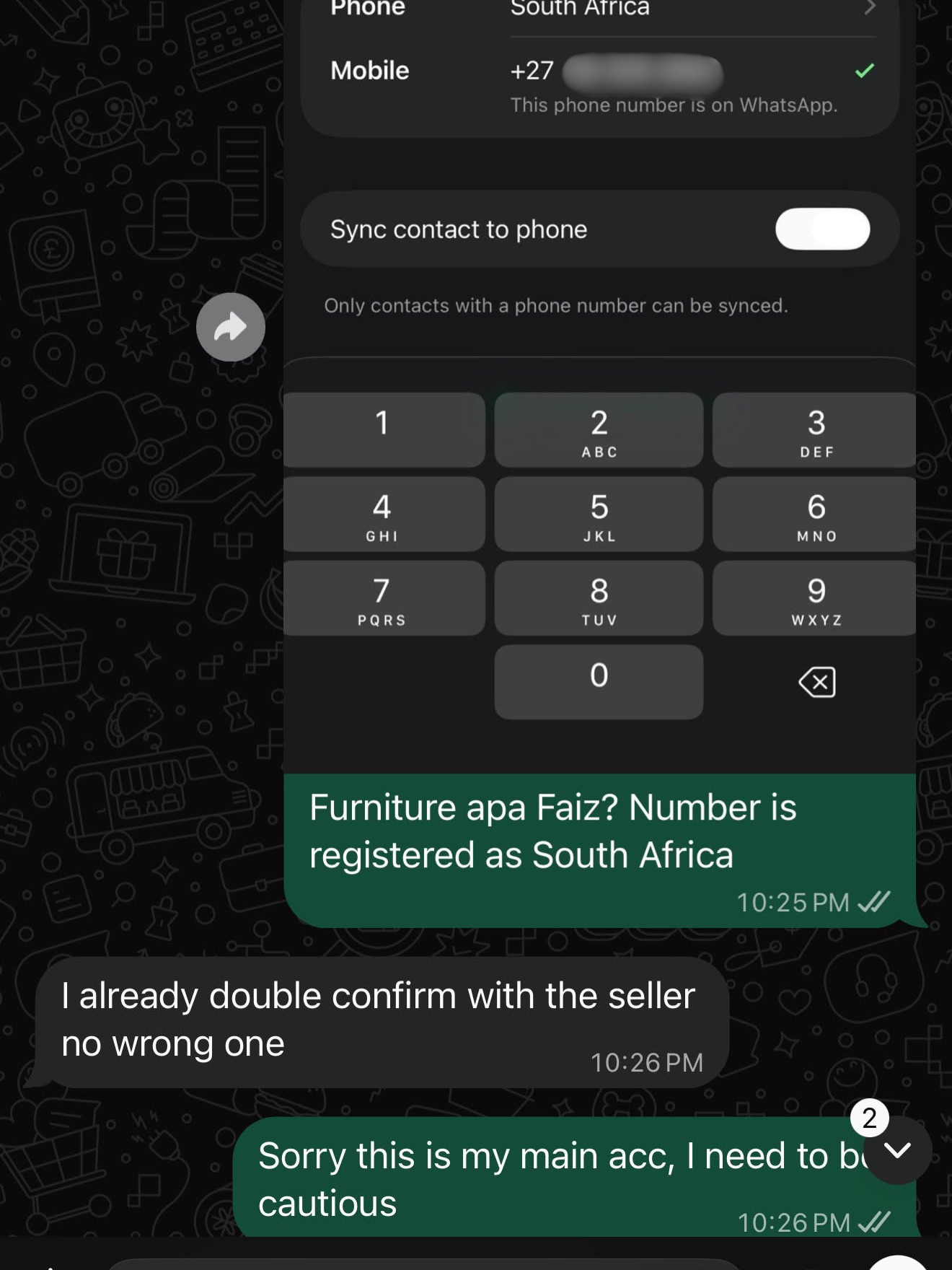 Photo from Faiz's Instagram
She took a screenshot and sent it to "Faiz", but the person insisted that it was the correct number.
He told her to "relax" and that "everything [is] normal".
Wrote awkward Malay
Faiz's friend then started to message in Malay, suggesting that he wait until the next day so his transfer limit would be reset, since it was already close to midnight.
In English, the person claimed that he would lose his S$300 deposit after that day.
"Can you talk in Bahasa?" the friend asked, again in Malay. "I want to make sure your number isn't used by someone else."
"Faiz" responded by sending her a number that appeared to be a Singapore one, followed by a DuitNow QR code to an account named "LMVH Singapore".
"Please make payment here, dear. I really need your help," he said, finally writing in Malay, but using awkward grammar.
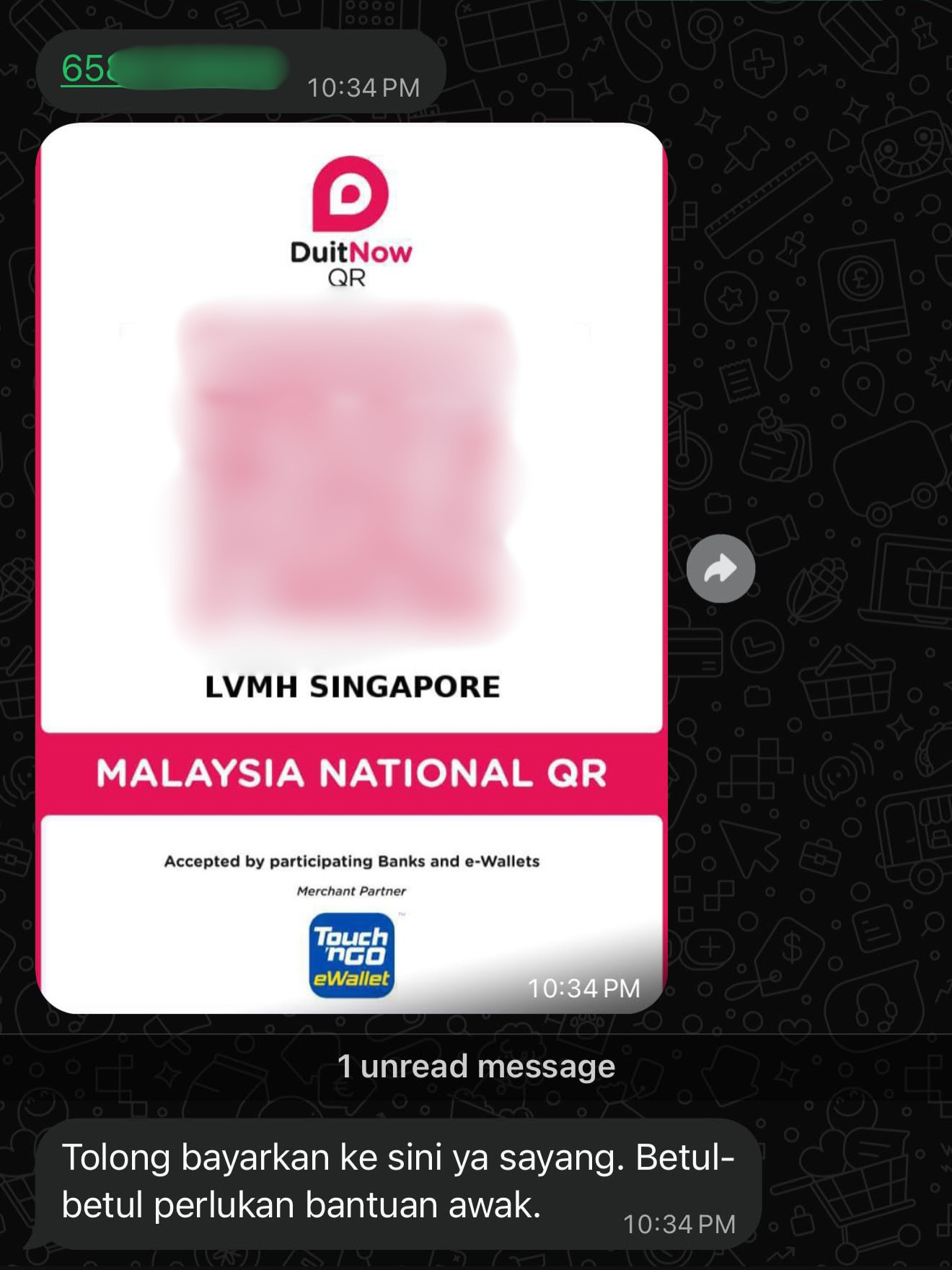 Photo from Faiz's Instagram
This was the last message before Faiz's friend messaged him on Instagram. She sent him the screenshots of the WhatsApp chat and asked if he had indeed sent the messages.
Faiz called her immediately to tell her it wasn't him.
When he checked his own WhatsApp, there was no record of the messages his friend had apparently received.
'Scary'
A self-professed tech savvy person, Faiz found it "scary" to think that someone had hacked and impersonated him on WhatsApp.
Hoping to warn others to be more careful, he posted about the incident, along with the chat screenshots from his friend, on Instagram.
In his caption, he wrote that the scammer could imitate the way he typed and kept the previous chat history with his friend on screen to trick his friend into thinking it was indeed him.
But there were a few things that made the conversation suspicious.
Faiz rarely talked to this friend on WhatsApp, as they were colleagues and would typically use Microsoft Teams.
The last time he messaged her on WhatsApp was Sep. 29, he said.
The scammer also appeared not to know Malay well and likely used a translation tool, he believed.
He reported the incident to the ScamShield Helpline at 1799, the staff on the phone advised him to log out of WhatsApp and then log back in again, explaining that WhatsApp can only be active on one phone at a time.
They also suggested that he set up two-factor authentication (2FA) on the app for extra security.