



News


LTA seeking public views on merging COE Cat A & B
LTA is also proposing a "feebate" mechanism to apply surcharges or rebates, based on the type of car purchased.
October 08, 2026, 05:00 PM
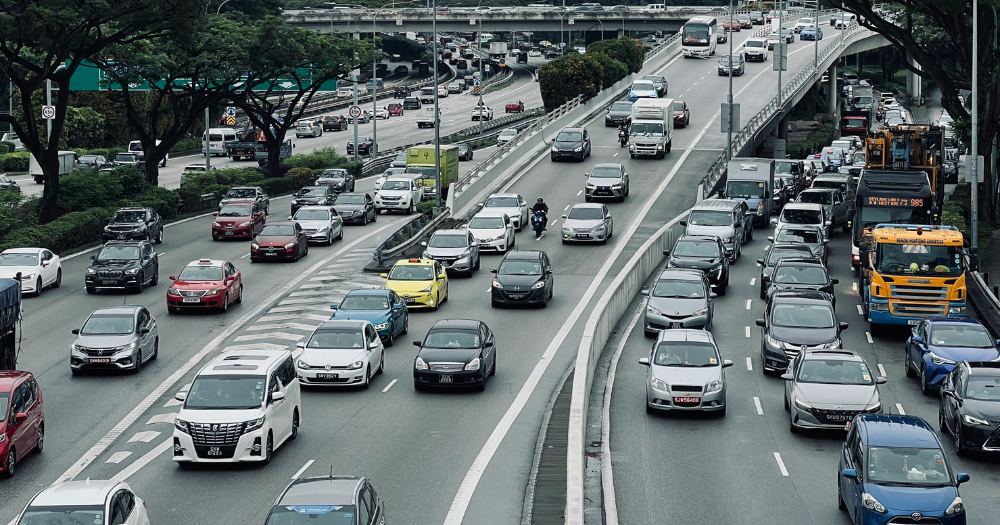
Photo via The Transport Enthusiast DC / Unsplash.


The Land Transport Authority (LTA) has launched a public consultation exercise on the proposed merging of Categories A and B of the Certificate of Entitlement (COE) into a single passenger car category.
Category A COE is currently for mass-market cars while Category B is for higher-end cars.
The two categories are distinguished based on engine capacity and power.
LTA is also proposing the introduction of a "fee-and-rebate" ("feebate") mechanism on top of the merged category to continue ensuring a premium difference between the two car markets.
The idea was mooted by Edward Chia, deputy chair of the Government Parliamentary Committee for transport and Member of Parliament for Holland-Bukit Timah GRC, during a focus group discussion in July 2026.
Proposed 'feebate' mechanism
Merging Categories A and B would mean buyers of mass-market and higher-end cars would be able to bid from a combined pool of COEs.
Besides this merger, LTA is also proposing the introduction of a new "feebate" mechanism to ensure that higher-end car buyers continue to pay more than mass-market car buyers.
How this works is that on top of the COE premium, car buyers will face one of three scenarios:
- Receive a rebate
- Pay a surcharge
- See no adjustment
To determine which will apply to a car buyer, LTA will gather a list of all median Open Market Value (OMV) for cars on the market.
The median OMVs will then be arranged in a distribution before bands are determined based on percentiles.
Whether a car buyer pays a fee or receives a rebate will depend on the band in which the car model they are purchasing falls.
For example, if the median OMV of a mass-market vehicle like the Toyota Sienta, Volvo EX 30 or a Honda Freed falls within the zero to 35th percentile of all median OMVs, buyers of such a car will receive a certain amount of rebate on their COE premium.
For a higher-end car like a Tesla Model 3, BYD Sealion 7 Performance or Mercedes Benz A180, whose median OMV might fall above the 50th percentile of all median OMVs, it might mean that consumers purchasing such a car would have to pay a surcharge on top of their COE premium.
The OMV of a car is currently used to calculate the Additional Registration Fee.
Feedback on feebate mechanism and others
LTA has yet to determine whether this should be a three-band or five-band structure, and is looking to gather feedback via the public consultation exercise.
Apart from the band structure, LTA is also looking for feedback on:
- Whether such a single passenger car category with a feebate system should be introduced.
- Whether median OMV is an appropriate basis for determining the feebate bands.
- Whether the feebate should apply to COE renewals.
- How Category E should be adjusted if Categories A and B are merged.
In its consultation paper, LTA explained that its review is guided by three principles:
- The COE framework being the most efficient method to allocate car ownership.
- The framework should ensure buyers of higher-value cars pay more for a COE than those of lower-value cars.
- The framework should be open and transparent.
Technological advances dulled effectiveness of Category A and B
Explaining the rationale for such a proposal, LTA said that the use of engine capacity and power as the criteria to distinguish between the groups have become less effective.
This is in part due to advances in technology, particularly the advent of electric vehicles.
Such technological advancements have enabled manufacturers to adjust vehicle specifications to fit within the Category A threshold.
As a result, more car buyers are competing for Category A COEs, which has resulted in a narrowing of the price gap between Categories A and B.
According to LTA, between February and June 2026, Category A COE prices have exceeded Category B prices on three occasions.
During the latest COE bidding exercise on Oct. 7, 2026, CNA reported that the prices for both Category A and B were almost the same, with Category A closing at S$130,001 and Category B closing at S$130,100.
Current framework
Under the current COE framework, cars with engine capacity and power of less than or equal to 1,600cc and 130bhp, or 110kW, fall under Category A.
Cars with engine capacity and power of more than 1,600cc and 130bhp, or 110kW, fall under Category B.
The public consultation on the proposed merger and "feebate" mechanism will run from Oct. 8, 5pm, to Nov. 2, 11:59pm.
The review is expected to be completed by the end of 2026, and LTA said it will share the findings and recommendations by the first-half of 2027.
Details on the proposed framework can be found here, while feedback can be submitted here.
Other suggestions considered
LTA said it has to date engaged more than 200 members of the public, academics and representatives from the automotive industry, including through focus group discussions in April and May 2026.
According to LTA, these participants generally agreed that engine capacity and power have become less effective in distinguishing between the two categories of cars.
LTA also heard other suggestions regarding the COE framework, such as allocating COEs based on family needs, applying a surcharge on multiple car ownership and a separate category for private hire cars.
However, in its press release, LTA explained why they might not be feasible.
More COEs for families with young children?
For example, many participants suggested that families with young children, particularly larger families, should receive greater support with car ownership, to assist with managing school runs and other responsibilities.
While LTA recognises that families have different transport needs at different stages of life, this means a choice must be made about whose needs should receive greater priority. Allocating more COEs for one group would take away COEs for others, such as multi-generational households who have their own transport needs.
Furthermore, household circumstances also change over time, making it difficult to administer such a system fairly over the lifespan of a COE.
Instead, LTA is looking at other ways to support the needs of families. It is currently working out the details of a transport grant to help offset the transport costs of large families with three or more Singapore Citizen children, whether by taxi or public transport.
LTA will announce more details on this grant when ready.