



Abroad


German Chancellor Friedrich Merz says he'd like to take learnings from S'pore's NS to Germany
Merz was delivering the 49th Singapore Lecture at the ISEAS - Yusof Ishak Institute.
October 27, 2026, 06:58 PM
Image via Mothership


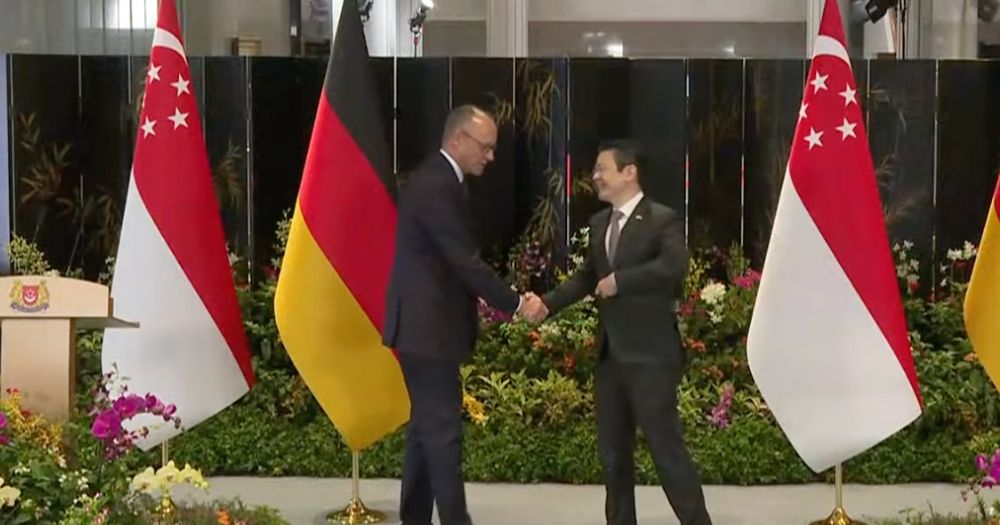
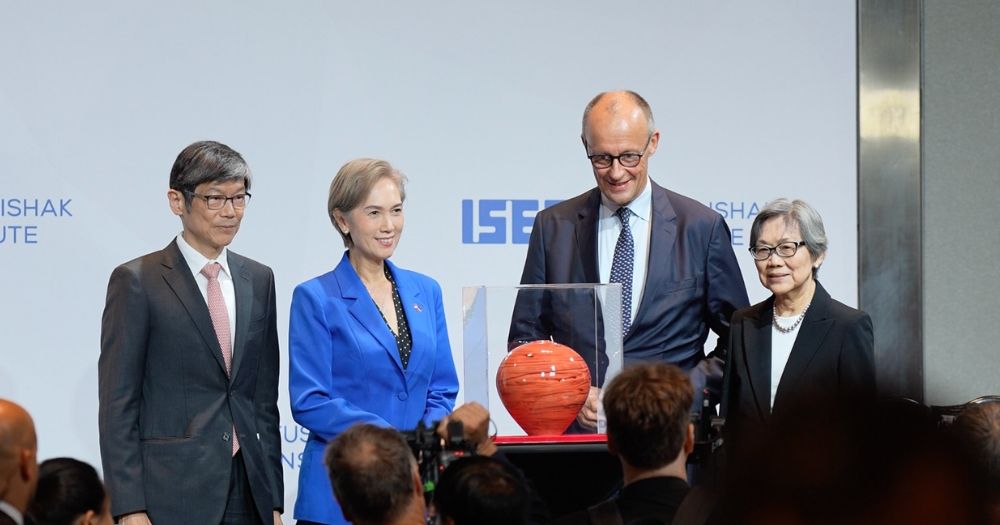
Chancellor of Germany Friedrich Merz delivered the 49th Singapore Lecture at the ISEAS - Yusof Ishak Institute on Oct. 27, during his two-day official visit to Singapore.
Merz met with Prime Minister Lawrence Wong, President Tharman Shanmugaratnam, and Senior Minister Lee Hsien Loong earlier in the day at Parliament House and the Istana, before delivering the lecture in a session chaired by Minister for Digital Development and Information, Josephine Teo.
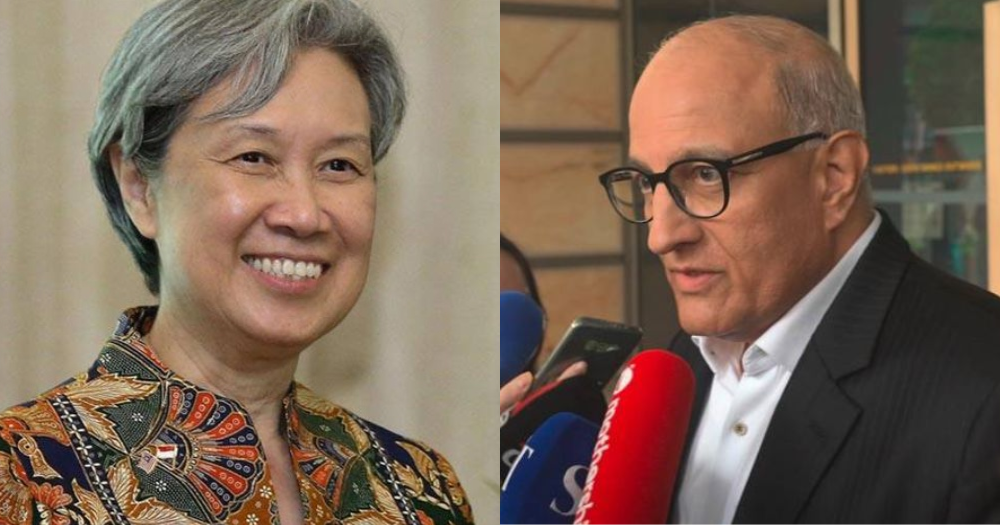
Teo noted in her introduction of Merz that he was the first Chancellor to deliver a Singapore Lecture in 15 years, entitled “Germany and the Indo-Pacific: Partnership, Competitiveness and Resilience in a Changing World.”
Threshold of a new era
Merz opened his lecture by emphasising that countries like Germany, Singapore, Japan, and South Korea, the latter two countries being next on his itinerary, stood on the “threshold of a new geopolitical era.”
It would be an era shaped by “new dynamics among great powers”, as well as technological revolution, and the international order that had been “forged over decades,” now faced an erosion that was “at odds with our fundamental values and interests.”
He spoke about Europe and Germany’s own experience, in the form of Russia pursuing a “militant, revisionist agenda” when it invaded Ukraine unprovoked, sending shockwaves through Europe but also the Indo-Pacific.
But Merz said that the new era brought new opportunities, the chance to deepen ties and cooperation between Europe and Asia, in trade, technology, security policy, and the renewal of the international order.
He said that the German government’s approach to the world’s upheavals was fourfold:
- Investing in global alliances
- Strengthening its resilience
- Investing in the international order
- Pursuing dialogue and diplomacy
On one-sided dependencies
Merz spoke at length about building a network of partners with whom Germany shared core values, not just with Singapore, but other Asian countries such as Japan, South Korea, Indonesia, India, and Vietnam.
However this did not mean that these partners would have to agree on everything, something that not even the closest of European allies did.
Merz said that he considered European and Indo-Pacific security issues as linked, saying that NATO worked closely with the Indo-Pacific Four, Australia, Japan, South Korea, and New Zealand.
Despite the geographical distances, Merz said that the challenges faced were very similar and that: “Your security has a direct bearing on ours. Our security has a direct bearing on yours.”
In China relations, Merz spoke about a realistic, distinctly European, China policy for Germany.
Realism did not mean decoupling, a mistake that make Germany neither safer nor more prosperous, but involved derisking and diversification, something that applied to all great powers.
He rejected “unhealthy, one-sided dependencies”, regardless of the partner involved, but Germany would not withdraw from cooperation and dialogue.
Singapore-German ties
He spoke warmly of Singapore-German ties, noting Germany training the SAF to operate German-built Leopard 2 tanks, and agreements to cooperate on submarines and cyber security.
There were also non-security cooperation initiatives, such as between Schaeffler and the Nanyang Technological University’s deepening cooperation in humanoid robotics, the German European School Singapore, the largest German school abroad in Asia, and the Singapore branch of the Technical University of Munich, TUM Asia.
Merz also cited Germany’s joining Singapore’s Guiding Principles for Underwater Infrastructure Defence Exchanges (GUIDE) along with 16 other countries, aimed at encouraging cooperation to enhance the security of undersea infrastructure like undersea cables.
Learning from each other
During the question-and-answer session that followed his lecture, he was asked twice what Germany could learn from Singapore and vice versa, once at the beginning and once at the end of the session.
Merz gave different answers each time.
To the earlier question, he emphasised the structural similarity between the German and Singaporean economy; both have a significant emphasis on industry and manufacturing, at least 20 per cent of GDP in Germany’s case.
He said both countries had to preserve this “strong basis for the wealth of our people”, and that countries should not rely on services only.
He also praised Singapore’s education system, especially what Teo helped identify as the Work Study Programme, which allows individuals to combine full-time employment with structured academic learning.
He noted that Singapore had adapted this type of education from the German system, and said that this was “a very successful transfer to Singapore,” and that he would like to see more of such exchanges.
Ukraine and learning from National Service
He was asked again at the end of the session by a student from the German European School Singapore (GESS), after Teo encouraged their delegation to ask Merz questions.
Merz had just answered a separate question about German and European roles in the Ukraine war’s peace process, to which he answered vigorously.
He said that no peace agreement by the U.S. and Russia could exclude Ukraine, and that “Ukraine is a part of Europe and belongs to the European Union” as Ukraine wanted to become a member.
Europe, he said, would be involved in the security setup of postwar Ukraine, and he said that he wanted no doubt that it “is in our European interest to defend (Ukraine) because we are not just defending the territorial integrity of this country; we are defending the entire political order of the European continent, and that's the reason why we are so engaged.”
It was after giving that answer that he answered the GESS student’s question by saying that he would like to learn from Singapore’s national service.
He suggested that many in Germany and Europe were reluctant to realise the security threat represented by Russia.
Merz said a key question for European societies was whether they were “willing” to defend their freedom, values, peace, and themselves, and that question was why Germany was discussing military service again.
Singapore’s military service, he noted, was “not disputed”, and that “the vast majority of the young people are agreeing with your system.”
Germany, Merz said, was far from that, and that was something he would like to learn from “and take this to Germany.”