



Features


Filipino helper, 35, worked in law firm for 8 years before coming to S'pore, hopes to one day study law
“I want to be the first Filipina helper who earns the most number of engineering diplomas and certificates in Singapore,” Jo said.
October 17, 2026, 01:56 PM
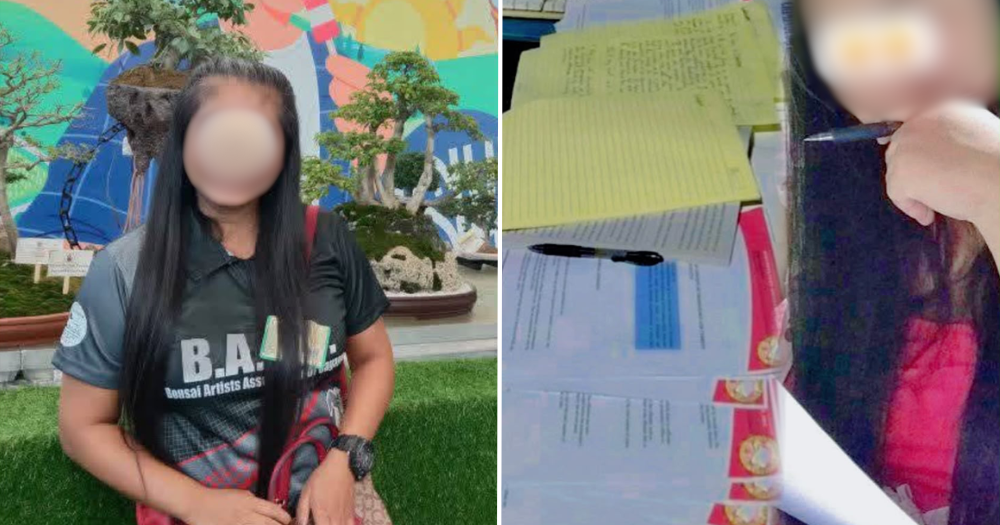
Image via Jo


Back in the Philippines, 35-year-old Jo majored in political science, obtained a scholarship, and even worked in a law firm for eight years.
But around two years ago, she came to Singapore to work as a domestic helper.
Coming to Singapore wasn't her original plan, Jo told Mothership. She'd initially planned to work in Europe, and applied for jobs for around a year.
But to no avail.
"I went to dozens of interviews but got no confirmation... So, at that time, I kept praying and asking God, ‘Where do you want me to go?’"
After a year of countless rejections, she decided to give up on her European dream and apply to Singapore instead.
Jo said she was confirmed after just two days of waiting and arrived in Singapore in less than three weeks.
She described her role as a domestic helper as an "honourable stepping stone", and added that she is blessed to have her current employer who is "very nice" and "very supportive".
Couldn't complete her degree
Back in the Philippines, Jo majored in political science in university under a full scholarship.
The scholarship required her to work as a student assistant. But due to a medical condition that prevented her from carrying out her student assistant duties, she eventually had to give up her scholarship.
Jo was therefore unable to complete her degree as she could not financially support her education.
Having to withdraw from university did not stop her, though.
Wearing many hats
Jo shared that she took on “all kinds of jobs” before coming to Singapore, doing almost all of them “just to survive”.
These included working at a hospital intensive care unit, a call centre, and a law firm.
It was at the law firm where she learnt to draft affidavits, go to court, and prepare documents.
This eventually sparked an interest in becoming a contract executive and quantity surveyor in the construction industry, which she calls her "dream" job.
Studies when she can
Jo shared that some people doubted her ability to pursue her studies because of her limited resources and her position as a domestic helper.
“They doubt that I can finish my engineering class. That I’m so ambitious to take [it] when I’m just a helper,” she said.
Despite others’ lack of confidence in her, Jo remains steadfast in working towards her dream.
She spends her days off and rest time to earn technical qualifications and skills, including attending courses and obtaining certificates relevant to the field.
She is currently pursuing two engineering diplomas, which she expects to complete in about two months, and is enrolled in three courses certified by the Building and Construction Authority (BCA) to support her career transition.
She also has completed several other courses offered by overseas universities and hopes to one day study law at the University of London.
"I dream of working in one of the most important work roles in the construction industry... as a contract executive and quantity surveyor," she said.
Jo declined to share details about the financial costs of her studies.
Daily work
Asked how she balances her work as a domestic helper with her studies, Jo shared that she multitasks, often studying as she works.
Sometimes, she even dreams about the tasks she needs to complete.
Jo added that her employers are very supportive, and her work hours are manageable enough that she can set aside time to study.
"That's why it's a blessing to have [my employer], because not all bosses are the same, and I'm very grateful to find someone who cares for me."
Still, she acknowledged that the journey to her dream is tough.
"I've traded days off, parties, meeting friends, rest hours... just to earn my technical skills," she said.
The dream
Jo said she lost her dad when she was 19, and her mum when she was 33.
Her mum's passing was especially heartbreaking, as she was busy working in healthcare in the Philippines at the time.
“When my mother died, I wasn’t there. I was serving other patients, not knowing my mother was suffering…
I lost interest in [healthcare] because I had served hundreds of patients, but I wasn’t there when my mother needed me.”
But she believes they would be "fully supportive" of her decisions, if they were alive.
She also shared that she is actually appreciative of the people who doubt her and look down on her, as they have motivated her to work harder.
"Challenges are just part of the learning curve... The biggest risk, is not taking any risk."