



Environment

'Protecting workers from haze is not optional': Jasmin Lau encourages employers to let staff WFH where possible
As these are exceptional conditions, she asked that employers and employees discuss early and find arrangements that work for both sides.
October 16, 2026, 06:34 PM
Photos by Mothership, from Canva


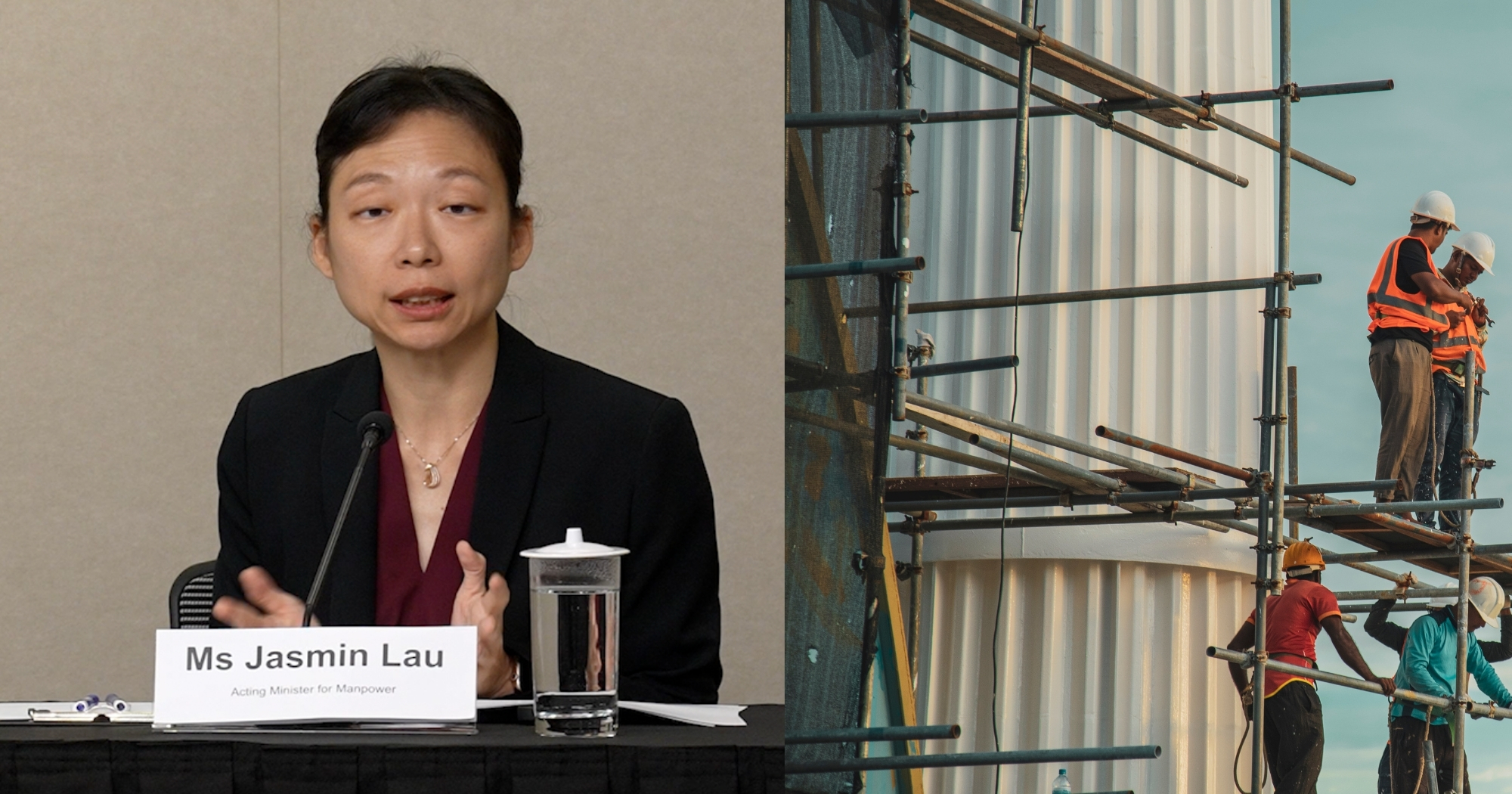
Protecting workers from the haze is not optional, said Acting Minister for Manpower Jasmin Lau during an Oct. 16 press conference on the haze situation.
Lau added that under the Workplace Safety and Health Act, "employers must take reasonable and practicable measures to keep their workers safe".
This includes protecting them from the haze, she said.
Monitor situation
In that regard, Lau pointed out that employers ought to monitor the haze situation and assess the risk it carries for their workers.
They should then follow the Ministry of Manpower's (MOM) guidelines.
"If the Pollutant Standards Index (PSI) forecast is above 200 in the Very Unhealthy range, employers should implement measures in line with MOM guidelines, and these include to avoid prolonged or strenuous work outdoors, to minimise outdoor work for vulnerable workers," she said.
They include older workers and pregnant women or those with heart and lung conditions, Lau added, noting that N95 masks should be provided to workers as well.
Hazardous range
If the PSI forecast crosses 300 and enters the Hazardous range, employers should implement additional measures.
This includes minimising outdoor work for healthy workers as well.
It also includes adopting additional precautions such as reducing work intensity, providing indoor rest breaks, and deferring non-essential work.
"Employers should plan for these measures now, so that they are well prepared if the situation worsens," Lau said.
She added that MOM will issue additional advice on how employers can use the one-hour PM2.5 readings to decide on immediate outdoor work activities and measures to be taken, which may include pausing outdoor work completely for vulnerable workers.
This is to help employers make decisions on the ground operationally, as the haze conditions change throughout the day.
Inspections, platform workers
Since September 2026, MOM has carried out more than 400 worksite inspections, Lau said, noting that most employers "have done the right thing" with haze management plans, and providing N95 masks and regular updates to workers.
"And for the worksites that have fallen short, we have directed them to put that right, and we will check again."
MOM has also reminded all platform operators to advise their workers on protecting themselves and to ensure that workers are not penalised for taking longer to complete jobs during this period.
"This includes not penalising them through incentive schemes, reduced job allocation, or paid deductions."
Lau highlighted that platform operators such as Grab and foodpanda have partnered with the National Delivery Champions Association (NDCA) to distribute N95 masks to their members.
"We welcome such proactive efforts by platform operators, and I hope more will do the same," she said.
Workers with concerns about safety and health during hazy conditions should raise them with their employers, she added.
They may use the SnapSAFE platform to report workplace safety and health violations or lapses to MOM.
Flexible work arrangements
In addition, Lau encouraged employers to let their employees work from home where the job allows, considering the haze creates "practical problems" at home.
This work from home arrangement is especially so for those who are more vulnerable to the haze, she said.
Lau added that possible scenarios from the haze situation could include a child falling sick, a parent requiring more care, or schools moving to home-based learning at short notice.
She emphasised that employers must properly consider work from home requests under the Tripartite Guidelines for flexible work arrangements, including from parents whose children are on home-based learning.
Lau said:
"We recognise that flexible work arrangements may not be feasible for all jobs.
Some jobs can only be done on site, and in those cases, we urge employers to allow their employees to use their annual leave or childcare leave when applicable."
When that runs out, employers are encouraged to be flexible and grant paid time off or allow employees to draw on the next year's annual leave in advance without affecting their wages.
Lau added that unwell employees should see a doctor, with medical leave applying as usual.
Acknowledging that these are exceptional conditions, she asked that employers and employees discuss early and find arrangements that work for both sides.
"MOM will continue to work with our tripartite partners to safeguard workers' safety and health," she said.