News


Up to 80% drop in care expenses for persons with disabilities by 2028
For one four-person household earning S$6,000 a month, an Adult Disability Home place would fall from S$3,500 to S$700.
October 04, 2026, 06:03 PM
Top image via SHVETS production/Pexels


Fees for adult disability services are set to become more affordable soon, under recommendations released by the Taskforce on Assurance for Families with Persons with Disabilities.
For families caring for persons with disabilities, this will provide "greater assurance as they plan for long-term care and support", said the taskforce.
More affordable adult disability services
Firstly, the Ministry of Social and Family Development will implement a cap on fees for disability services, limiting what families pay out of pocket after government subsidies.
Next, there will be more subsidies for disability services.
Means-tested subsidies for adult disability services will rise by at least 10 percentage points for most families, across a wide range of services including day activity centres, Enabling Skills Centres, adult disability hostels, adult disability homes, children disability homes, the Enabling Transport Subsidy and the Taxi Subsidy Scheme.
The subsidy eligibility ceiling will also be raised to a per capita household income of around S$6,000, up from S$4,800 today.
This widens coverage to about eight in 10 households using disability services, from seven in 10 currently.
Lower-income families will pay no more than S$10 for community-based services such as day activity centres.
Lastly, more support will be provided for persons with intellectual disabilities and autism.
Eligibility for four financial support schemes will be expanded by the first quarter of 2027 to explicitly cover persons with intellectual disabilities or autism who have significant care needs.
The schemes are the Home Caregiving Grant, Caregivers Training Grant, Pioneer Generation Disability Assistance Scheme and Migrant Domestic Worker Levy Concession for Persons with Disabilities.
This will go towards defraying their caregiving costs.
Up to 80 per cent reduction in disability-care expenses
These enhancements will go towards reducing the a household's monthly disability-care expenses.
Families of persons with higher support needs can expect their monthly fees for selected services to fall by about 25 per cent to 80 per cent compared to today.
To illustrate, the taskforce cited the example of a four-person family living in an HDB flat with a household income of S$6,000, or S$1,500 per capita, caring for someone with higher support needs.
An adult disability home placement that costs them S$3,500 a month today would drop to S$700.
A day activity centre placement which costs S$210 today will drop to S$40.
For a similar household earning S$13,000, or S$3,250 per capita, an adult disability home fee which costs S$7,000 today will fall to S$1,600.
A S$710 day activity centre fee today will become S$400.
By 2030, the affordability changes are expected to benefit around 5,000 persons with disabilities accessing residential and community disability services.
Why the cost burden adds up
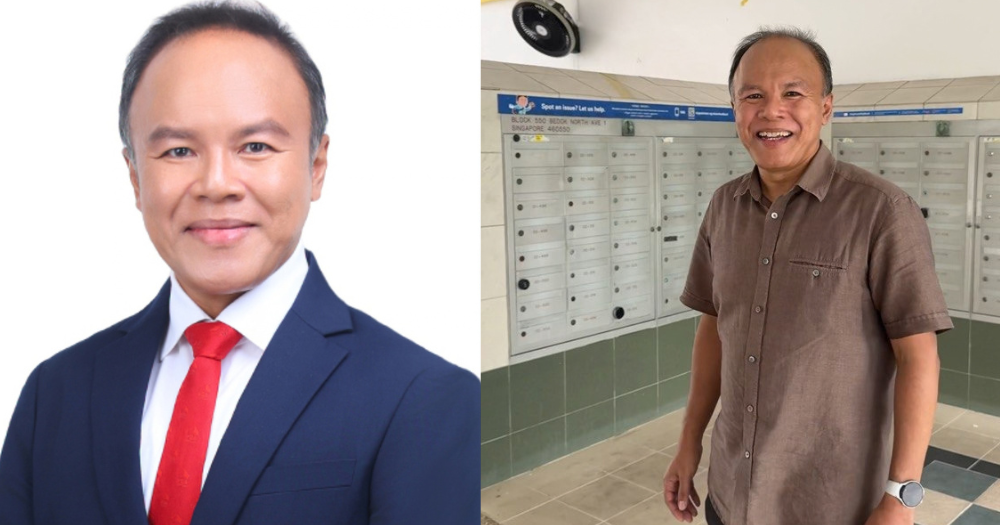
 Senior Minister of State for Home Affairs and Social and Family Development Goh Pei Ming said that affordability was one of the more salient concerns raised during the taskforce's engagement sessions. Photo by Mothership.
Speaking at the press conference on Oct. 2, Senior Minister of State for Home Affairs and Social and Family Development Goh Pei Ming said the issue of affordability came up repeatedly in the taskforce's engagements:
"Another concern we heard repeatedly from families was affordability... I hope that with the conversations on future care planning, as well as enhancing affordability, we are able to give our families a lot more assurance that their future needs are looked into, and that they are able to make informed decisions when they need to."
The taskforce said disability-related care needs last a lifetime, with recurring costs adding up significantly for families, particularly when caregivers are unable to work full-time.
The report noted that serving persons with the most severe needs under the Enabling Skills for Life Programme can cost more than twice that of persons with the lowest needs.
It said persons with severe disabilities pay higher fees because of the higher cost of providing more support.
One caregiver told the taskforce: "There's no option to plan so we [are] sort of stuck. So, we just live [on] a day-to-day basis."
Several caregivers also said their worries about affordability did not fade over time, but grew as care needs increased.
"They are not quite sure what they don't know"
Goh also said one concern surfaced repeatedly from families is the "post-18 cliff".
He said:
"They ask the question: when they leave SPED school at age 18, what is the next step? They often face uncertainty about finding employment or securing a place in an adult disability service. And in fact, if you think about it, throughout the first 18 years, that is perhaps the first and most major milestone of significant uncertainty."
But the worries did not stop there, he said, extending to what happens if someone wants to change jobs, retire, or if caregiving arrangements change.
He added: "Some of them have also said that they are so overwhelmed with just the day-to-day arrangements, they don't have the capacity to think long term."
Some families relied on chat groups and speaking with other similar families, he said:
"They are not quite sure what they don't know. They're worried that they may have missed a spot, and when they really need something, they may have missed the window to do so."
Part of three key shifts
The affordability measures are part of three key shifts identified by the taskforce: future planning, meaningful and sustained employment, and meaningful engagement in the community.
"With these shifts, we want to ensure that there are pathways available, so that persons with disabilities and their families no longer experience a “post-18 cliff” after graduation and can lead a meaningful life and pursue their aspirations with greater confidence."