



Abroad


'Don't just throw the baby out with the bathwater': Vivian Balakrishnan on maintaining international laws despite need for global reforms
His remarks came against a backdrop of ongoing international conflicts discussed at this year's UNGA.
September 27, 2026, 01:12 PM


The formula that has brought the world relative peace and prosperity for more than eight decades must be preserved, despite a need for institutional reforms, said Foreign Minister Vivian Balakrishnan.
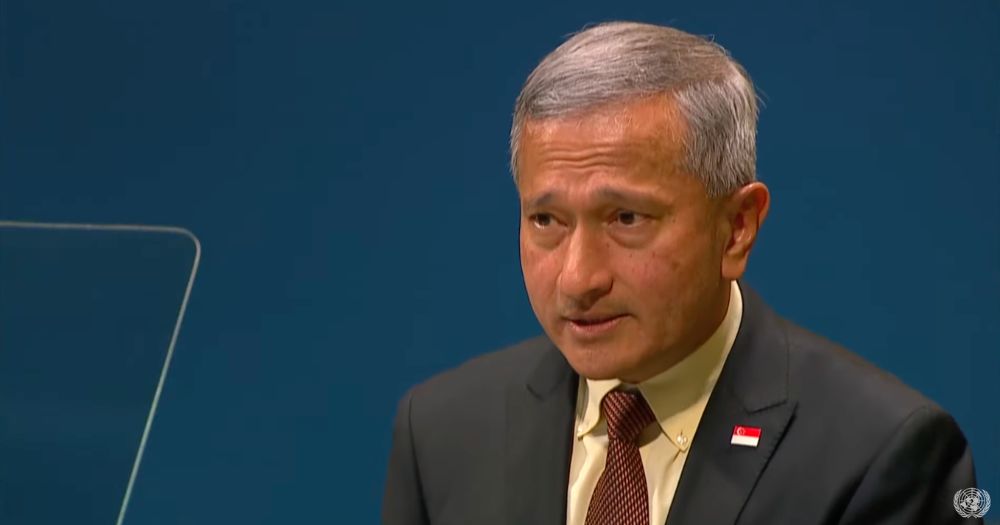
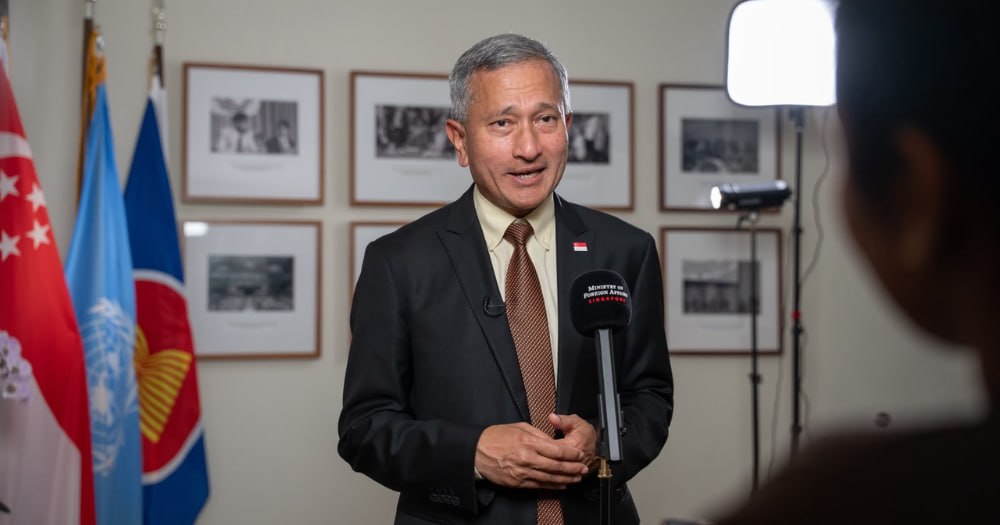
Speaking in his wrap-up interview in New York City after delivering Singapore's national statement at the United Nations General Assembly (UNGA) on Sep. 26, he added that small and medium states like Singapore can do their part in reminding big powers that it is "actually in their own interest" to operate in accordance with the international law.
In his speech to the UN earlier, Vivian had called for the reform of existing multilateral institutions like the UN itself.
“We need a more flexible coalition of states and partners who are willing and able to move forward, whilst remaining open to others to join when they are ready,” he said.
No need for egregious disruption
However, he later added that "while we recognise the need for reform, don't just throw the baby out with the bathwater."
"Disrupt what needs to be disrupted," he said, but don't engage in egregious disruption.
Vivian's remarks came against a backdrop of ongoing international conflicts discussed at this year's UNGA, including the Gaza conflict and the Israel-U.S. war on Iran.
Responding to Mothership's question on how small and middle states fared at the high-level summit, he said most recognised the dangers that loom ahead, but have resolved to "not just surrender to our fates".
"We are going to make our voices heard...make the case for consistency of international law," he proclaimed.
A time of change
Vivian also spoke of the many issues on the table at this year's discussions.
He said there was "considerable interest" in the issue of safe artificial intelligence (AI) usage, though it was too early to tell whether a UN framework convention on AI safety, like he had suggested, was necessary.
Meanwhile, the U.S. and Iran reportedly held talks of ending the war on the sidelines of the summit, while the UN is undergoing its own institutional reforms in electing a new Secretary-General
"The world is at a particularly disrupted and potential dangerous phase, that’s why there’s so much on the agenda," said Vivian.
On whether the chatter has left him with a sense of optimism, he said that he "would go home slightly encouraged people recognise the gravity of the situation and are trying to get to grips with it".
"People are assessing each other's bottom lines, red lines, concerns and ambitions," he added.
Not all matters can be solved quickly
However, while intensive discussions is "a good thing", Vivian warned that not all matters can be solved in a week, or even a year.
Singapore's stance on tensions at the Strait of Hormuz, for instance, must be made known "not gratuitously and not provocatively, but carefully, deliberately and firmly."
Countries should recognise international law
He also reiterated Singapore's calls for countries to recognise international laws, including the UN Convention on the Law of the Sea (UNCLOS) in the Strait's issue.
He added that for Singapore, who is one in over 193 UN member states, staying constructive and relevant in the UN remains important.
"We have to take a longer term view because we are small and trade-dependent.
We need the world to be stable and predictable, where rules apply, sanctity of contract is recognised and people and states behave accordingly."
Admitting this may "sound like a wish-list" as Singapore is not in the position to impose them on other countries, Vivian nonetheless emphasised that it is "better we spend more time meeting and talking rather than resorting to coercive measures".
"So we have to do our part, but Singapore has to be realistic and take the world as it is. There are no easy solutions," he said.
Trump-Xi meeting
Vivian also addressed the meeting between U.S. and China presidents Donald Trump and Xi Jinping against the backdrop of the UNGA, stating that he was "glad they met", as were other countries in the UN.
The relationship between China and the U.S., two major superpowers, is "most critical" both for them and for the rest of the world, Vivian said.
However, while both leaders' apparent good personal relationship will be helpful, he said the talks ended in more of a truce as neither party wants to have a collision or a major confrontation.
Strategic trust will have to be built a little at a time in the longer term in order to solve thorny issues at the crux of their relationship, he added.