News


S'pore taxi & private hire drivers can transition to bus captains under new employment pathway
Drivers will be able to reskill on a part-time or full-time basis to maintain flexibility.
September 28, 2026, 12:00 PM
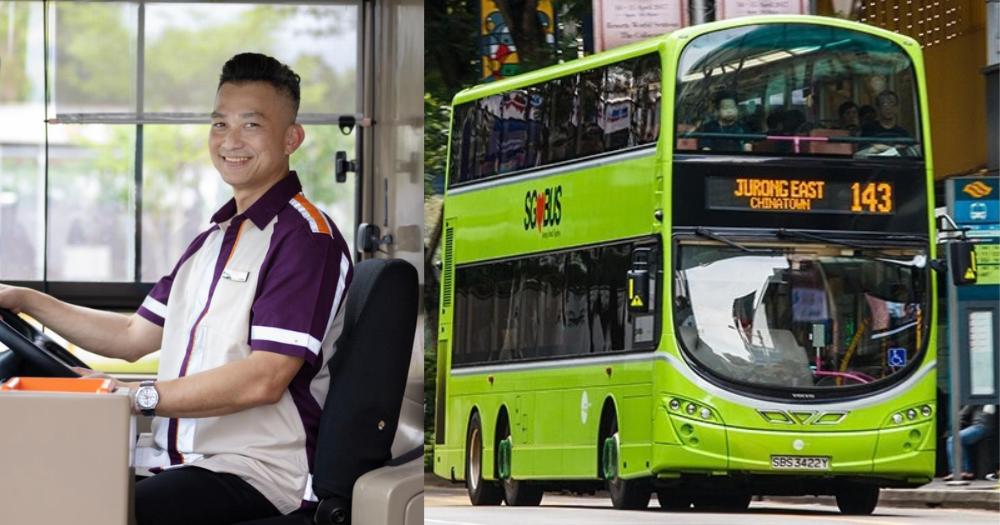
Photo from SBS Transit and Land Transport Authority


A new employment pathway to help taxi and private hire car drivers reskill and transition to bus captains will be rolled out, announced Senior Minister of State for Transport Sun Xueling.
This comes as part of the considerations of the government's broader plan to transition to autonomous vehicles (AVs).
Speaking at a media doorstop on Sep. 28 at the Singapore Bus Academy, Sun said that while technology can provide more options for commuters, it will also impact transport-related jobs.
"We want to make sure that there are various options for our workers in the transport sector," she added.
Adoption of autonomous vehicles
A press release by the Ministry of Transport, Skills and Workforce Development Agency, and National Trades Union Congress shared that the government is progressively adopting AVs to improve connectivity particularly in remote and underserved areas, with plans to establish a few hundred of such vehicles in the next two years.
Despite AVs still being in its "infancy stages of development", Sun noted that "as with all new forms of technology, once it hits an inflection point, it can move quickly".
She also shared that drivers have voiced concerns that AVs will impact their jobs.
To allow for drivers to have more options to diversify their skills and improve career progression prospects, a support package will be put together to aid them.
This comprises of structured employment pathways through Career Conversion Programmes (CCPs), a new training incentive scheme, and enhanced outreach and career guidance.
New pathway for bus captaining
While a previous CCP focusing on AV specialisation was rolled out, this new Point-to-Point Driver to Bus Captain Pathway aims to support taxi and private hire car drivers transition to bus captains, equipping them with technical and operational skills.
It was implemented by the Land Transport Authority (LTA), developed in consultation with NTUC – namely its affiliated National Private Hire Vehicles Association (NPHVA) and National Taxi Association (NTA) – and the National Transport Workers' Union (NTWU).
According to the press release, many taxi and private hire car drivers often value the freedom to balance work and personal responsibilities.
Under this new pathway, taxi and private hire car drivers can have more flexibility by choosing to train on either a part-time or full-time basis.
The programme includes building skills and on-the-job training, and will take between two to six months.
Drivers who already hold a Class 4 licence are eligible for a shorter training programme and can make a faster transition.
Sun added that this CCP aimed at bus captain conversion is meant to be one option of many for drivers, and as such the government does not have a target placement rate.
Making the role of bus captain more attractive
The newly announced pathway complements broader efforts to attract and retain local bus captains.
The government is working with public transport operators to offer more flexible work arrangements such that drivers will have the option of balancing bus driving and other work opportunities, said Yeo Wanling, NTUC Assistant Secretary-General and Advisor to NPHVA, NTA and Executive Secretary of NTWU.
The salaries of bus captains have also been raised to ensure that there will continue to be "good jobs" in the transport sector, Sun added.
Participants under the new pathway will be eligible for the increased starting salaries and enhanced sign-on bonuses for new local bus captains, which will take effect from Jan. 1, 2027.
Applicants interested in the Point-to-Point Driver to Bus Captain Pathway can apply for bus captain positions directly with the public bus operators or visit this website to find out more.