Parliament


PM Wong to donate pay increment for next 5 years following adjustment of political salaries
To suitable good causes.
September 08, 2026, 12:43 PM
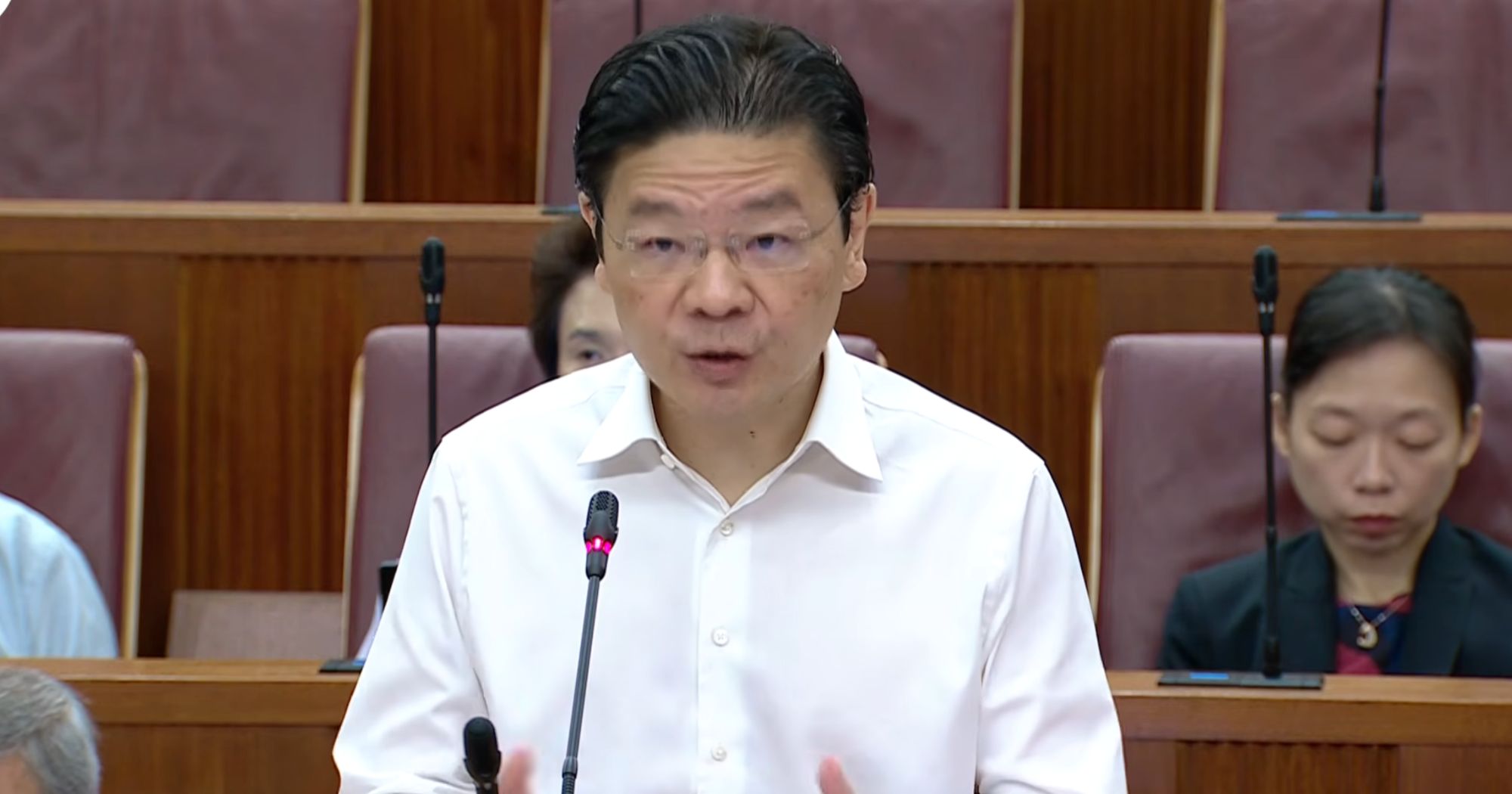
Photo from MDDI/YouTube


The government has accepted the recommendations by an independent committee to adjust political salaries.
The proposed adjustments will not be immediately implemented in one step.
More details will be touched on by Minister for Defence and Coordinating Minister for Public Services Chan Chun Sing later on in parliament today on Sep. 8.
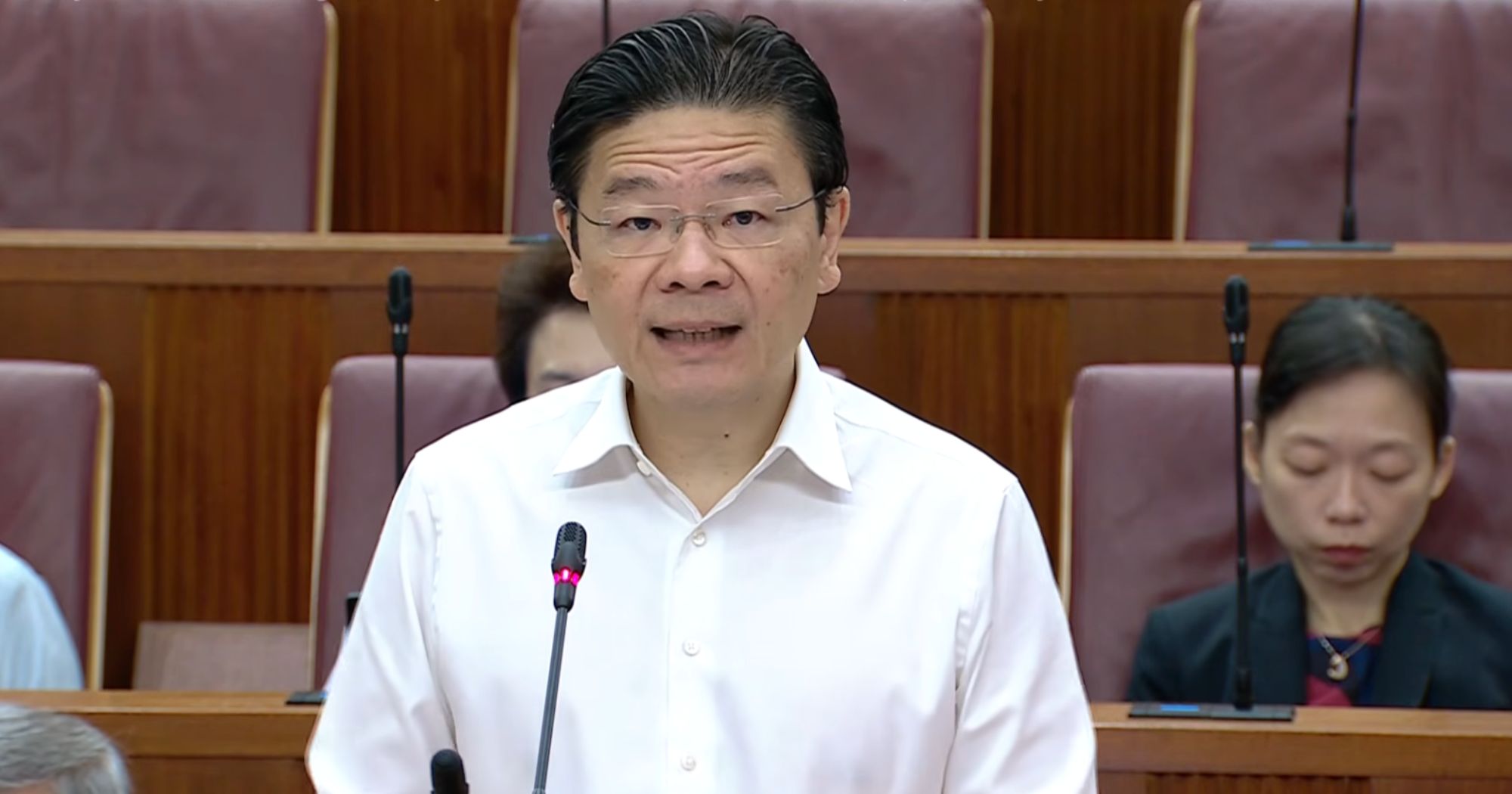
Prime Minister Lawrence Wong will be donating the full increase in his salary for the next five years following the adjustment of political salaries.
During his ministerial statement on the government’s response to the 2026 review of salaries for Political Appointment Holders (POH) and Members of Parliament (MPs), PM Wong shared that he will be donating his increase to “suitable good causes.”
This is on the assumption that he remains prime minister during this period.
PM Wong emphasised that this is his “own decision” and that he does not expect other officeholders to do the same.
“As a general rule, I do not believe in making a public show of charitable giving,” he said, adding that while the salary framework is a cabinet decision, he carries “ultimate responsibility” for it as the PM.
PM Wong said he will review the position afresh at the end of the five years, taking into account the circumstances at that time.
“I fully expect to continue supporting good causes, as I have always done. But I do not want to make an open-ended public commitment, or to create an expectation that future Prime Ministers may feel obliged to follow,” he said.
Setting the context
PM Wong also acknowledged that political salaries are a “difficult and emotive issue”, adding that the sums involved are “more than what most citizens earn”.
“So I understand why Singaporeans scrutinise them closely, and why many feel strongly about the issue. It is certainly not an issue ministers themselves find easy to discuss,” he said.
He said the government has “repeatedly exercised restraint” in making any salary adjustments under the framework established after an independent committee review in 2012.
A subsequent committee was convened in 2017 to review the 2012 framework, which recommended an upward adjustment.
The government nevertheless decided not to adjust political salaries at that time.
In 2023, the Government also decided to defer the scheduled review of the framework, citing the uncertain external environment and downside risks to the global economy at the time.
As a result, the salary norms for political officeholders have remained unchanged for 15 years, PM Wong noted.
Ministerial salaries fallen behind
Over the same period, however, salaries in other sectors have increased, PM Wong said, including in the private sector, civil service and judiciary.
Ministerial salaries have therefore fallen further behind, he said, adding that the gap is most obvious when compared with the private sector.
He highlighted that even in the public service, some senior permanent secretaries earn more than ministers.
“It’s not because the framework changed. But because successive Governments have decided, at different points, to hold back,” he said, though he set out that there were good reasons for doing so.
While it would have been “easier politically” for him to leave things as they are, PM Wong said it would not be right to affirm a framework in principle but disregard it indefinitely in practice.
“Otherwise, over time, the framework loses its meaning. Restraint cannot become neglect. That’s why I have decided we must act now,” he said.
Why political leadership matters
In explaining the need for the adjustment, PM Wong first explained that good government depends on good leadership.
“Institutions are only as effective as the people who lead them. Systems and processes matter. But they do not run themselves. Especially at the top, the quality of leadership makes a decisive difference,” he said.
Character was foremost in importance, "a veto factor", but that alone was not enough.
While they look at a person’s character when looking for a minister, they also look for competence, PM Wong said.
This involves the judgment, ability and leadership to do the job well, he said.
This is where remuneration becomes relevant, PM Wong said, explaining that while it does not determine who is capable, it does affect whether “enough capable people are prepared to step forward and take on the responsibility”.
Some may think that being a minister is “straightforward”, as they can just go along with the “popular view”, he noted.
However, Singapore has less room than most countries to govern in this way, PM Wong emphasised, pointing to our size and few natural advantages.
For example, the reset of family policies he announced at the National Day Rally was done with the work of civil servants but also Indranee Rajah (who chairs the inter-agency Marriage and Parenthood Reset Workgroup) and other political officeholders, he said.
This includes deciding where support would make the greatest difference, how the costs should be shared between parents, employers and government, and how the different measures should fit together.
The job of a minister is not simply to do what is popular today but to make judgments about what will leave Singapore in a stronger position tomorrow, he said.
“That requires mastery of the issues, a clear sense of priorities, and the willingness to take difficult decisions,” he said.
Difficulty in making leadership renewal
PM Wong shared that following his succession as PM in 2024, leadership renewal became one of his highest priorities.
“Leadership succession cannot be planned like clockwork. People and circumstances change. Unexpected events happen. So we need strength across the team, and we need to begin renewal early,” he said.
Ahead of the last General Election in 2025, PM Wong said he approached several senior permanent secretaries whom he thought had the temperament and potential for political leadership.
However, none was prepared to make the move, he said.
Recruiting from the public service is becoming harder, PM Wong said, explaining that senior civil servants today have meaningful careers, substantial responsibilities and competitive remuneration.
"If the gap between public service and political salaries continues to widen, that hurdle will become higher," he said.
The answer was the same when he approached those in the private sector, including several CEOs and other senior business leaders.
While they were earning several times a minister’s salary, none said to him directly that pay was the reason they would not join, PM Wong shared.
“Nor would I want someone whose decision turned mainly on money,” he said.
However, this does not mean remuneration is irrelevant, he said, explaining that they have spent years building a successful career, and they would have to take a substantial reduction in income if they were to join.
He also noted that the sacrifice is not only financial, as the political life places real demands on the families of the politicians, including time and scrutiny of private lives
“The purpose of remuneration is much more modest: to ensure that, on top of all these other sacrifices, we do not make the financial hurdle unnecessarily high,” he said.