News


S'pore must help local workers & firms benefit from global opportunities: DPM Gan
He said Singapore will pursue cooperation that supports participation for its people and businesses in new growth areas.
September 25, 2026, 01:11 PM
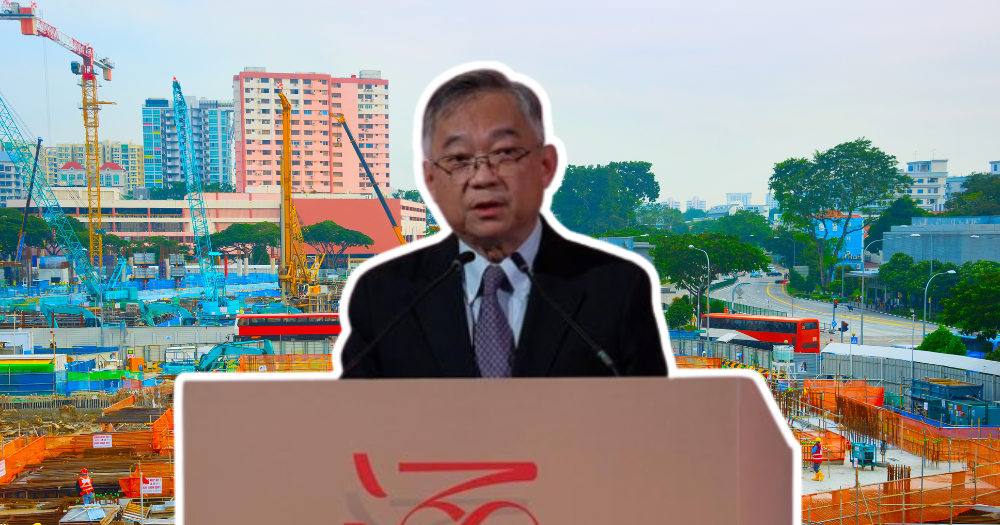
Photo by Aiman Nadzri/Mothership and Canva


As Singapore expands its connections abroad, it must also build stronger capabilities at home, said Deputy Prime Minister Gan Kim Yong on Sep. 25.
This means giving Singapore businesses and people a stake in the progress and prosperity brought about by the trust forged with other countries, said Gan, who is also Minister for Trade and Industry (Trade).
Speaking on the second day of the FutureChina Global Forum 2026 held in Singapore, DPM Gan discussed how cooperation between Singapore and China can help to strengthen resilience in each country and in Southeast Asia.
He highlighted that the two countries have spent decades building trust through mutually beneficial cooperation.
"We should now draw on that trust to build capabilities in Singapore and across Asean," he said.
Making opening up work better
Gan began his speech pointing out how the traditional model where opening up drives development is now strained.
"Geopolitical rivalry has made countries more concerned about dependencies and economic security," he said.
Singapore and China have both benefited from trade and investment, which has opened markets for businesses and enabled workers to have better jobs.
In response, businesses and workers have asked whether they have a fair share in the gains from openness and growth, as well as technological change, Gan noted.
Rather than looking inward and closing up to protect local businesses, he believes Singapore needs to make openness work better for its businesses and people.
Building capabilities at home
Gan observed that Southeast Asia today faces a harder path to industrial upgrading.
This is due to intensifying competition, the growth of automation, and digital platforms that bring not only new markets but also new competition.
More trade and investment, by themselves, will not be enough now, Gan said.
"We must also help local enterprises move up the value chain to benefit from these opportunities, and workers acquire the skills to take on new roles."
When Singapore becomes the Asean chair in 2027, it will work together with fellow member states to deepen integration and strengthen the region's capacity to respond to change, Gan committed.
Additionally, he believes a stronger and more resilient Asean should be a shared priority for Singapore and China, because greater prosperity in the region will give their businesses growing markets, more resilient supply chains, and stronger partners.
The Asean-China Free Trade Area 3.0, he said, offers Singapore a framework to work with China and its Asean partners in areas such as the digital and green economies and supply-chain connectivity.
"The task now is to translate these commitments into practical opportunities for enterprises and workers across the region."
He gave examples of investors in transport connectivity projects working with local suppliers to improve quality standards, production methods, and products.
Technology partners can also help smaller firms adopt digital tools, while developing local capabilities to adapt and maintain them, he added.
Competitive niche
While talking about strengthening cooperation, Gan emphasised that the aim is not for every economy to do exactly the same thing.
Instead, it should help businesses across the region build a competitive niche in the value chains, and help workers to see pathways to progression.
Such interactions keep regional integration more relevant and resilient, he said.
"When local firms gain from customers and capabilities, and workers gain better opportunities, they will have a reason to support continued trade and investment."
Singapore—China cooperation
Gan also outlined the opportunities Singapore and China can seize together in AI and the green economy.
He brought up the Singapore—China Digital Policy Dialogue, a platform where both countries can exchange perspectives on AI governance and data, and build confidence in the responsible use of this technology.
In terms of the green economy, Gan said that China has deep technological and manufacturing capabilities, while Singapore brings strengths in areas such as finance, connectivity, and project implementation.
They have established a Green and Digital Shipping Corridor in Tianjin, combining trials of alternative fuels and digital solutions with workforce development.
This project helps businesses and workers prepare for changes in the maritime sector, Gan added.
"This is the kind of cooperation we will pursue – cooperation that builds capabilities, and supports participation in new areas of growth."