Parliament


Jeffrey Siow & Kenneth Tiong debate over SIA's Air India investment in Parliament
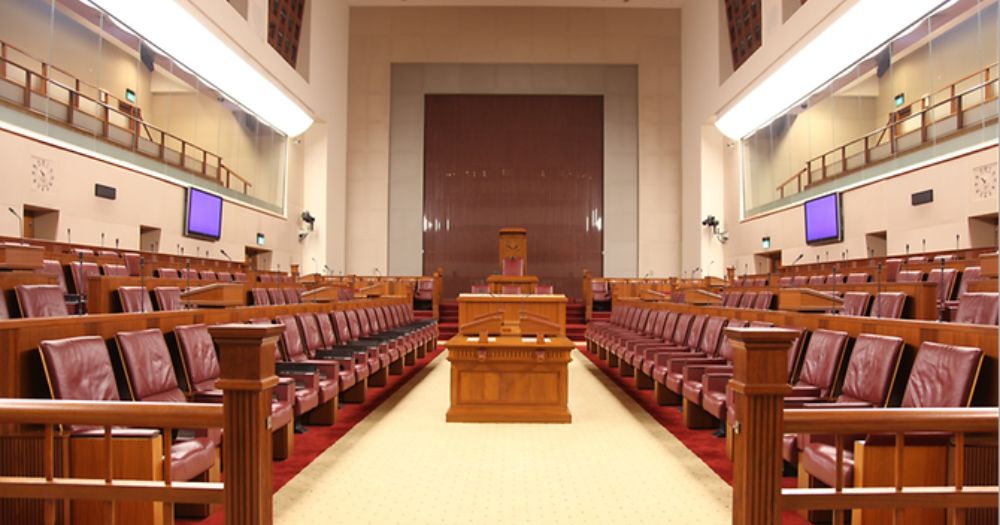
Sep. 8 parliament sitting.
September 08, 2026, 06:34 PM
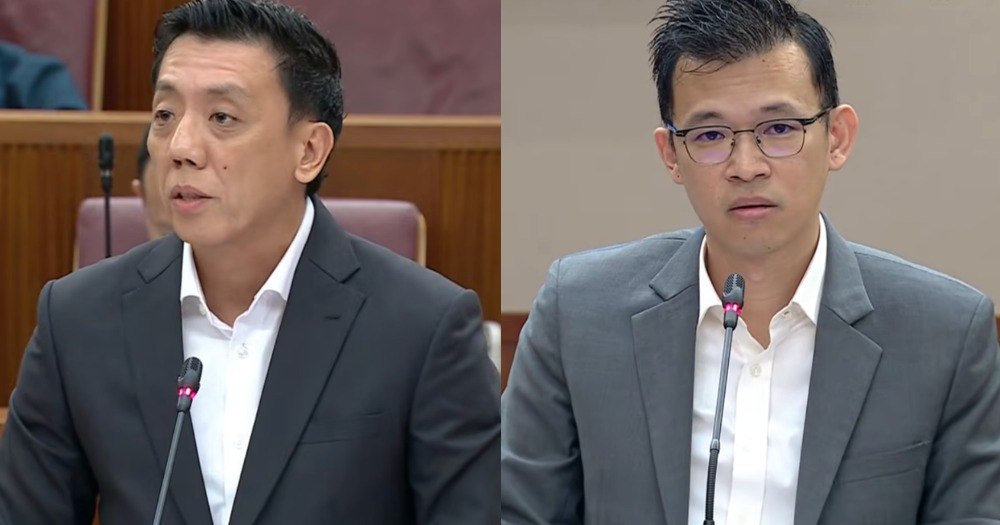
Image from MDDI/YouTube


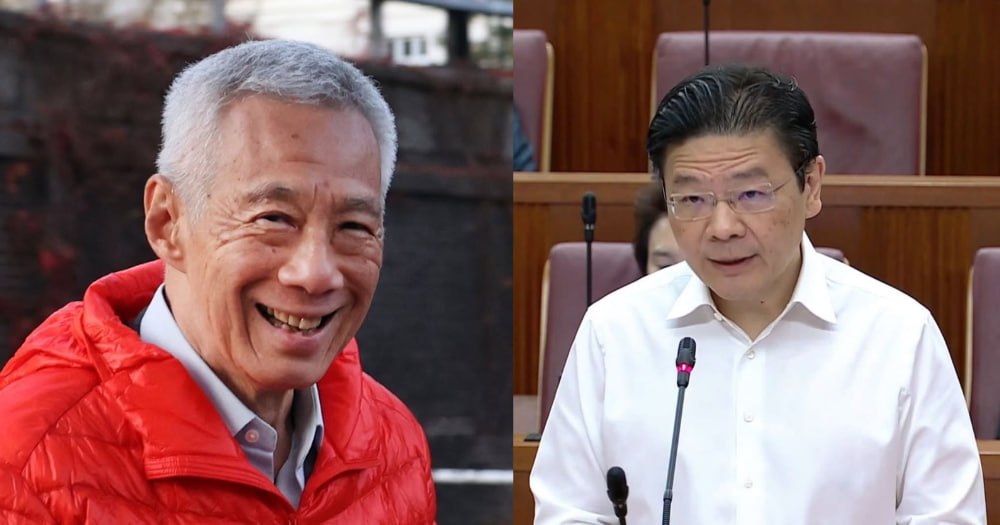
Minister of Transport and Second Minister for Finance Jeffrey Siow and Workers' Party MP Kenneth Tiong exchanged views in Parliament over Singapore Airlines' (SIA) investment in Air India, with Siow saying there was no reason to doubt SIA's ability to deliver air services here, and Tiong pressing for clarity on where the risk limits lie.
This comes after Tiong had posted on social media on Aug. 26, stating that he would not support nor expect any future use of Singapore's state investment company Temasek’s funds to prop up Air India via Singapore Airlines.
Tiong later clarified that his concerns were purely commercial and condemned racist comments surrounding the subject.
Parliament questions
At the Sep. 8 Parliament sitting, Tiong asked two questions on SIA.
Firstly, whether, since SIA became a designated operating entity under the Civil Aviation Authority of Singapore (CAAS) Act 2009, losses incurred from and the carrying amounts of its foreign associates had been assessed against its capacity to provide essential transport services.
Secondly, whether such losses, or a continuing pattern of losses, would engage the notification duty under Section 67B, and, if so, based on what criteria.
Siow: No adverse impact on essential services
Siow noted that Tiong's question concerned the CAAS Act, but that he had spoken publicly about the Air India investment.
He said SIA became a designated operating entity under the CAAS Act in April 2025, and that CAAS assesses its ability to operate essential services safely and reliably, including its overall financial health.
Losses in a foreign associate do not necessarily meet the threshold for reporting on their own, he said. What matters is whether they reach the point of materially constraining the resources available for SIA's fleet maintenance or network operations here.
He said: "We are nowhere close to this scenario."
He added that SIA's core business had one of its strongest years, with record revenue and a record number of passengers carried.
Singaporeans are not footing the bill
Siow rejected the suggestion that Singaporeans were footing the bill, saying SIA is a listed company that funds its investments from its own balance sheet and earnings. It currently holds more than S$10 billion in cash reserves and over S$3 billion in undrawn credit facilities.
SIA had not sought further capital from shareholders, and if it did, that would be a commercial matter between the company and its shareholders.
On the rationale, he said much of SIA's traffic is transit passengers and there is a limit to how many will fly through Singapore. Air India gives it deeper access to one of the world's largest aviation markets and a base for onward connections to Europe and the Middle East.
Four facts
Tiong responded with what he called "four facts".
Tiong said SIA is in net debt, holding S$10.5 billion in cash against S$10.7 billion in debt as of Jun. 30, and posted a net loss for the quarter.
The undrawn facilities Siow cited are loans not yet taken, he said, meaning more debt rather than more capital.
Airline turnarounds that succeed tend to show results within three years, he said, citing Japan Airlines and Qantas.
Air India's own plan in 2022 said five years, but its losses doubled last year, and its chairman now says five to 10, he noted.
IndiGo carries two-thirds of India's domestic passengers against the Air India Group's 24 per cent. Air India's hubs at Delhi and Mumbai are run by GMR Group and Adani Group, and he said India is reportedly weighing lifting the rule preventing both from owning an airline, which he said would make the landlord at each hub a competitor able to steer prime slots.
And SIA holds 25.1 per cent without control. Its own filing says future injections will be considered based on Air India's requirements, which he called "open-ended by design".
"This cannot be a blank cheque": Tiong
Tiong noted that in 2020, Temasek, whose capital forms part of the past reserves, underwrote SIA's S$8.8 billion recapitalisation, and that the House was told the government would provide more direct support if necessary.
He asked whether the government would rule out doing so again if the Air India investment goes wrong.
He also asked whether the government had satisfied itself that there is a limit on further cash from SIA to Air India, a return threshold, a maximum exposure, or a point at which it stops.
He noted SIA is a designated entity under the Transport Sector Critical Firms Act precisely so its capacity to provide essential services is safeguarded.
He said:
"This cannot be a blank cheque, least of all on a minority stake. We ask because through the reserves, Singaporeans are SIA's stakeholder of last resort, and the stakeholder of last resort needs to know where the line is."
Siow: "Air India's finances are not SIA's finances"
In response, Siow said he would clarify a "basic misconception" in Tiong's argument.
He said that SIA owns 25.1 per cent of Air India, but Air India's finances are not SIA's finances.
Likewise, Air India's losses do not automatically become SIA's liabilities, and that a capital request does not oblige SIA to provide it.
He pointed out that SIA's board has said they would consider any capital request on "commercial merits".
"That is the right approach. SIA's board and management must decide whether any investment makes commercial sense for it and its shareholders," he said.
Siow also pointed out that Tiong may have misunderstood SIA's published financial statements, explaining that most of SIA's debt is in non-current, long-term borrowing, such as five or 10-year bonds.
These generally have low interest rates, he said, adding that SIA's current liabilities within the next 12 months are under 3 billion, which is well within SIA's cash reserves of over 10 billion.
He noted Tiong had opposed putting more money into Air India without saying what SIA should do instead.
He put to Tiong whether he thinks SIA should ever have invested in Air India, and whether he would suggest pulling out the investment now.
"It's easy to criticise, but I suspect it is much harder for the member to tell us what SIA should do."
Siow on building globally competitive companies
Siow further noted that Tiong himself had claimed that Singapore hosts many large companies but builds few of them during a parliamentary debate on growing local enterprises last month.
Siow noted that building globally competitive companies means entering potentially difficult markets against people who got there first and staying the course when there is turbulence.
"We cannot have it both ways. We cannot tell our companies to go out and compete, and then treat every tough year abroad as proof that they should stay home," he said, adding that this goes the same for SIA.
On Tiong's question on how Temasek, and by extension our reserves, will be affected, Siow said the government does not judge Temasek on any single holding.
Noting that Temasek has a portfolio of over 500 billion, Siow said a portfolio of that size will always contain investments with different risks and time horizons.
"Some will look worse than others on any given day, and that's what investing is. If SIA requests capital from Temasek for any reason, Temasek will have to assess this on a commercial basis," he said.
Siow also noted that SIA has not requested any funding from Temasek apart from during Covid-19 in over 50 years of operation, adding that it was a "fundamentally different" situation.
Racist and xenophobic comments
Noting that Tiong has stated online that he strongly rejects the racist and xenophobic comments that have arisen in the public discussion on Air India, Siow said he is glad Tiong agrees with the government that "no one should seek to exploit racial divisions for political purposes".
However, Siow said the member's public rhetoric goes beyond the question that he puts before this house.
He highlighted that Tiong has posed the "narrowly framed technical query" on SIA's capacity to provide essential transport services in Parliament.
Tiong has drawn an "imaginary link between an overseas investment from SIA and its ability to maintain air services in Singapore" by asking the question in this manner, Siow argued.
He further highlighted that Tiong has asked, "What happens if this deal goes bad? Will Temasek be their backstop, and what it means, and what will this mean for Singaporeans' taxes and their quality of life?" on social media.
"He has drawn these multiple tenuous linkages, dressed them up in emotive terms, insinuated that through SIA's investments, Singaporeans somehow owe Air India a living, and suggested that SIA is not making its investment decisions on a commercial basis, but for some other reason," Siow said.
There is no basis for this, he emphasised, adding that while Tiong is free to question whether it will ultimately be a good investment, it is another thing for him to take a commercial investment risk and extrapolate that into the financial failure of a national airline.
"But it's quite another thing for a former business analyst to take a commercial investment risk, extrapolate that into the financial failure of a national airline, and from there speculate and whip up alarm about a taxpayer bailout, to insinuate improper motives that any particular investment does not provide or contribute to a healthy climate for our companies to make commercial decisions, which serve the best interests of Singapore and Singaporeans."
Tiong: "Puzzled as to why it is brought into a purely commercial matter"
In response, Tiong said he categorically rejected racism and xenophobia but was puzzled as to why it had been brought into what he called a purely commercial matter.
He rejected any suggestion that questioning the issue amounted to being racist, xenophobic or imputing improper motives, and said rather that Singaporeans need to understand what the risk limits are.
On Siow's question of what Tiong thinks SIA should do instead, he suggested that the minister seems to have misunderstood his point, adding that this is something that is very common in the private sector.
Using an analogy of a financial fund, Tiong said that Parliament functions as a "risk team" for the reserves while SIA's board is the "investment team".
"I'm not going to tell SIA what to do, what strategy [it] should be. I'm saying that this is quite risky. I'm not saying that it's constituted from improper motives," he said.
"But it is very, very risky, especially because it's constituted on a 25.1 per cent minority stake, so we need to understand because it could have implications for the reserves, and it could have implications for SIA as designated operator."
He went on to highlight how complicated the India market is, before reiterating that there is a need to evaluate the investment "very, very carefully".
Siow's closing
Siow agreed that India is a complicated market and added that by law no foreign airline in India can hold a majority stake.
He said Tiong was entitled to question whether it was a good investment, but had gone much further, "leaping without evidence" from Air India's losses to SIA's ability to provide essential air services, capital calls on Temasek, and consequences for Singapore's taxes and quality of life.
He said: "Members may ask difficult questions, but the claims we make must be grounded in facts, not exaggerated speculation that creates needless public alarm."
"Singaporeans deserve public debate that examines the risks honestly, explains them responsibly, and remains anchored on truth and logic."