Abroad


An 'extremist right-wing' party just had a dominant victory in German elections. Who is the AfD and what do they stand for?
Its opponents call it extremist. The AfD says its simply anti-establishment and libertarian.
September 09, 2026, 10:44 AM
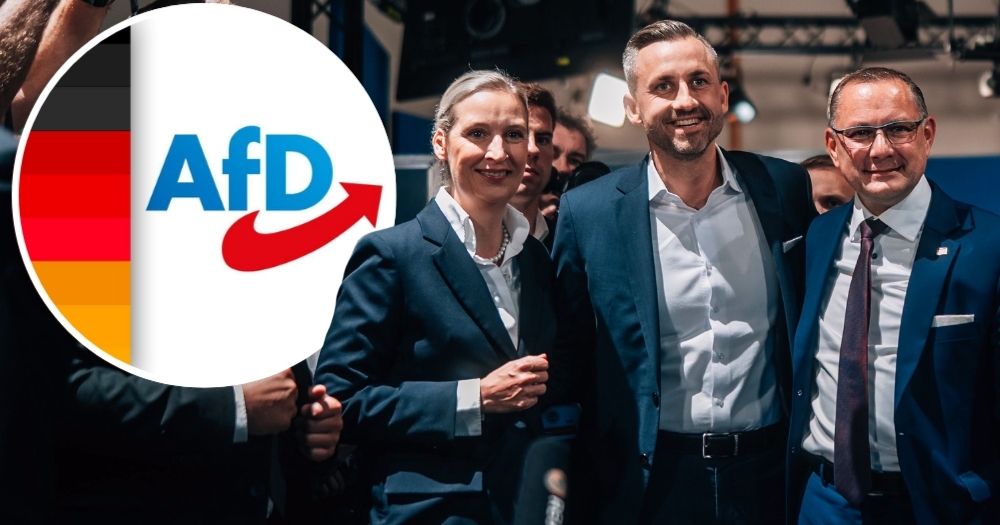
Image via Alice Weidel/Facebook & AfD/Facebook

 On Sep. 6, German politics experienced what its Chancellor called a “tectonic shift” as the AfD, or Alternative für Deutschland (Alternative for Germany), won elections in the German federal state of Saxony-Anhalt.
The AfD has been labelled right-wing, far right, populist, and even fascist in some quarters, and has been steadily gaining in popularity over the past decade.
So what happened, who are the AfD, and what does their election mean for Germany and beyond?
Landtag
Germany is a federal republic, which means it consists of several states which individually hold significant authority over how they are governed, with each having its own parliament.
On Sep. 6, the parliament of Saxony-Anhalt, also called the Landtag, held fresh elections which saw the right-wing AfD party win 43.8 per cent of the vote.
The party won 39 seats, three seats short of an outright majority in the 83-seat body, as reported by the BBC.
The incumbent state governing party, the centre-right Christian Democratic Union, which is also the party of Germany’s current Chancellor (PM) Friedrich Merz, was reduced to 17.2 per cent.
All other parties, including the Social Democratic Party (SPD), the Greens, and the Der Linke (The Left), all received under 10 per cent of the vote.
Possible alliance
But perhaps the most important of these parties is now the BSW, a left-wing populist party.
While nominally on the opposite sides of the political spectrum, both parties share populist ideals, with significant overlap in policy goals.
BSW received the minimum percentage of votes to be represented in the Landtag, five per cent, and their five seats could tip AfD over the edge into the majority.
If that were to happen, or if AfD were able to find another coalition partner, they would be the first right-wing party to hold state government in Germany since the end of the Second World War.
Who is the AfD?
So this begs the question: who is the AfD, and what does their election mean?
Germany has a tumultuous history when it comes to right-wing parties, in light of its Nazi government during the 1930's and 40's, famously igniting the Second World War while prosecuting a murderous regime against Germany's minorities.
Because of this, post-war Germany has traditionally banned or otherwise limited far-right parties from political participation, leading to a significant dispute about whether the party is far-right or not, but some facts are not disputed.
The party was founded in 2013 and has grown by leaps and bounds, being represented in the state governments of almost all German states, and is the second-largest German party in the European Union parliament.
It was founded in opposition to eurozone bailouts of Greece, but came to take on more anti-immigration positions in the wake of then-Chancellor Angela Merkel’s decision to admit Syrian refugees fleeing from violence in their home country.
But there are also significant differences between how the party is portrayed and how it speaks of itself.
Who people say the AfD is:
Outside of the AfD and other right-wing parties, the AfD has been classified as an extremist-right group, designated as such by Germany’s domestic intelligence agency, as reported by the BBC, which labelled it xenophobic, anti-minority, and Islamophobic.
The AfD has been accused of collusion with foreign far-right movements, whether it be working with associates of the Russian government, meeting U.S. Vice-President JD Vance, or receiving congratulations from former Hungarian leader Viktor Orban.
But the most persistent and most worrying accusation is that the AfD houses elements of Germany’s neo-Nazi movement.
While the AfD’s leaders have been careful not to be tainted by the association with neo-Nazi groups, rally attendees have been seen sporting neo-Nazi clothing, and some of their political slogans appear to reference Nazi-era political slogans.
So, despite their purported support for the State of Israel, there are concerns that it is masking a well of anti-Semitic sentiment.
The AfD is also accused of severe Islamophobia, with reports dating back to 2016 showing AfD candidates saying the religion was not welcome in Germany.
What the AfD says it is:
These accusations are dismissed by AfD’s leaders.
The party’s leader, Weidel, points to herself as a rebuttal to many of the accusations of being intolerant.
Weidel leads a party that believes in conservative conceptions of family, but is openly in a long-term relationship with a woman of Sri Lankan origin, and they have two children.
AfD supporters want a more nationalist approach to the economy, but Weidel worked for several multinational corporations (she even spent some time in Singapore and speaks fluent Mandarin, the Guardian reports).
Instead, AfD has simply classified itself as being conservative, or libertarian.
Interviews with supporters by the BBC are anecdotal, but paint a picture of voters frustrated by the inability of traditional parties to improve their lives.
Saxony-Anhalt is perhaps an unsurprising venue for this ‘revolution’, it is hardly a secret that former East German regions have had trouble adapting to a post-Cold War world, its economies benefiting less and suffering more from a globalised economy.
In this vein, the AfD is seen as a vehicle for radical change, change that many seem to feel Germany desperately needs.
Firewall
The victory in Saxony-Anhalt is an important stepping stone for the AfD.
A BBC report quoted an AfD politician as saying that regional government was a chance for the party to show that it was a viable party and would be key to gaining power at a national level.
Until now, the party has been kept from government by other mainstream parties practising what they call the “firewall” strategy, refusing to cooperate with the AfD under any circumstances.
But now the AfD might have won a large enough victory that the firewall cannot contain them.
Germany’s Chancellor Merz and his CDU party are severely impacted by this development, with the AfD winning over many of their traditional supporters.
It sets the stage for an uncertain global environment, and Germany’s government will have to rapidly tend to domestic concerns.