Features


In the 90s, divers spent over 10,000 hours to save corals before Jurong Island reclamation. What about the new Western island?
How did the mitigation effort ahead of land reclamation fare?
September 19, 2026, 06:36 PM
Photos via Nature Society Singapore / Facebook.


During his 2026 National Day Rally, Prime Minister Lawrence Wong announced the intention to create a new Western island by merging several along Singapore's southern shores: Semakau, Sudong, Bukom and "a few other smaller islands".
It could be used for "advanced manufacturing facilities" or "power generation infrastructure", PM Wong said.
The announcement was followed by an outpouring of grief from the marine community, who pointed out that these islands are not just sand and water.
Some vibrant reefs, particularly the ones around Hantu and Semakau, are as old as 8,000 years old and provide vital environmental functions, such as being a source of food.
But PM Wong also pointed out that the concept of the Western Island was inspired by the transformation of Jurong Island.
As we know, Jurong Island now houses the beating heart of Singapore's energy and chemical industry.
But how did it come to exist?
The origin of Jurong Island
In the sixties, founding Minister for Finance Goh Keng Swee looked afar, pointed to Singapore's lands in the West, and presciently said, "Industry." Or something like that.
Thus began the transformation of those marshlands into the gravitational centre of Singapore's economy.
Petrochemical companies set up shop on the islands off Jurong. But by the nineties, as Singapore's energy and chemical industry boomed, more land was needed. There was not enough on mainland Singapore.
So the government looked around and came up with the "bold idea" (as then-Minister for Trade and Industry Lim Hng Kiang called it in 2009) to merge several islands, including Pulau Ayer Chawan, Ayer Merbau, Merlimau and Seraya.
Younger Singaporeans would not be familiar with these names, because they are no longer on maps.
Land was reclaimed to merge these islands into a larger whole, more than tripling the land area available for industry, from less than 1,000 hectares to about 3,000.
The result? Today's Jurong Island.
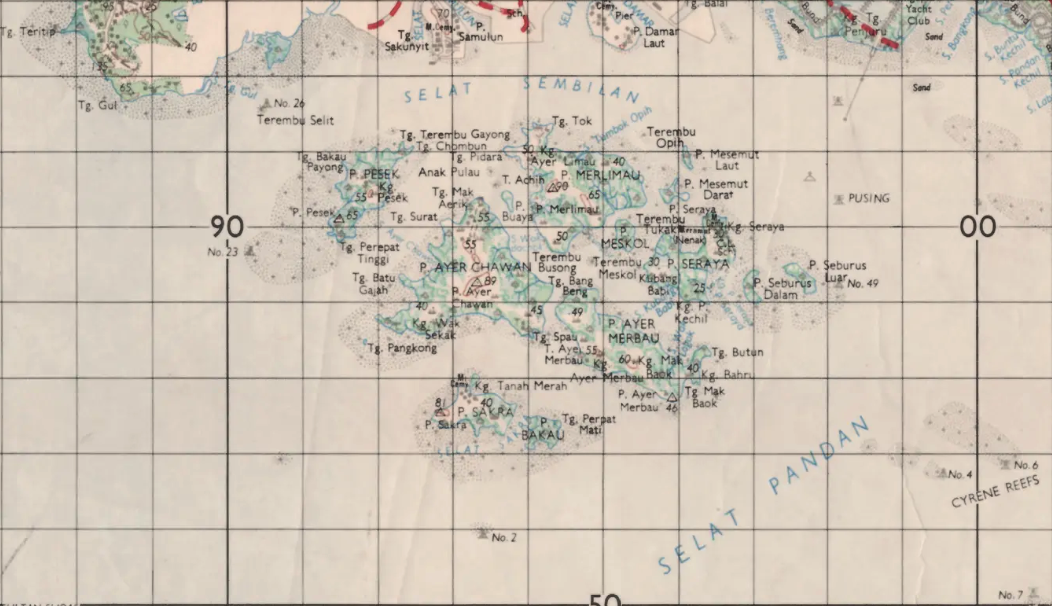 1969 map of today's Jurong Island. Image via NUS Libraries.
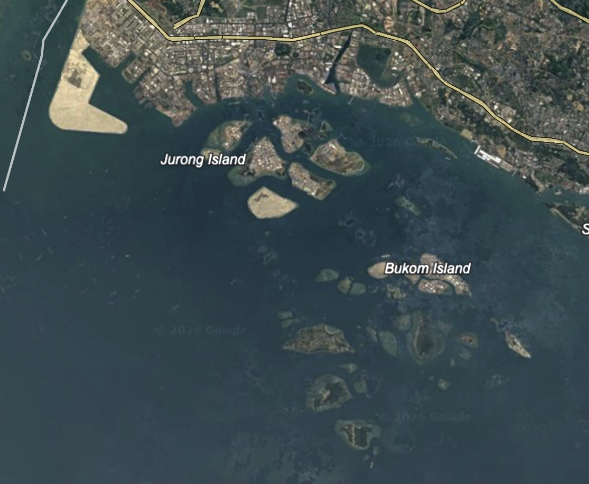 Satellite image of Jurong Island in 1984. Screenshot via Google Earth.
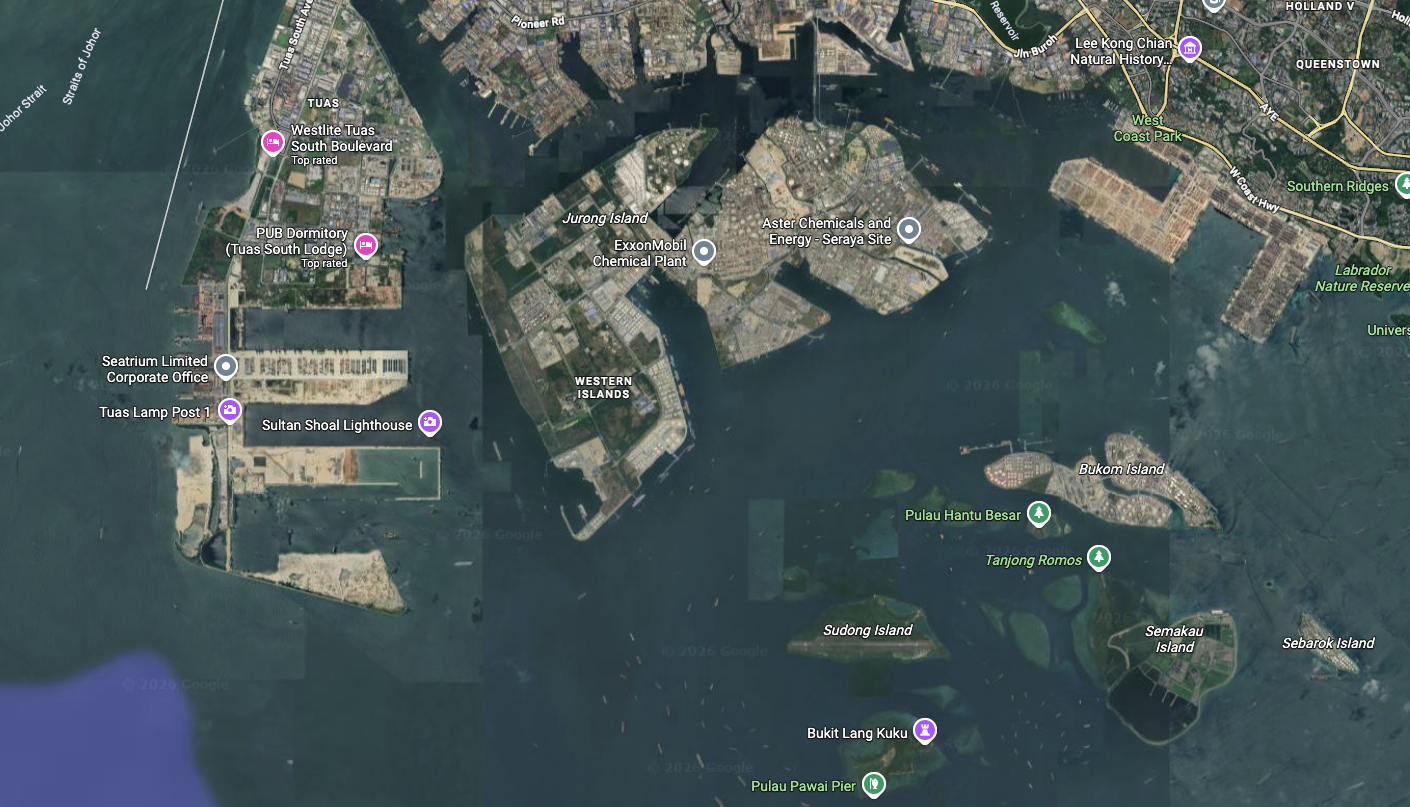 Satellite image of Jurong Island today. Screenshot via Google Maps.
Development vs. conservation
But that's just the surface of the Jurong Island story.
Even back then, there was a struggle between development and conservation. Enter a second, similarly bold attempt: To conserve the marine habitats that would have been lost to reclamation for Jurong Island.
What was at stake was 10 square kilometres of coral cover that surrounded the original islands.
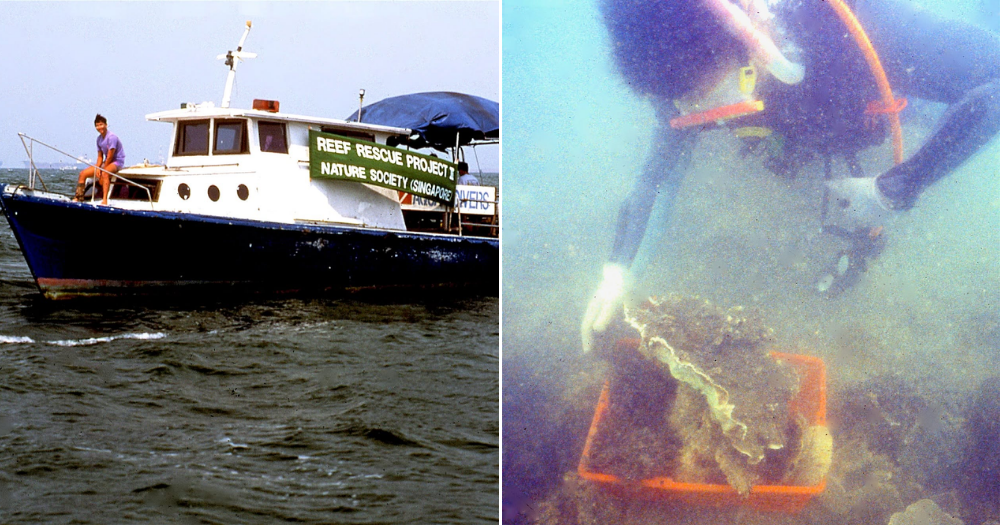
In a bid to conserve those corals, the Marine Conservation Group of the Nature Society of Singapore initiated the Reef Rescue project.
There were two such projects, in fact — one taking place over 25 days in 1991, and the second taking place between 1993 and 1995.
The first initiative, dubbed "Reef Rescue 1", involved transplanting corals from Buran Darat, a small island east of Sentosa, ahead of its merger with Sentosa via reclamation.
10,000 hours under the sea
How about its sequel, "Reef Rescue 2"?
Like the first one, it began with members of the marine conservation group. They learnt about the planned Jurong Island reclamation and found that the reefs around it were the "best in Singapore waters".
Four reefs were marked for conservation by the government. (Remember this, it's important.)
But a fifth site — located at Pulau Ayer Chawan — was not.
Finding this an unacceptable loss, the group launched a conservation project in 1993 to rescue the precious corals around Pulau Ayer Chawan.
It was one of the largest efforts in the world at the time, involving 400 volunteers.
Once every a week on Sundays, for two years, the volunteer divers would lug coral parcels measuring 10m by 12m some 1.5 hours away from Pulau Ayer Chawan to Sentosa.
This was on top of an average of one to 1.5 hours needed to collect the corals from beneath the surface.
In total, 10,000 hours were spent underwater by volunteer divers, a 1995 ST report said.
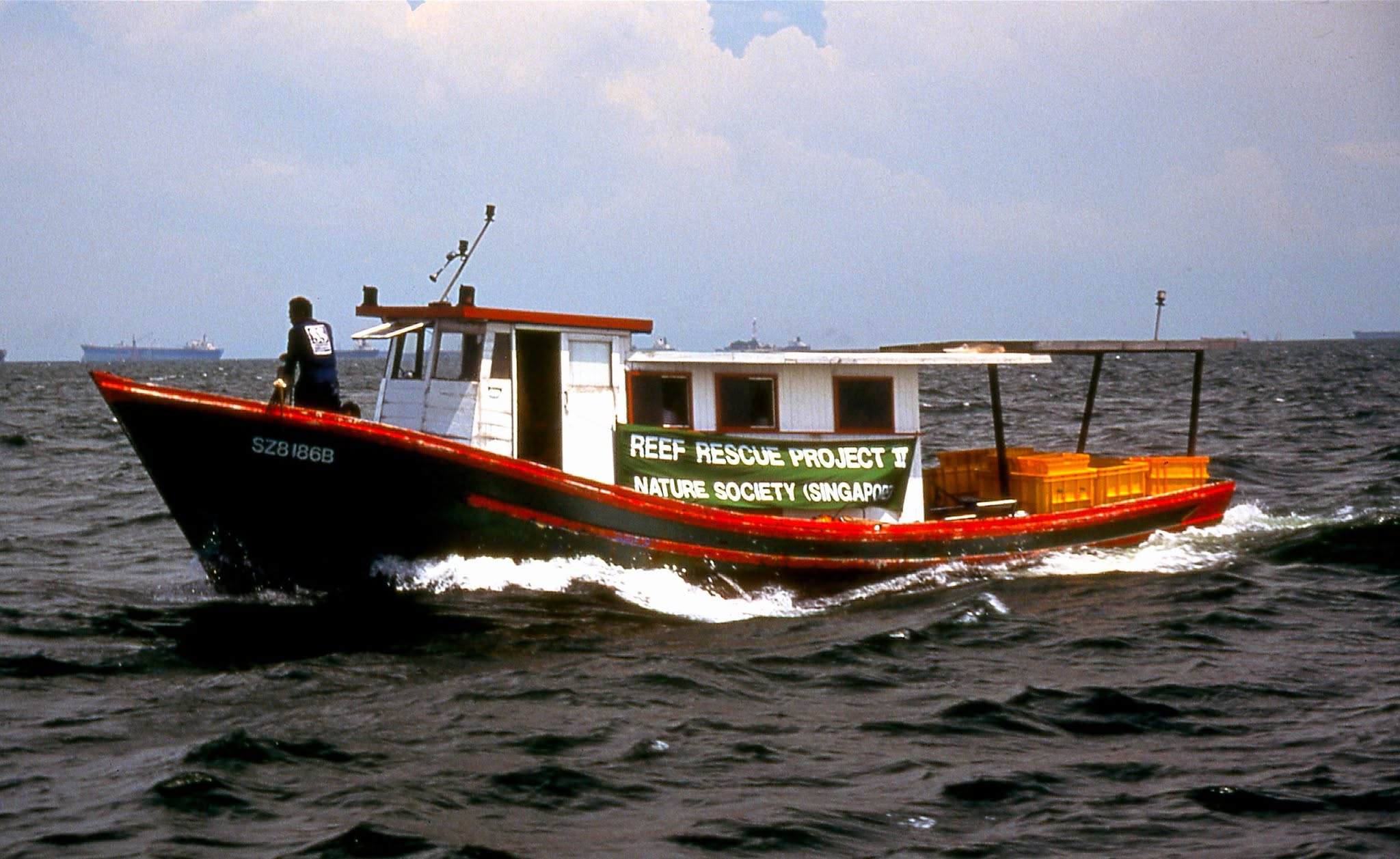 Image via Nature Society Singapore / Facebook.
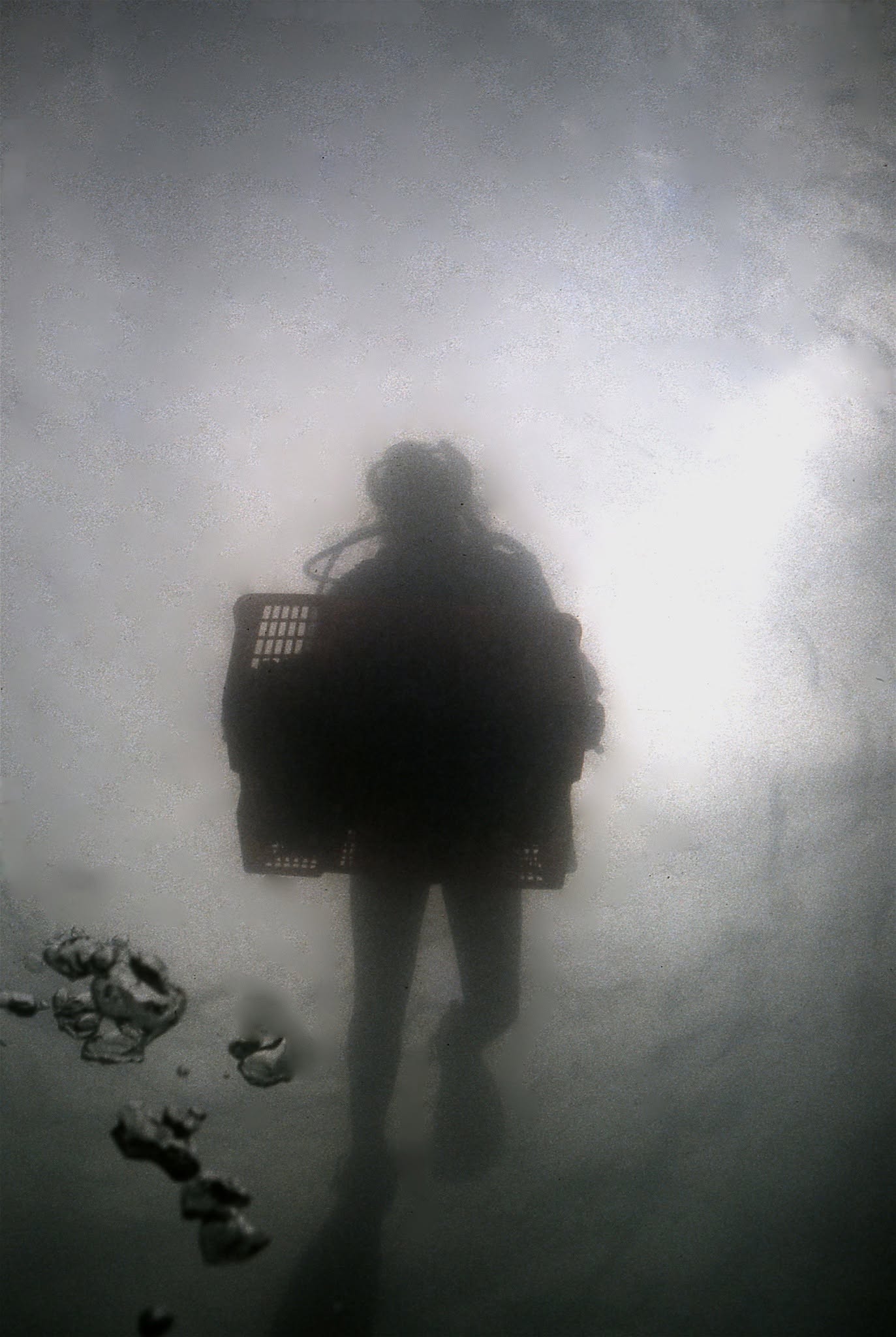 Image via Nature Society Singapore / Facebook.
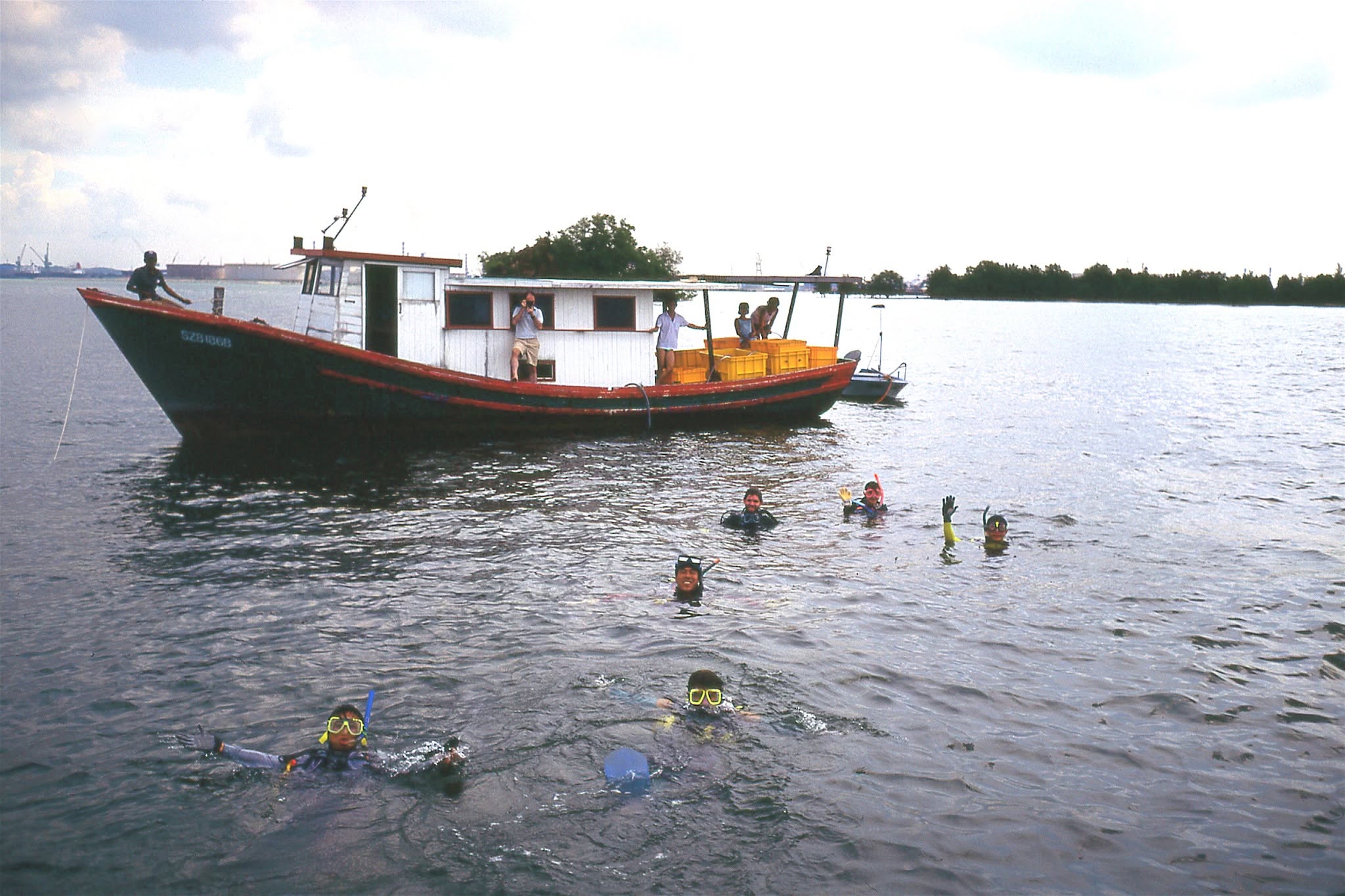 Image via Nature Society Singapore / Facebook.
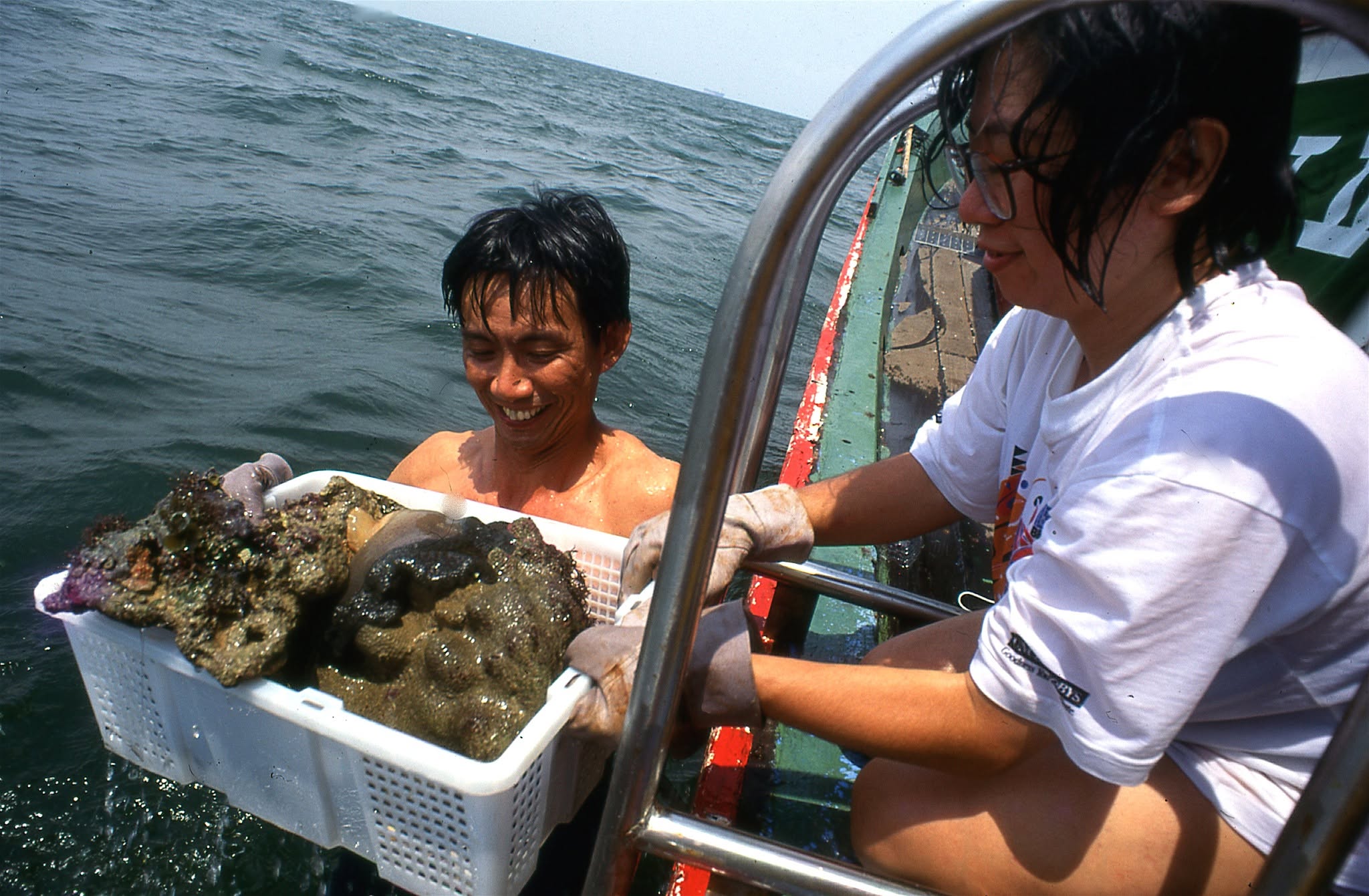 Image via Nature Society Singapore / Facebook.
Jurong Island's corals
About 31 years after Reef Rescue 2, Jurong Island continues to serve Singapore well as a key driver of economic growth.
But how did the translocated corals fare?
As it turns out, the success rate was mixed. Results were decent for Reef Rescue 1, but more limited for Reef Rescue 2.
Survival rates were in the low 35 per cent a year after Reef Rescue 2, according to the Reef Ecology Lab.
A 1997 study by Chou Loke Ming and Karenne Tun that examined the survival rate of the Reef Rescue 2 transplants noted that the transplants "did not show potential long term survivorship".
"A major reason for the low survivorship of the transplanted corals was the unsuitability of the site," the researchers wrote.
They elaborated: "The entire southwestern coastline of Sentosa is subjected to constant surges caused by high speed ferry boats plying daily, and since the transplants were not secured firmly to the substratum, they were subjected to the full force of the surges."
Our turn to think boldly
It is now our generation's turn to "think just as boldly, and build for the next generation", as PM Wong said.
Remember the four sites which were earmarked for conservation in the Jurong Island project? You might find them familiar: St John's Island, Pulau Hantu, Pulau Semakau, and Pulau Sudong.
With the plans for Western Island, three of them may now have to make way for the future of Singapore.
And so we find ourselves at a similar crossroads as we were back in 1993, with Reef Rescue 2.
Back then, we went to great lengths for conservation. Should we do it again, and can we do it better now, with better scientific knowledge and capabilities?
Do we then need to launch a third Reef Rescue? And who should take the lead?
Turning to the past
Although Reef Rescue 2 had debatable results, it's not all for naught.
Commenting on the past Reef Rescues, Chou, who is Emeritus Professor at NUS' Tropical Marine Science Institute, shared with Mothership that the translocated colonies from Reef Rescue 1 and 2 that survived, "despite low survival rates", would "by today contribute to the site's functional ecology".
Chou suggested that the survival rates would have been higher if the transplanted corals were securely fastened, such as with underwater epoxy.
He also pointed out that there have been translocation exercises since the Reef Rescues of the nineties, ones which were conducted with "proper planning based on science and proper securement".
These have had higher survival rates.
Huang Danwei, director at the NUS' National Institute for Marine and Ocean Sciences, pointed to what was likely the largest coral translocation exercise since Reef Rescue 2: a project in 2013 and 2014, to protect corals at Sultan Shoal from the impact of Tuas Terminal's development.
2,300 hard coral colonies out of an estimated 2,800 were translocated to sites at St. John's and Sisters' Islands, the Maritime Port Authority of Singapore said in a 2015 press release.
It was celebrated as a success.
Effective?
As to whether coral translocation could be an effective or practical way to mitigate the impact of the potential reclamation in the Bukom-Semakau-Sudong area, Huang said that it may be practical, but perhaps not effective.
This is because translocation could preserve the corals themselves — but not their utility to people.
For instance, the reefs in the Bukom-Semakau-Sudong area and around Hantu, serve vital ecosystem functions. These include playing a role in food security (coral reefs are habitats for commercially-important fish), and protecting our coastlines from erosion.
They also serve as a "transition habitat" between reefs in Southeast Asia and supports biodiversity and fisheries, owing to their location.
But once translocated, they do not "take along" such functions, he said. These will be lost.
He added that it will take "hundreds to thousands of years" before the corals can build reefs that will, once again, supply people with those essential functions.
"So basically, what we are doing by translocating corals is to save individual corals. But not creating anything that is useful to people in a few (human) generations."
Clear-eyed
In June 1995, those who participated in Reef Rescue 2 received a commendation from then-Acting Minister for the Environment and Senior Minister of State for Defence, Teo Chee Hean.
At the certificate presentation ceremony, Teo told the audience that economic development and environmental protection "are not in conflict".
"As a small country with very limited land, Singapore is acutely aware of its environmental responsibilities," he said.
That has not changed.
During his 2026 NDR speech, PM Wong made the point that Singapore's vision has grown from being a "garden city" to a "city in nature".
He also said,
"To do all this well, we have to plan far ahead. We cannot wait until we run out of space.
We must create new opportunities for future generations. So they too will have room to grow, while preserving what is precious about Singapore."
The Ministry of National Development has said the government recognises the biodiversity value of the proposed Western island reclamation area.
"We are carefully studying the plans as there is a need to plan ahead and create options for the future," the MND spokesperson said.
The way forward
It is emblematic of Singapore's reality. Singapore's needs are ever-evolving, and we have to do what we can with what we have.
In particular, the Middle East crisis exposed the urgent need to build resilience into Singapore's energy supply.
But must natural heritage consequently suffer then? Reef Rescue 2 and the Jurong Island story show us that there are options for mitigation, such as translocation.
But even these can only do so much. An opportunity cost remains, and it cannot be erased.
It's hard to argue against the need to create more space for Singapore to grow. Generations of Singaporeans depend on it.
But it's just as important to recognise that it's not only advanced manufacturing industries or power generation infrastructure that keeps our city in nature going.
Beneath the waves, the nature we don't see silently keeps our heads above the water. Some of them have been here long before this city sprouted amidst nature.
Generations of Singaporeans are entitled to those too.