News


Personal safety education, enhanced monitoring of informal gatherings with minors among new measures by MUIS to keep mosques safe
They will strengthen education for youths about recognising and reporting unsafe or inappropriate behaviours.
August 29, 2026, 03:10 PM
Photos from MUIS's website and MUIS


The Islamic Religious Council of Singapore (MUIS) will be strengthening mosque safety by introducing a common framework of safeguarding practices across mosques.
For example, staff will enhance monitoring of informal gatherings involving minors, and intervene where there are concerns of unauthorised teaching or inappropriate boundary crossings.
These and more new initiatives come in light of the case where a 37-year-old "religious influencer" sexually abused two young boys at mosque premises between 2022 and 2023.
Though the man had conducted religious classes at a mosque, Acting Minister-in-Charge of Muslim Affairs Zaqy Mohamad previously said he was not an accredited religious teacher under the Asatizah Recognition Scheme (ARS), nor was he conducting a formal religious class organised or approved by the mosque.
Mosques 'must remain open and welcoming'
Zaqy further addressed the case in his speech at an aLIVE (Learning Islamic Values Everyday) Service Learning event on Aug. 29. aLIVE is a programme that provides students with opportunities to practise Islamic values by serving the community while developing qualities such as empathy and leadership.
Zaqy noted that the case has understandably caused concern, especially among parents.
When the sexual abuse case made headlines, MUIS announced measures to strengthen security, including patrols and CCTV monitoring.
At the time, Zaqy said he called for MUIS to go further, especially when it comes to informal activities and gatherings involving children and youths.
Speaking on Aug. 29, he reiterated this need to build on existing safety measures, but added that measures and processes alone are not enough.
Zaqy committed that MUIS will work closely with families, asatizah, and young people to help the youths understand appropriate boundaries, recognise when something may not be right, and know where to seek help.
"Our mosques must remain open and welcoming places, and all of us have a part to play in keeping them safe."
Common safeguarding framework across mosques
MUIS will be rolling out the common safeguarding framework across mosques progressively.
It aims to set out safeguarding principles, the responsibilities of mosque personnel, and clear reporting and escalation protocols when concerns arise.
The initiatives include safeguarding awareness training for mosque staff and volunteers so that they can better recognise signs of abuse or neglect, respond appropriately to disclosures, maintain professional boundaries, and understand their safeguarding responsibilities.
There will also be clearer reporting and escalation protocols to standardise the documentation, reporting, and timely escalation of safeguarding concerns.
As for the tighter monitoring of informal gatherings involving minors, staff will be tasked to identify recurring mentoring or teaching activities.
Where necessary, they need to conduct appropriate checks and intervene to protect the youths.
Additionally, periodic audits and spot checks will be conducted with district offices to review physical safety measures such as visibility, lighting, CCTV coverage, and signage.
Safeguarding education
Another new initiatives is to strengthen education for children and youth to protect themselves against unsafe or inappropriate behaviours.
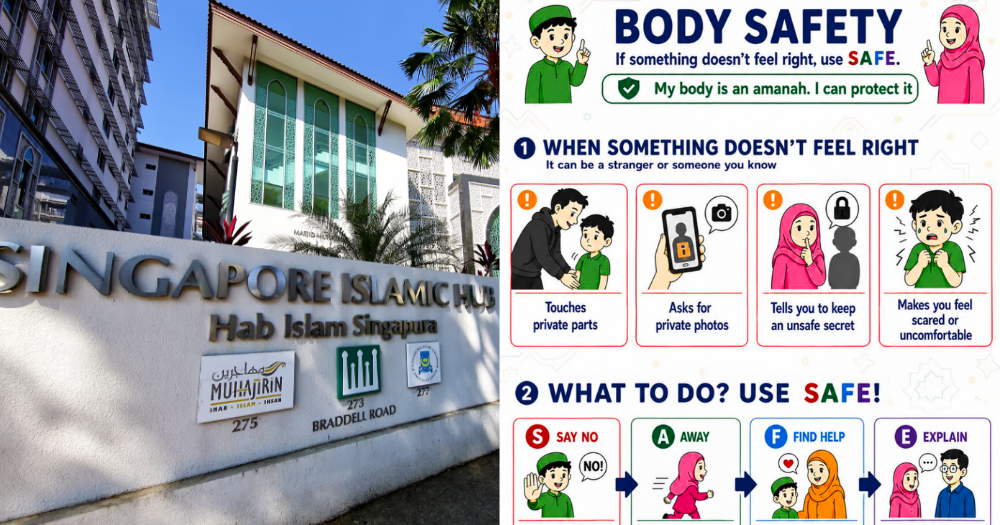
MUIS has already introduced Protective Behaviour learning inserts for aLIVE students to help them recognise such behaviours, and know how to respond and report concerns to a trusted adult.
Age-appropriate infographics will also be shared with the students to reinforce these messages.
 Image from MUIS
 Image from MUIS
MUIS will engage parents and mosque teachers as well to support youths.
They will provide parents with resources to recognise warning signs, speak openly with their children about personal safety, navigate online risks, and know where to report concerns or seek support.
Teachers will be similarly trained to recognise safeguarding concerns, respond appropriately to disclosures or incidents, and follow the relevant reporting and escalation procedures.
Outside of mosque environments, other Islamic Education Centres and Providers will also be encouraged to adopt these resources and practices within their programmes.