News


Ex-Senior Minister of State criticises WP future economy motion as 'political opportunism'
He argued that the WP takes "the politically easier position at every turn".
August 16, 2026, 02:54 PM
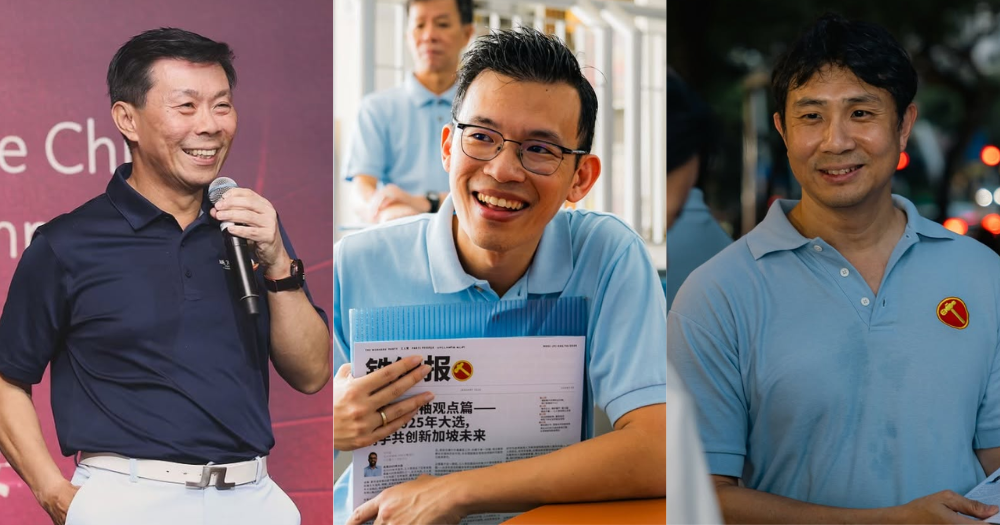
Images via Yi Shyan Lee/Facebook & The Workers' Party/Facebook


Editor's note: This article has been further updated with Tiong's Facebook post
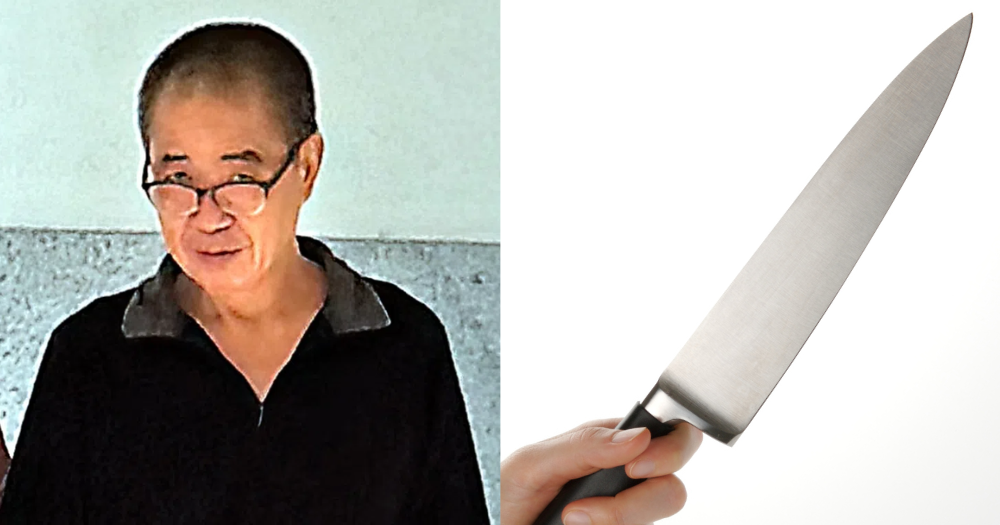
Former Senior Minister of State for Trade and Industry and National Development Lee Yi Shyan has chimed in on the debate surrounding The Workers' Party (WP) future economy motion, tabled in parliament on Aug. 5.
The motion, WP's first since 2023, was titled "An economy of the future that works for all" and put forth by WP Members of Parliament (MPs) Kenneth Tiong and Jamus Lim.
It outlined arguments advocating a rethink of Singapore's economic model into one designed for the success of local entrepreneurs and SMEs.
'I was taken aback'
Lee, who had been involved in economic policies as a civil servant (Economic Development Board [EDB] and then International Enterprise Singapore [IE Singapore]), and later as a political office holder in MTI, shared his thoughts in a Facebook post on Aug. 16.
Lee wrote that he was "taken aback" by Tiong's call for an "economic engine driven by dynamic local companies" and "healthy domestic demand".
Lee, who was also a former CEO of IE Singapore, also expressed his surprise at Lim's urge for a "pivot toward SMEs as our homegrown economic engine".
"I have worked with entrepreneurs and SMEs as they grew and ventured abroad.
I’ve also seen firsthand how MNCs in Singapore create opportunities for local companies, and help them build capabilities and reach new markets."
"So yes, we want dynamic local companies, and healthy domestic demand. But neither can substitute for foreign investment and global markets," he argued.
Lee, currently the Chair of Business China, continued that with a domestic market of only six million people, the domestic market alone cannot sustain the jobs and living standard Singaporeans aspire for.
'Political opportunism'
Lee then turned towards a "familiar pattern" he saw in the WP's policies.
"Too often, the WP formula seems to be this: when a Government policy is popular, demand more of it; when it is unpopular, oppose it while playing down the consequences of the alternatives it offers."
He highlighted a number of examples to support this argument, including the WP's changes in stance when the PAP tightened its foreign worker policies in 2011, and later when the debate became about population policies.
The same "backtracking" happened during incidents involving the government's BTO building programme and with regards to the introduction of the Goods and Services Tax (GST) scheme, he claimed.
Genuine difference in approach to reserves
The only area where the PAP and WP have genuinely diverged is in their views on the government's use of the national reserves—with the WP advocating a greater use of it—Lee added.
"This is not legitimate differences over policy calibration. It is about taking the politically easier position at every turn.
This is not serious policy debate. It is political opportunism."
He concluded that the philosophical difference between both parties "is worth debating further".
"It is easy to take positions that are politically attractive. It is much harder to make choices, confront trade-offs, and be honest about their consequences."
Parliament motion
The motion was met with responses by PAP political office holders, who spoke in favour of an amended version of the motion. They were
- Senior Minister of State for Culture, Community and Youth and Trade and Industry, Low Yen Ling,
- Minister of State for Cultural Community and Youth and Manpower, Dinesh Vasu Dash,
- Minister for Transport and Second Minister for Finance, Jeffrey Siow, and
- Minister for Trade and Industry (Energy and Industry), Tan See Leng.
They emphasised the government’s commitment to ensuring that Singaporean workers are able to succeed, while highlighting the difficulties that entrepreneurs face and the moves the government has made to help them.
Multinational companies (MNCs), far from hindering the success and growth of local SMEs and start-ups, provide good partners and test beds for such small companies to succeed, they added.
The amended motion reads:
"That this House, in line with the suggestions in the Economic Strategy Review on the future Singapore economy, believes:
(a) in a more equal and inclusive economy, with opportunities for entrepreneurs to experiment, households and businesses to succeed, workers to thrive, and ideas and innovation to flourish; and
(b) in an economy powered by dynamic local companies, global enterprises, healthy domestic and external demand, and Singaporeans and Singaporean capital venturing abroad."
Eventually, all 12 WP MPs voted against the amended motion, which was backed by the rest of Parliament, including the nominated MPs.
WP responds
In a Facebook post, Tiong responded to Lee.
Tiong said Lee had mischaracterised their position.
Tiong said they did not suggest choosing between local enterprise and multinationals.
"What we suggested was to supercharge local enterprise: automatic support for new registrants, seconded experts, wider R&D tax deductions, grants to match MNC starting salaries, German-style internships. None of it, a zero-sum policy."
Tiong also said that WP said that "domestic demand is necessary, not that domestic demand is sufficient".
He also rejected the idea that WP backed down.