Abroad


Yen rises against S'pore dollar after US & Japan take action to stop slide
The yen had been weakening in 2026.
August 03, 2026, 06:31 PM
Images from Google and Canva


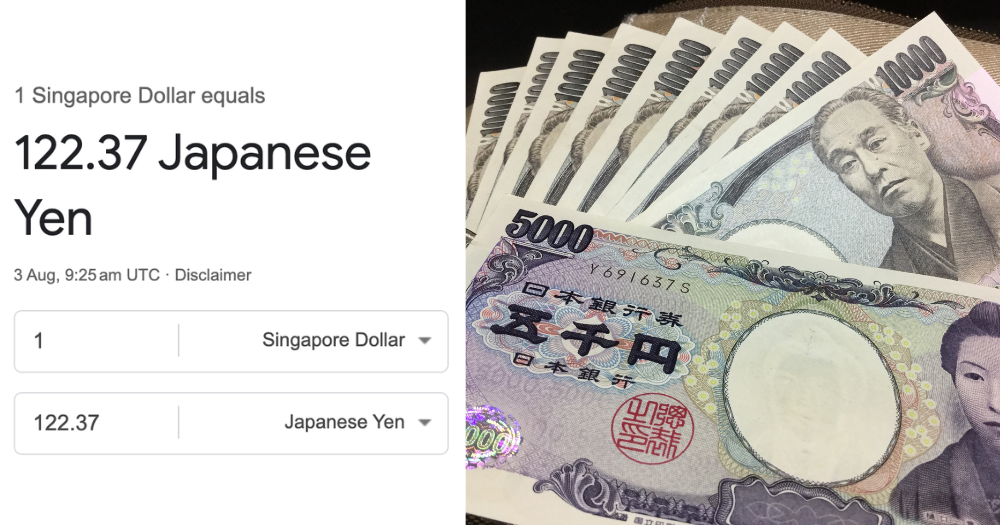
The yen has risen against the Singapore dollar after the United States stepped in to help prop up the Japanese currency on Jul. 30.
Compared to the rate of 126.7 yen per S$1 on Jul. 29, the yen surged to 122.7 per S$1 on Jul. 31, and further to 122.19 per S$1 on Aug. 3.
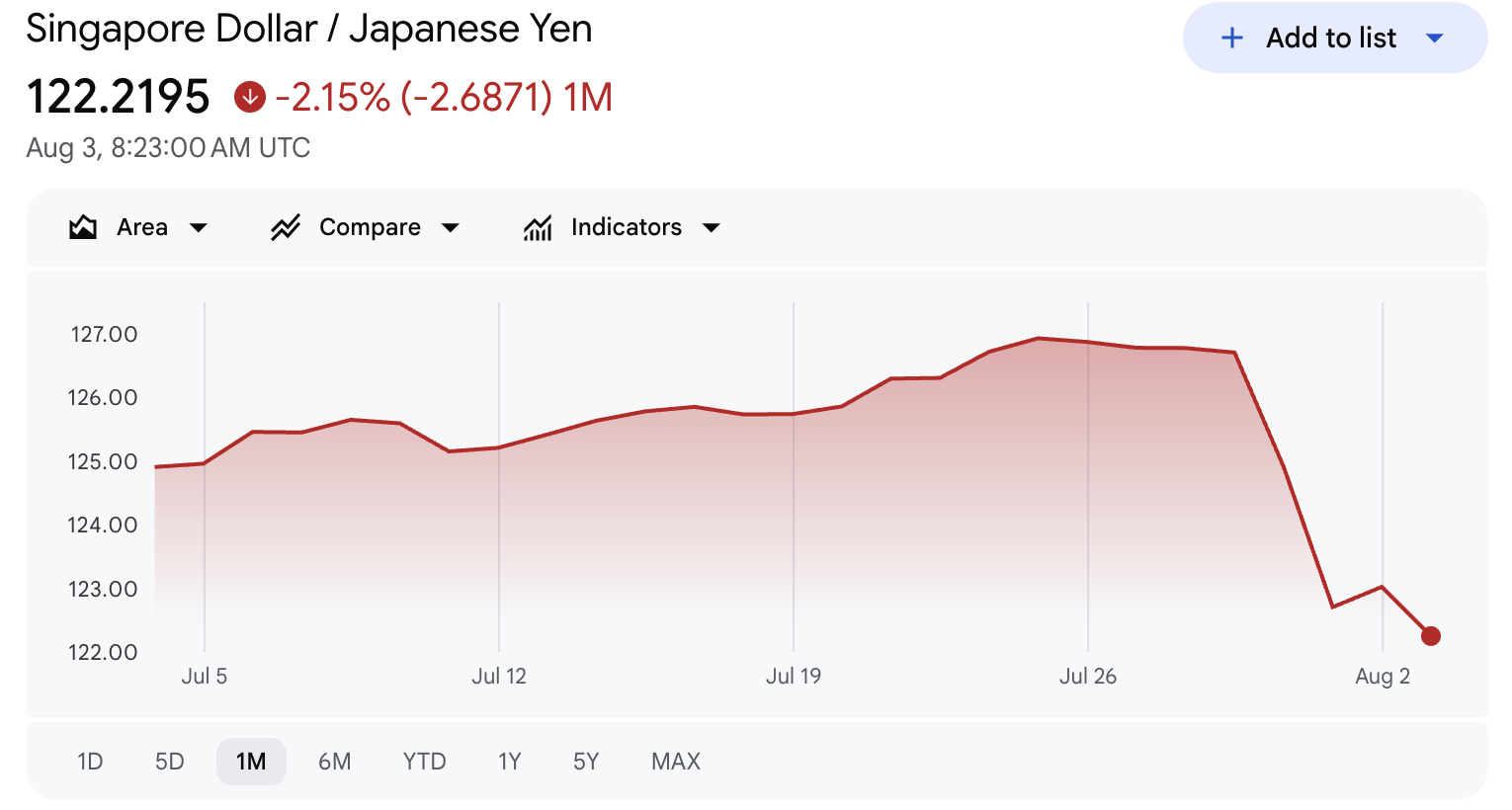 Screenshot from Google
This coordinated intervention between the U.S. and Japan to prop up the yen was the first since 2011, when they acted to weaken a strong yen following a major tsunami in eastern Japan.
On Aug. 2, U.S. President Donald Trump described the move as "a signal of friendship" between the two countries.
"They have a weakening yen, and they wanted a little bit of help. And we’re always there for Japan," he said on board Air Force One, as quoted by CNN.
Weakening yen
The joint action "countered excessive volatility and disorderly movements in the Japanese yen in recent months", Japan’s Finance Minister Katayama Satsuki said in an Aug. 3 statement.
The yen had been depreciating in 2026 due to increasing energy costs arising from the Middle East conflict, as Japan relies heavily on imported energy, and because of its relatively low interest rates.
On Jun. 30, it hit a 40-year low against the U.S. dollar, and its weakest level against the Singapore dollar.
Pledging further support
The U.S. did not state how much yen they bought in this intervention, but a Reuters photo showed that a notepad in front of U.S. Treasury Secretary Scott Bessent during a cabinet meeting on Jul. 30 read, "To Do: Buy Japanese Yen $5-10 bil".
Posting about the move on X on Aug. 3, Bessent committed that the U.S. "will not hesitate to participate in further joint intervention".
Trump said on Aug. 2 that supporting the yen would be "good for the world economy", adding that the U.S. would benefit financially from the move.
According to CNN, the U.S. has interests in shoring up the yen because a weaker U.S. dollar would make American exports more affordable for foreign consumers.