Parliament

S'pore will exploit AI to grow economy & ensure growth translates into good jobs: PM Wong
Jobs.
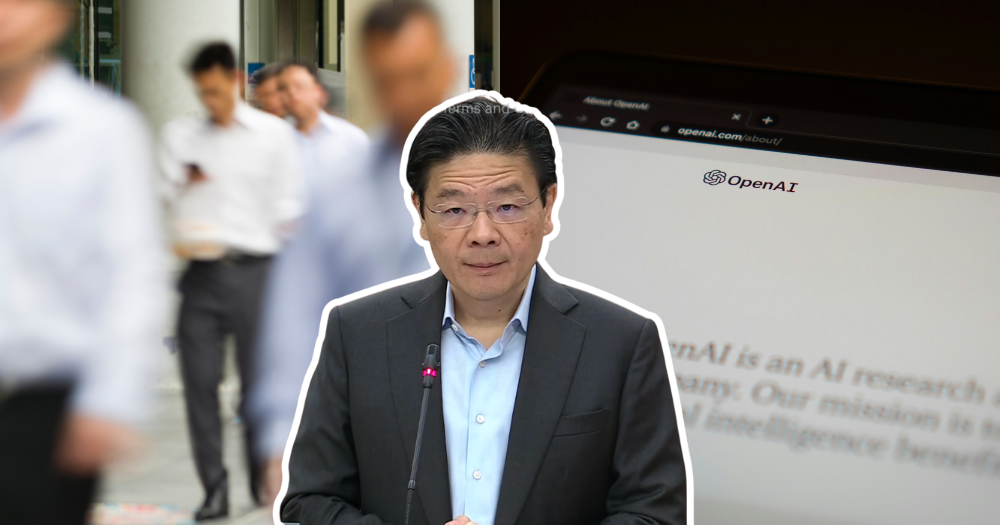


Prime Minister Lawrence Wong touched on the issue of jobs and upcoming technological leaps at the Feb. 26 Budget round-up speech.
He highlighted that Singapore's economic strategies must adapt to changing realities.
Among the different challenges, he addressed in particular corporate rental costs, labour costs, and concerns of AI adoption.
Rental costs
SMEs play a critical role in employing many Singaporeans and anchor economic activity in Singapore.
But certain SME sectors, namely retail and F&B, may face structural headwinds.
Such headwinds may be caused by "e-commerce and changing consumer habits, and from increased overseas travel by Singaporeans, and perhaps also by the strong Singapore dollar".
In the immediate term, PM Wong pointed to corporate income tax rebates as one important form of support.
But he noted that support should be sustainable and should not distort market incentives in the longer-term.
He also touched on the largest components of SMEs' operating expenditures: The cost of goods and materials, labour, and rent.
Goods and materials costs are something that Singapore has little scope to influence, given our size.
Despite growing concerns, PM Wong noted rental costs have, in fact, declined as a share of total business costs in recent years, although he made the point that market rates vary by property type and location.
Individual tenants may also face higher rent increases. The government is mindful of these cases, and wherever government agencies are landlords and have direct oversight, there are frameworks to "keep rents fair and competitive".
Sustained action
Moving forward, Singapore must take the lead in key domains to create distinctive value that others cannot easily replicate.
That does not mean growth is unimportant, PM Wong said, but growth alone is not sufficient, because growth alone will not automatically translate into job opportunities across the board.
This is why he said there is a need to uplift the broader domestic economy, raising productivity, wages and career pathways across the services sector.
To that end, the government is taking sustained action in areas like education, healthcare and social services.
Such actions include increased salaries for workers in public healthcare institutions and updated salary guidelines for community care social service sectors.
These are integral to Singapore's economic strategy, because inclusive growth also means ensuring that domestic services — services that Singaporeans rely on daily — become more productive, more professional, and more attractive as careers.
Raised wages
PM Wong also noted that the labour costs have increased in recent years.
This, in part, reflects structural factors like an ageing population and tighter labour supply.
But it is also the outcome of policy, he said.
Through policies like the progressive wage model, the government has raised wages and narrowed wage gaps for Singaporeans, leading to higher labour costs.
To support businesses through the transition, PM Wong pointed to measures like the progressive wage credit scheme, which was extended in this Budget for another two years.
He also said there will be more calibrated ways to provide flexibility for SMEs to hire foreign workers, including expanding the sources from which they can hire foreign workers.
"We will continue to strike the right balance, sufficient flexibility for businesses, without undermining Singaporean workforce development," he said.
Ultimately, though, the sustainable path forward is productivity improvement and business transformation, he said.
AI
PM Wong then moved on to the AI transformation that Singapore has and is currently embarking on.
He addressed the anxieties that workers and fresh graduates are feeling.
"These concerns are real, and we must and we will take them seriously."
He noted that historically, every major technological wave has "displaced some jobs, but also created new ones".
"Computers displaced stenographers and typists, but created new professions in ICT, in finance and services. And over time, productivity gains expanded opportunities for workers."
He noted that AI can augment jobs and help workers achieve more, even as it automates certain tasks.
He cited one example of how workers can move up the value chain. The woman, Angeline Tan, works at a local event infrastructure company in Singapore.
When the company adopted an AI chatbot to handle customer enquiries, she "stepped up" rather than being displaced, and became a chatbot manager.
Today, she is an AI tech lead at the company, overseeing the implementation of AI tools and improving workflows. "That's the pathway we want to encourage," PM Wong said.
Investing deliberately
He noted that while current evidence does not point to widespread displacement, there are emerging pressures.
Historically, with major technological waves, the reality is that "ultimately more jobs are created than lost".
But PM Wong noted that there was no economic law that says this will "always happen, or that this will happen in the future".
For instance, one of the concerns is that a heavier investment in AI might lead to less investment in worker training and would ultimately displace these workers.
"We are alert to these risks and we will act early to prevent such outcomes from taking hold in Singapore. We will invest more deliberately and more systematically in our people."
He also agreed with NTUC Secretary-General Ng Chee Meng’s three calls to empower every worker to be AI-ready and said the government will work closely with tripartite partners, especially NTUC, to realise these goals.
PM Wong said it was essential that AI uplifts workers, and that Singapore does not have jobless growth.
"We will exploit AI to grow the economy, and we will ensure that growth translates into good jobs and better wages.
That's how we give every Singaporean confidence to progress in the future."
Top photos from Canva, Unsplash and MDDI/YouTube