




Parliament


S'pore's top 1% holds 14% of total household wealth, top 5% holds 33%: Jeffrey Siow
He noted that these estimates were broadly comparable to those of other advanced economies.
February 25, 2026, 05:42 PM
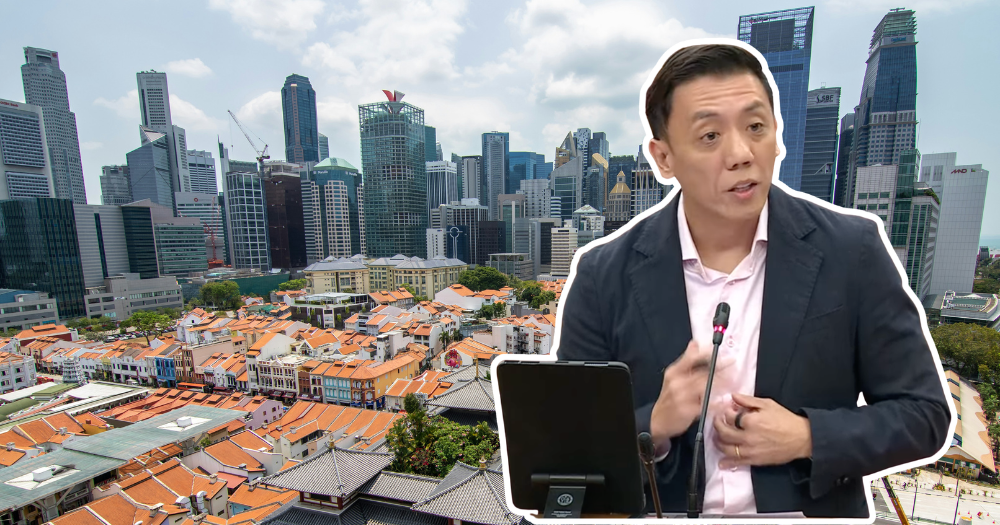


The top 1 per cent of households in Singapore hold around 14 per cent of total household wealth, while the top 5 per cent hold about 33 per cent, Senior Minister of State for Finance Jeffrey Siow said on Feb. 25, 2026.
He noted that these estimates were broadly comparable to those of other advanced economies.
Siow, who is also the Acting Transport Minister, was responding to questions in parliament for the Budget 2026 debate.
The questions were posed by Members of Parliament (MPs) about wealth and inequality data that the Ministry of Finance (MOF) had published on Feb. 9.
Siow added that the figures "should be interpreted with caution due to sample size limitations and potential under-reporting in survey responses at both ends of the distribution".
Findings of MOF's paper
In MOF's paper, "Occasional Paper on Income Growth, Inequality, and Social Mobility Trends in Singapore", it found that Singapore's wealth inequality coefficient at 0.55 was greater than its income inequality at 0.38 after taxes and transfers.
The Gini coefficient measures inequality on a scale of 0 to 1, with a higher value meaning greater inequality.
Wealth inequality checks asset distribution, such as property, stocks, savings and liabilities, such as mortgages.
Income inequality looks at income distribution across a population.
The report's data showed that "Singapore’s wealth Gini coefficient is broadly comparable to that of other advanced economies, including the UK, Japan, and Germany, where wealth Gini coefficients are estimated to be in the range of 0.6 to 0.7."
Siow explained that in advanced economies, the figure for wealth inequality would be higher than income inequality, as wealth accumulates over a lifetime
He said: "In Singapore, a significant part of household wealth especially among lower and middle-income households is held in owner-occupied housing and CPF savings"
Wealth data difficult to measure
"Most countries face challenges in measuring wealth inequality accurately", said Siow, as data on overseas or unlisted assets and businesses may not be reported, and wealth is "notoriously hard to measure".
Siow also noted that Singapore's data collection process involved survey-based approaches, similar to other advanced economies:
“We have no plans at this point to seek additional legislative or administrative powers to require more granular asset disclosure solely for inequality measurement."
Siow said the Feb. 9 paper was the first compilation of Singapore's wealth Gini coefficient and that the government intends to track this measure over time, with the next cycle of the household expenditure survey held in 2028.
Siow provided further clarifications on the matter in a Facebook post:
Data for occasional paper
The occasional paper that was published is based on data from the Household Expenditure Survey, which was last conducted in 2023.
It captured information on assets, such as bank deposits and unlisted assets, including overseas assets, and liabilities such as household arrears and bank loans.
Other data it considers include administrative records on properties, Central Provident Fund (CPF) accounts, Singapore Savings Bonds, shares and securities held in Central Depository accounts and the CPF Investment Scheme Special Account, life insurance policies, balances in the Post-Secondary Education Account and Edusave accounts, and loans administered by the Housing and Develop Board.
Top photo from MDDI/YouTube and Bing Hui Yao/Unsplash