Parliament


'Difference between crowded train & intolerable one': He Ting Ru calls for clarity on S'pore's population planning parameters & infrastructure plan
She gave the example of crowded trains during peak hour.
February 25, 2026, 05:19 PM
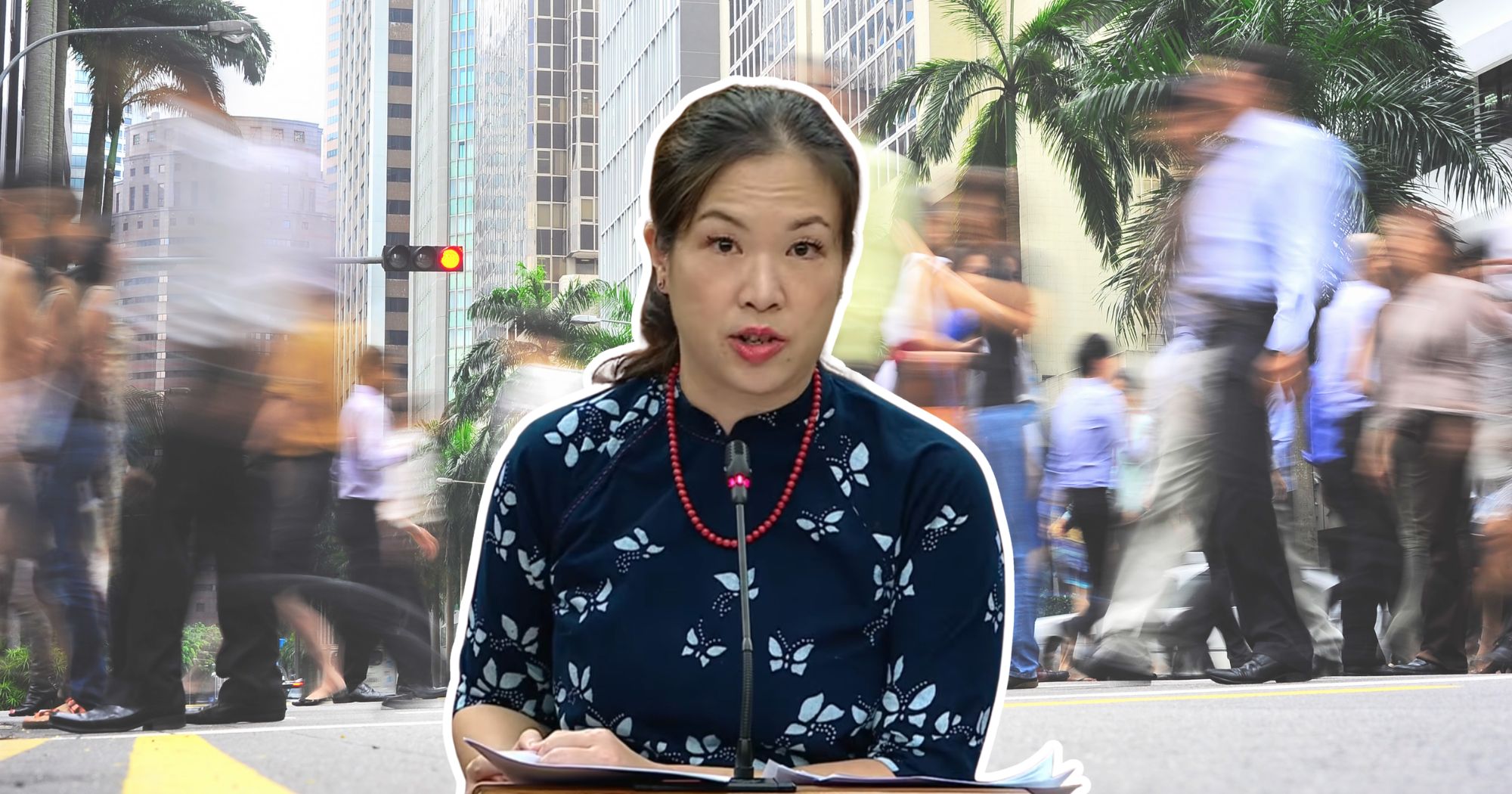


It is fair for Singaporeans living in high-density estates such as Sengkang to seek clarity on national population planning parameters, said Sengkang MP He Ting Ru of the Workers' Party.
He was speaking in Parliament on Feb. 25 during the second day of the Budget 2026 debate, where she raised the issue of how Singapore measures and plans for its population.
To understand Singapore’s limits, one only needs to take the MRT during peak hour and experience being "sandwiched" among commuters, she said.
This, she added, raises questions about population projections and limits.
What is the maximum population?
He referred to the figure of 6.9 million, previously stated by the government as a relevant planning parameter for the 2030s. However, it added that population size, not limits, depend on demographic trends and social and economic needs.
“At that parameter, what precisely does our infrastructure plan to provide, and at what point does this provision start to cause discomfort?” she asked.
Although the government has said it does not have a population target, He noted that when it said the population will be significantly below 6.9 million by 2030, it "failed to assuage concerns that residents have" about what they can expect their daily lives will be like in five, 10 or even more years from now.
“It is a visible uncertainty that may cause anxiety and actively dampen positive emotions. It is thus fair for Singaporeans to ask for greater clarity.”
In Mandarin, she called on the government to inform the public of the "maximum population" allowable in Singapore, and outline how it plans to manage that number.
What are the regional projections?
He also asked the government to consider releasing population projections for each region.
She said the difference between a crowded train and an intolerable one is not just the number of passengers, but whether commuters believe the train has a "timetable and a plan".
He also referenced the Institute of Policy Studies conference held in January, where several ministers spoke about immigration’s role in keeping the economy dynamic amid persistently low total fertility rates.
“We must learn from the mistakes of our past and be clear-eyed about the question of infrastructure sufficiency”, she said.
She added that research on perceived control in high-density environments shows that stress responses are influenced less by actual crowd density, and more by whether people feel the crowding is being properly managed.
Top photos from MDDI/YouTube and Canva