



Parliament


GST still important, fiscal surplus not the 'aim' but welcome: PM Wong
Round-up.
February 26, 2026, 02:28 PM
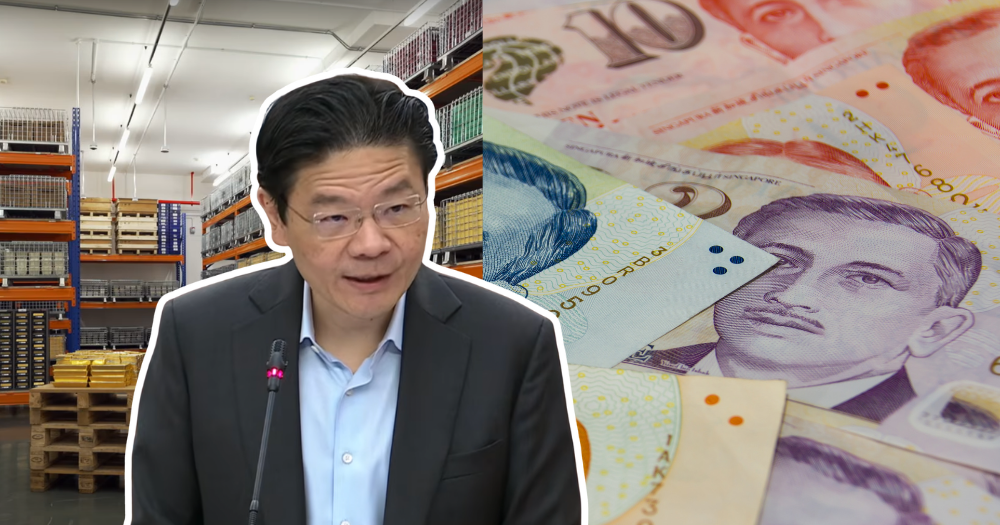


Singapore's fiscal surplus is a "strategic advantage" in a global backdrop of record national debt, said Prime Minister Lawrence Wong at the Feb. 26 Budget round-up speech.
He was addressing concerns by different MPs, including Gerald Giam, Pritam Singh, and Shawn Loh, on the record S$15.1 billion surplus in FY2025.
"Many advanced economies are now carrying record-high levels of public debt," he said.
"Against this backdrop, Singapore's strong fiscal position is a strategic advantage...
The fact that we are in a better position today than our projections is something we should all welcome. It's good news for Singapore and Singaporeans."
PM Wong explained that Singapore's higher-than-expected surplus — double the S$6.8 billion estimate — was due to unexpectedly high corporate income tax collections, which began towards the end of FY2023.
"This outcome was not anticipated," he stressed.
He added that Singapore uses the "best available data" for its forecasting, but as a small open economy, growth outcomes can diverge significantly from forecasts as global conditions evolve.
"Forecasting Singapore's GDP growth is like forecasting the world's GDP growth — which is very, very difficult to do."
"But I assure everyone in this house and Singaporeans that our approach still [is] and will be responsible and professional."
GST still important
PM Wong also touched on the topic of GST, which was increased in 2023 and 2024 to 7 and 9 per cent, respectively.
The hike was first announced in 2018 with the goal of supporting rising healthcare expenditure, but was pushed back due to Covid-19.
Responding to Giam's queries in Parliament about whether the GST hikes should be re-evaluated in the face of Singapore's "fiscal abundance" and the lower-than-projected operating expenditure at the Ministry of Health, PM Wong said that GST has helped mitigate the growth in healthcare spending in Singapore.
It remains "the only broad-based and sustainable option" to fund rising healthcare needs, while preserving Singapore's reserves framework, he said.
While corporate tax revenues increased unexpectedly, these "will not replace the structural role of the GST", he said.
He added that when the decision was made to proceed with the hike in 2022, there had been "no sign" that corporate income taxes would rise so significantly.
"At the time... outcomes and the revenue implication were far from certain. It would not have been responsible to fund permanent healthcare commitments using revenue sources that were uncertain."
Not the aim to run high surpluses
At the same time, the government also put in place policies to mitigate the impact of the GST hikes.
The result is that the majority of GST collections are from high-income individuals, tourists, and families, PM Wong said.
"Our aim is not to run high surpluses for the rest of this term of government...
Our objective is a balanced Budget over the term of government."
PM Wong also countered allegations that a fiscal surplus means the government is taking more from the economy, leaving households and businesses to bear a deficit.
"This is an oversimplified and inaccurate characterisation of how a fiscal system works," he said.
He said that a surplus means that revenue exceeds expenditure — which, in Singapore, includes significant investment income from reserves, not just income and corporate taxes.
Furthermore, expenditure has to meet revenue.
As such, the money — including the reserves income — gets channelled back into the economy, such as through support for households and businesses.
Related stories
Top image from CNA/Youtube, Canva, and MDDI/YouTube