


Branded
S’pore company provides flexi-work arrangements to seniors & sponsors ITE students under Work-Study Diploma programme
Sustainability in the face of increasing automation.
The watchword in today’s corporate world is talent – how to attract, retain and upgrade skilled workers.
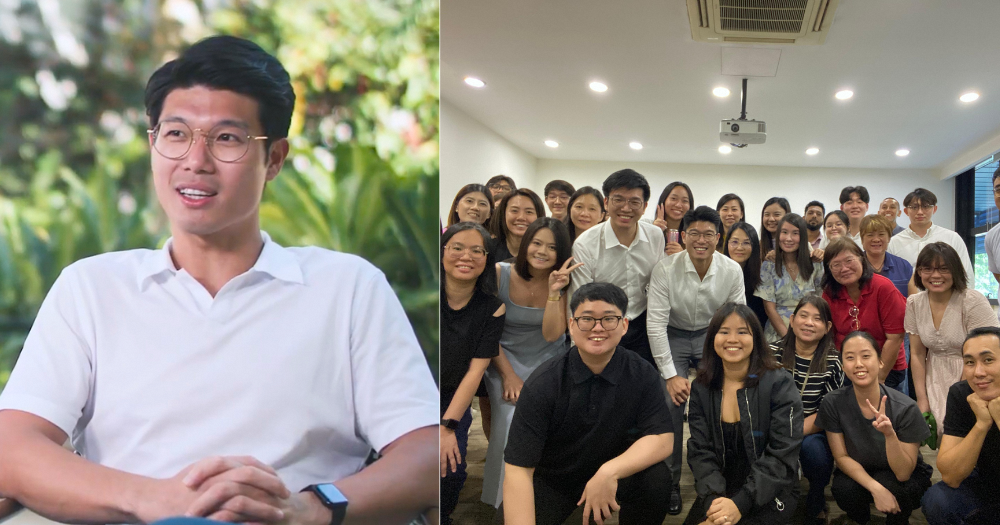
Few know this better than Lee Hsin Chong, the Managing Director of BNL Group, an environmental services company that handles landscaping, cleaning, waste management among others.
With a staff strength of 1000 strong, Lee is aware of the importance of training.
“I wanted to upskill our workers, because we’re a strong believer in life-long learning,” Lee said.
Initially, the company prioritised reskilling, development and learning to keep pace with the fast-changing environment. Then, they discovered that the government offered the Progressive Wage Credit Scheme (PWCS) for companies to tap into.
The PWCS, introduced in 2022, helps provide transitional wage support for employers.
Under the scheme, the government supports companies like BNL Group by co-funding mandatory wage increases for eligible lower-wage workers who are covered by the Progressive Wage Model.
It can also be used to provide for voluntary wage increases of lower-wage workers.
For Lee, the PWCS could help subsidise training courses for his workers.
But not just hard skills, or the knowledge necessary to keep up with the demands of their jobs and abiding by safety requirements.
Lee also saw it as an opportunity for them to improve their soft skills, such as communication.
In addition, going for courses together helps to foster a better understanding and camaraderie among his workers.
“So it's something that's intangible, but it's something that has a lot of benefit in terms of helping our working environment and the working culture within a site,” he said.
Lee also elaborated on the specialised training for different employees at BNL Group, with his HR team keeping up to date with the Employment Act or other schemes relevant to their company.
All employees also go for regular workshops to train their communication skills, and even mentoring courses so they could become future trainers within their field, or coach the people working under them.
Helping low-wage workers
In addition to preparing for the future, Lee also thinks it’s important to support the lower-wage workers in the company right now.
Helping these workers gain more skills and knowledge enables them to contribute in more ways and they will take pride in what they do.
In addition, schemes like flexible work arrangements for senior workers help them stay active in the workforce while balancing other priorities in life.
“We want to be flexible to enable these senior employees to achieve whatever they can. If they cannot commit to a certain arrangement, we will try to find a way around it,” Lee said.
One senior employee that Lee hired during a job fair is 73-year-old Tan Hong Chua. Tan is semi-retired and is working four days a week at BNL Group, as he wishes to continue keeping an active lifestyle.
Work-Study Programme
Aside from their own employees, BNL Group has also sponsored over 20 ITE students under the Work-Study Diploma programme.
The students come from a wide range of backgrounds, from horticulture to media and communications. For example, students studying a Diploma in Arboriculture & Horticulture were given the opportunity to work as a landscape technician which involves regular maintenance of park areas, pruning and weeding amongst other roles. Despite their varied training, they are able to gain practical skills by applying what they learn in class to real-world scenarios.
According to Lee, it doesn’t matter if the students don’t plan to go into the same industry. What they learn would still be relevant to them later on in life.
As for why BNL Group does this, Lee said it’s about the sustainability of his own industry.
While not every student the company helps to train will remain in the industry, some of them may be inspired to find jobs there due to their newfound experiences.
Lee shared that he has a pretty good “hit rate” with over 50 per cent of such trainees joining the company later on.
“I'm very thankful for that. We want them to have the skill set and experience to be able to contribute towards our industry, right? So hence, we want to sponsor them and share with them as much as we can, so that it advances our sustainability in terms of an economy, and as an industry for the future.”
Looking to the future
Such upskilling programmes may be more needed than ever in the face of increasing automation, as jobs may get replaced by robots.
But Lee believes the way forward is to prepare both staff and customers to embrace the changes that new technology will bring, and to help them adapt to using it in their daily routines.
Also, automation may not replace every aspect of a job, which means that people are still needed and wanted.
At the end of the day, Lee believes being open, honest and communicating with his workers is important in the face of turbulent change.
This branded article is brought to you by the Ministry of Manpower.