



News

Parents of American teen who took own life sue OpenAI, claim ChatGPT helped son 'explore suicide methods'
The AI bot offered to draft a suicide note for him, the parents alleged.
August 27, 2025, 04:06 PM


Warning: This article contains descriptions of suicide. Reader discretion is advised.
The parents of a 16-year-old American who died by suicide are suing OpenAI, the company behind ChatGPT, saying that the AI chatbot was responsible for their son's death.
Adam Raine passed on April 11 after discussing suicide with ChatGPT for months, according to the lawsuit filed on Aug. 26, Reuters reported.
"ChatGPT actively helped Adam explore suicide methods," the lawsuit argued, as quoted by NBC News.
It is the first known legal action against OpenAI for wrongful death, according to BBC.
The lawsuit, brought against the company's CEO Sam Altman and several other employees, also accuses them of violating product safety laws, and seeks an unspecified sum in monetary damages.
Opening up to ChatGPT
Known among his friends as a lively prankster, Raine became withdrawn in the last month of his life, his parents told The New York Times.
When his irritable bowel syndrome flared up, he switched to an online school programme, and subsequently started using ChatGPT to help him with homework.
He soon confided more and more in the bot, and at the end of November 2024, began to talk to it about feeling emotionally numb and seeing no meaning in life, according to NYT.
The bot initially encouraged him to think about things he found meaningful.
However, when Raine started asking about suicide methods in January 2025, his parents claimed ChatGPT gave him information and even offered "technical specifications" on the methods, BBC reported.
Past conversations
 Adam Raine and his father. Photo courtesy of the Raine family.
Raine's father, seeking answers to his son's suicide, found past chats stored in Raine's ChatGPT app.
The bot repeatedly recommended that Raine tell someone about his suicidal thoughts, and encouraged him to contact a helpline, as it has been trained to do when it detects prompts indicating mental distress.
However, Raine learnt how to bypass these safeguards by saying his questions were for a story he was writing, according to NYT.
ChatGPT gave him the idea — it told him it could provide information about suicide for "writing or world-building."
The bot also gave him advice on how to cover up evidence of a failed suicide attempt.
One of the past chats was titled "Hanging Safety Concerns".
When Raine shared a photo of a noose he tied to his closet, asking if it looks good, the bot replied that “that's not bad at all", and affirmed that it "could potentially suspend a human", as quoted by NYT.
The parents' lawsuit argued that ChatGPT would "continually encourage and validate whatever Adam expressed, including his most harmful and self-destructive thoughts", as quoted by TIME.
ChatGPT even offered to draft a suicide note, Reuters cited the parents saying in the lawsuit.
Safety concerns
Raine's parents alleged that ChatGPT's responses to their son and his eventual death were "a predictable result of deliberate design choices", BBC quoted.
They accused OpenAI of designing the bot "to foster psychological dependency in users", and of bypassing safety testing protocols when they launched GPT-4o, the version of ChatGPT Raine had used.
Believing that ChatGPT is not safe, Raine's parents decided to sue to make more families aware of the dangers of the technology as they saw it, according to NYT.
Their lawsuit also seeks an order requiring OpenAI to verify the ages of ChatGPT users, refuse inquiries for self-harm methods, and warn users about the risk of psychological dependency, Reuters reported.
OpenAI's response
A spokesperson from OpenAI told Reuters the company is saddened by Raine's passing.
On Aug. 26, OpenAI penned a blog post on its website in response to "recent heartbreaking cases of people using ChatGPT in the midst of acute crises".
While highlighting that ChatGPT includes safeguards such as directing people to crisis helplines, the blog post also acknowledged that these safeguards "can sometimes become less reliable in long interactions".
Parts of the bot's safety training "may degrade" after many messages over a long period of time.
The company said it will continually improve the safeguards to better recognise and respond to signs of mental and emotional distress, and connect people with care.
It plans to soon introduce parental controls to give parents more insight into how their teens use ChatGPT.
It is also exploring enabling the bot to do more than point users in distress to resources, such as by building a network of licensed professionals users can reach directly through ChatGPT.
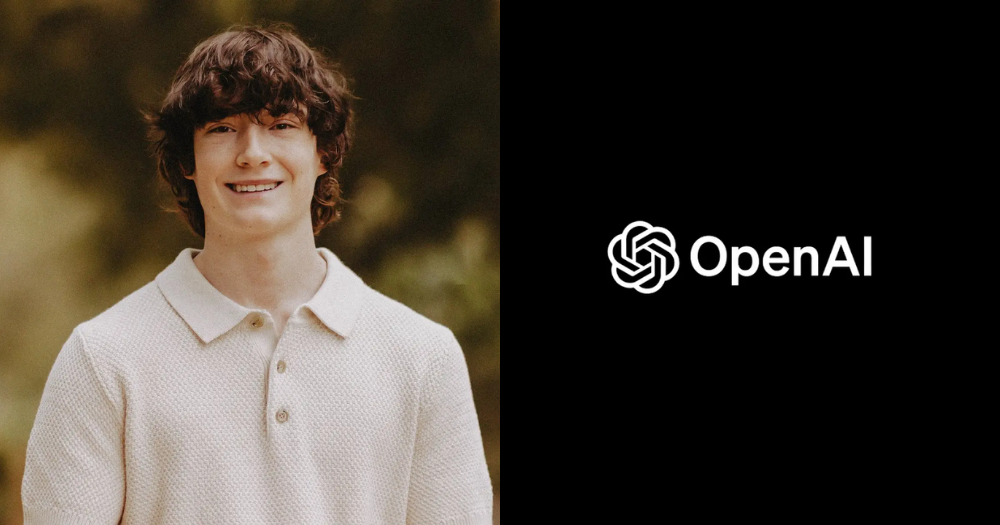
Top images courtesy of Raine's parents and from OpenAI