
Branded
I heard that Temasek Polytechnic is offering training for corporations & courses for workers
If you need to be convinced about why companies and workers need training, read on.


What would you do if you lost your job tomorrow?
As someone who's accumulated over 15 years of work experience, the thought of sudden job loss got me wondering: Do I have a strong enough skillset to navigate potential career disruptions?
Is it the company's duty to equip workers with these skills?
What should I do if they don't?
To find answers, I turned to the experts. In this case, Temasek Polytechnic (TP).
Adult learners can go to polytechnic too
I always associated TP with educating teens and post-pubescent youths to prepare them for the workforce.
Unbeknownst to me, corporate training has always been a core part of TP’s offerings for adult learners.
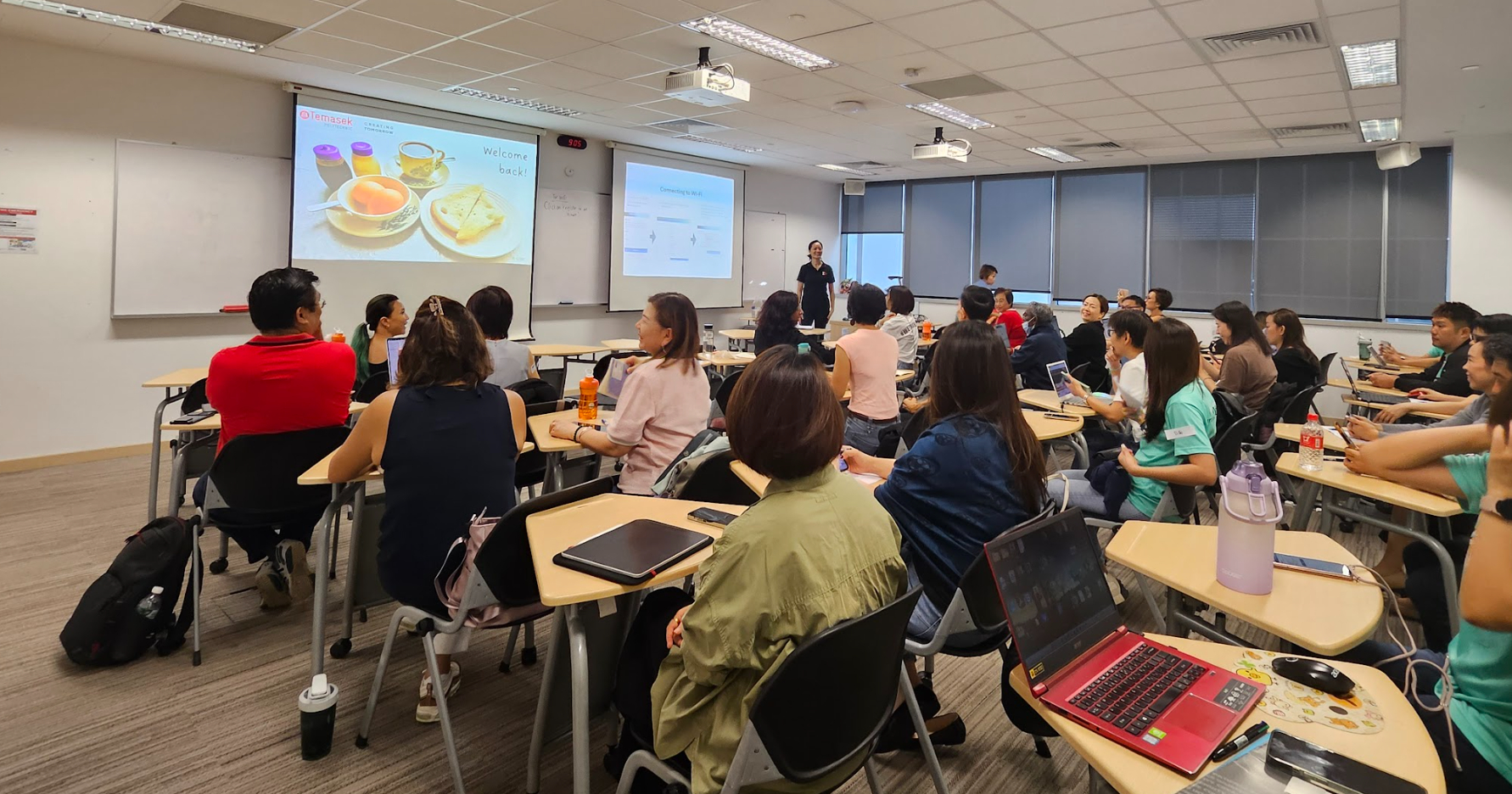 Corporate customised training for NuSkin in Basic Nutrition, Health and Wellness via Temasek Polytechnic
The institution makes learning accessible by offering flexible, bite-sized programmes that can easily fit into busy schedules.
Kwan Kian Hoong, director of Temasek SkillsFuture Academy at TP, who champions continuing education and training, explains that the key to success is learning and re-learning new skills, allowing both companies and individuals to stay relevant and productive in an ever-changing job market.
The real reward is not just the training itself, but the tangible benefits it brings to employees and organisations alike.
This, in turn, benefits Singapore’s economy, society, organisations, and even the learners themselves, said Kwan, who oversees the Continuing Education & Training (CET) initiatives.
The educator, researcher and lifelong learning advocate said: “In my opinion, the best career isn’t just about the paycheck.”
“It’s about making a meaningful impact.”
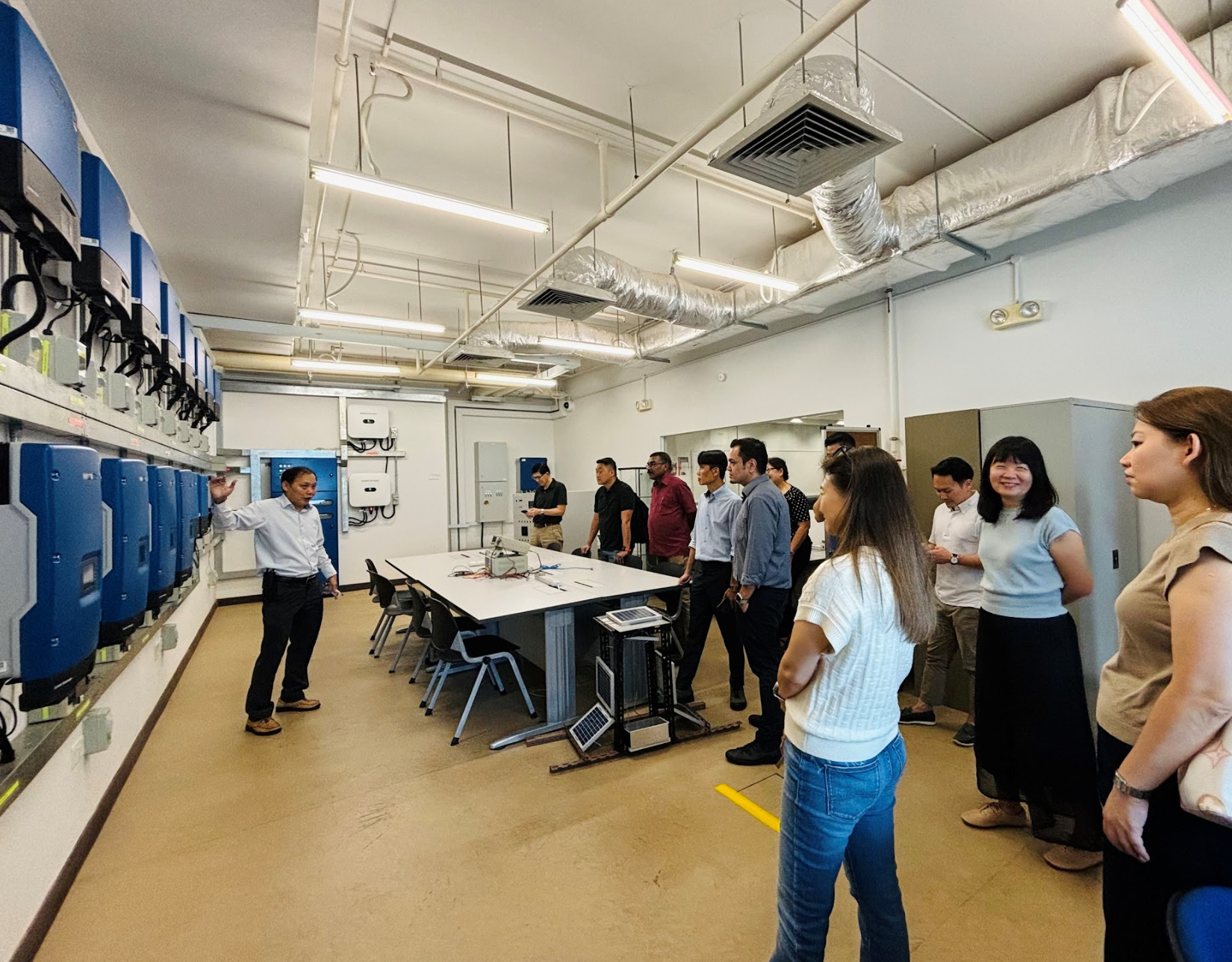 Customised corporate learning journey: A sustainability workforce transition programme via Temasek Polytechnic
Workplace learning is for everyone
The polytechnic believes that corporate training and workplace learning are meant for all companies, regardless of size.
A company with a dozen staff and a multinational corporation that employs thousands can benefit from corporate training.
“We understand the needs of corporate clients and tailor our existing programmes to suit the needs of our clients,” TP explained.
Smaller companies, for example, can focus on consultancy training to level up productivity and efficiency.
Bigger corporations can look at skills that cut across the organisation, such as artificial intelligence (AI) or technology, to level workers up based on specific roles.
TP’s website highlights the diverse range of companies from both the public and private sectors that have taken advantage of the corporate training offer.
These include Applied Materials, Changi Airport Group, as well as Ascott International Management with training in areas, such as industrial automation, environmental services management, and business management.
How can companies make training work?
While training is expected to lead to favourable outcomes, not everyone approaches it with enthusiasm.
Fortunately, there are solutions to overcome this challenge.
“Management can lead by example and promote lifelong learning internally,” TP said.
“The key is to create a culture where learning is valued and rewarded,” where there is “a culture of learning” and where development is seen as “a priority, not an afterthought”.
TP added, “We all know people are creatures of habit and change is never comfortable.”
The trick? Companies need to rethink their priorities and recognise that long-term benefits will outweigh the short-term inconveniences.
Equipping employees with real-world skills
Even employees who are not academically inclined can benefit from corporate training, as it is not about acing exams or writing dissertations.
“It’s about practical, real-world skills,” TP said.
Identifying those who need training first is a good starting point.
Companies can focus strategically on a specific area, such as rolling out a fundamental baseline course in AI or sustainability for everyone in the organisation to gain foundational knowledge.
Respective teams or staff can then be assigned to upskill in related areas and levels.
This might include staff who lack “trending skill sets”, such as expertise in generative AI, or those facing recurring challenges in their roles.
Corporate training is not just about addressing weaknesses; it’s also about enhancing strengths.
Employees who show potential for leadership or have cross-functional roles—being adept at different tasks across departments—should be prioritised as well.
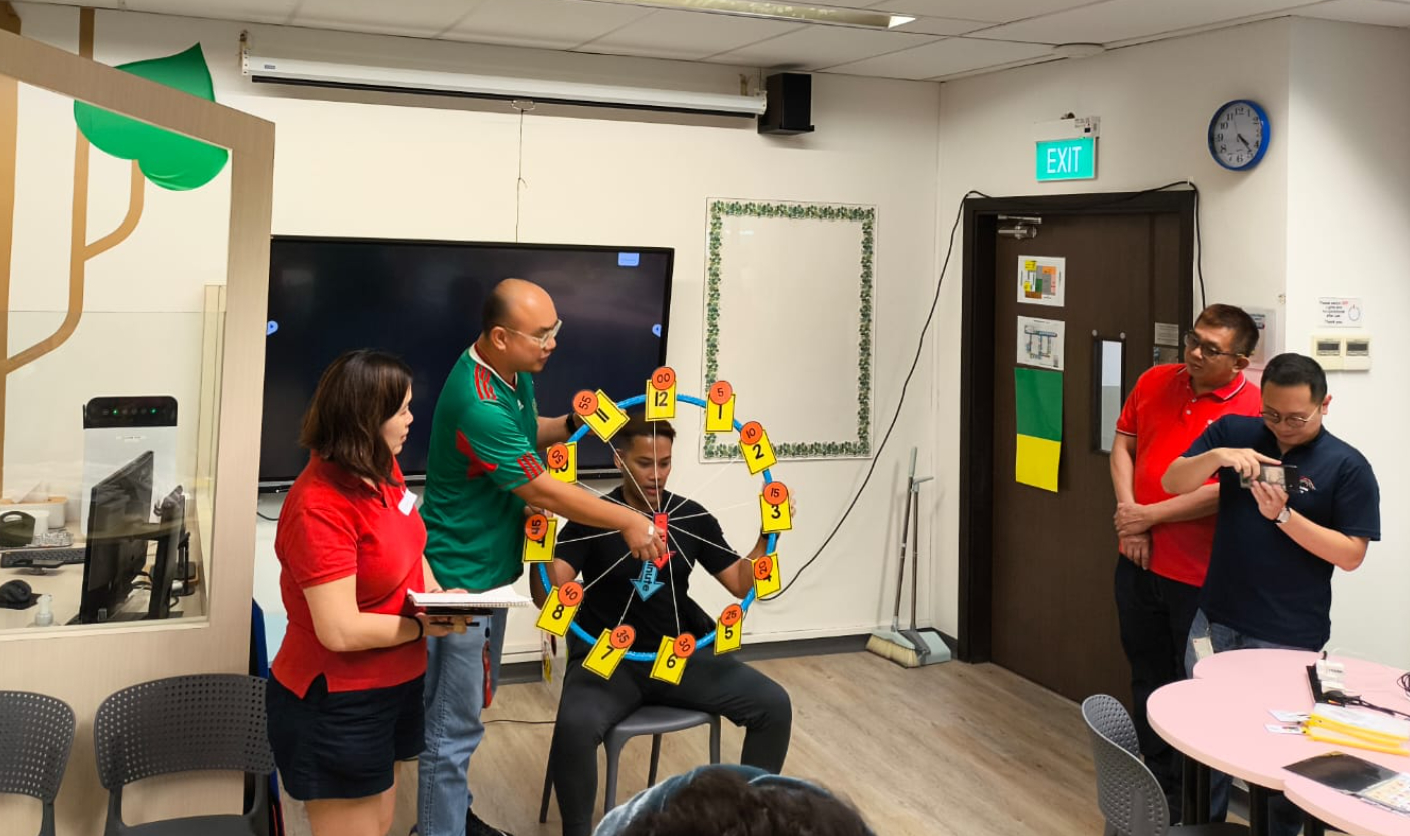 Students engage in hands-on activities at Rainbow Centre Singapore for part-time Specialist Diploma in Applied Autism Studies via Temasek Polytechnic
Better trained workers, better remuneration?
Does better training mean companies are obliged to pay employees more?
According to TP, the answer is: “There is no obligation.”
“Employees with upgraded skills certainly add value, and companies that recognise and reward this are more likely to retain their top talent,” the school added.
“Otherwise, they may be lured away by competitors.”
TP added that linking training to career progression, offering incentives, or integrating learning into work routines can help employees see training as an opportunity, not a chore.
Why not upskill yourself?
It is not always about waiting for employers to make the first move in pushing employees in the right direction.
Many workers, including those in mid-career, have already started their own education journeys, earning new diplomas at the institute in Tampines.
Kwan, who has helped upskill and reskill industry professionals and working adults to stay relevant in a rapidly evolving job market, shared that some diplomas under CET are more popular than others, as employees take the initiative to prioritise their own learning paths.
Popular diplomas include Legal Executive Studies, which equips learners with essential expertise in legal frameworks, and governance, as well as the Specialist Diploma in Applied Psychology (Behavioral Insights), where learners gain an understanding of behavioural patterns and cognitive biases to design effective interventions and drive positive societal change.
According to Kwan, in today’s care economy, mental health, behavioural insights, and emotional intelligence are becoming just as crucial as physical care.
These fields help improve society, he said, even if these roles do not command the highest salaries out there.
He has personally witnessed the evolution of training methodologies over the years alongside a shift in society’s priorities.
Today, having an education certificate and work experience may no longer be enough.
Skills are becoming just as essential.
Bombardier, a Canadian business jet manufacturer, sends its staff to TP to upgrade their skills as part of its WSP (Work-Study Programme).
Participants who embarked on Bombardier's WSP not only gained skills required by the industry but also earned a WSQ Higher Certificate in Aerospace to allow a smooth transition into full-time employment.
But that’s not all.
TP also offers customised programmes in robotics and automation.
These include online learning modules, allowing workers to study at their own pace, before completing the remaining face-to-face lessons on campus to earn their specialist diploma.
Any advice for someone in their 40s?
But what about someone like me?
What can I do if none of the courses above align with my current skills?
When I asked Kwan for advice, specifically for someone like me who could benefit from acquiring new skills in today’s economy, he said: “For mid-career individuals, especially those who are unemployed, the SkillsFuture Career Transition Programme can help you gain industry-relevant skills, making it easier to pivot into new sectors or job roles.”
“For someone in the communications and media industry, shifting to roles like Cloud Support or Full Stack Developer could open new doors and ignite new passions.”
If you are also interested to find out more, you can do so here.
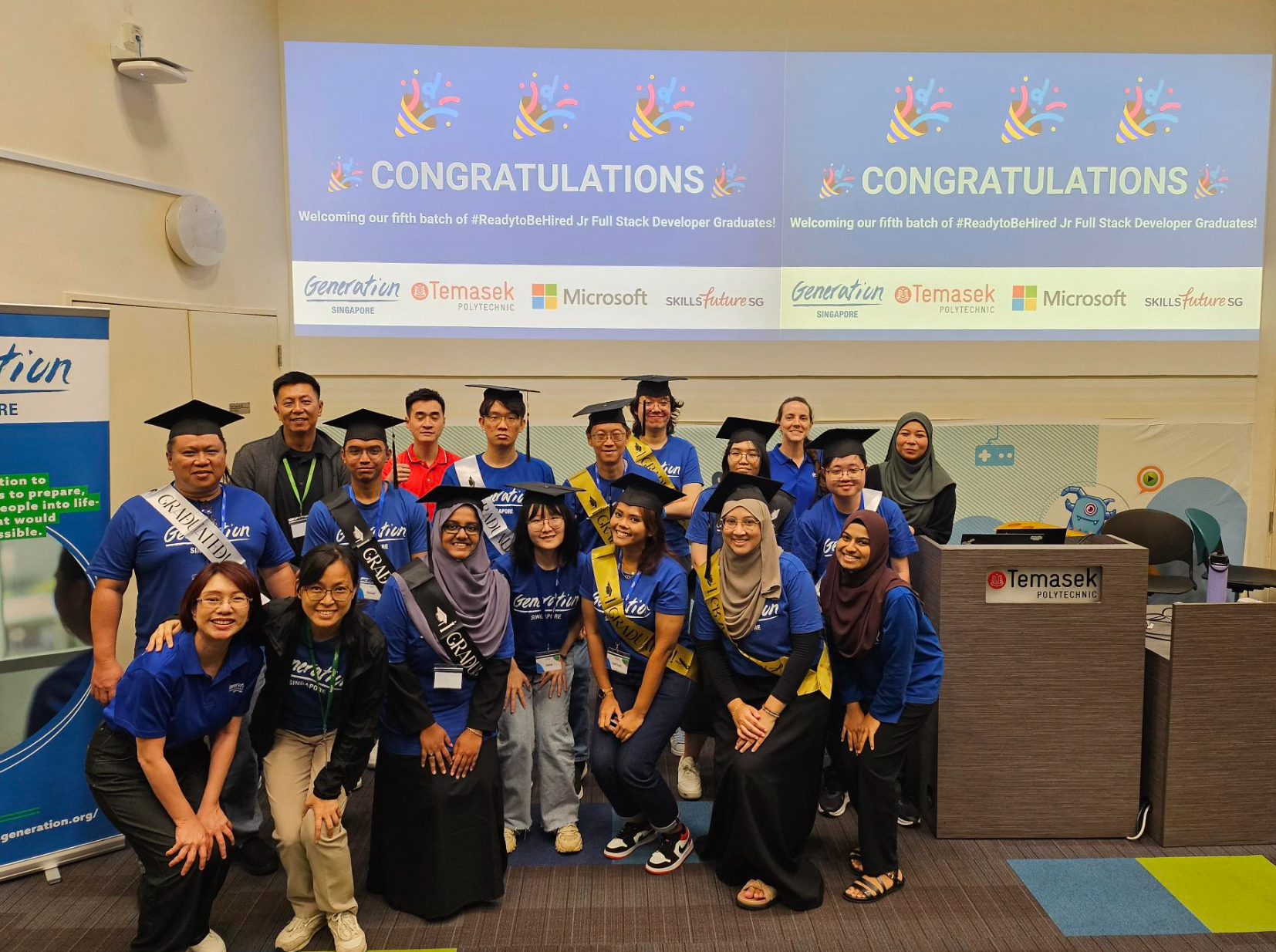 Graduates from SkillsFuture Career Transition Programme via Temasek Polytechnic
This branded content was brought to you by Temasek Polytechnic.